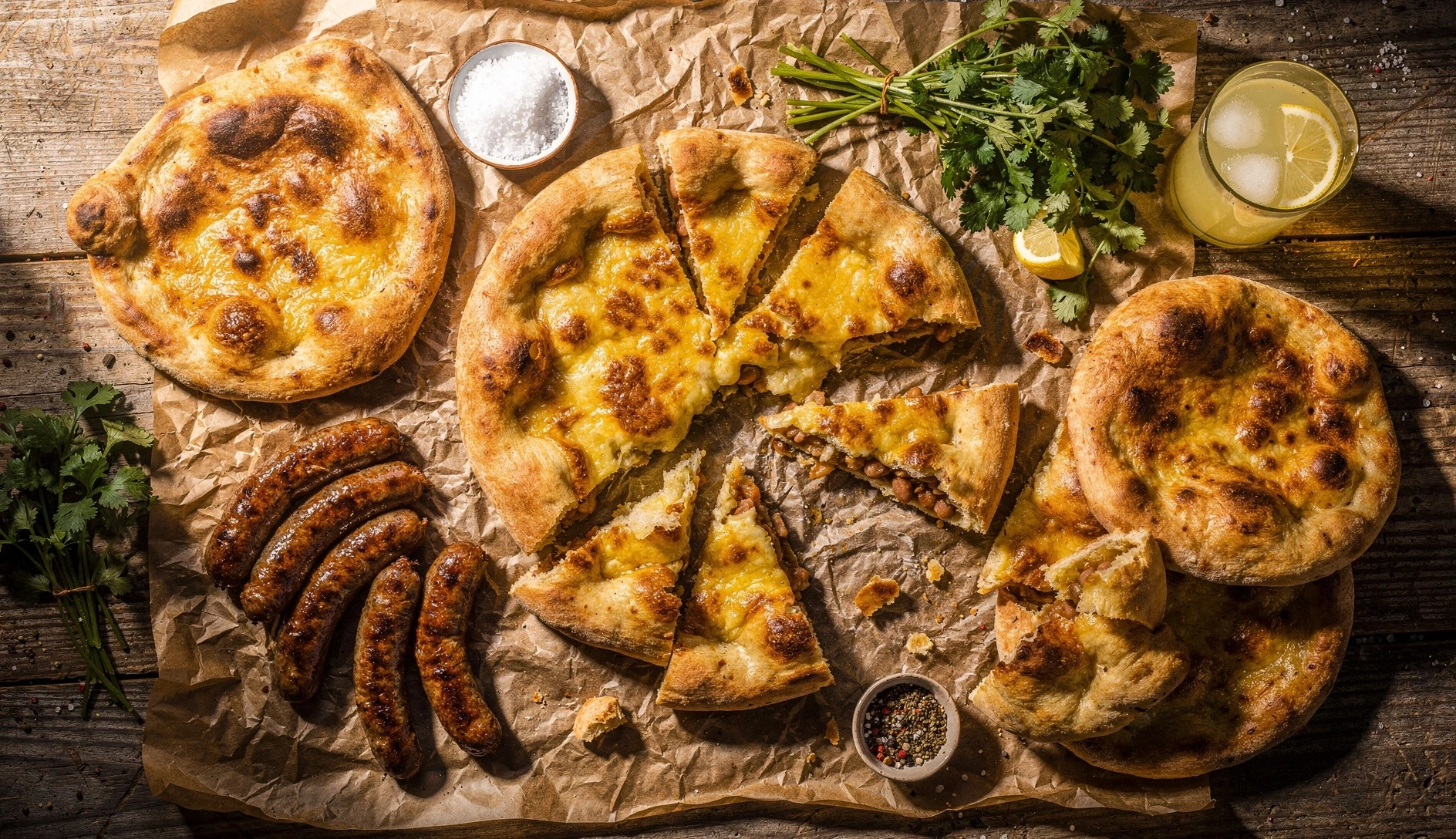
Georgia doesn't really have "street food" in the Southeast Asian sense — no hawker stalls lining every block, no wok-fired noodles at 2 AM. What it has is better: a bakery culture so deeply embedded that fresh bread is never more than a five-minute walk away, and a handful of dishes so portable and cheap that they've become the default meal for anyone in a hurry.
Walk through any Georgian city and you'll notice the pattern: small bakeries with windows facing the street, the smell of bread pulling you in. A man handing over a 1-lari coin for a khachapuri wrapped in paper. Construction workers sharing lobiani on a bench. This isn't curated "street food" — it's just how people eat.
The Bakery Window: Georgia's Real Street Food Scene
Forget food trucks. In Georgia, the street food ecosystem revolves around the gamockhoba — the bakery window. These tiny operations, sometimes just a single tone oven and a counter, are the backbone of Georgian fast food. They're everywhere: tucked under apartment buildings, squeezed between shops, sometimes just a hole in the wall with a hand-lettered price list.
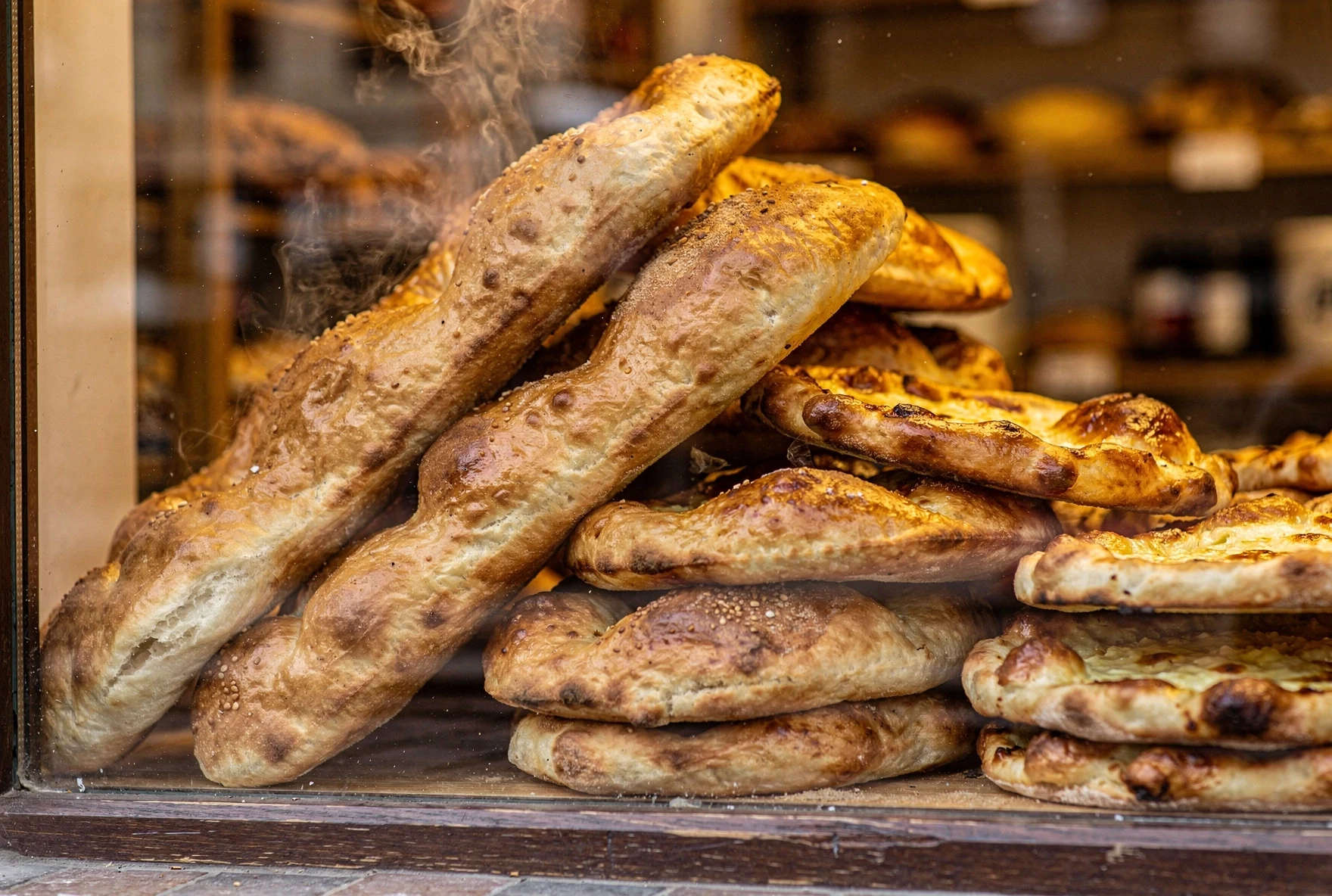
The economics are simple. A fresh shotis puri costs 1–1.50 GEL (about $0.35–0.55). An Imeretian khachapuri runs 3–5 GEL. A lobiani, 2–4 GEL. For under $2, you have a full meal. That's not tourist pricing — that's what everyone pays. A software developer, a taxi driver, and a grandmother all walk up to the same window.
Peak bakery hours
The best time to hit a bakery window is 8–10 AM or 5–7 PM. That's when turnover is highest and everything is fresh from the oven. Mid-afternoon, you might get bread that's been sitting. It's still good — Georgian bread ages well — but nothing beats the first 20 minutes out of the tone.
The Breads: Where It All Starts
Georgian bread isn't a side dish. It's the foundation of every meal and the single most consumed street food in the country. The tone oven — a cylindrical clay pit fired to extreme heat — produces bread with a charred, blistered crust and a soft, slightly chewy interior that no conventional oven can replicate.
Shotis Puri
The canoe-shaped bread slapped onto the inner wall of the tone oven. Pulled out with a long hook when the crust blisters. Costs 1–1.50 GEL. Eat it within an hour for the full experience — the crust shatters, the inside steams. Full recipe →
Tonis Puri
The round, flatter cousin baked in the same tone oven. Slightly thicker, more substantial. Many Georgians prefer it to shotis puri for stuffing with cheese or herbs. Same price range, same bakeries.
Lavashi
Thin, crispy sheets pulled from the oven wall. Shatters when you bend it. Georgians wrap cheese in it, crumble it into soup, or just eat it plain. Keeps longer than other breads — good for road trips.
Shoti with Cheese (Penoiani)
A shotis puri with a layer of sulguni cheese pressed into the dough before baking. The cheese melts into the bread as it cooks. It's essentially a lazy khachapuri, and it's fantastic. Around 3–4 GEL.
The Stuffed Breads: Georgia's Portable Meals
If Georgian bread is the foundation, stuffed bread is the main event. These are complete meals wrapped in dough — protein, carbs, fat, flavor, all in one hand-held package. Every bakery makes at least two or three varieties, and they're the single best value in Georgian street food.
| Bread | Filling | Price | Best For |
|---|---|---|---|
| Imeretian Khachapuri | Imeretian cheese (tangy, crumbly) | 3–5 GEL | The default — if you eat one thing |
| Lobiani | Spiced mashed red beans | 2–4 GEL | Cheapest full meal; smoky, earthy |
| Kubdari | Spiced beef/pork, cumin, fenugreek | 5–8 GEL | Svaneti mountain food; the meatiest |
| Achma | Layered sulguni cheese & butter | 4–6 GEL | Adjarian style; sold by the square |
| Nazuki | Cinnamon, raisins, cloves (sweet) | 3–5 GEL | Sweet bread; famous from Surami |
The khachapuri-versus-lobiani debate is one Georgians take seriously. Khachapuri is the glamorous one — the cheese stretches, the tourists photograph it. But lobiani is the working person's bread. It's denser, more filling, and the bean filling has a smoky depth that cheese can't match. If you're choosing between the two at a bakery window, get lobiani. You can always find khachapuri at a restaurant. Good lobiani from a bakery is a different thing entirely.
Kubdari is worth seeking out
Kubdari is Svaneti's gift to the rest of Georgia, but finding a great one in Tbilisi takes effort. Most bakeries don't make it — you need a Svan restaurant or a specialty bakery. When you find one with hand-chopped (not ground) meat and proper Svan spice ratios, it's the best stuffed bread in the Caucasus.
The Grilled Meats: Smoke and Fire
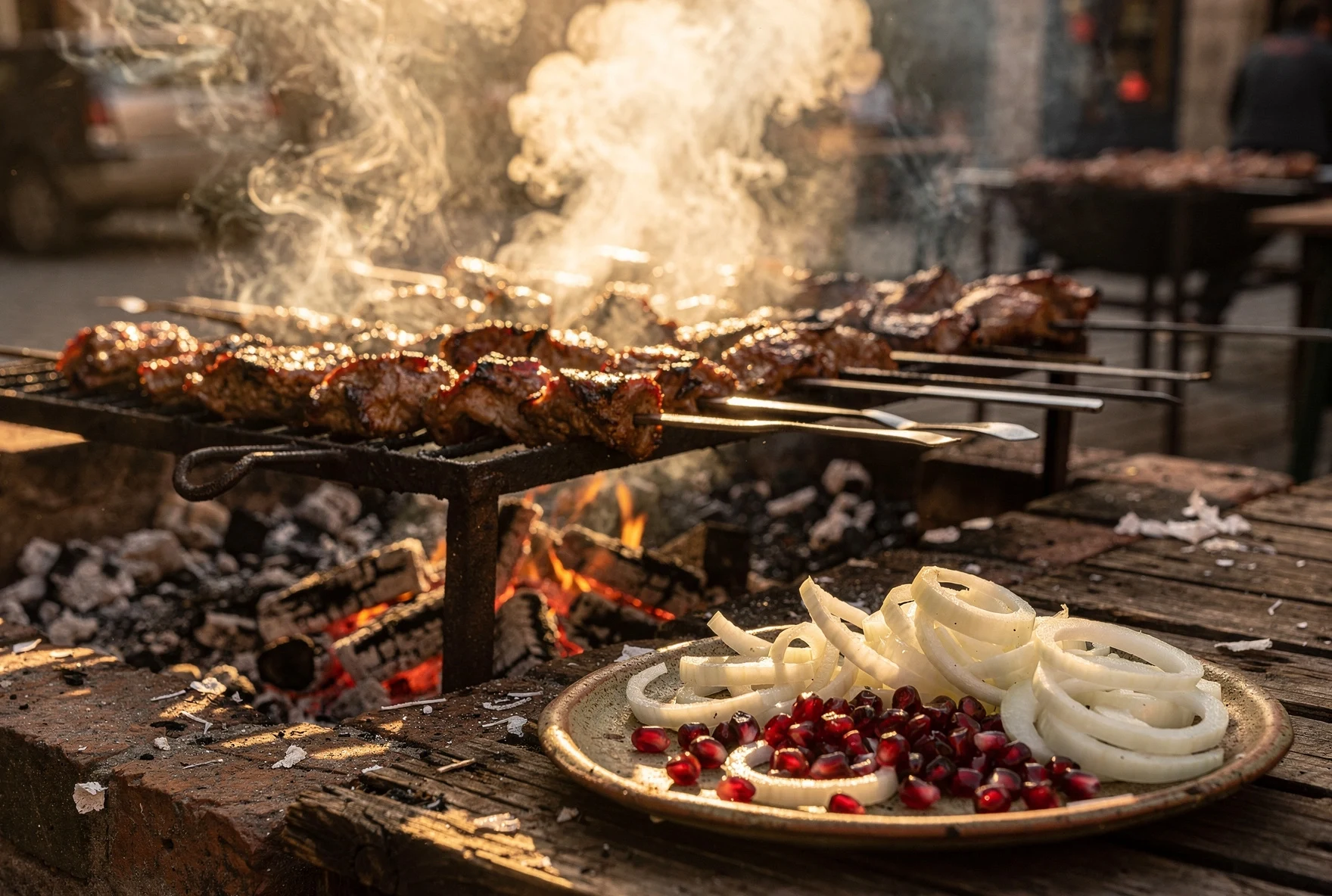
Georgian street barbecue happens wherever there's a mangali — a rectangular metal grill over charcoal. You'll find them outside restaurants, at markets, beside highways, and in backyards. The smell carries for blocks.
Mtsvadi (მწვადი)
Thick chunks of pork shoulder on metal skewers, grilled over charcoal or grapevine cuttings. Served with raw onion rings, pomegranate seeds, and a dusting of sumac. The meat is salted, nothing more. Simplicity is the point. 8–15 GEL per skewer. Full recipe →
Kupati (კუპატი)
Fat, rustic pork sausages packed with blue fenugreek, coriander, and barberries. Grilled until the natural casing splits and the fat renders. The best kupati snap when you bite into them and the juices run. 4–7 GEL each. Full recipe →
The key difference between Georgian grilled meat and, say, Turkish kebab: Georgians use big chunks, not minced meat. The pieces are cut thick — 3 to 4 centimeters — so the outside chars while the center stays juicy. And the marinade philosophy is minimal. Most mtsvadi uses only salt and maybe onion juice. The charcoal does the work.
Grapevine charcoal matters
The best mtsvadi is grilled over dried grapevine cuttings, not standard charcoal. The vine burns hot and fast, adding a subtle fruity smokiness you can't get any other way. If someone tells you their mtsvadi is "on vine" — that's worth paying more for.
The Snacks: Between-Meal Essentials
Not everything in Georgian street food is a full meal. Some of the best things are the small bites — the stuff you eat standing at a counter, waiting for a marshrutka, or just because you walked past a window and couldn't resist.
| Snack | What It Is | Price | Where to Find |
|---|---|---|---|
| Churchkhela | Walnuts dipped in thickened grape juice, dried into a chewy candy | 2–5 GEL | Markets, roadside stalls, souvenir shops |
| Mchadi | Crispy cornbread patties, pan-fried golden | 1–2 GEL | Bakeries, western Georgian restaurants |
| Chvishtari | Cornbread stuffed with melted sulguni cheese | 2–3 GEL | Svan restaurants, some bakeries |
| Kada | Flaky pastry with sweet butter-sugar filling | 1–2 GEL | Bakeries, especially in Kakheti |
| Puri with Cheese | Fresh tone bread torn open, stuffed with sulguni | 2–3 GEL | Any bakery — just ask |
| Sunflower Seeds | Roasted seeds sold in paper cones — the universal Georgian snack | 0.50–1 GEL | Every kiosk, metro station, park |
The most underrated street food move in Georgia: walk into any bakery, buy a fresh tonis puri, then stop at the cheese counter next door and get 200 grams of sulguni. Tear the bread, stuff the cheese inside while it's still warm. Total cost: about 3 GEL. It's the simplest meal in the country and one of the best.
The Drinks: Lemonade and Beyond
Georgian street drinks deserve their own section because they're genuinely unusual. Forget Coca-Cola — the drinks people actually buy from street vendors and corner shops are uniquely Georgian.
Limonati (ლიმონათი)
Georgian lemonade in flavors that don't exist elsewhere: tarragon (bright green, herbal), cream soda (vanilla-sweet), pear, and the classic lemon. Sold in glass bottles from every shop. The tarragon one is an acquired taste — Georgians are divided on it too. 1–2 GEL.
Matsoni (მაწონი)
Thick Georgian yogurt, sold in clay pots at markets or in plastic tubs at supermarkets. Not really a "street drink" but people drink it straight, sometimes sweetened with honey. It's the base for many Georgian sauces. 1–3 GEL.
Kompoti
Homemade fruit compote — stewed fruit in sweet liquid, served cold. Every grandmother makes it. You'll find it at traditional restaurants in big glass pitchers. Peach, cherry, plum, and apple are common. 2–3 GEL per glass.
Natakhtari / Zedazeni
The two big local lemonade brands. Natakhtari's cream soda is the iconic one. Zedazeni's tarragon (tarkhuna) is aggressively green and tastes like nothing you've had before. Both are everywhere and cost under 2 GEL.
The tarragon lemonade test
Tarkhuna (tarragon lemonade) is Georgia's most polarizing drink. It's neon green, intensely herbal, and slightly medicinal. Locals either love it or avoid it entirely. Try one early in your trip — your reaction to it is a reliable predictor of how adventurous your Georgian food journey will be.
What Everything Costs
Georgian street food is absurdly cheap by European standards. Here's what you'll actually spend:
Street Food Budget (Per Person, Per Day)
That's not backpacker pricing with sacrifices. That's eating well — fresh bread, real cheese, grilled meat, and drinks — for the cost of a single sandwich in most European capitals. The "budget travel" advice about Georgia barely needs to exist because the default price of good food is already budget pricing.
Where to Find the Best Street Food
The best Georgian street food isn't in one famous market or food hall. It's distributed across the city in a pattern that makes sense once you understand it:
Bakery Windows
Every neighborhood has several. The ones with the longest lines are usually best. Look for bakeries where you can see the tone oven — that means they're baking on-site, not reheating.
Dezerter Bazaar (Tbilisi)
Tbilisi's largest market. The food section has everything: fresh bread, churchkhela hanging from hooks, spice vendors, cheese stalls. Come hungry. It's overwhelming in the best way.
Highway Rest Stops
Some of the best Georgian street food happens along major highways. The roadside grill stands between Tbilisi and Kutaisi, or the Surami pass bakeries selling nazuki, are destinations in themselves.
Metro Exits & Bus Stations
Wherever commuters congregate, bakeries follow. Station Square, Didube, and Samgori metro exits all have clusters of bakery windows doing high-volume trade in khachapuri and lobiani.
How to Eat Like a Local
Georgian street food has unwritten rules. None of them are strict, but following them marks the difference between a tourist eating khachapuri and someone who actually knows what they're doing.
| Rule | What It Means |
|---|---|
| Eat bread fresh | Don't buy shotis puri and save it for later. Eat it within the hour. Cold Georgian bread is a different (worse) thing. |
| Tear, don't cut | Georgian bread is torn by hand, never sliced with a knife. This applies to shotis puri, tonis puri, and all flatbreads. |
| One bite of mtsvadi, one bite of onion | The raw onion rings served with grilled meat aren't garnish. You alternate: meat, onion, meat, onion. The sharp bite cuts the fat. |
| Never waste bread | In Georgia, throwing away bread is considered almost sinful. If you can't finish it, take it home. This is deeply cultural — bread is sacred here. |
| Churchkhela: break, don't bite | Break churchkhela into pieces rather than biting it like a candy bar. It's denser than it looks, and the walnuts inside distribute unevenly. |
| Khachapuri is breakfast food | Tourists eat khachapuri at dinner. Georgians eat it in the morning. The bakery windows are busiest at breakfast time for a reason. |
What Changes with the Seasons
Georgian street food isn't static. The bakeries run year-round, but what you'll find at markets and roadside stalls shifts dramatically with the seasons.
🌸 Spring (March–May)
Jonjoli (pickled sprouts) appears at markets. Fresh tarragon for chakapuli. Green tkemali (sour plum sauce) starts showing up. The first outdoor mangali fires of the year.
☀️ Summer (June–August)
Peak fruit season — peaches, cherries, watermelon sold from trucks. Fresh herb bundles at every market stall. Lemonade vendors everywhere. This is when kompoti is at its best.
🍂 Autumn (September–November)
Rtveli (grape harvest) season. Fresh churchkhela being made and dried. Persimmons, pomegranates, and walnuts everywhere. Pelamushi (grape pudding) appears. The best food season.
What's NOT Street Food (But Tourists Think It Is)
A few Georgian dishes get called "street food" in travel blogs but aren't really eaten that way by locals:
| Dish | Tourist Myth | Reality |
|---|---|---|
| Khinkali | "Georgian street dumplings!" | Sit-down restaurant food. You eat them with both hands, hot broth drips everywhere. Not portable. |
| Adjarian Khachapuri | "Grab one from a bakery!" | Needs to be eaten hot from the oven with a fork. The egg and butter pool isn't walkable. It's restaurant food. |
| Badrijani Nigvzit | "Easy finger food!" | A supra (feast) appetizer. Made fresh, served cold on a plate. Not sold at bakery windows or stalls. |
The distinction matters because if you go to Georgia expecting a Bangkok-style street food scene with sit-down dishes available from carts, you'll be confused. Georgian street food is almost entirely bread-based: things you can hold in one hand and eat while walking. Everything else happens at a table.
Common Questions
Is Georgian street food safe?
Yes. The bakery-based model means most street food is baked at extreme temperatures and eaten fresh. There's very little raw food or long-sitting prepared dishes in the street food scene. Standard food safety applies — if a bakery looks clean and busy, it's fine.
Can vegetarians eat Georgian street food?
Absolutely. Lobiani (bean bread), khachapuri (cheese bread), mchadi (cornbread), churchkhela, and all the breads are vegetarian. Vegans will have a harder time — cheese and butter are everywhere.
What if I don't speak Georgian?
Point and pay. Bakery windows are self-explanatory — the food is visible, you point at what you want, they hand it over. Most have simple price lists. In Tbilisi, younger staff often speak some English. Outside Tbilisi, smiling and pointing works perfectly.
Can I pay with card?
Small bakery windows are usually cash only. Carry small bills — 1, 2, and 5 GEL notes. Larger bakeries and chains accept cards. Markets are almost entirely cash. ATMs are everywhere in cities.
What's the one thing I absolutely must try?
A fresh Imeretian khachapuri from a bakery window within 10 minutes of it leaving the oven. Not a restaurant, not a chain — a real neighborhood bakery. That's the purest expression of Georgian street food there is.
Written by The Georgian Eats Team
We've spent years eating from bakery windows, arguing about lobiani versus khachapuri, and hunting down the best kupati in Tbilisi. This guide is based on what we actually eat — not what looks good on Instagram.
Last updated: February 2026.
Related Articles
Georgian Food: 20 Dishes You Need to Try
The definitive guide to Georgian cuisine — from khachapuri to lesser-known gems.
Georgian Breakfast: What Georgians Actually Eat
Forget the tourist version — the real morning routine with bread, cheese, and matsoni.
Imeretian Khachapuri
The everyday round cheese bread — Georgia's most popular version.
Lobiani: Bean-Stuffed Bread
The working person's street food — smoky mashed beans in yeasted dough.