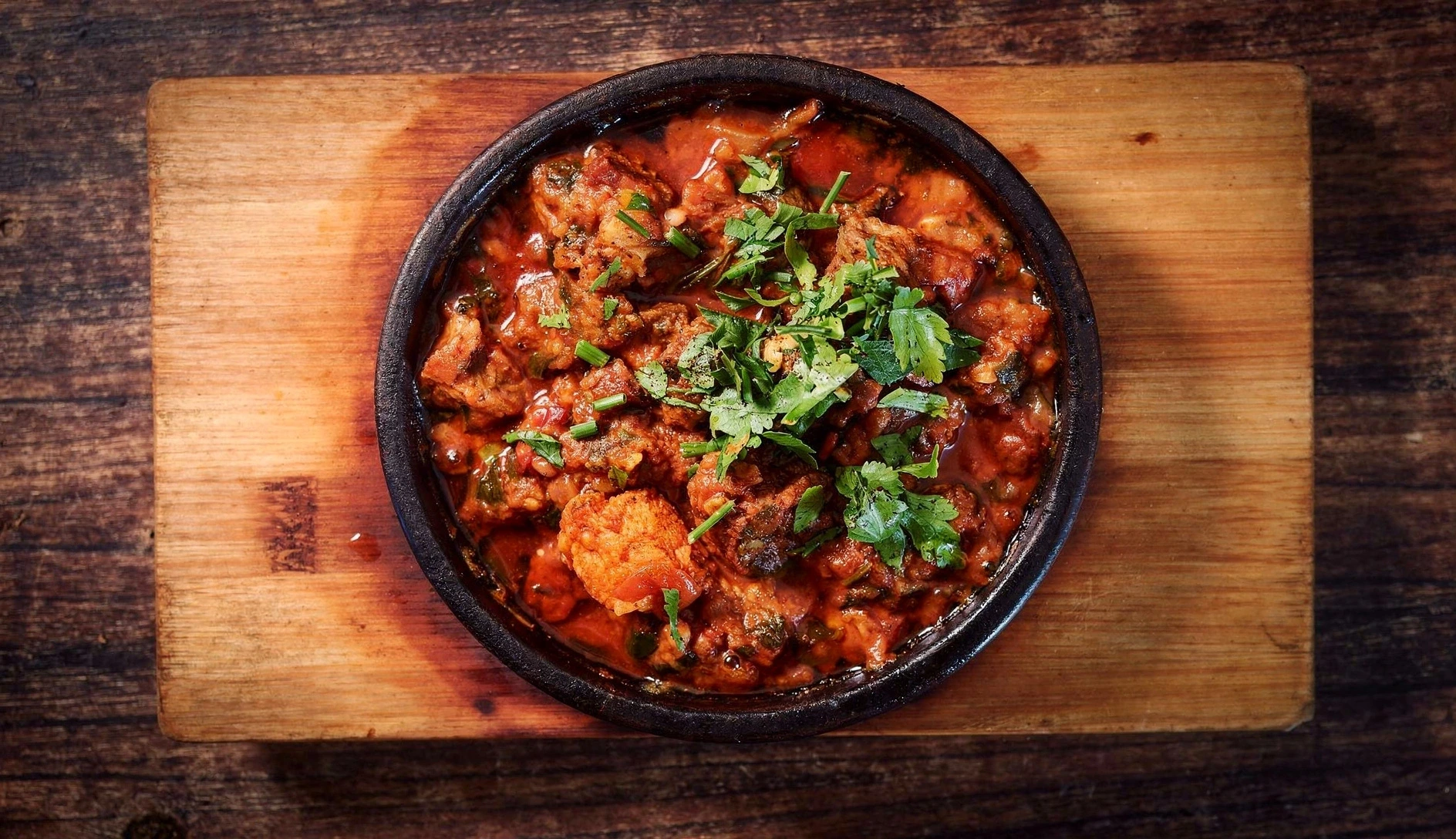
Chashushuli is the dish Georgians actually cook on a Tuesday night. Not khinkali — that's a project. Not khachapuri — you buy that fresh from the bakery. Chashushuli is what happens when you've got a chunk of beef, some tomatoes, and hot peppers, and you want dinner to take care of itself for two hours while you do literally anything else. The name comes from shushva — to stew, to simmer — and that's exactly what this is: beef that falls apart in a thick, fiery tomato sauce. No water added. No stock needed. Just meat, tomatoes, heat, and time.
Chashushuli Quick Facts
- Georgian name: ჩაშუშული (cha-shu-SHU-li)
- Origin: Found all across Georgia — an everyday home-cooking staple
- Key ingredients: Beef, tomatoes, hot peppers, cilantro, blue fenugreek
- Type: Spicy braised beef stew (no added liquid)
- Prep + cook time: 20 min prep, 1.5–2 hours cooking
- Cost in Georgia: 14–22 GEL in restaurants (~$5–8 USD)
- Difficulty: Easy — the oven or stove does 90% of the work
- Heat level: Medium-hot (adjustable — Georgians like it fiery)
Why Chashushuli Deserves More Respect
If khinkali is the dish tourists chase and khachapuri is the one Instagram obsesses over, chashushuli is the one that actually feeds the country. It's on every restaurant menu — usually buried in the meat section, priced at 14-22 GEL, served in a clay ketsi still bubbling from the kitchen. It doesn't photograph as spectacularly as an Adjarian khachapuri boat. It doesn't have the ritual theatre of folding khinkali. But it might be the single most satisfying meal in the Georgian repertoire.
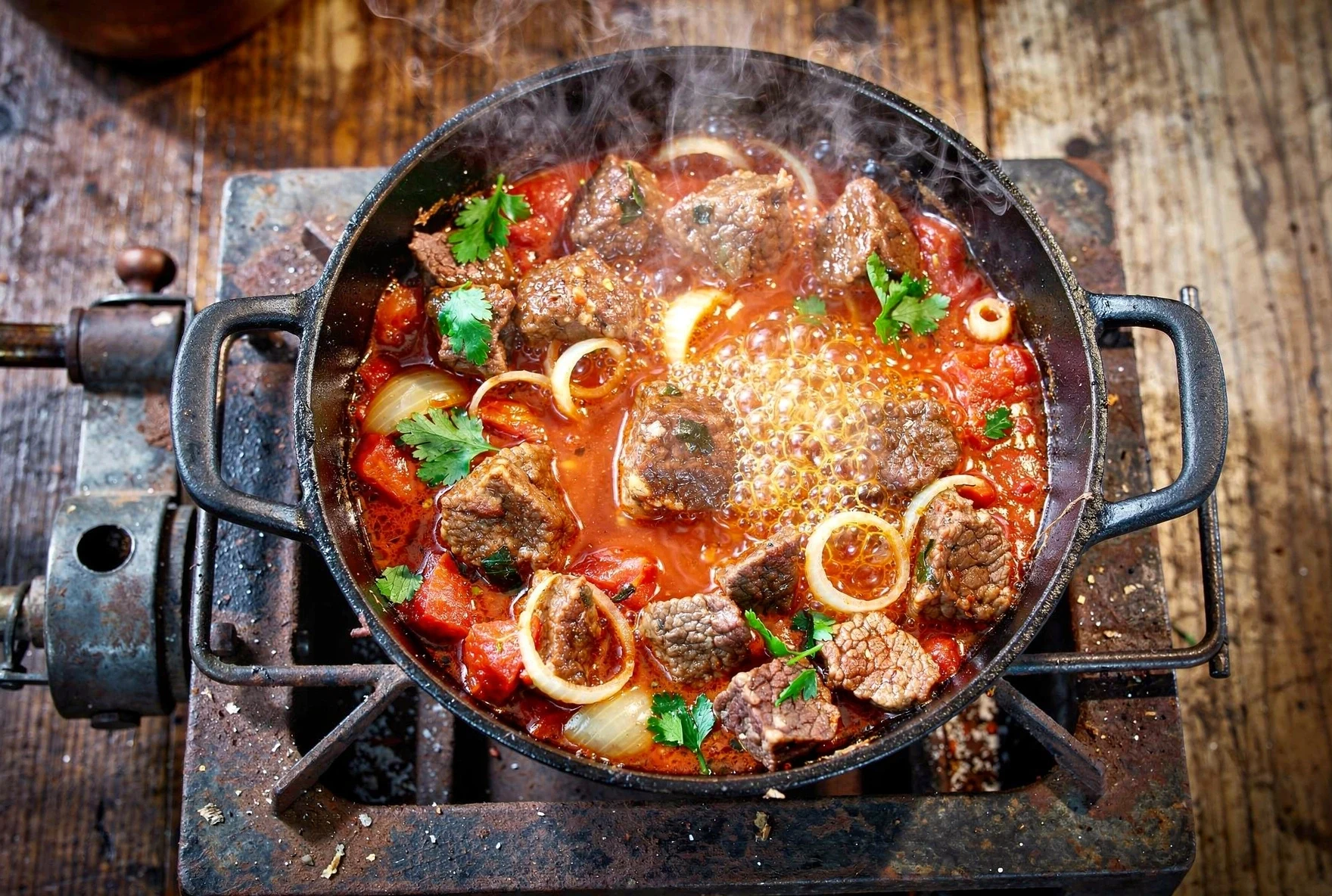
The genius of chashushuli is the no-water rule. You don't add stock. You don't add water. The only liquid comes from the tomatoes and onions as they break down around the beef. This creates a sauce that's intensely concentrated — more like a thick, rich gravy than a soup. Every spoonful tastes like the full expression of what was in the pot. Nothing diluted. Nothing washed out.
Chashushuli vs. Ostri — What's the Difference?
This confuses everyone, including some Georgian cooks. Both are spicy beef stews. Both use tomatoes and hot peppers. Both show up on restaurant menus. Here's the real difference:
| Feature | Chashushuli | Ostri |
|---|---|---|
| Cooking method | Long, slow stew (1.5-2 hours) | Quick braise (30-45 minutes) |
| Meat | Tough cuts (chuck, shoulder) — broken down by time | Tender cuts (tenderloin, sirloin) — quick-cooked |
| Sauce | Thick, reduced, almost dry | More liquid, saucier |
| Heat | Medium-hot | Hot — "ostri" literally means "sharp/spicy" |
| Added liquid | None — tomatoes only | Sometimes broth or wine |
| Everyday or special? | Everyday home cooking | Restaurant/feast dish |
In practice, many Georgian restaurants use the names interchangeably. If you order one and get the other, nobody lied — the line between them is genuinely blurry. But traditional chashushuli is the slow one. It's the patient version. Ostri is its impatient, spicier cousin. If you want the quicker tender-beef version spelled out properly, see our full ostri recipe.
Choosing the Right Meat
This is where chashushuli differs from most stew recipes you'll find online. There are two schools:
🥩 Traditional Approach: Veal
Many Georgian grandmothers insist on veal (khbos khortsi). It's more tender, cooks faster, and has a milder flavor that lets the spices and peppers dominate. In Georgia, veal is cheap and widely available at any bazaar.
🐄 Home Cook Approach: Beef Chuck
Outside Georgia, beef chuck or shoulder is your best bet. These cuts have enough connective tissue to break down into silky tenderness over 2 hours. The extra fat adds body to the sauce. This is what we recommend for most readers.
Skip the Tenderloin
Some recipes (especially non-Georgian food blogs) call for tenderloin or sirloin. Don't do it. Lean, tender cuts dry out during the long simmer and turn chalky. Save them for ostri, which cooks quickly. Chashushuli needs fat and collagen — that's what makes the sauce rich and the meat fork-tender.
Ingredients
Chashushuli uses pantry staples plus a few Georgian-specific spices. The dish is forgiving — you don't need every single spice to make something great. But the hot peppers and fresh cilantro are non-negotiable.
| Ingredient | Amount | Notes |
|---|---|---|
| Beef (chuck/shoulder) | 700g | Cut into 3-4cm cubes. Leave some fat on. |
| Tomatoes | 4 medium (or 400g canned) | Summer tomatoes are best. Canned work great in winter. |
| Onions | 2 large | Diced. They dissolve into the sauce. |
| Garlic | 4-5 cloves | Minced. Add more if you love garlic. |
| Hot green peppers | 2-3 | Georgian tsitsaka. Jalapeños or serranos work. |
| Tomato paste | 1 tbsp | For depth. Skip if using very ripe tomatoes. |
| Blue fenugreek | 1 tsp | The Georgian signature. No real substitute. |
| Ground coriander | 1 tsp | Toasting whole seeds and grinding is better. |
| Khmeli-suneli | 0.5 tsp | Georgian all-purpose spice blend. |
| Dried marigold | 0.5 tsp | Imeruli shaphrani — adds earthy color. |
| Fresh cilantro | Large bunch | Added at the very end. Essential. |
| Bay leaves | 2-3 | Remove before serving. |
Finding Blue Fenugreek
Blue fenugreek (utskho suneli) is what makes Georgian food taste Georgian. It's different from regular fenugreek — lighter, nuttier, less bitter. In Georgia, it's at every spice stall. Outside Georgia, check online Georgian/Middle Eastern spice shops. If you absolutely can't find it, use half the amount of regular fenugreek seeds ground fine, but the flavor won't be the same. For more on Georgian spices, see our complete spice guide.
Step-by-Step Instructions
Step 1: Sear the Beef
Pat the beef cubes dry with paper towels — this is important. Wet meat steams instead of searing. Season with salt and pepper. Heat oil in a heavy-bottomed pot (a Dutch oven is perfect) over high heat until the oil shimmers. Sear the beef in batches, giving each piece 2-3 minutes per side. You want a deep, mahogany-brown crust, not a pale gray exterior. Don't touch the meat once it's in the pan — let the Maillard reaction do its work.
This step takes 10-12 minutes across 2-3 batches. It's the only part of the recipe that requires your full attention. Everything after this is passive.
Step 2: Build the Base
Lower the heat to medium. Add the diced onions to the same pot — all that browned beef fond on the bottom is flavor you're not throwing away. Cook the onions 8-10 minutes, stirring occasionally, until they're soft and starting to turn golden. Add the garlic, sliced hot peppers, and tomato paste. Stir for about 2 minutes until everything is fragrant and the paste darkens slightly.
Step 3: Add Tomatoes
Add the chopped tomatoes. If you're using canned, pour in the whole tin — juice and all. If you're using fresh summer tomatoes, you can grate them on a box grater and discard the skins. Cook for 5 minutes, breaking them down with a wooden spoon, until you have a rough sauce bubbling in the pot.
Step 4: Combine and Spice
Return the seared beef to the pot along with any juices that collected on the plate. Add the coriander, blue fenugreek, marigold, khmeli-suneli, chili flakes, and bay leaves. Stir everything together so each piece of beef is coated in the tomato-spice mixture.
The No-Water Rule
Do not add water, stock, wine, or any other liquid. This is the defining feature of chashushuli. The tomatoes and onions release enough moisture to braise the beef. As the stew simmers, the liquid slowly reduces into a thick, concentrated sauce. If you add water, you get a generic beef stew. If you trust the process, you get chashushuli.
Step 5: The Long Simmer
Cover the pot, reduce heat to the lowest setting, and walk away. Simmer for 1.5 to 2 hours, checking and stirring every 30 minutes or so. The sauce will initially seem thin as the tomatoes release their juice. Don't panic. By the end, it'll be thick, dark, and clinging to the meat.
If the sauce starts to look dry before the meat is tender (this can happen with fresh tomatoes that aren't very juicy), add a splash of water — just enough to keep things moving. But this should be the exception, not the norm.
Step 6: Finish and Rest
The stew is done when the beef is completely fork-tender — a piece should break apart with gentle pressure. The sauce should be thick and reduced, coating the back of a spoon. Taste for salt (it usually needs more than you think). Remove bay leaves. Roughly chop a big handful of fresh cilantro, stir it in, put the lid back on, and let it rest for 5 minutes off heat. The cilantro wilts into the sauce and perfumes the whole dish.
Visual Cues for Doneness
| What to Look For | Not Ready Yet | Perfect |
|---|---|---|
| Beef texture | Firm, requires chewing | Falls apart with a fork |
| Sauce consistency | Thin, watery, red | Thick, dark, clings to spoon |
| Onions | Visible pieces | Completely dissolved into sauce |
| Color | Bright red-orange | Deep brick red, almost brown at edges |
| Aroma | Sharp tomato smell | Deep, unified, spiced meat smell |
How to Serve Chashushuli
In Georgia, chashushuli almost always arrives in a clay ketsi — still bubbling, with a thick layer of red oil on top and fresh cilantro scattered over everything. But how you eat it matters as much as how it's served.
| Accompaniment | Why It Works | Our Take |
|---|---|---|
| Shotis puri | Tears into perfect sauce-scooping strips | The classic pairing. Non-negotiable. |
| Mchadi | Cornbread absorbs the sauce beautifully | Especially good with extra-spicy versions. |
| Elarji | Stretchy cheese-cornmeal tames the heat | A Megrelian move. Highly recommended. |
| Rice | Catches every drop of sauce | Not traditional, but practical. |
| Fresh herbs + onion | Cuts the richness, adds crunch | Sliced raw onion, tarragon, basil on the side. |
| Saperavi wine | Georgia's tannic red stands up to the spice | The natural match. See our grape guide. |
Regional Variations
Like most Georgian dishes, chashushuli changes as you cross regional borders. No version is more "authentic" than another — they're all rooted in local ingredients and preferences.
| Region | Variation | Distinctive Feature |
|---|---|---|
| Kakheti | Uses veal, extra-heavy on tomatoes | Milder, sweeter sauce — let the meat shine |
| Samegrelo | Adds adjika paste, more garlic | Significantly hotter and more pungent |
| Imereti | Sometimes includes bell peppers | Slightly sweeter, less aggressive |
| Tbilisi (modern) | Mixed meats, some add mushrooms | Restaurant-friendly, adaptable |
Other Meats That Work
Beef is standard, but chashushuli is a method as much as a recipe. You can apply it to other proteins:
| Protein | Cooking Time | Notes |
|---|---|---|
| Veal | 1-1.5 hours | Traditional in many regions. More delicate flavor. |
| Pork | 1.5 hours | Shoulder works well. Richer, fattier sauce. |
| Chicken | 45 minutes | Use thighs, not breast. Quick weeknight version. |
| Mushrooms | 30-40 minutes | Not traditional but increasingly popular in Tbilisi. Use king oyster or portobello. |
Storage and Reheating
🧊 Storing
Fridge: 4-5 days in an airtight container. Freezer: 3 months. The sauce actually improves overnight as the flavors meld — day-two chashushuli is a genuine upgrade. Let it cool completely before refrigerating.
🔥 Reheating
Stovetop over medium-low heat, adding a splash of water if the sauce has thickened too much. Microwave works but dulls the texture. Don't boil it — gentle reheating keeps the meat tender. Add fresh cilantro after reheating for brightness.
Common Mistakes
❌ Adding Water
The whole point is that the sauce comes from the tomatoes and onions only. Adding water or stock dilutes the flavor from concentrated to generic.
❌ Skipping the Sear
Dumping raw meat into the sauce gives you gray, boiled beef. The brown crust adds a huge amount of flavor — both to the meat and to the fond that forms in the pot.
❌ Using Lean Cuts
Tenderloin and sirloin sound premium but they dry out over 2 hours of simmering. Chuck, shoulder, or shin — cuts with connective tissue — are what you need.
❌ Cooking Too Hot
High heat = tough meat and burnt sauce. The simmer should be barely visible — a bubble rising every few seconds. If it's boiling, it's too hot.
❌ Forgetting Cilantro
Chashushuli without cilantro is like pizza without basil. That final addition of fresh herbs transforms the dish from "good beef stew" to distinctly Georgian.
❌ Undersalting
Stews need more salt than you think. The thick sauce distributes salt differently than a brothy soup. Taste right before serving and be generous.
Where to Eat Chashushuli in Tbilisi
Shavi Lomi
Modern Georgian kitchen that treats traditional recipes with respect. Their chashushuli uses quality beef and doesn't hold back on the peppers. ~18-22 GEL.
Ezo
Hidden courtyard restaurant in Old Tbilisi. Very traditional preparation — arrives in a clay ketsi, still bubbling. The veal version is worth trying. ~15-20 GEL.
Machakhela
Chain restaurant that's a reliable baseline. Not the best chashushuli in the city, but consistent and cheap. Good if you want to understand the "standard" version. ~14-16 GEL.
Any Roadside Sachere
The best chashushuli you'll eat in Georgia probably won't be in Tbilisi. Highway rest stops and village restaurants often make it with local veal in massive portions for 10-14 GEL.
Nutrition
| Nutrient | Per Serving | % Daily Value |
|---|---|---|
| Fat | 18g | 23% |
| Iron | 5.2mg | 29% |
| Vitamin B12 | 4.8µg | 200% |
| Vitamin C | 28mg | 31% |
Frequently Asked Questions
Can I make chashushuli in a slow cooker?
Yes, but sear the beef first on the stovetop — don't skip that. Then combine everything in the slow cooker on low for 6-8 hours. The result is slightly different (more liquid, less concentrated) but still good. Finish with cilantro right before serving.
How spicy is chashushuli supposed to be?
In Georgia, it's meant to be noticeably hot — not painful, but you should feel it. Start with 2 peppers and taste the sauce after an hour. You can always add more sliced peppers during cooking. Remove the seeds from the peppers if you want less heat.
Why is my sauce too thin?
Either the tomatoes were very watery or the lid isn't tight enough. Try cooking with the lid slightly ajar for the last 30 minutes to let excess moisture evaporate. The sauce should be thick enough to coat the back of a spoon by the time you're done.
Can I use a pressure cooker?
You can — sear the beef, build the base, then pressure cook for 30-35 minutes. You'll need to reduce the sauce afterward with the lid off. It's faster but the slow version develops deeper flavor. Pressure cooking is a valid weeknight shortcut.
Is chashushuli the same as Hungarian goulash?
They share DNA — both are slow-cooked beef in a pepper-tomato sauce. But goulash uses paprika (sweet, smoky) while chashushuli uses fresh hot peppers and Georgian spices (earthy, sharp). Goulash has liquid; chashushuli doesn't. They're cousins, not twins.
Written by The Georgian Eats Team
We've eaten chashushuli in Tbilisi restaurants, highway rest stops, and village kitchens across Kakheti and Imereti. We've also made it at home more times than we can count — it's one of those dishes that rewards repetition. Each batch teaches you something about heat, timing, and patience.
Last updated: February 2026.
Related Articles
Kharcho: Georgia's Spiced Beef and Walnut Soup
The other great Georgian beef dish — thickened with walnuts and sharpened with sour plum.
Chanakhi: Georgian Lamb and Vegetable Stew
Another no-water stew — layers of lamb, eggplant, potato, and tomato baked in clay.
Chakapuli: Spring Lamb with Tarragon and Plums
Georgia's bright, herby spring stew — the light counterpart to chashushuli's winter warmth.
Georgian Spices: The Complete Guide
Blue fenugreek, marigold, khmeli-suneli — everything you need to stock a Georgian pantry.