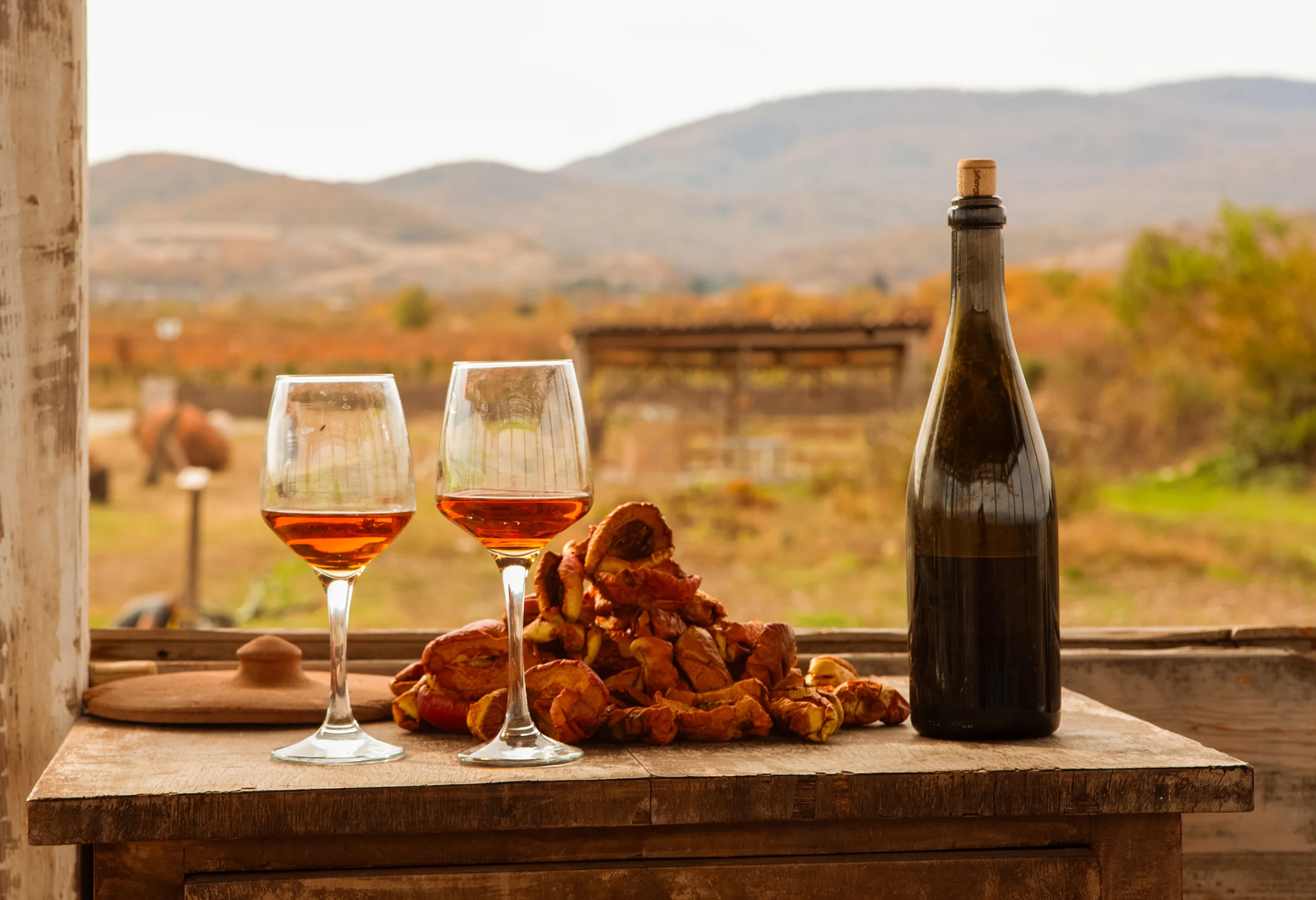
Georgia has over 525 indigenous grape varieties — roughly one-sixth of the world's total. That number sounds made up until you realize this is where winemaking began 8,000 years ago. Most of these grapes exist nowhere else on Earth. About 40 are in commercial production today, and maybe a dozen show up regularly on restaurant menus in Tbilisi. Here's what each one actually tastes like, when to drink it, and what to eat alongside it.
How to Use This Guide
I've organized grapes by color — whites first, then reds — and within each group, roughly by how likely you are to encounter them. Saperavi and Rkatsiteli dominate Georgian wine the way Cabernet and Chardonnay dominate Napa. But the real magic is in the second tier: grapes like Kisi, Mtsvane, and Tavkveri that most visitors never try because nobody tells them to ask.
For each grape, I've included: what it tastes like (honestly, not in marketing-speak), where it grows, how it's typically made, and what food to pair it with. If you're heading to Georgia, screenshot the tasting notes table and bring it to dinner.
Qvevri vs. European Method
Many Georgian grapes produce dramatically different wines depending on winemaking method. "European-style" means stainless steel, no skin contact for whites — clean and crisp. "Qvevri-style" means fermented and aged in buried clay vessels, often with skin contact — resulting in amber wines with more tannin, texture, and complexity. When a grape is listed as "excellent in qvevri," that's where it really shines.
White Grapes
Georgia is overwhelmingly a white-grape country. About 60% of vineyard area is planted to white varieties, and the tradition of amber (orange) wine — white grapes fermented with extended skin contact — means Georgian whites have a range of expression you won't find anywhere else.
1. Rkatsiteli — The Workhorse
Region: Kakheti (primarily), grown nationwide
Style: Dry white, amber/orange wine
Pronunciation: r-KAH-tsi-TEH-lee
Rkatsiteli is to Georgia what Riesling is to Germany — the grape that defines the country's white wine identity. It's the most widely planted variety, covering thousands of hectares across Kakheti and beyond. The name means "red stem," referring to the vine's reddish shoots.
Made European-style, Rkatsiteli produces crisp, high-acid whites with green apple, quince, and white peach. Pleasant but unremarkable. Made in qvevri with six months of skin contact, it transforms into something entirely different: an amber wine with honey, dried apricot, walnut skin, and a tannic grip that can stand up to grilled meat. This is the version that converted me.
Rkatsiteli is frequently blended with Mtsvane Kakhuri, which adds floral aromatics to Rkatsiteli's structure. If you see "Rkatsiteli-Mtsvane" on a label, that's what's happening.
Want the full Saperavi breakdown?
This guide covers all the major grapes, but Saperavi is big enough to need its own page. For Mukuzani, Kindzmarauli, serving temperature, and bottle-buying advice, read the dedicated Saperavi wine guide.
Best Rkatsiteli to Try First
Try a qvevri Rkatsiteli from a small Kakhetian producer. Pheasant's Tears, Iago's Wine, or any bottle from Sighnaghi's family cellars will show you why this grape has lasted 2,000+ years. Avoid the mass-produced supermarket versions — they're thin and forgettable. If you want the full dry-white vs amber breakdown, read the dedicated Rkatsiteli guide.
2. Mtsvane Kakhuri — The Aromatic Partner
Region: Kakheti
Style: Dry white, amber wine
Pronunciation: MTSVA-neh ka-KHOO-ree
Mtsvane means "green" in Georgian, and it's the aromatic counterpart to Rkatsiteli's structure. Where Rkatsiteli brings acid and body, Mtsvane brings perfume — jasmine, citrus blossom, ripe pear, and a honeyed richness. Blended together, they're one of the great grape partnerships in wine.
On its own, Mtsvane makes gorgeous amber wines in qvevri. The skin contact amplifies its natural aromatics and adds a spicy, almost tea-like complexity. It's slightly lower in acid than Rkatsiteli, so the wines tend to be rounder and more approachable young.
Pair with: Sulguni cheese, herb salads, white fish, or on its own as an aperitif.
Mtsvane deserves its own page
This guide covers the big picture, but Mtsvane is more than a supporting grape. For dry versus amber styles, the Rkatsiteli blend logic, and food pairings that actually work, read the dedicated Mtsvane wine guide.
3. Kisi — The Rising Star
Region: Kakheti (Akhmeta area especially)
Style: Amber wine, dry white
Pronunciation: KEE-see
Kisi is having a moment. It was nearly extinct a few decades ago — down to a handful of old vines — but small producers rediscovered it and now it's one of the most exciting grapes in the country. In qvevri, it produces amber wines with remarkable complexity: dried flowers, beeswax, golden raisin, and a long, slightly bitter almond finish.
What makes Kisi special is its thick skin. Extended skin contact doesn't overpower it — it concentrates it. The best Kisi wines have a depth that rivals aged Rkatsiteli but with more elegance. If you try one grape you've never heard of, make it this one.
Pair with: Aged cheese, roasted walnuts, mushroom dishes, lobio.
4. Chinuri — The Sparkling Option
Region: Kartli (central Georgia)
Style: Dry white, sparkling, amber wine
Pronunciation: chee-NOO-ree
Chinuri is Kartli's signature grape, and it's underrated. In European style it's light and nervy — green apple, mint, white flowers — with a crispness that makes it a natural for sparkling wine. Georgian pétillant naturel (pét-nat) made from Chinuri is genuinely fun to drink, and several natural wine producers have caught on.
In qvevri, Chinuri gets more serious: herbal, waxy, with a mineral backbone from Kartli's volcanic soils. It's also a popular table grape — you'll see it in Tbilisi markets in autumn.
Pair with: Fried trout, vegetable pkhali, light salads, or drink the sparkling version on a hot terrace.
5. Tsolikouri — The Western Gem
Region: Imereti, Lechkhumi, Racha
Style: Dry white, semi-sweet
Pronunciation: tso-lee-KOO-ree
Western Georgia's leading white grape. Tsolikouri makes round, full-bodied whites with ripe fruit character — yellow plum, melon, a touch of herb. In Imereti, where winemaking traditions differ from Kakheti (shorter skin contact, different vessel shapes), Tsolikouri captures the region's gentler, more fruit-forward style.
In Lechkhumi and Racha, it contributes to the famous semi-sweet wines — Tvishi being the best-known appellation. A good Tvishi Tsolikouri has natural residual sugar balanced by bright acidity, tasting of honeydew and ripe apricot. Nothing like the cloying sweet wines you might expect.
Pair with: Imeruli khachapuri, fresh goat cheese, grilled vegetables, fruit desserts.
6. Krakhuna — The Hidden Treasure of Imereti
Region: Imereti
Style: Dry white, amber wine
Pronunciation: kra-KHOO-na
Krakhuna means "crunchy" — a reference to the grape's crisp texture when eaten fresh. In wine, it's one of Imereti's most interesting varieties: high acidity, moderate alcohol, with notes of citrus peel, green almond, and white pepper. It responds beautifully to skin contact, gaining depth without losing its bright, electric character.
Production is small. If you see it on a wine list, order it — you might not get another chance for a while.
Pair with: Gebzhalia (cheese in mint sauce), fresh herbs, white fish.
Red Grapes
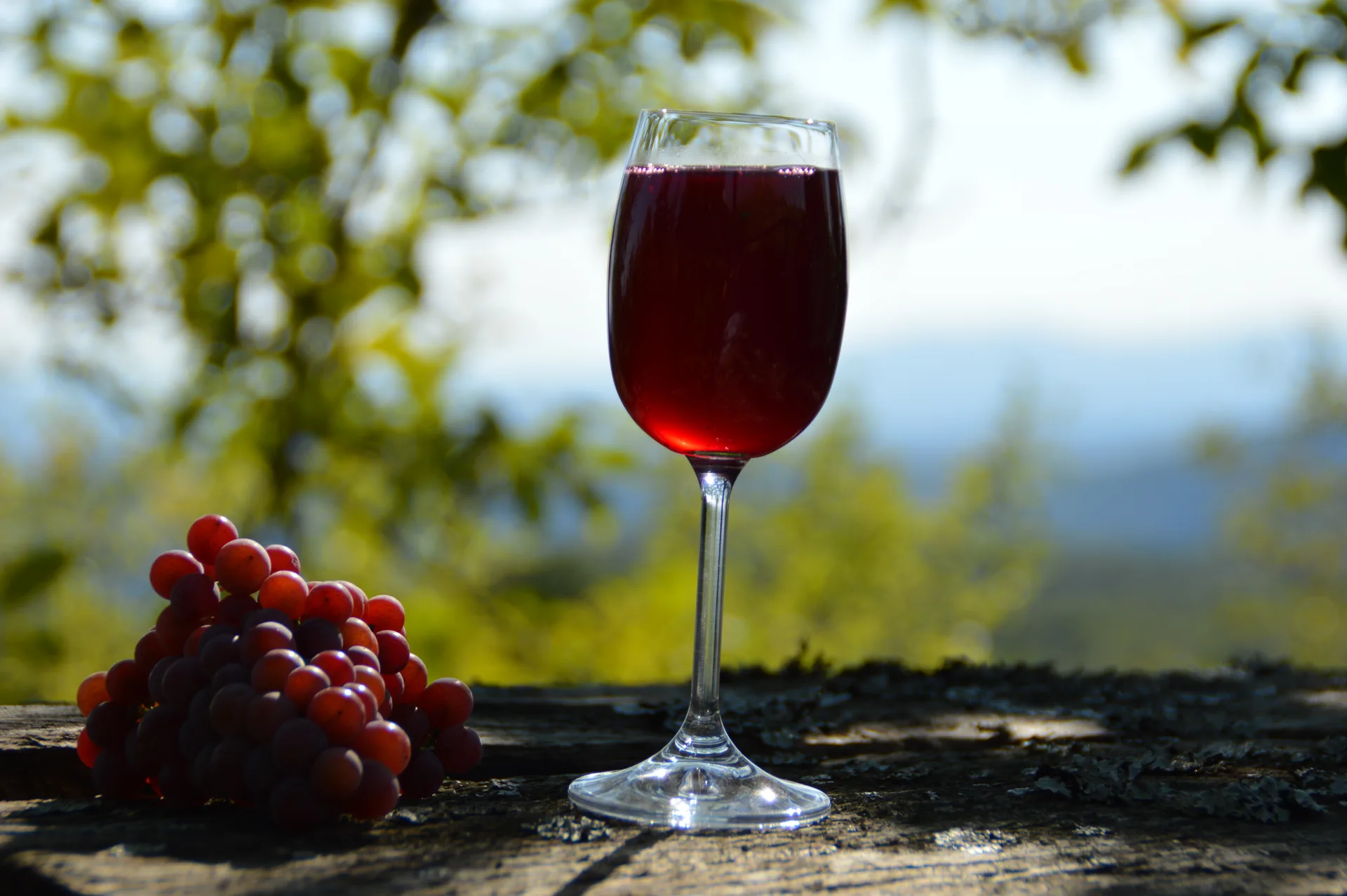
Red grapes account for about 40% of Georgian vineyards, but Saperavi so thoroughly dominates that most people never explore beyond it. That's a mistake. Georgia's red grapes range from light, almost rosé-like Tavkveri to the deeply concentrated Aleksandrouli of Racha.
7. Saperavi — The King
Region: Kakheti (primarily), grown everywhere
Style: Dry red, semi-sweet
Pronunciation: sa-peh-RAH-vee
Saperavi is Georgia's only red grape that matters on the global stage — and it deserves every bit of its reputation. The name means "dye" or "place of color," which tells you everything: this is one of the rare teinturier varieties in the world, meaning the flesh is red, not just the skin. Pour a glass and the wine is so dark it's nearly opaque. Look at it against light and you'll see deep purple-black with a crimson rim.
Young Saperavi hits you with blackberry, sour cherry, and black plum, backed by firm tannins and bracing acidity. With age — and good Saperavi ages beautifully for 15-20 years — it develops dark chocolate, leather, pipe tobacco, and dried herbs. The acidity keeps everything fresh even at full maturity.
The best single-varietal Saperavi comes from Kakheti's Mukuzani appellation (minimum 3 years oak aging) and Kindzmarauli (naturally semi-sweet, from late-harvest grapes on the left bank of the Alazani). Kindzmarauli is Georgia's most famous semi-sweet red — legitimately good when authentic, though mass-produced versions are syrupy and disappointing.
| Saperavi Style | Character | Aging |
|---|---|---|
| Young dry | Intense dark fruit, high tannin, bracing acid | Drink 2-5 years |
| Mukuzani | Structured, oak-aged, chocolate and spice | 5-15 years |
| Kindzmarauli | Semi-sweet, ripe plum, velvety | 1-5 years |
| Qvevri Saperavi | Earthy, rustic, dried fruit, long finish | 3-10 years |
| Napareuli | Medium body, softer tannins, red fruit | 2-8 years |
Pair with: Mtsvadi (grilled meat), chakapuli (lamb stew with tarragon), aged cheese, or just a plate of walnuts and tonis puri.
8. Tavkveri — The Lightweight
Region: Kartli, Kakheti
Style: Light red, rosé
Pronunciation: tav-KVEH-ree
Tavkveri is Georgia's answer to Beaujolais — a light, bright, cherry-scented red meant for drinking young and slightly chilled. It's the opposite of Saperavi: low tannin, low body, high drinkability. Think fresh raspberries, sour cherry, and a faintly earthy, balsamic note in the background.
Tavkveri also makes excellent rosé, and some producers are using it for sparkling wine with great results. It's the grape you want at a summer supra when the heavier reds start feeling like too much.
Pair with: Cold cuts, lobio, cheese-filled bread, light salads — or just drink it on a hot afternoon with nothing.
9. Aleksandrouli — The Racha Noble
Region: Racha-Lechkhumi
Style: Semi-sweet red, dry red
Pronunciation: ah-lek-san-DROO-lee
Aleksandrouli is half of the blend that makes Khvanchkara — arguably Georgia's most prestigious wine and allegedly Stalin's favorite (take that factoid with a grain of salt, but the wine is genuinely excellent). Grown exclusively in the micro-zone around Khvanchkara village in Racha, it produces naturally semi-sweet reds that are deeply colored, with pomegranate, dark cherry, and raspberry flavors balanced by crisp mountain acidity.
The "naturally semi-sweet" part is important: fermentation stops naturally due to cold mountain temperatures before all sugar converts to alcohol. No sugar is added. The result is nothing like industrial semi-sweet wine — it's structured, complex, and ages well.
Pair with: Blue cheese, chocolate desserts, walnuts, or sip after dinner on its own.
10. Mujuretuli — Aleksandrouli's Partner
Region: Racha-Lechkhumi
Style: Semi-sweet red (blended)
Pronunciation: moo-joo-reh-TOO-lee
You rarely see Mujuretuli alone — it's the other half of the Khvanchkara blend, adding darker fruit, more tannin, and deeper color to Aleksandrouli's elegance. The two grapes are traditionally grown together and co-fermented. Think of it as the bass to Aleksandrouli's melody.
A few producers have started bottling varietal Mujuretuli, and it's worth trying if you can find it — darker and more brooding than Aleksandrouli, with blackberry and plum compote notes.
11. Ojaleshi — The Rare Western Red
Region: Samegrelo (western Georgia)
Style: Semi-sweet red, dry red
Pronunciation: oh-ja-LEH-shee
Ojaleshi nearly went extinct in the 20th century. It's a finicky grape — late-ripening, disease-prone, and low-yielding. But when everything goes right, it produces one of Georgia's most distinctive reds: a semi-sweet wine with intense cherry, pomegranate, and wild berry aromas, layered with herbal and slightly smoky notes.
The name reportedly means "growing on a tree" — a reference to the traditional Megrelian practice of training vines up trees, which still exists in some old vineyards. Production is tiny. A bottle of genuine Ojaleshi from Samegrelo is a collector's piece.
Pair with: Megrelian cuisine — spicy adjika-laced dishes, elarji (cornmeal with cheese), satsivi.
12. Otskhanuri Sapere — The Sleeper Hit
Region: Imereti
Style: Medium-bodied red
Pronunciation: ots-kha-NOO-ree sa-PEH-reh
This Imeretian red grape is gaining serious attention from natural wine producers. It makes medium-bodied reds with fresh red fruit — cherry, cranberry, red currant — and an herbal, slightly peppery edge. The tannins are moderate, the acid is bright, and the overall impression is of a wine that's alive and energetic without being heavy.
It's sometimes compared to Pinot Noir, which is lazy but gets the weight roughly right. Better to say it tastes like nothing else — which is the point of drinking Georgian wine in the first place.
Pair with: Chicken tabaka, mushroom stews, mild cheese.
Rare and Revived Varieties
One of the most exciting things happening in Georgian wine right now is the revival of nearly-extinct grape varieties. Small producers are planting old vines from the National Grape Collection in Jighaura (which preserves 437 Georgian varieties), and wines from grapes nobody has tasted in generations are appearing at natural wine bars in Tbilisi.
Shavkapito
A dark Kartli red, nearly extinct until recently. Deep color, firm tannins, black fruit. Some producers now bottling single-varietal versions.
Dzelshavi
Light, aromatic Imeretian red. Delicate floral nose, strawberry and rose petal. Think of it as Imereti's answer to Tavkveri.
Khikhvi
Ancient Kakhetian white. Rich, honeyed, and waxy in qvevri. Some of the most exciting amber wines being made today use this grape.
Aladasturi
Rare western Georgian red. Light-bodied, tart, bright — revived by a handful of natural wine producers. Limited production.
Quick Reference Table
| Grape | Color | Region | Key Flavors | Best In |
|---|---|---|---|---|
| Rkatsiteli | White | Kakheti | Green apple, quince, honey (qvevri) | Qvevri amber |
| Mtsvane | White | Kakheti | Jasmine, pear, citrus blossom | Qvevri amber |
| Kisi | White | Kakheti | Beeswax, dried flowers, almond | Qvevri amber |
| Chinuri | White | Kartli | Green apple, mint, white flowers | Sparkling, pét-nat |
| Tsolikouri | White | Imereti | Yellow plum, melon, herb | Dry or semi-sweet |
| Krakhuna | White | Imereti | Citrus peel, green almond, pepper | Skin-contact |
| Saperavi | Red | Kakheti | Blackberry, plum, chocolate, tobacco | Oak-aged dry |
| Tavkveri | Red | Kartli | Cherry, raspberry, balsamic | Light red, rosé |
| Aleksandrouli | Red | Racha | Pomegranate, dark cherry, raspberry | Khvanchkara blend |
| Mujuretuli | Red | Racha | Blackberry, plum compote | Khvanchkara blend |
| Ojaleshi | Red | Samegrelo | Cherry, pomegranate, herbal, smoky | Semi-sweet |
| Otskhanuri Sapere | Red | Imereti | Cherry, cranberry, pepper, herbs | Natural wine |
Regions and Their Grapes
Georgia's wine regions each have distinct personalities, and understanding them helps make sense of the grapes.
| Region | Climate | Key Grapes | Style |
|---|---|---|---|
| Kakheti | Continental, warm | Rkatsiteli, Mtsvane, Kisi, Saperavi | Full-bodied, qvevri amber, structured reds |
| Kartli | Continental, cooler | Chinuri, Tavkveri, Shavkapito | Crisp whites, sparkling, light reds |
| Imereti | Subtropical, humid | Tsolikouri, Krakhuna, Otskhanuri Sapere | Fruit-forward whites, shorter skin contact |
| Racha-Lechkhumi | Mountain, cool | Aleksandrouli, Mujuretuli, Tsolikouri | Naturally semi-sweet reds, crisp whites |
| Samegrelo | Subtropical, wet | Ojaleshi | Rare semi-sweet reds |
What to Order: A Decision Guide
Staring at a Georgian wine list with unfamiliar names can be paralyzing. Here's a shortcut based on what you actually want to drink.
Want something familiar?
European-style Rkatsiteli (dry, crisp white) or young Saperavi (bold red). These are the gateway grapes.
Ready for amber wine?
Qvevri Kisi or Mtsvane. Approachable, aromatic, and complex without the tannic intensity of Rkatsiteli amber.
Like it light and fun?
Tavkveri (light red or rosé) or Chinuri sparkling. Chill them. Drink on a terrace.
Seeking something rare?
Ojaleshi, Khikhvi amber, or Otskhanuri Sapere. Ask your sommelier — they'll light up.
Semi-sweet, done right?
Khvanchkara (Aleksandrouli-Mujuretuli blend) or Tvishi (Tsolikouri). Both are naturally semi-sweet, not sugared.
Dinner party showstopper?
Aged Mukuzani (Saperavi, 3+ years oak). Georgia's most serious red, competitive with top Barolo at a fraction of the price.
Buying Georgian Wine: What to Know
Georgian wine is still remarkably cheap — even at Tbilisi's best wine bars, a glass of excellent qvevri wine runs 15-25 GEL ($5-9). But navigating the market takes some knowledge.
The Mass-Production Problem
Georgia's biggest wine factories (Teliani Valley, Tbilvino, etc.) produce enormous volumes for export, especially to Russia and the former Soviet market. These wines are often mediocre and give Georgian wine a bad reputation abroad. Skip anything under 10 GEL in a supermarket. The good stuff comes from small family producers — look for names like Pheasant's Tears, Iago's Wine, Lapati, Orgo, Gotsa, Baia's Wine, or Nikoladzeebis Marani.
| Where to Buy | Price Range | What You'll Find |
|---|---|---|
| Wine shops (Tbilisi) | 20-80 GEL | Curated selection, knowledgeable staff, small producers |
| Direct from cellars | 15-50 GEL | Best prices, unique vintages, can taste before buying |
| Supermarkets | 5-30 GEL | Mass-produced mostly, some decent bottles — stick to 15+ GEL |
| Wine bars (by glass) | 15-30 GEL/glass | Best way to explore variety before committing to bottles |
Best Wine Bars in Tbilisi for Grape Exploration
Vino Underground (Tabidze Street) is the epicenter of Georgia's natural wine movement — they serve only qvevri wines from small producers. g.Vino and Wine Gallery offer broader selections including European-style wines. Tell them what you normally drink and they'll guide you to the Georgian equivalent. Budget 50-80 GEL for a tasting session of 4-5 wines.
Food Pairing Cheat Sheet
Georgian food and wine evolved together over millennia, so the pairings are natural and intuitive. Here's the quick version.
| Dish | Best Grape | Why It Works |
|---|---|---|
| Khachapuri | Mtsvane amber or Chinuri | Cuts through cheese richness with acid and tannin |
| Khinkali | Tavkveri or light Saperavi | Light enough for delicate dumplings, red fruit matches meat broth |
| Mtsvadi (grilled meat) | Mukuzani Saperavi | Tannin and char are best friends |
| Pkhali / Badrijani | Kisi amber or Rkatsiteli | Walnut paste needs wine with body and nuttiness |
| Lobio | Tsolikouri or Chinuri | Earthy beans need a refreshing white counterpoint |
| Shkmeruli | Rkatsiteli amber | Garlic cream sauce meets honey-walnut amber wine — magic |
| Churchkhela / desserts | Khvanchkara | Natural sweetness matched, not overpowered |
Frequently Asked Questions
What's the difference between amber and orange wine?
Same thing. "Amber wine" is the Georgian term (preferred locally), "orange wine" is the international marketing term. Both mean white grapes with extended skin contact. Georgians have been making it for 8,000 years — the rest of the world caught on about 20 years ago.
How many grape varieties does Georgia really have?
Over 525 documented indigenous varieties, of which about 40 are in commercial production. The National Grape Collection in Jighaura preserves 437 varieties for research and revival.
Is Georgian wine natural?
Traditional qvevri wine is inherently "natural" — no additives, no temperature control, minimal intervention. But not all Georgian wine is qvevri wine. Many producers use European methods. Both approaches can be excellent — it depends on the producer, not the method.
Can I bring Georgian wine home?
Yes. Most countries allow 2-3 bottles duty-free. Georgian wine is surprisingly hard to find abroad, so stock up. Wine shops in Tbilisi will pack bottles for travel. Keep them upright in your carry-on if possible.
What's the best grape to start with?
If you drink white wine: start with Kisi in qvevri. If you drink red: start with a mid-range Saperavi (Mukuzani appellation). If you're adventurous: go straight to amber Rkatsiteli. If none of this sounds familiar: just go to Vino Underground and trust the staff.
Written by The Georgian Eats Team
We've spent years drinking our way through Georgian wine — from supermarket Saperavi to rare single-vineyard Ojaleshi. Our tasting notes come from actual glasses, not press releases. Based in Tbilisi.
Last updated: February 2026.
Related Articles
Saperavi Wine Guide
Georgia's flagship red grape explained properly — styles, appellations, pairings, and what to buy.
The Georgian Supra
A guide to the world's greatest feast — and the wine that fuels it.
Georgian Cheese Guide
Every variety worth knowing — and what wine to pair them with.
Adjarian Khachapuri
The iconic cheese boat — perfect with a glass of amber Mtsvane.