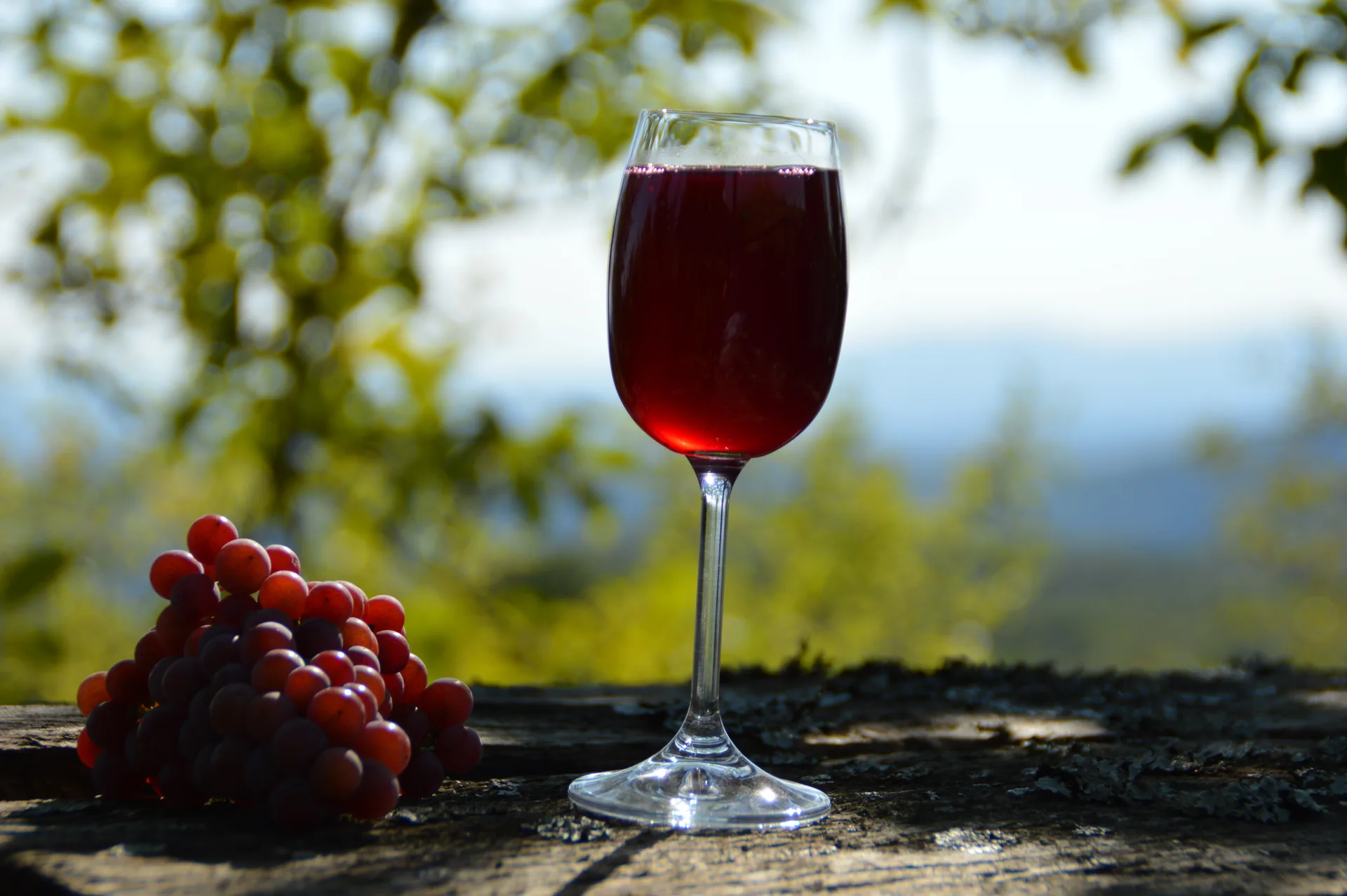
If Georgia had a national dumpling — and it basically does — khinkali would be it. These massive, pleated soup dumplings are filled with seasoned meat and hot broth, eaten with bare hands, and judged by the number of pleats on top. They're messy, satisfying, and the subject of more passionate arguments than Georgian politics. They're essential at any Georgian supra and a cornerstone of Georgian cuisine. This is how you make them properly.
Khinkali Quick Facts
- Georgian name: ხინკალი (khin-KAH-lee)
- Origin: Pshavi-Khevsureti mountains, northern Georgia
- Traditional filling: Beef/pork mix with onion, cumin, chili flakes
- Ideal pleat count: 19–21 (debated fiercely)
- Typical serving: 5–10 per person (yes, really)
- Cost in Georgia: 0.50–0.80 GEL each (~$0.18–0.30 USD)
- How to eat: By hand. Upside down. Bite, slurp, repeat.
Mountain vs. City: The Two Schools
There are two fundamentally different khinkali traditions, and Georgians will argue about which is "real" until the sun explodes.
⛰️ Mtiuluri (Mountain-Style)
- • Meat only — no herbs whatsoever
- • Beef, pork, or lamb (or mixed)
- • Heavy on cumin, black pepper, chili
- • Thick, chewy dough
- • More broth inside — extremely juicy
- • The "purist" choice
🏙️ Kalakuri (City-Style)
- • Meat plus fresh herbs (cilantro, parsley)
- • Usually beef/pork mix
- • Same cumin and pepper base
- • Slightly thinner dough
- • Herbs add fresh, green flavor
- • What most restaurants serve
This recipe covers both — the herb addition is optional. Start with mountain-style for the authentic, intensely meaty experience. Add herbs once you've mastered the basics.
Ingredients
Makes approximately 30–35 khinkali (serves 4–5 people)
🫓 Dough
| All-purpose flour | 500g (4 cups) |
| Water (room temperature) | 250ml (1 cup) |
| Egg | 1 large |
| Salt | 1 tsp |
🥩 Filling
| Ground beef | 300g |
| Ground pork | 200g |
| Onions, finely minced | 2 medium |
| Cold water or beef broth | 150–200ml |
| Ground cumin | 1½ tsp |
| Black pepper | 1 tsp |
| Red chili flakes | ½–1 tsp |
| Salt | 1½ tsp |
| Garlic, crushed | 3 cloves |
| Optional (city-style): | |
| Fresh cilantro, chopped | ½ cup |
| Fresh parsley, chopped | ¼ cup |
The Water in the Filling Is NOT Optional
Adding cold water or broth to the raw meat mixture is what creates the soup inside the dumpling. It seems wrong — why would you add liquid to ground meat? Because when the khinkali boils, the liquid combines with the meat juices and fat to create the signature broth. Skip it and you'll get a dry meat ball inside a dough wrapper. That's not khinkali — that's a mistake.
The Dough
Khinkali dough is intentionally sturdy. It needs to hold a ball of raw meat and hot soup without tearing. This is not the place for delicate pasta skills.
Step 1: Mix
Combine the flour and salt in a large bowl. Make a well in the center. Beat the egg with the water and pour it into the well. Mix with a fork, gradually pulling flour from the edges, until a shaggy dough forms.
Step 2: Knead
Turn out onto a floured surface and knead for 10–12 minutes. This is longer than most doughs — the gluten development matters. You want a smooth, elastic ball that bounces back when poked. It will feel stiff compared to bread dough. That's correct.
Step 3: Rest
Wrap in plastic (or cover with a damp towel) and rest at room temperature for at least 30 minutes. An hour is better. The gluten relaxes, making the dough easier to roll without it springing back.
Dough Consistency Check
The dough should feel like Play-Doh — firm, smooth, not sticky. If it's too wet, add flour a tablespoon at a time. If it tears when you stretch it, knead longer. The windowpane test works here: stretch a small piece thin enough to see light through without tearing.
The Filling (Where the Broth Comes From)
This is the heart of khinkali. Get this right and your dumplings will be juicy, flavorful, and produce that telltale gush of hot broth when you bite in.
Step 1: Prep the Aromatics
Mince the onions as finely as humanly possible. You want them practically dissolved. If you have a food processor, pulse them — but stop before they become a liquid. Crush the garlic into a paste with the flat side of your knife and a pinch of salt.
Step 2: Combine
In a large bowl, mix the ground beef and pork by hand. Add the onions, garlic paste, cumin, black pepper, chili flakes, and salt. Mix thoroughly — you want the spices evenly distributed through every bite.
Step 3: Add the Liquid
Here's the part that feels wrong: add the cold water (or broth) to the meat mixture, a little at a time, mixing with a fork after each addition. The meat will look loose and almost soupy. That's exactly right. Add the herbs now if you're going city-style.
Step 4: Chill
Cover and refrigerate for at least 30 minutes (while your dough rests). Cold filling is easier to work with and holds its shape better during assembly.
Why Cold Filling Matters
Cold filling firms up slightly, making it easier to scoop and place on the dough circles. It also gives you more working time before the fat in the meat softens and makes everything slippery. Take the filling out of the fridge only when you're ready to assemble.
Shaping & Pleating
This is where khinkali go from "just dumplings" to an art form. The pleating takes practice. Your first batch will look rough. By your third batch, you'll be counting pleats with pride.
Step 1: Roll the Dough
Divide the rested dough into 3–4 pieces. Work with one piece at a time, keeping the rest covered. Roll one piece into a thin sheet, about 2–3mm thick. Not paper-thin — khinkali dough needs to withstand boiling without tearing.
Step 2: Cut Circles
Using a round cutter, glass, or bowl (approximately 10–12cm / 4–5 inches diameter), cut circles from the dough. Re-roll scraps once.
Step 3: Fill
Place approximately 1 generous tablespoon of filling in the center of each circle. Don't overfill — you need enough dough border to pleat closed. Underfilling is almost as bad — nobody wants a thick dough pillow with a marble of meat inside.
Step 4: Pleat
Hold the filled circle in one hand. With the other hand, lift one edge of the dough and fold it toward the center, pinching to secure. Continue around the circle, making small pleats that overlap slightly — like folding a fan, all directed to the center top. Once all pleats meet in the middle, twist the gathered dough to seal it tightly. This twisted knob is the kudi (კუდი) — the "tail" or handle.
Pleating Tips from Georgian Grandmothers
- • The 19-pleat rule: Traditional khinkali have 19 pleats. Some say 21. Nobody agrees. Aim for at least 15.
- • Keep your fingers dry: Raw meat on your fingers = dough won't stick. Wipe your hands constantly.
- • Don't stress the first batch: Your first 5 will look ugly. They'll still taste incredible. By #20, your hands will know what to do.
- • Seal aggressively: The twist at the top must be tight. Any gap and the broth escapes. Pinch, twist, and pinch again.
Step 5: Stage
Place finished khinkali on a well-floured surface or parchment-lined tray, spaced apart so they don't stick. Cover with a tea towel.
Cooking
Use the largest pot you own, filled with generously salted water. Khinkali need room to float without crowding. Cook in batches of 6–8 maximum.
- Bring water to a rolling boil. Add salt (about 1 tablespoon per liter) and 2 bay leaves.
- Lower khinkali gently into the water, one at a time. Stir very gently with a wooden spoon immediately — this prevents sticking to the bottom.
- Reduce to a gentle boil — not a violent one. Vigorous boiling can burst your dumplings.
- Cook for 8–10 minutes after the khinkali float to the surface (they sink first, then float — that's normal).
- Remove with a slotted spoon — never pour out the water with the dumplings.
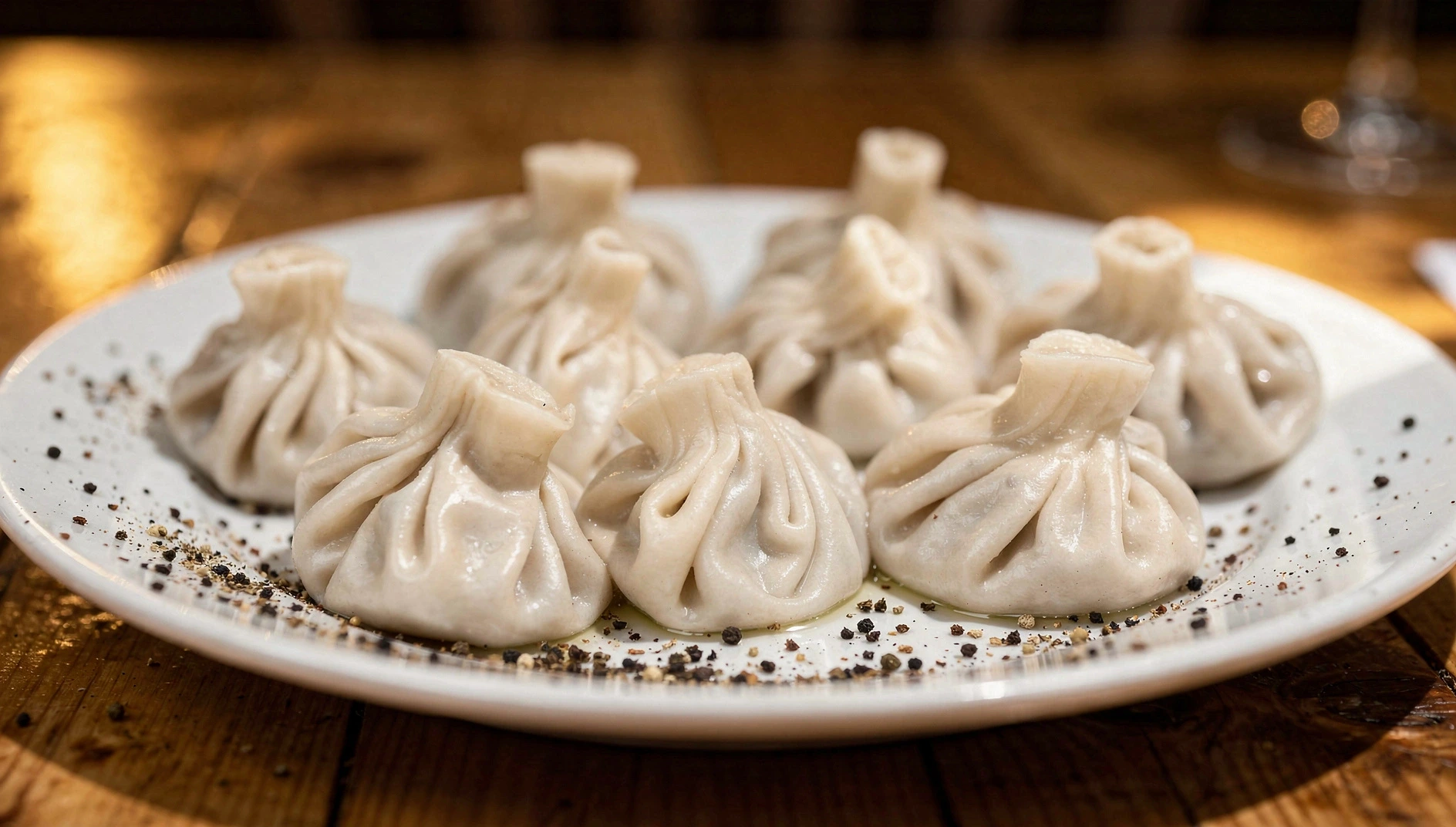
Place on a plate or wooden board. Crack fresh black pepper on top immediately. That's the traditional garnish and it's non-negotiable.
| Stage | Time | Notes |
|---|---|---|
| Dough kneading | 10–12 min | Until smooth and elastic |
| Dough resting | 30–60 min | Longer is better |
| Filling prep | 10 min | Chill 30 min after |
| Assembly (30 dumplings) | 40–60 min | Gets faster with practice |
| Boiling per batch | 10–12 min | 8 min after they float |
| Total | ~2.5–3 hours | First time. Gets faster. |
How to Eat Khinkali (The Rules)
This is serious. Eating khinkali wrong in Georgia will earn you looks. There's a correct technique, and it exists for a reason — the broth.
The Correct Way to Eat Khinkali
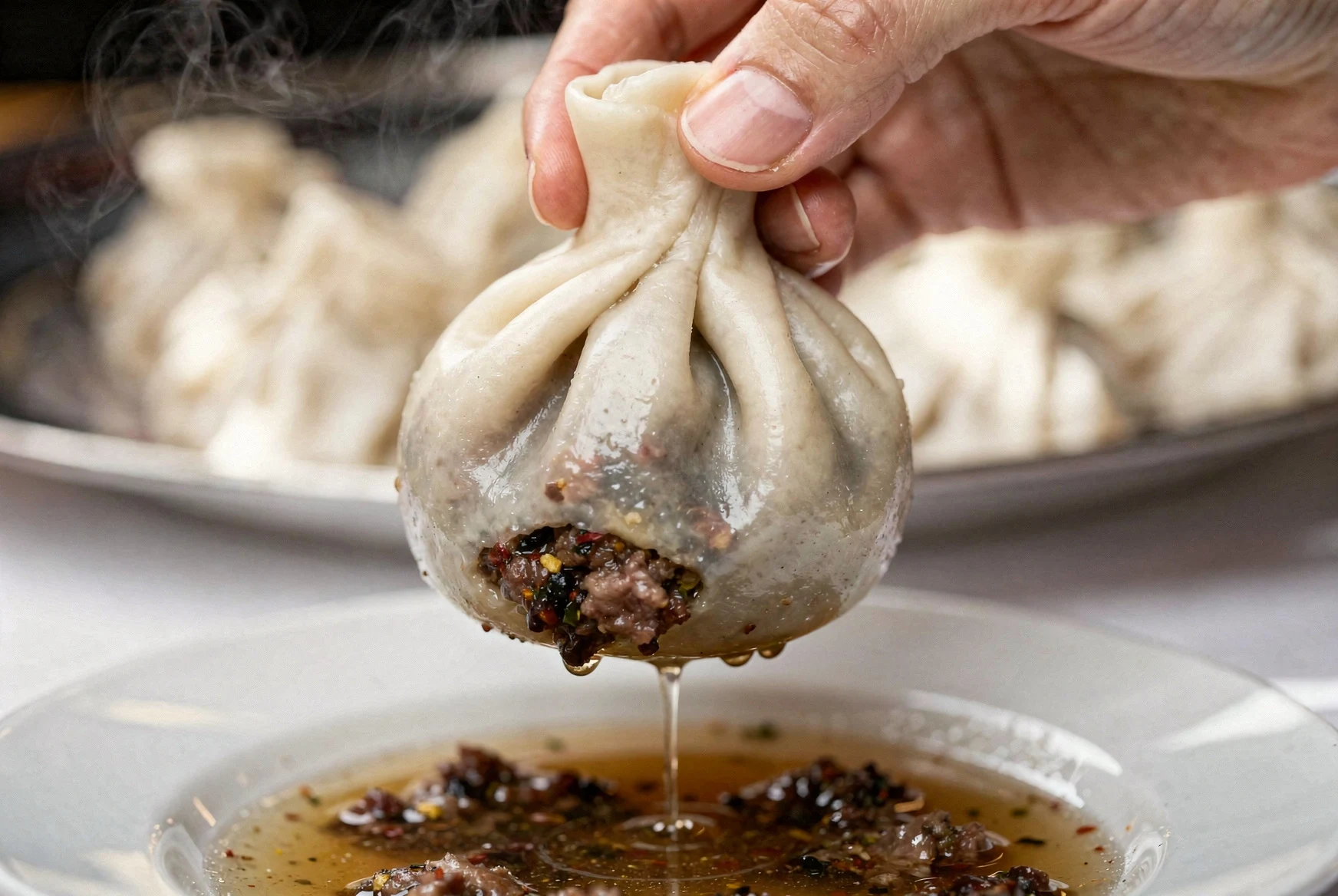
- 1. Pick it up by the kudi (tail). Use your hand. A fork will puncture the dough and the broth spills out — defeating the entire purpose.
- 2. Flip it upside down. The broth pools at the bottom. You want it where your mouth is going to be.
- 3. Take a small bite from the side. Not huge — just enough to create an opening.
- 4. Slurp the broth. Carefully — it's hot. This is the best part. The concentrated, cumin-scented meat broth is one of the great pleasures of Georgian cuisine.
- 5. Eat the dumpling. The meat, the dough, the remaining broth — all of it.
- 6. Leave the kudi on your plate. The twisted top knob is thick dough, not meant to be eaten. Counting the kudis is how Georgians keep score.
Cardinal Sins of Khinkali Eating
- • Using a knife and fork. The worst offense. You will be corrected.
- • Eating the kudi. It's the handle, not the food.
- • Letting the broth leak onto the plate. If broth is pooling, you have failed.
- • Putting sauce inside. Khinkali are a complete flavor system. No ketchup. No soy sauce. Just black pepper.
Variations & Fillings
The beef/pork meat khinkali is the classic, but Georgian restaurants typically offer several fillings:
🥩 Meat (კალაკური / მთიულური)
The standard. Beef/pork or lamb. Mountain-style (no herbs) or city-style (with cilantro/parsley). This recipe.
🧀 Cheese (ყველით)
Filled with sulguni or a soft Georgian cheese blend. Lighter, slightly rubbery texture. Popular with kids.
🍄 Mushroom (სოკოთი)
Finely chopped mushrooms sautéed with onions and herbs. The vegetarian favorite. Surprisingly good — earthy and savory.
🥔 Potato (კარტოფილით)
Mashed potato with butter and herbs. Comfort food in dumpling form. Some people add cheese. Not traditional but no one complains.
Troubleshooting
Khinkali keep opening during boiling?
Three possible causes: (1) The seal isn't tight enough — twist harder and pinch. (2) Raw meat juice got on the dough edges, preventing them from sticking. (3) The boil is too vigorous — reduce to a gentle simmer.
No broth inside the cooked dumpling?
You didn't add enough water to the filling. The filling should feel loose and almost soupy when raw. Also make sure your meat has some fat — very lean meat produces less juice.
Dough too thick / chewy?
Roll thinner — aim for 2–3mm. Also check your resting time. Under-rested dough is tougher. 30 minutes is the absolute minimum; an hour is significantly better.
Dumplings sticking to the pot bottom?
You forgot to stir gently right after adding them. The first 30 seconds are critical — use a wooden spoon to nudge them off the bottom.
Can I freeze uncooked khinkali?
Yes! Flash-freeze on a tray first, then transfer to bags. Cook from frozen — add 2–3 extra minutes of boiling time. Georgian families routinely make 100+ at a time and freeze half.
Where to Eat Khinkali in Georgia
If you're traveling to Georgia (and you should), here are the spots where locals actually eat khinkali. Tourist restaurants in Old Town Tbilisi serve passable versions, but for the real thing:
Zakhar Zakharich
Tbilisi — Multiple locations
The most famous khinkali spot in Tbilisi. Always packed, usually a wait. Their mountain-style khinkali are enormous, juicy, and perfectly spiced. Order 10 and don't pretend you'll share.
Pasanauri
Tbilisi — Vake district
Named after the village considered the birthplace of khinkali. Large portions, cheap prices, no-frills atmosphere. This is where university students fuel up.
The Village of Pasanauri Itself
Georgian Military Highway — 2 hours north of Tbilisi
The tiny mountain village on the road to Kazbegi where khinkali are said to have been perfected. Every roadside restaurant here specializes in them. Stop on your way to Kazbegi — it's the best lunch break in Georgia.
Shinvali & Ananuri Area
Georgian Military Highway — before Pasanauri
Roadside khinkali restaurants compete fiercely. Prices are rock-bottom (0.50 GEL per dumpling), portions are massive, and the views of the Ananuri fortress across the reservoir make the meal.
Written by The Georgian Eats Team
We eat Georgian food every day — not as tourists, but as residents. Our recipes come from real kitchens, real grandmothers, and years of trial and error in Tbilisi.
Last updated: February 2026.