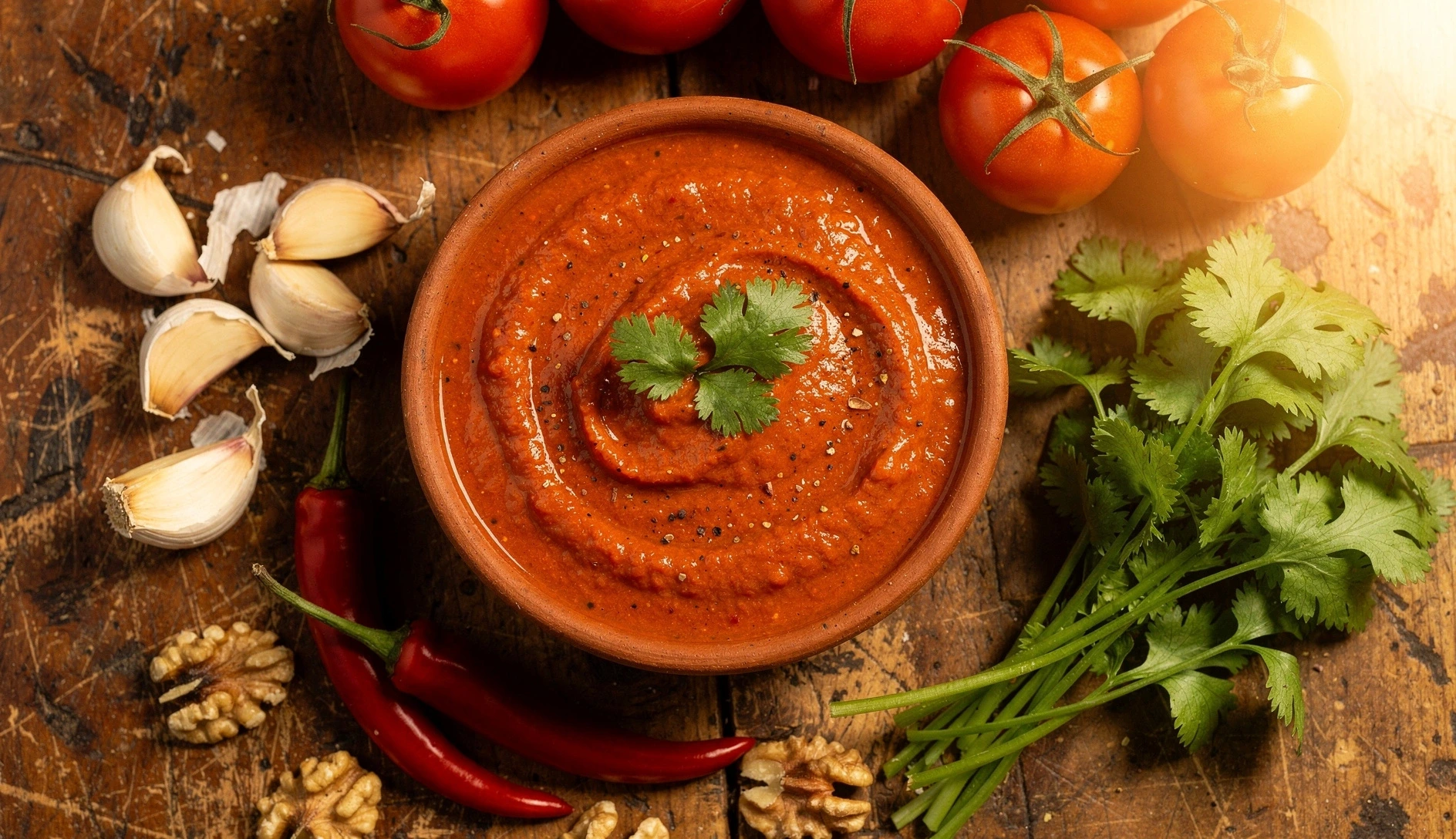
The word "satsebeli" literally means "sauce" in Georgian. Which tells you everything about its status — it's not a sauce, it's the sauce. Walk into any restaurant, supermarket, or grandmother's kitchen in Georgia, and you'll find a version of this tomato-walnut-herb condiment waiting on the table. It sits next to tkemali and adjika as part of the holy trinity of Georgian sauces, but satsebeli is the one that works with absolutely everything. Richer than ketchup, more complex than salsa, and somehow both bright and earthy at the same time. Fresh tomatoes, toasted walnuts, raw garlic, cilantro by the fistful, and enough Georgian spices to make it unmistakably Caucasian. Twenty minutes of work, and you'll never buy bottled tomato sauce again.
Satsebeli Quick Facts
- Georgian name: საწებელი (sa-TSE-be-li) — literally "sauce"
- What it is: Tomato-walnut-herb sauce — Georgia's universal condiment
- Key ingredients: Tomatoes, walnuts, garlic, cilantro, coriander, chili
- Prep + cook time: 15 min prep, 25 min cooking
- Yield: ~500ml from 1kg tomatoes
- Difficulty: Easy — barely more effort than making pasta sauce
- Shelf life: 2 weeks refrigerated, months frozen
What Is Satsebeli
If you've eaten at a Georgian restaurant, you've had satsebeli — even if you didn't know the name. It's the reddish-orange sauce in the small bowl that arrives without you ordering it, the one you dip bread into while waiting for khinkali, drizzle over mtsvadi, and eventually find yourself spooning directly onto rice because it makes everything better.
At its simplest, satsebeli is cooked tomatoes, garlic, cilantro, and Georgian spices. But the versions worth eating go further: ground walnuts for body and richness, fresh hot chili or adjika paste for heat, blue fenugreek and marigold for that distinctly Georgian flavor profile, and sometimes pomegranate juice for a sweet-tart edge. The result is something that sits between ketchup and salsa but is fundamentally neither — thicker than a Mexican table sauce, more complex than anything Heinz ever dreamed of.
Unlike tkemali (fruit-based, bracingly sour) or adjika (raw chili paste, punishingly hot), satsebeli is the approachable one. It has enough sweetness from ripe tomatoes to win over anyone, enough heat to keep things interesting, and enough depth from walnuts and spices to make cooks ask what's in it.
The Georgian Sauce Trinity
Georgian cooking runs on three sauces. Every table has at least one, and serious households keep all three. Here's how they compare:
| Sauce | Base | Flavor Profile | Heat Level | Best With |
|---|---|---|---|---|
| Satsebeli | Tomato + walnuts | Sweet, savory, herby | Mild to medium | Everything — the universal sauce |
| Tkemali | Sour plums | Tart, sharp, fruity | Low | Grilled meat, potatoes, beans |
| Adjika | Raw chili peppers | Hot, garlicky, pungent | High | Stews, rubs, cheese, bread |
Satsebeli Is Also a Family Name
Confusingly, "satsebeli" is both a specific tomato sauce and a generic term for any Georgian sauce. When Georgians say "satsebeli," they usually mean the tomato version. But technically, tkemali is a satsebeli. Walnut sauce is a satsebeli. Even satsivi is a satsebeli. Context makes it clear. When a recipe says "serve with satsebeli," they mean this one — the tomato sauce.
Ingredients Deep Dive
Satsebeli lives or dies on ingredient quality. The recipe is simple enough that every component has nowhere to hide.
| Ingredient | Amount | Notes |
|---|---|---|
| Ripe tomatoes | 1 kg | The ripest, most flavorful you can find. Roma, heirloom, or vine-ripened. |
| Walnuts | 100 g | Toasted and ground fine. Adds body, richness, slight bitterness. |
| Garlic | 6-8 cloves | Fresh only. This isn't the place for garlic powder. |
| Fresh cilantro | Large bunch (~40 g) | Stems and leaves both. Added raw at the end for maximum flavor. |
| Fresh basil | ~15 g | Purple basil preferred — more peppery, more Georgian. |
| Hot chili | 1-2 peppers | Red chili or 1 tsp adjika paste. Adjust to your taste. |
| Ground coriander | 2 tsp | Toast and grind whole seeds yourself if possible — night and day difference. |
| Blue fenugreek | 1 tsp | Utskho suneli — the signature Georgian spice. No real substitute exists. |
| Khmeli suneli | 1 tsp | Georgian spice blend. Optional but recommended. See spice guide. |
The Tomato Question
This is the single most important decision you'll make. Georgian grandmothers make satsebeli in late summer when tomatoes are at their peak — sweet, deeply red, bursting with juice when you slice them. If you're making this with mealy, pale supermarket tomatoes in February, the result will taste like it. Options, ranked:
🥇 Peak-Season Fresh Tomatoes
The real deal. Heirlooms, vine-ripened, farmers market finds. If they smell like tomato vines, you're golden.
🥈 Canned San Marzano
Off-season, good canned tomatoes beat bad fresh ones every time. Use whole peeled San Marzano. Drain the juice first.
🥉 Tomato Paste + Water
The quick Georgian shortcut. 3-4 tbsp paste dissolved in 500ml water. Works, but you lose the fresh tomato character.
❌ Ketchup
No. The whole point of making satsebeli is that it's not ketchup. Don't shortcut it this badly.
The Walnut Debate
Not every satsebeli recipe includes walnuts. The simpler versions — especially restaurant versions and the jarred stuff you buy at the bazaar — skip them entirely. But the traditional village versions, the ones Georgian women make in September and jar in bulk, almost always include ground walnuts. They add a richness and body that tomatoes alone can't provide. The sauce clings to food differently, coats the tongue, and has a depth that the walnut-free version lacks. Use them.
Sourcing Georgian Spices
Blue fenugreek (utskho suneli) and ground marigold (imeruli shaphrani/Georgian saffron) are what make Georgian food taste Georgian. If you live outside the Caucasus, you can find them at Russian/Georgian grocery stores, Amazon, or specialty spice shops. There's no real substitute for blue fenugreek — it has a warm, nutty, slightly bitter flavor that regular fenugreek can't replicate. Stock up. You'll use it in half the recipes on this site. See our complete guide to Georgian spices.
Step-by-Step Instructions
Step 1: Prep the Tomatoes
Score a shallow X on the bottom of each tomato with a sharp knife. Drop them into boiling water for 30-60 seconds — just until the skin starts to peel back at the cuts. Transfer immediately to a bowl of ice water. The skins will slip right off. Roughly chop the peeled tomatoes, saving all the juice.
If using canned tomatoes: drain them, reserve the juice, and crush by hand. You can add the juice back later if the sauce is too thick.
Step 2: Toast and Grind the Walnuts
Toast walnuts in a dry skillet over medium heat, stirring constantly, for 3-4 minutes until fragrant and slightly golden. Watch carefully — they go from toasted to burnt in seconds. Let cool, then grind to a fine paste. A food processor works. A mortar and pestle gives a more traditional, slightly coarse texture that's arguably better.
Step 3: Build the Base
If you're including onion (optional but recommended for depth), cook it in a splash of oil over medium-low heat until soft and translucent — 5-7 minutes. Don't rush this. You don't want color on the onion, just sweetness. Add the minced garlic and cook 30 seconds more, just until fragrant.
Some traditional recipes skip the onion entirely and add raw garlic later with the herbs. Both approaches work. The cooked onion version has more roundness and body. The raw garlic version is punchier and more aggressive.
Step 4: Cook the Tomatoes
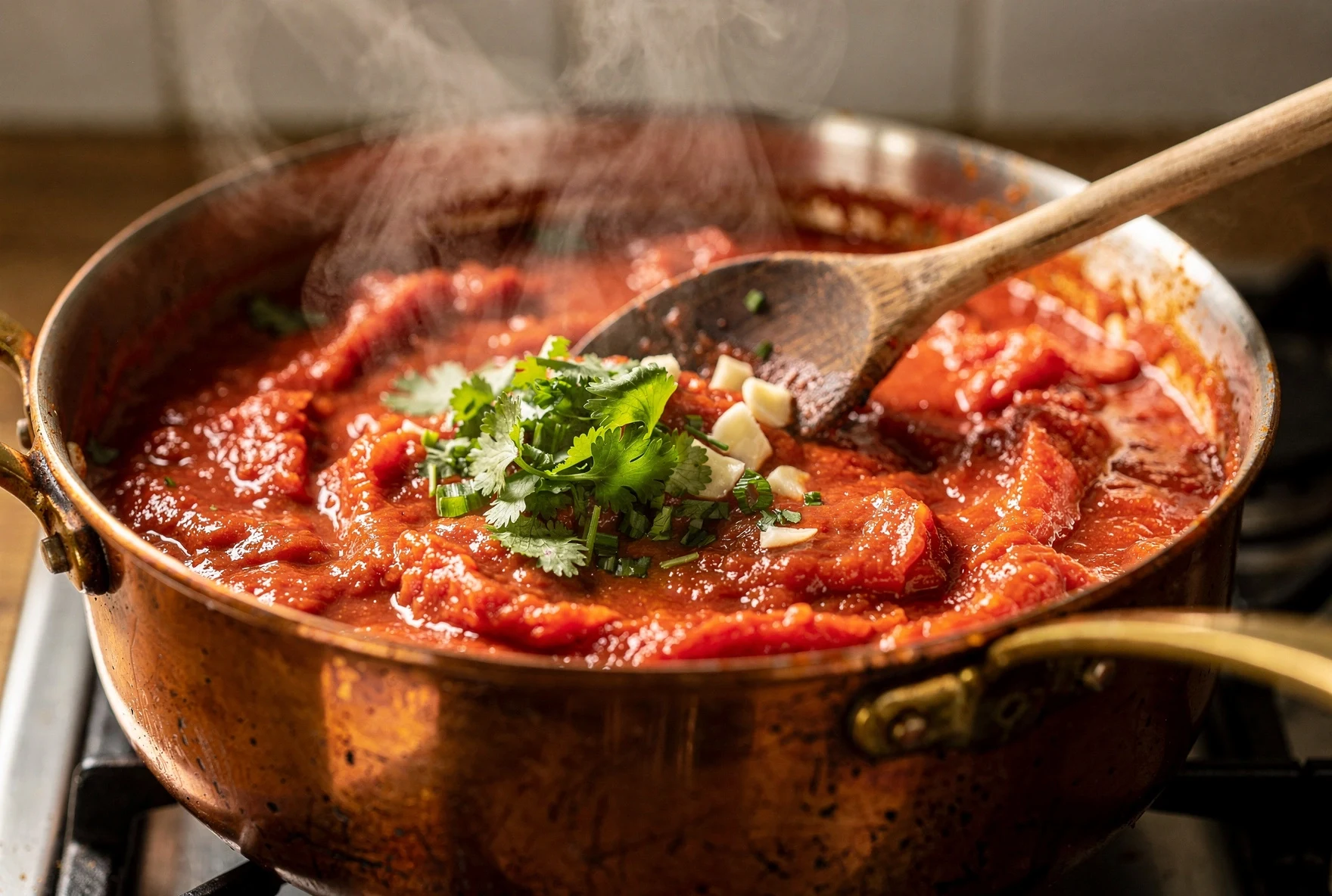
Add all the chopped tomatoes and their juices to the pot. Bring to a simmer over medium heat and cook for 15-20 minutes, stirring occasionally and crushing any large pieces with a wooden spoon. You're looking for a thick, saucy consistency — thicker than pasta sauce, thinner than paste. The tomatoes should be completely broken down with no large chunks remaining.
| Visual Cue | What It Means | Action |
|---|---|---|
| Very watery, light orange | Just started — too thin | Keep simmering, stir occasionally |
| Thickening, some chunks remain | Getting there — 10 more minutes | Mash chunks with wooden spoon, stir more frequently |
| Thick, deep red-orange, coats a spoon | Ready for spices | Add walnut paste and dry spices now |
| Very thick, spattering when stirred | Too thick — overdone | Add a splash of water to thin. Still usable. |
Step 5: Add Walnuts and Spices
Stir in the ground walnut paste, ground coriander, blue fenugreek, khmeli suneli, ground marigold, and minced chili. Simmer for 5-7 more minutes so the spices bloom and the walnuts integrate fully. The sauce will darken slightly and become noticeably more aromatic. Taste now and adjust salt.
Step 6: Finish with Fresh Herbs
Remove from heat. Stir in finely chopped cilantro and basil — stems and all for the cilantro, leaves only for the basil. This is critical: the herbs go in raw, off the heat. Cooking them destroys the fresh, bright flavor that defines good satsebeli. If you want more tang, add a splash of pomegranate juice or a tablespoon of red wine vinegar now.
Step 7: Rest and Store
Let the sauce cool completely before tasting critically. Like most Georgian sauces, satsebeli improves dramatically after resting. The flavors meld, the heat mellows slightly, and the herbs infuse the sauce over hours. Make it in the morning, eat it at dinner. Even better: make it today, use it tomorrow.
To Onion or Not to Onion
This is the great satsebeli debate. Georgian cooks divide sharply on whether satsebeli should contain onion. Here's the breakdown:
With Onion (Cooked Base)
Sweeter, rounder, more body. Closer to Western sauce-making. Most common in restaurant-style satsebeli. Our recipe includes it.
Without Onion (Raw Finish)
Brighter, sharper, punchier. Raw garlic and herbs hit harder. More traditional village style. Skip step 3 — add raw garlic with herbs in step 6.
Both are correct. Try both. You'll have a preference within two batches.
Regional Variations
Georgia is a small country with enormous culinary diversity. Satsebeli changes as you move across it:
🔥 Megrelian Style
Heavier on adjika paste, more garlic, more chili. Megrelian food is Georgia's spiciest regional cuisine. Their satsebeli follows suit — punchier, hotter, not for the timid.
🍇 Kakhetian Style
Adds unripe grape juice (abgora) or pomegranate juice for tartness. More walnuts. Sweeter, fruitier — Kakheti is wine country and they put grape in everything.
🌿 Green Satsebeli
Made with green (unripe) tomatoes, extra cilantro, and sometimes tomatillos. Sharper, tangier. A summer variation when green tomatoes are abundant.
🫙 Canning Style
The bulk September batch. More vinegar for preservation, cooked longer, processed in sterilized jars. Meant to last all winter. Every household makes 10-20 jars minimum.
Common Mistakes
❌ Using Bad Tomatoes
This is a tomato sauce. If the tomatoes taste like nothing, the sauce will taste like nothing. Use peak-season fresh or quality canned — never mealy, pale, off-season ones.
❌ Cooking the Herbs
Cilantro and basil go in raw, off the heat, at the very end. Cooking them turns their bright, fresh flavor into dull bitterness. This is the number one mistake.
❌ Skipping the Walnuts
Without walnuts, it's just spiced tomato sauce. The walnuts give it the richness, body, and texture that make satsebeli distinctly Georgian. Don't skip them.
❌ Not Resting the Sauce
Freshly made satsebeli tastes sharp and disjointed. After 4-6 hours (ideally overnight), the flavors meld into something unified and deeper. Patience pays.
❌ Making It Too Smooth
Satsebeli isn't a purée. It should have visible bits of herb, small walnut pieces, some texture. Don't blend it into baby food. Rustic is correct.
❌ Using Dried Cilantro
Dried cilantro is a completely different ingredient than fresh. It has none of the bright, citrusy punch that satsebeli needs. Fresh only, no exceptions.
What to Serve It With
The honest answer is "everything." But some pairings are more classic than others:
| Pairing | Why It Works | How to Serve |
|---|---|---|
| Mtsvadi (grilled pork) | Acid and herbs cut through smoky, fatty meat | Small bowl on the side for dipping |
| Khinkali | A tiny dip between bites — purists say unnecessary but everybody does it | On the side, a spoonful between dumplings |
| Fried potatoes | The Georgian equivalent of fries with ketchup — but better | Drizzle on top or dip |
| Shotis puri (bread) | Warm bread torn and dipped into sauce — the pre-meal ritual | Bread basket + satsebeli bowl, center of table |
| Lobio and mchadi | The acid cuts through rich beans; cornbread soaks up the sauce | Spoon alongside or drizzle over beans |
Storage and Shelf Life
| Method | Shelf Life | Notes |
|---|---|---|
| Refrigerator (jar) | 2 weeks | Best method for fresh batches. Use a clean spoon every time. |
| Freezer | 3-6 months | Freeze in ice cube trays, then bag. Defrost only what you need. |
| Canned (sterilized jars) | 6-12 months | Requires extra vinegar/acidity. How Georgian families store it for winter. |
Canning Satsebeli (September Tradition)
In late summer, when tomatoes are cheap and abundant, Georgian families make satsebeli in massive batches — 10, 20, even 50 jars. The process: cook a double or triple batch, add extra vinegar (2-3 tbsp per liter) for preservation, fill sterilized jars while the sauce is still hot, seal tight, and turn upside down to cool. Some families add a thin layer of sunflower oil on top before sealing. These jars line basement shelves and pantries, lasting through winter. It's Georgia's answer to Italian families canning tomato sauce — same energy, different spices.
Frequently Asked Questions
Can I make satsebeli with tomato paste instead of fresh tomatoes?
Yes — many Georgian home cooks do this as a quick weeknight version. Dissolve 3-4 tablespoons of tomato paste in about 500ml of water, then proceed from step 4. It won't have the fresh tomato sweetness of the full version, but it's a legitimate shortcut that's common in Georgia. Add a pinch more sugar to compensate.
What if I can't find blue fenugreek or khmeli suneli?
The sauce will still be good without them — just less distinctly Georgian. Ground fenugreek leaves (methi) are a distant substitute for blue fenugreek. For khmeli suneli, you can approximate with equal parts coriander, dried marigold, and a pinch of fenugreek. But honestly, order the real spices online. They keep for months and you'll use them constantly. Check our spice guide for sourcing.
Is store-bought satsebeli any good?
It's acceptable. Brands like Kinto and Soko make decent bottled versions that you can find in Russian/Georgian stores or on Amazon. They lack the fresh herb punch of homemade, but they're leagues better than ketchup. Fine for a weeknight dinner when you don't have 40 minutes to make the real thing.
How spicy should satsebeli be?
It varies. Restaurant versions are usually mild to medium — warm but not painful. Home versions, especially from western Georgia (Samegrelo, Adjara), can be significantly hotter. Start with one chili pepper or a teaspoon of adjika, taste after resting, and add more heat next batch if you want it. The sauce should have warmth, not burn.
Can I use this on non-Georgian food?
Absolutely. Satsebeli works anywhere you'd use ketchup, salsa, or marinara. Try it on burgers, scrambled eggs, grilled chicken, roasted vegetables, rice bowls, or as a pizza sauce. It's genuinely versatile — the walnut richness and fresh herb brightness improve nearly everything.
Written by The Georgian Eats Team
We've been making and eating satsebeli in Tbilisi for years — buying it from bazaar grandmothers, getting jars from Georgian friends in September, and eventually learning to make our own. This recipe is the version we keep coming back to.
Last updated: February 2026.
Related Articles
Tkemali: Georgia's Sour Plum Sauce
The tart, herb-packed plum sauce that sits next to satsebeli on every table.
Adjika: Georgia's Fiery Chili Paste
The third member of the sauce trinity — raw, hot, and addictive.
Essential Georgian Spices
Blue fenugreek, marigold, khmeli suneli — the spices that make Georgian food taste Georgian.
The Complete Georgian Food Guide
Everything you need to know about Georgian cuisine — dishes, customs, and how to eat like a local.