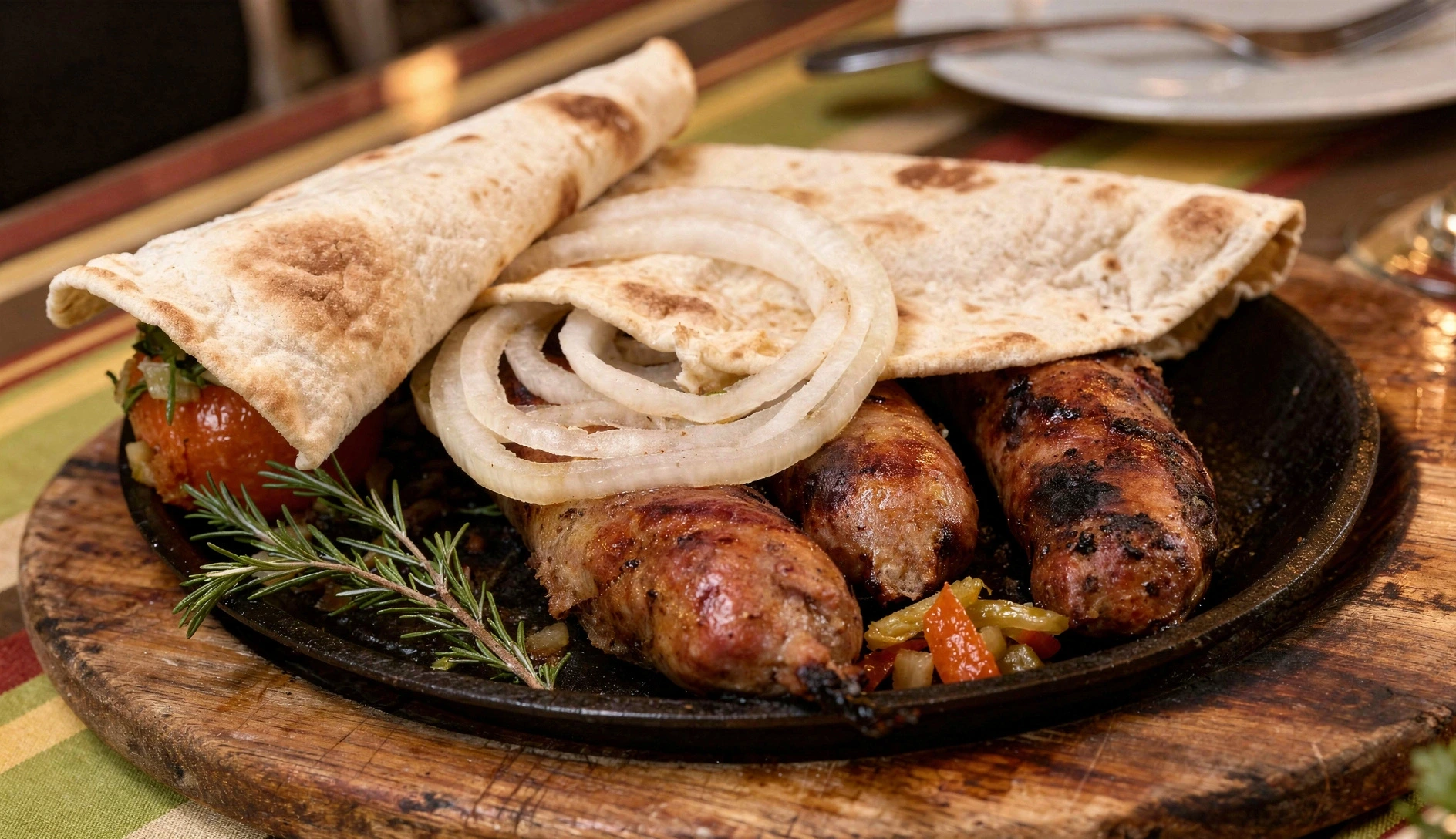
Kupati is the smell of every Georgian barbecue. Before you see the meat, before anyone pours the wine, you smell the kupati — pork fat hitting charcoal, blue fenugreek and coriander smoke curling through the air, casings splitting just enough to leak juice onto the coals. These are not delicate sausages. They're fat, coarse, aggressively spiced, and they come to you charred and splitting on a plate with nothing but raw onion and a slab of bread. That's all they need.
Kupati Quick Facts
- Georgian name: კუპატი (koo-PAH-tee)
- Origin: Western Georgia — Samegrelo and Imereti
- Key spices: Blue fenugreek (utskho suneli), coriander, summer savory, barberries
- Casing: Natural pork intestines — no substitutes
- Prep + cook time: 45 min prep, 25 min grilling (plus marinating)
- Cost in Georgia: 8–15 GEL in restaurants (~$3–5.50 USD)
- Difficulty: Moderate — the stuffing takes practice
What Makes Kupati Different
Every country with pigs makes sausages. What separates kupati from bratwurst, chorizo, or Italian sausage is the spice profile. Blue fenugreek (utskho suneli) is the signature — a warm, slightly bitter, earthy spice that doesn't exist in any other sausage tradition. Pair that with coriander seed, dried summer savory (kondari), and dried barberries for a faint tartness, and you have something that tastes specifically, unmistakably Georgian.
The other difference is texture. Kupati is coarsely ground — some families hand-chop the meat entirely. You can see and feel distinct pieces of pork in each bite, not the smooth paste of a hot dog or the fine grain of a bratwurst. Combined with the natural casing, which snaps when you bite through it, kupati has a rustic, substantial quality that makes mass-produced sausages feel like processed food (which, of course, they are).
Regional Variations
Like most Georgian dishes, kupati changes when you cross a mountain range. The recipe above follows the most common style, but families in different parts of the country have their own takes:
| Region | Meat | Distinctive Feature |
|---|---|---|
| Samegrelo | Pork + offal (liver, heart) | Spiciest version, heavy on adjika paste and chili |
| Imereti | Pork shoulder only | Most common version, balanced spicing |
| Kakheti | Pork + beef mix | Walnuts sometimes added to the filling |
| Tbilisi (modern) | Pork + cheese | Contemporary twist — sulguni stuffed inside |
The Samegrelo version is the boldest. Megrelians often include organ meats — liver and heart ground into the mix — which gives a richer, more mineral flavor. They also add adjika, the fiery Megrelian chili paste, making their kupati noticeably hotter than the Imeretian standard. If you order kupati at a restaurant in Zugdidi or Senaki, expect to sweat.
In Kakheti, some families fold ground walnuts into the meat mixture, which adds richness and a slightly creamy quality when the fat renders. This is less common now but worth trying if you ever get invited to a Kakhetian family table.
Ingredients Breakdown
Let's talk about what goes in and why each ingredient matters. Georgian sausage-making isn't about throwing spices at meat — every component has a function.
| Ingredient | Amount | Why It Matters |
|---|---|---|
| Pork shoulder | 1.5kg | The lean base — shoulder has the right fat marbling |
| Pork belly / fatty trim | 500g | Adds juiciness — without this, kupati dries out |
| Blue fenugreek | 1.5 tsp | THE defining Georgian spice — warm, earthy, slightly bitter |
| Coriander (ground) | 2 tsp | Citrusy warmth — toast whole seeds and grind for best flavor |
| Summer savory | 1 tsp | Peppery, thyme-like herb — called kondari in Georgian |
| Barberries | 1 tbsp | Tiny dried berries — add tart bursts that cut through the fat |
| Natural casings | ~3 meters | Pork intestines only — collagen casings won't snap properly |
Finding Blue Fenugreek Outside Georgia
Blue fenugreek (utskho suneli) is the hardest ingredient to source outside the Caucasus. It's NOT the same as regular fenugreek (methi). Look for it at Eastern European or Central Asian grocery stores, or order from Georgian spice sellers on Etsy or Amazon. The brand "Sanaeli" exports decent quality. If truly desperate, use half the amount of regular fenugreek seeds, toasted and ground — it's not the same, but it's closer than skipping it entirely.
Step-by-Step Instructions
Step 1: Prepare the Meat
Cut the pork shoulder and belly into chunks that fit your meat grinder. If you're grinding at home, keep the meat cold — even stick it in the freezer for 30 minutes before grinding. Warm meat smears through the grinder instead of cutting cleanly, and you end up with a paste instead of the coarse texture you want.
Grind through a medium-coarse plate (6-8mm holes). If you don't own a grinder, you can hand-chop the meat with a large knife — dice it into pieces roughly the size of lentils. This is actually the more traditional method and gives a superior texture, though it takes 20-30 minutes of chopping.
Step 2: Season the Filling
Finely chop the onions — you want them nearly minced, not chunky. Add them to the meat along with minced garlic, all the spices, salt, and pepper. Mix everything by hand (wearing gloves if you want) for a good 3-4 minutes. You're not just combining ingredients — you're developing a slight bind in the meat that helps it hold together inside the casing.
Add the warm broth a splash at a time. The filling should be moist and workable — if you squeeze a handful, it should hold its shape but feel soft, not dense. Too dry and the sausages will be tough. Too wet and they'll fall apart.
Test Your Seasoning
Before you stuff 2kg of meat into casings, fry a small patty in a pan and taste it. This is your one chance to adjust the salt and spice levels. Under-seasoned sausage is heartbreaking to discover after all the work of stuffing. The filling should taste slightly saltier than you think — cooking mellows it.
Step 3: Marinate (Don't Skip This)
Cover the bowl and refrigerate for at least 2-4 hours. Overnight is ideal. During this time, the salt penetrates the meat, the spices bloom, and the onion juice mingles with the pork fat. The difference between immediate stuffing and overnight marinating is dramatic — not subtle.
Step 4: Prepare the Casings
Natural pork casings come packed in salt. Rinse them thoroughly under cold running water, both inside and outside. The easiest way to rinse the inside is to fit one end over the faucet nozzle and run water through. Then soak them in warm water with a tablespoon of vinegar for 30 minutes. This softens them and removes any residual smell. Rinse one more time before using.
Before you start stuffing, run water through each casing to check for holes. If you find one, just cut there — you'll have two shorter casings instead of one long one. No big deal.
Step 5: Stuff the Sausages
This is the part that separates reading a recipe from actually making sausage. If you've never stuffed casings before, expect the first two to be ugly. That's fine — they'll taste the same.
Slide the entire length of casing onto your stuffing nozzle (a sausage-stuffing attachment for your grinder works best, but a wide funnel and wooden spoon handle also work). Tie a knot at the end. Feed the meat through slowly and steadily. The key rule: don't overfill. Leave about 20% slack in the casing — when you twist it into links, you need room. An overstuffed casing will burst on the grill, and instead of kupati you'll have expensive loose meat.
Once filled, twist or tie with kitchen string at 20-25cm intervals. The traditional shape is a horseshoe — curve each link into a U-shape. Some people also coil them into spirals.
Prick each sausage 2-3 times with a needle or toothpick. This releases trapped air and prevents the casing from bursting during cooking. Don't stab aggressively — tiny pinholes are enough.
Step 6: Cook the Kupati
Three methods, one clear winner:
🔥 Grilled (Best)
Over medium charcoal or wood coals — never direct flame. 20-25 minutes, turning every 5 minutes. The casing should be deeply browned, even charred in spots. The fat renders slowly, basting the meat from inside. This is how kupati is meant to be eaten.
🍳 Pan-Fried
Start in a cold pan with a thin film of oil. Cook over medium heat for 15-20 minutes, turning regularly. Starting cold lets the fat render gradually instead of the casing burning before the inside cooks. Good for apartments without balconies.
♨️ Baked
180°C/350°F for 30-35 minutes. Functional but doesn't develop the char that makes grilled kupati special. Better for large batches when you can't stand at the grill for an hour.
🚫 Boiled (Never)
Some recipes online suggest boiling kupati first. Don't. Georgian grandmothers would disown you. Boiling washes out the spice flavor and fat, leaving you with a sad, gray tube of meat. The whole point is the crispy casing and the rendered fat.
How to Serve Kupati
Kupati doesn't need a complex presentation. In Georgia, you'll get it on a plate with:
- Raw white onion rings — essential, not optional. The sharp bite of raw onion cuts through the rich pork fat. Soak them in cold water for 10 minutes if you find them too aggressive.
- Pomegranate seeds — scattered over the top. The tiny bursts of sweetness and acidity are the perfect counterpoint.
- Fresh herbs — tarragon, cilantro, and basil (the purple variety). Eat them whole between bites of sausage.
- Bread — mchadi (cornbread) is the classic pairing. Fresh shotis puri works too.
- Tkemali — sour plum sauce on the side. The tartness and the richness need each other.
Kupati is barbecue food. It belongs at outdoor gatherings, eaten with your hands, with wine flowing. Serve it alongside mtsvadi (grilled pork) and badrijani nigvzit as starters, and you have the beginning of a proper Georgian supra.
Equipment You Need
You don't need professional butcher equipment. Here's what actually works at home:
| Equipment | Ideal | Budget Alternative |
|---|---|---|
| Meat grinder | Stand mixer attachment or manual grinder | Large knife + cutting board (hand-chop) |
| Sausage stuffer | Grinder stuffing attachment | Wide funnel + wooden spoon handle |
| Grill | Charcoal or wood-fire grill | Heavy cast-iron skillet |
| Kitchen string | Butcher's twine | Just twist the casings (takes practice) |
Storing and Freezing
This is a batch recipe for a reason. Kupati freezes beautifully, and you'll thank yourself when you have homemade sausages ready to grill on a Wednesday night.
Fresh (Refrigerator)
Raw kupati keeps for 2-3 days in the fridge, loosely covered. Don't stack them — they'll stick together. Lay them on a tray in a single layer.
Frozen
Freeze on a tray first (1 hour), then transfer to freezer bags. This way they don't freeze into a solid mass. Good for 3 months. Cook straight from frozen — add 5-7 minutes to the grilling time.
Common Mistakes
❌ Not Enough Fat
All-lean pork makes dry, crumbly sausage. You need at least 25% fat content. Pork belly is your friend. The fat renders during cooking, keeping everything juicy and carrying the spice flavor.
❌ Overstuffing Casings
The number one beginner mistake. Packed-tight sausages explode on the grill. Leave slack. The meat swells as it cooks — it needs somewhere to go.
❌ Too Much Heat
Kupati needs slow, indirect heat. High flame chars the outside while the inside stays raw. If using charcoal, wait until the coals are white-gray with no visible flame. Patience is the technique.
❌ Using Collagen Casings
Artificial casings don't snap. They don't char properly. They taste like nothing. Natural pork casings are available at most butcher shops — ask for them. The difference in texture is night and day.
❌ Skipping the Marinating
Grinding, seasoning, and immediately stuffing gives you muted flavor. Even 4 hours in the fridge makes a significant difference. The salt needs time to work, and the spices need time to bloom in the pork fat.
❌ Wrong Fenugreek
Regular fenugreek (methi) and blue fenugreek (utskho suneli) are completely different spices. Regular fenugreek is much stronger and will overpower the filling. Make sure you're buying the right one — it should say "blue fenugreek" or "utskho suneli."
Where to Eat Kupati in Georgia
If you're in Georgia and want to taste the real thing before attempting it at home, here are the rules:
Every restaurant in Tbilisi serves kupati. Most are fine. But the best kupati isn't in restaurants — it's at roadside BBQ spots (called sachere) along highways, especially the road from Tbilisi to Kutaisi. Look for places with a mangal (charcoal grill) going, smoke in the air, and locals eating. The kupati at these stops costs 5-8 GEL per sausage and is almost always better than what you'll get at a fancy restaurant for 15 GEL.
In Tbilisi specifically, try kupati at traditional restaurants in the Abanotubani (Old Town) area. Avoid the places with trilingual menus and tourist photos — find the ones where the menu is handwritten in Georgian.
The Supermarket Kupati Trap
Georgian supermarkets (Carrefour, Goodwill, Nikora) sell pre-made kupati in the meat section. These are convenient but typically over-processed and under-spiced compared to restaurant or homemade versions. They're fine for a quick dinner, but don't judge Georgian sausage by them. It's like judging Italian food by frozen pizza.
Frequently Asked Questions
Can I make kupati with beef instead of pork?
You can, but it won't be kupati — it'll be a Georgian-spiced beef sausage. Kupati is specifically a pork sausage. That said, some Kakhetian families use a pork-beef mix (about 70/30), which works well. Beef alone is too lean and doesn't have the right fat quality for this recipe.
Where do I buy natural pork casings?
Ask your local butcher — most carry them or can order them. They come packed in salt and keep in the fridge for months. In the US, you can also find them at ethnic grocery stores (Chinese, Korean, Eastern European), or order online from sausage-making supply shops. About 3 meters costs $5-8.
How do I know when kupati is cooked through?
The casing should be deeply browned (not just golden — actually browned), and the juices should run clear when you prick it. Internal temperature should reach 72°C/160°F. If in doubt, cut one open — the meat should be gray-brown throughout with no pink spots.
Can I smoke kupati?
Traditionally, no — kupati is fresh sausage, not cured or smoked. But smoking works beautifully if you have the setup. Smoke at 110-120°C/225-250°F with fruitwood (cherry or apple) for 2-3 hours. The spice profile holds up well against smoke.
What wine pairs with kupati?
A medium-bodied red — Saperavi is the natural choice (it's Georgia's main red grape). The tannins and dark fruit cut through the pork fat perfectly. For qvevri-style amber wine, try a Rkatsiteli — the skin contact gives it enough body to stand up to grilled meat.
Written by The Georgian Eats Team
We've eaten more kupati than we can count — from roadside sachere on the highway to Kutaisi, to homemade batches at Kakhetian family tables, to the aggressively spicy Megrelian versions in Zugdidi. This recipe reflects years of tasting, comparing, and making our own.
Last updated: February 2026.
Related Articles
Mtsvadi: Georgian BBQ Pork
Thick-cut pork shoulder grilled over charcoal. Kupati's best friend on the mangal.
Georgian Spices & Herbs
Everything about utskho suneli, coriander, savory, and the spices that define Georgian cooking.
Tkemali: Sour Plum Sauce
The perfect condiment for kupati — tart, garlicky, and essential.
The Georgian Supra
The feast tradition where kupati is always on the table.