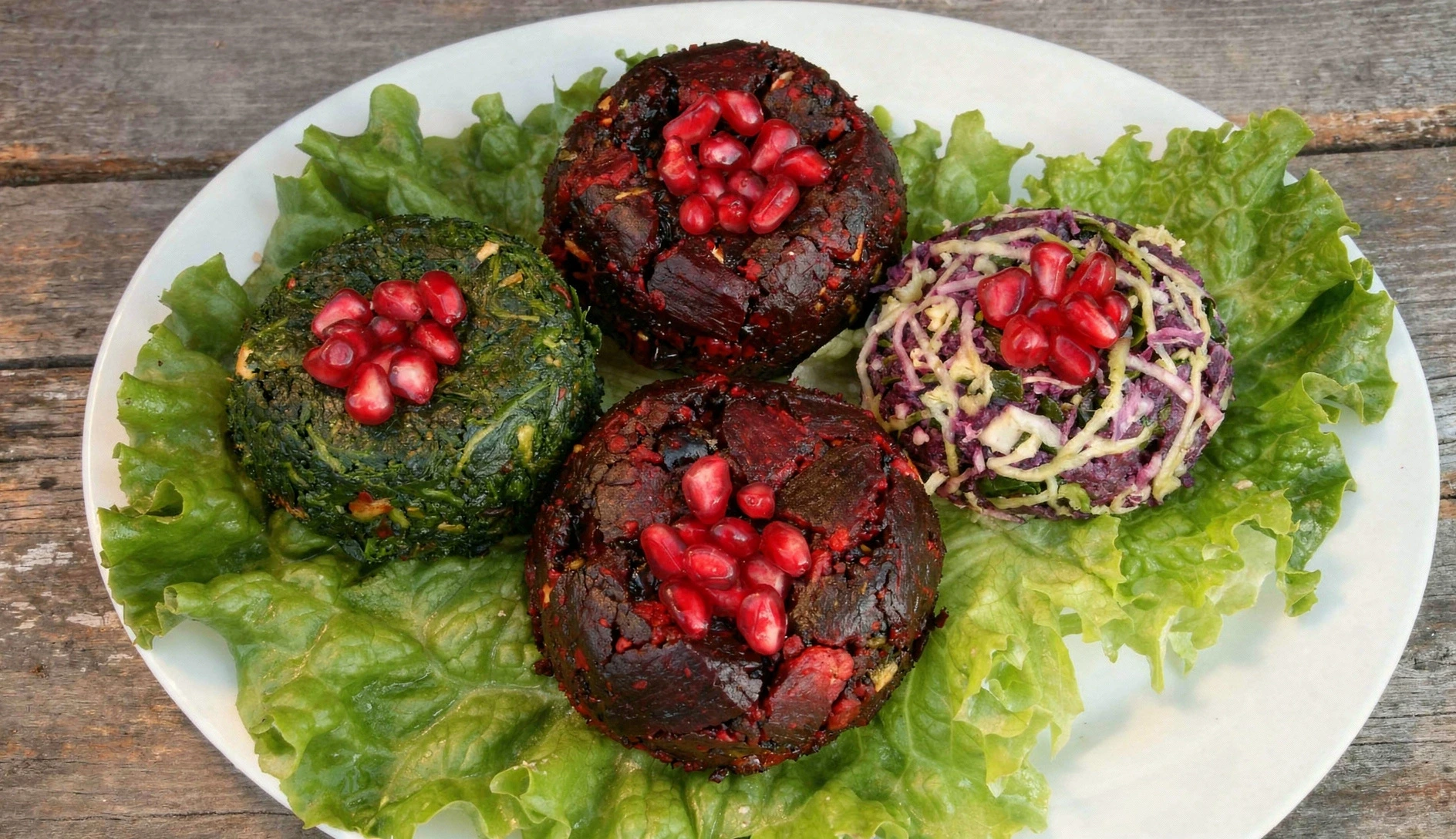
Pkhali is the dish that quietly steals the entire supra. While everyone's arguing about khinkali technique and posing with khachapuri, these small, jewel-toned bites of vegetables ground with walnuts, garlic, and fresh herbs sit on the table doing more flavor work per gram than anything else on offer. Every color tells a different story — deep green spinach, vibrant magenta beet, pale jade green bean — and they all share the same walnut soul. Here's how to make all three.
Pkhali Quick Facts
- Georgian name: ფხალი (PKHA-lee)
- Also called: Mkhali (მხალი) in some regions
- Origin: Nationwide — every region has its own version
- Key technique: Vegetables ground with walnut-garlic paste
- Prep time: 30 minutes
- Cook time: 15 minutes (blanching)
- Serves: 6–8 as appetizer
- Diet: Vegan — a staple of Orthodox fasting periods
- Cost in Georgia: 5–8 GEL (~$2–3 USD) at restaurants
- Serve with: Other appetizers, bread, wine — essential supra starter
Why Pkhali Is the Most Underrated Georgian Dish
Ask any foreigner about Georgian food and you'll hear khachapuri, khinkali, maybe churchkhela. Ask a Georgian what they want on the table at any proper dinner, and pkhali will be in the first three answers. It's the bridge between appetizer and art — a dish that turns simple vegetables into something you can't stop eating.
The concept is elegant: take a cooked vegetable, grind it with a walnut paste spiked with garlic, vinegar, and Georgian spices, shape it into balls or patties, and crown each one with pomegranate seeds. The walnut paste (nigvzis pasta, ნიგვზის პასტა) is the same base that drives badrijani nigvzit, satsivi, and half the cold dishes in the cuisine. Master it once, and you've unlocked a dozen Georgian recipes.
Pkhali is also a fasting champion. Georgia's Orthodox calendar includes over 200 days of fasting — no meat, dairy, or eggs. Georgian cooks didn't just survive these periods; they created some of their best dishes during them. Pkhali, lobio, badrijani — these aren't "substitute" foods. They're the main event.
The Three Classic Variations
While you can make pkhali from almost any vegetable — cabbage, nettles, leeks, even radish tops — three versions dominate every Georgian table. A proper pkhali platter serves all three together, and the color contrast is half the point.
The Walnut Paste — Foundation of Everything
Before we get to individual vegetables, you need to master the walnut paste. This is the DNA of pkhali — the same base (with minor tweaks) works for all three variations. Make it once and divide it three ways.
| Ingredient | Amount | Notes |
|---|---|---|
| Walnuts | 200g (2 cups) | Fresh, light-colored halves — stale walnuts ruin everything |
| Garlic | 4–5 cloves | Raw — don't be shy, pkhali should bite back |
| Fresh cilantro | 1 large bunch | Stems and leaves, finely chopped |
| Blue fenugreek (utskho suneli) | 1 tsp | The signature Georgian spice — earthy, slightly nutty |
| Khmeli suneli | ½ tsp | Georgian spice blend — adds complexity |
| White wine vinegar | 2 tbsp | Red wine vinegar works too — adds essential brightness |
| Salt | 1 tsp | Adjust to taste after mixing with vegetables |
| Ground coriander | ½ tsp | Reinforces the fresh cilantro |
| Cayenne or dried chili | Pinch | Optional — some families add it, others don't |
| Pomegranate seeds | ¼ cup | For topping — non-negotiable |
The Walnut Rule
Buy more walnuts than you think you need. Fresh, light-colored walnut halves make pkhali sing. Dark, shriveled, or bitter walnuts will ruin the entire dish — and since walnuts are the dominant flavor, there's nowhere to hide a bad batch. In Georgia, fresh-crop walnuts hit markets in October. Outside Georgia, buy from a store with high turnover and taste one before committing.
Preparing the Vegetables
Each vegetable needs different treatment before it meets the walnut paste. The goal is always the same: fully cooked, well-drained, finely chopped or ground.
| Vegetable | Amount | Prep Method | Key Tip |
|---|---|---|---|
| Spinach | 500g fresh | Blanch 1–2 min, ice bath, squeeze DRY | Squeeze until no water drips — this is critical |
| Beetroot | 3 medium | Boil 40–60 min until tender, peel, grate | Wear gloves unless you want pink hands for 2 days |
| Green beans | 400g | Trim, boil 5–7 min until tender, drain | Slightly overcooked is better than crunchy here |
Step-by-Step: Making Pkhali
Step 1: Make the Walnut Paste
Grind the walnuts using a meat grinder, food processor, or (traditional method) a mortar and pestle. You want a coarse paste, not walnut butter — some texture is good. Add the garlic, cilantro, blue fenugreek, khmeli suneli, ground coriander, salt, and cayenne. Pulse or pound until combined. Add the vinegar and mix. Taste it — it should be intensely savory, garlicky, and bright from the vinegar. Adjust salt and vinegar as needed.
Traditional vs Modern
Georgian grandmothers use a meat grinder for both walnuts and vegetables — it gives the ideal texture. A food processor works but tends to over-process. If using a processor, pulse in short bursts and check frequently. The texture should be spreadable but not smooth.
Step 2: Prepare Each Vegetable
Spinach: Bring a large pot of water to a boil. Add spinach and blanch for 1–2 minutes until just wilted. Transfer immediately to an ice bath. Once cool, gather the spinach into a ball and squeeze out every drop of water. This is the single most important step — wet spinach makes watery, sad pkhali. Squeeze it in a clean towel if needed. Finely chop.
Beetroot: Boil whole, unpeeled beets in salted water for 40–60 minutes until a knife slides in easily. Cool, peel (the skin should slip off), and grate on the fine side of a box grater. Let the grated beet drain in a colander for 10 minutes — beets hold a surprising amount of liquid.
Green beans: Trim the ends, boil in salted water for 5–7 minutes until fully tender (not al dente — this isn't Italian cooking). Drain and let cool. Chop finely or run through a meat grinder.
Step 3: Combine
Divide the walnut paste into three equal portions. Mix each portion with its respective vegetable. Work the mixture with your hands until evenly combined. Taste each one and adjust salt — the beetroot version usually needs a touch more vinegar to balance the sweetness, and the green bean version might want extra garlic.
Step 4: Shape
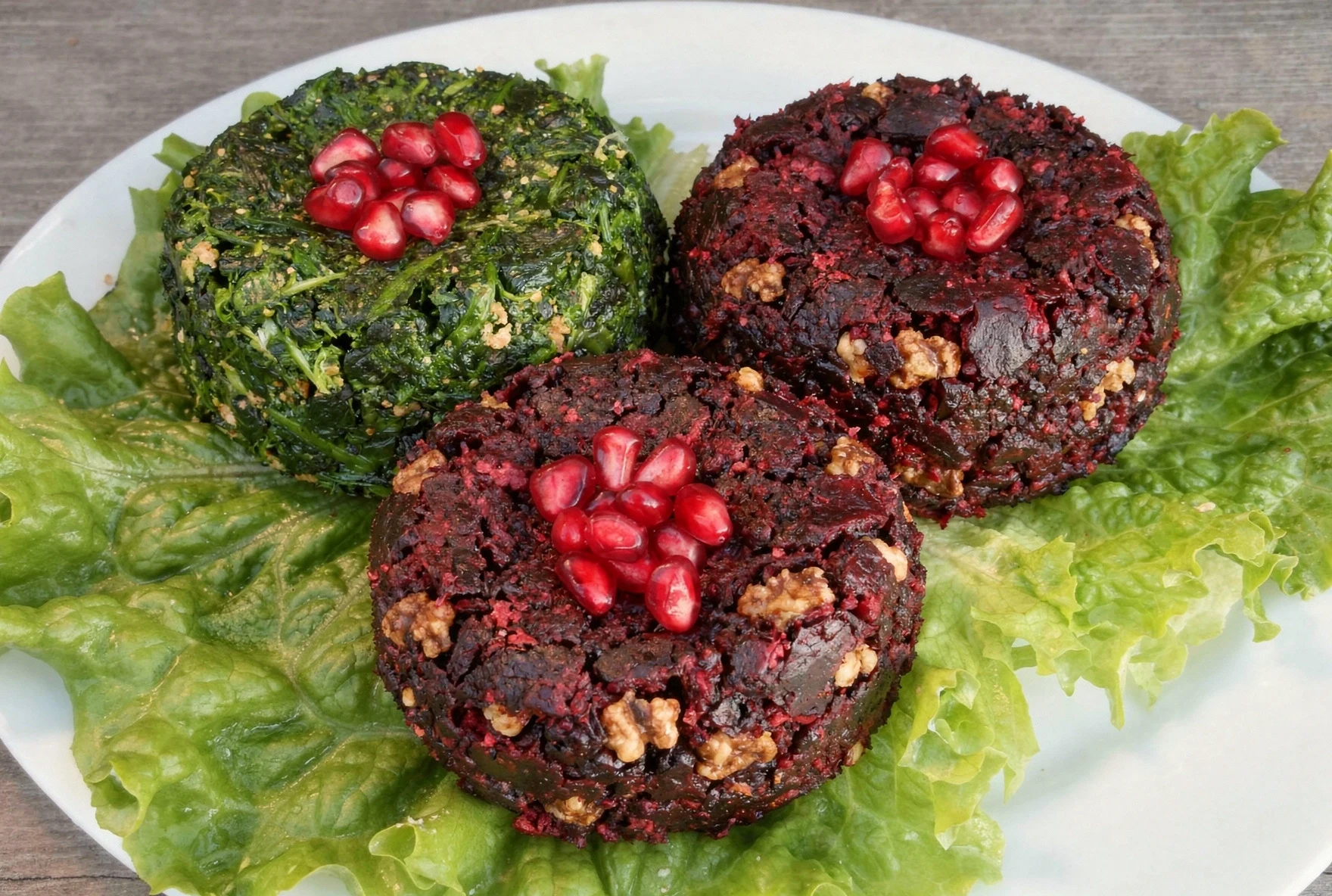
Wet your hands slightly (to prevent sticking) and shape the mixture into small balls, about the size of a large walnut (3–4cm diameter). Some families press them into patties instead, and some mold them in small bowls for a dome shape. All are correct — pick whatever looks best on your plate. Place each ball on a serving platter.
Step 5: Garnish and Serve
Press 3–4 pomegranate seeds into the top of each ball. The red against the green, magenta, and jade is the entire visual identity of pkhali. Some cooks add a single cilantro leaf next to the pomegranate, others dust with a tiny pinch of ground coriander. Serve at room temperature — never hot, never fridge-cold.
Tips for Perfect Pkhali
Squeeze Everything Dry
Excess moisture is pkhali's enemy. Spinach, beets, green beans — all need thorough draining. Wet vegetables dilute the walnut paste and make the balls fall apart.
Room Temperature Only
Pkhali is a cold appetizer, but "cold" means room temp, not refrigerator cold. The walnut oils need warmth to release their flavor. Take it out of the fridge 30 minutes before serving.
Fresh Walnuts or Nothing
Old, rancid walnuts produce bitter paste. In Georgia, autumn's fresh harvest walnuts are prized. Outside Georgia, taste before buying — they should be sweet and mild, never bitter.
Make All Three Colors
A single-color pkhali plate is like a painting with one color. The three-color platter — green, magenta, jade — is traditional and visually stunning. Worth the extra effort.
Common Mistakes (and How to Avoid Them)
| Mistake | Why It Happens | Fix |
|---|---|---|
| Watery, mushy texture | Vegetables not drained enough | Squeeze spinach in towel, drain beets in colander 10+ min |
| Bitter walnut taste | Stale or rancid walnuts | Always taste walnuts before using, buy from fresh stock |
| Balls fall apart | Too wet or not enough walnut paste | Add more walnut paste, refrigerate 15 min before shaping |
| Bland, flat flavor | Not enough garlic, vinegar, or salt | Pkhali should taste punchy — add more vinegar and garlic |
| Smooth, paste-like texture | Over-processed in food processor | Pulse briefly — you want coarse, not hummus |
Beyond the Big Three: More Pkhali Variations
Once you've mastered the spinach-beet-green bean trinity, you can make pkhali from almost anything. Georgian grandmothers have been doing exactly this for centuries — whatever grows in the garden becomes pkhali.
| Vegetable | Prep | Flavor Profile | Difficulty |
|---|---|---|---|
| Cabbage | Blanch, squeeze, chop | Mild, slightly sweet — great for beginners | Easy |
| Nettles | Blanch 3 min (removes sting), squeeze | Iron-rich, mineral, distinctly Georgian | Medium (foraging needed) |
| Leeks | Boil until very soft, drain well | Sweet, oniony — winter favorite | Easy |
| Radish tops | Blanch briefly, squeeze | Peppery, sharp — for adventurous eaters | Easy |
| Eggplant | Roast/grill, peel, drain | Smoky, rich — overlaps with badrijani territory | Medium |
The Georgian Spice Pantry for Pkhali
Two spices define pkhali and you likely don't have them in your kitchen: blue fenugreek (utskho suneli) and khmeli suneli. They're the reason Georgian food tastes like Georgian food and not just "Mediterranean with walnuts."
Blue Fenugreek (უცხო სუნელი)
Not the same as regular fenugreek. Made from the dried leaves and seeds of Trigonella caerulea, it has an earthy, slightly nutty, maple-adjacent flavor. Essential in walnut paste.
Khmeli Suneli (ხმელი სუნელი)
Georgia's "everything spice" — a blend of blue fenugreek, coriander, marigold, dill, summer savory, and more. Every family has their own ratio. Buy it imported from Georgia if possible.
Where to Buy Georgian Spices
Outside Georgia, try Georgian or Eastern European grocery stores, or order online from Georgian spice vendors (search "Georgian spices khmeli suneli" on Amazon or Etsy). In Tbilisi, the Dezerter Bazaar has the freshest spices at the best prices — buy the unblended whole spices and a pre-made khmeli suneli from different vendors to compare.
Where to Eat the Best Pkhali in Tbilisi
Barbarestan
The pkhali here is based on 19th-century recipes from Barbare Jorjadze's cookbook. Three-color platter served on hand-painted pottery. Upscale but worth every lari.
Shavi Lomi
Modern Georgian cuisine with traditional roots. Their pkhali uses seasonal vegetables and the walnut paste is notably garlicky. Popular with locals and tourists alike.
Sakhli #11
Home-style cooking in a converted apartment. The pkhali comes as part of a massive appetizer spread — you'll get all three colors plus cabbage and sometimes nettle versions.
Any Traditional Sakhli
The "sakhli" (home) restaurants around Old Tbilisi all serve pkhali. Quality varies, but even average pkhali in Georgia beats most attempts elsewhere. Look for places with handwritten menus.
Nutrition Facts
| Nutrient | Per Serving (3 balls) | Key Benefit |
|---|---|---|
| Fiber | 4g | Digestive health |
| Iron | 2.5mg (14% DV) | Especially high in spinach and beet versions |
| Vitamin K | 120μg (100% DV) | Spinach version — bone and blood health |
| Folate | 80μg (20% DV) | From beets and spinach |
Storage and Make-Ahead
Refrigerator
Keeps 3–4 days covered. The flavors actually improve after a day as the spices meld. Bring to room temperature before serving.
Freezing
Not recommended for shaped balls (texture suffers). You CAN freeze the mixed paste before shaping — thaw overnight in fridge, then shape fresh.
Make-Ahead Strategy
Shape the balls a day ahead, cover with plastic wrap, refrigerate. Add pomegranate garnish just before serving (they dry out otherwise).
Party Prep
Make walnut paste up to 2 days ahead. Cook and drain vegetables a day ahead. Combine and shape morning of. Garnish at serving time.
How Pkhali Fits the Georgian Table
Pkhali is always a cold appetizer, served at the start of a meal alongside other small dishes. On a proper Georgian supra (feast), pkhali shares the table with badrijani nigvzit (eggplant walnut rolls), lobio (bean stew), jonjoli (pickled bladderwort), pickled cabbage, fresh herbs, cheese, and bread — all before the hot dishes even arrive.
The three-color platter is traditional and practical: arrange all three varieties on one plate, alternating colors, with pomegranate seeds scattered across everything. Serve with shotis puri (Georgian bread) or mchadi (cornbread). A glass of amber or white wine — something crisp to cut through the richness of the walnuts — completes the picture.
Wine Pairing
Pkhali pairs beautifully with dry amber wine (qvevri-made Rkatsiteli or Mtsvane). The tannin structure of amber wine matches the richness of the walnuts, and the slight oxidative character complements the earthiness of the beets and spinach. A crisp Tsinandali also works well if you prefer something lighter.
Frequently Asked Questions
Can I use frozen spinach?
Yes, but thaw it completely and squeeze out ALL the water. Fresh spinach tastes better, but frozen works in a pinch. Use about 250g frozen to replace 500g fresh.
Is pkhali the same as mkhali?
Same dish, different name depending on the region. "Mkhali" is more common in western Georgia, "pkhali" in eastern Georgia and Tbilisi. The recipe is identical.
Can I substitute the walnuts?
Not really. Walnuts are the soul of pkhali — pecans come closest but still taste different. Cashews or almonds change the dish completely. If you have a walnut allergy, this isn't the recipe for you.
How far ahead can I make it?
Shape and refrigerate up to 24 hours ahead. The walnut paste alone keeps 2–3 days. Always add pomegranate garnish at serving time — they dry out if placed too early.
What if I can't find blue fenugreek?
Use half the amount of regular fenugreek leaves (methi) as a rough substitute, plus a pinch of ground fenugreek seed. It won't be identical, but it's the closest option. Order real utskho suneli online for next time.
Written by The Georgian Eats Team
Based in Tbilisi, we've eaten our way through hundreds of pkhali platters across Georgia — from Kakheti wine cellars where the beet pkhali is practically purple, to Svaneti sakhlis serving nettle versions you can't find anywhere else. This recipe is how our Georgian friends actually make it at home.
Last updated: February 2026.
Related Articles
Badrijani Nigvzit
Eggplant rolls with the same walnut paste — pkhali's elegant cousin.
Lobio: Georgia's Smoky Bean Stew
Another vegan Georgian classic — slow-cooked beans with walnuts and blue fenugreek.
Georgian Cheese Guide
The cheeses that share the table with pkhali — sulguni, imeruli, and 250+ more.
The Georgian Supra
The legendary feast where pkhali always has a seat at the table.