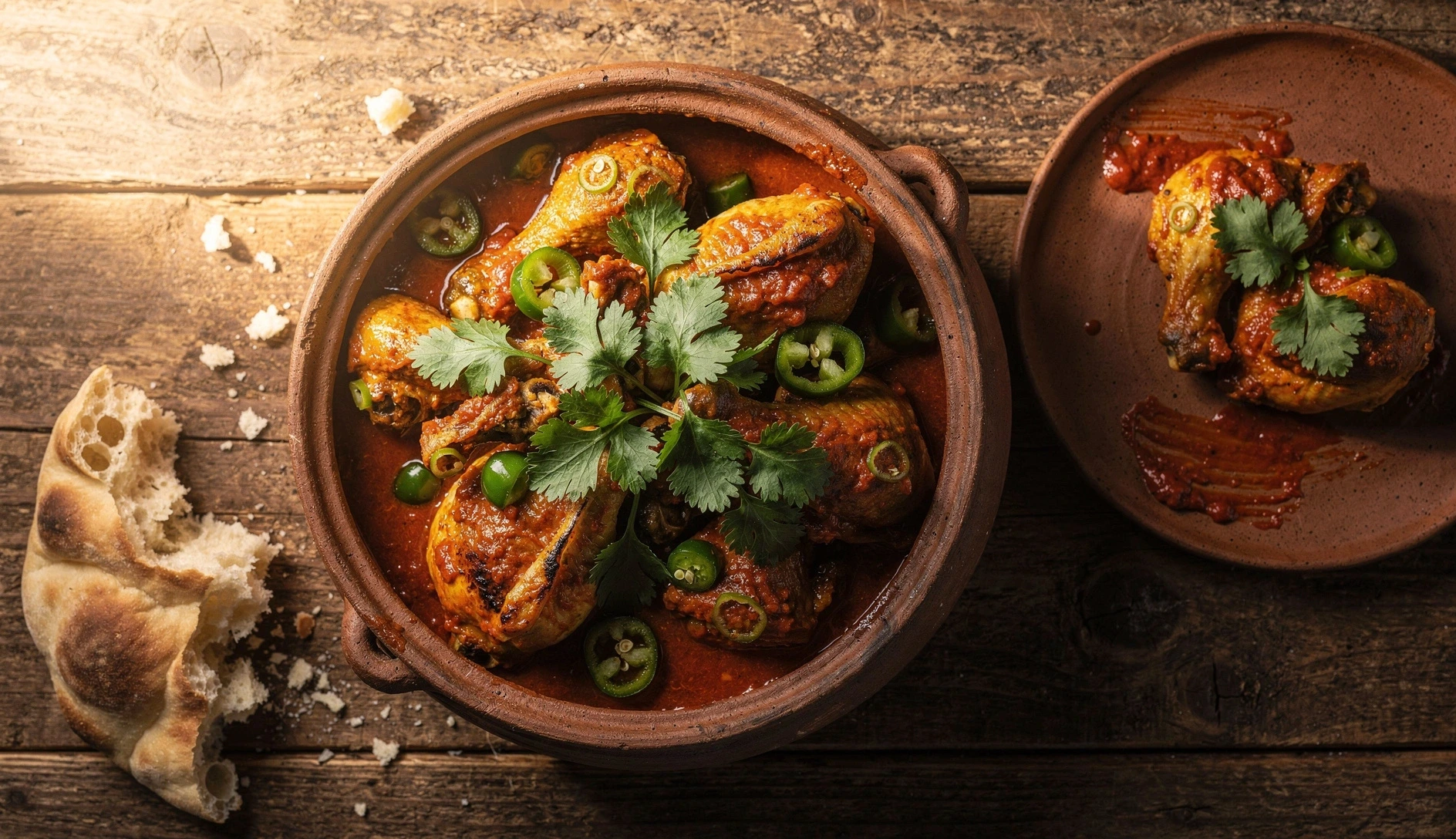
Chakhokhbili is the dish Georgians cook when they don't want to think too hard about dinner. A whole chicken goes into a pot with a mountain of onions and tomatoes, simmers for under an hour, and comes out in a sauce so bright and herby it barely resembles what went in. The name comes from khokhobi (ხოხობი) — the Georgian word for pheasant — because that's what this was before chickens took over. Today nobody uses pheasant. Everyone uses chicken. And every family has a version they'll defend with unreasonable passion.
Chakhokhbili Quick Facts
- Georgian name: ჩახოხბილი (cha-khokh-BI-li)
- Origin: All across Georgia — a universal home-cooking staple
- Original protein: Pheasant (now always chicken)
- Key ingredients: Chicken, tomatoes, onions, cilantro, garlic
- Type: Braised chicken stew with tomato-herb sauce
- Prep + cook time: 15 min prep, 45-50 min cooking
- Cost in Georgia: 12–18 GEL in restaurants (~$4–7 USD)
- Difficulty: Easy — this is weeknight cooking
Why Chakhokhbili Matters
If you want to understand what Georgians actually eat at home — not what they serve tourists, not what looks best on a menu — chakhokhbili is your answer. It's on almost every restaurant menu in the country, usually priced between 12-18 GEL, served in a clay pot or straight from a saucepan. It's one of those dishes that's so ordinary to Georgians that they're sometimes surprised foreigners want a recipe for it.
But ordinary doesn't mean simple-minded. The magic of chakhokhbili is in its ratios: the amount of onion to chicken is almost absurd. You look at four large onions for one chicken and think there's been a mistake. There hasn't. Those onions melt down into the tomato sauce over 45 minutes and create something silky and sweet that balances the acidity of the tomatoes and the punch of fresh herbs. The onion is the sauce.
Then there's the herb situation. Chakhokhbili uses more fresh herbs than almost any other Georgian dish, and Georgian cooking already uses a lot. Cilantro is non-negotiable. Flat-leaf parsley goes in. Many families add fresh basil in summer and tarragon if they have it. All of it gets stirred in at the very end so it stays bright and fragrant rather than cooking down to nothing.
Chakhokhbili vs. Other Georgian Chicken Dishes
Georgia has several iconic chicken dishes, and they're all fundamentally different. Confusing them is forgivable — there are only so many things you can do with a bird — but here's how chakhokhbili sits in the lineup:
| Feature | Chakhokhbili | Tabaka | Satsivi | Chikhirtma |
|---|---|---|---|---|
| Method | Braised in sauce | Pan-fried under weight | Poached, cold walnut sauce | Egg-thickened soup |
| Sauce | Tomato + herb | Garlic-cream (tkemali) | Walnut paste | Egg-lemon broth |
| Served | Hot, with bread | Hot, crispy skin | Cold or room temp | Hot, as soup |
| Season | Year-round | Year-round | Winter / holidays | Hangover cure / winter |
| Difficulty | Easy | Easy-medium | Medium | Medium (egg tempering) |
| Closest comparison | Chicken cacciatore | Poulet crapaudine | Circassian chicken | Avgolemono |
The comparison to Italian chicken cacciatore isn't accidental. Both are braised chicken in tomato sauce with herbs. The key differences: chakhokhbili uses vastly more onion (the onion-to-everything ratio is the defining feature), relies on cilantro instead of rosemary and thyme, and the sauce is brighter and more acidic rather than rich and earthy. If cacciatore is a warm hug, chakhokhbili is a firm handshake from someone who just came in from the garden with an armful of herbs.
The Pheasant Problem
Every article about chakhokhbili mentions the pheasant origin. Most leave it at that — a fun etymological footnote. But it's worth understanding why the switch happened, because it explains something about how Georgian food evolves.
Pheasants were genuinely common in Georgian forests for centuries. Hunters would bring them home, and the standard treatment for any game bird was to braise it slowly with whatever was seasonal — onions, tomatoes after the Columbian exchange, herbs from the garden. The word khokhobi stuck to the dish the way "hamburger" stuck to ground beef patties even after they left Hamburg.
By the Soviet era, hunting became less practical for most families and chicken became the default protein. The dish kept its name and, importantly, kept its character. The braising technique that made tough pheasant meat tender works beautifully on chicken — especially dark meat on the bone, which has the connective tissue that breaks down into gelatin and enriches the sauce.
If You Actually Have Pheasant
The recipe works exactly the same with pheasant or guinea fowl. Increase the simmer time to 50-60 minutes — game birds are leaner and tougher than farmed chicken. Add a tablespoon of butter at the end to compensate for the lower fat content. It's genuinely worth trying if you can source it.
Choosing the Right Chicken
This matters more than you think. In Georgia, chickens are smaller (1.2-1.5 kg), often free-range, and people typically buy a whole bird and cut it up at home. The meat has more flavour and less water content than the average supermarket bird in Europe or North America.
🏆 Best: Whole Chicken, Cut Up
This is how Georgians do it. The mix of breast, thigh, drumstick, and back pieces gives the best flavour. The bones contribute body to the sauce. Cut into 8-10 pieces — your butcher will do it, or use heavy kitchen shears.
👍 Good: Bone-in Thighs + Drumsticks
If you don't want to deal with a whole bird, dark meat is the way to go. About 1kg total. Bone-in, skin-on. The thigh fat renders into the sauce and the connective tissue turns to silk after 40 minutes.
Skip Boneless Chicken Breast
Yes, you'll see "simplified" chakhokhbili recipes using boneless breast. They're faster but they're a different dish. Breast meat in a braise turns chalky and dry after 40 minutes. The bones are doing critical work here — contributing gelatin that makes the sauce coat the back of a spoon. If you must use breast, add it in the last 15 minutes only.
Ingredients Breakdown
| Ingredient | Amount | Notes |
|---|---|---|
| Chicken | 1 whole (~1.5kg) or 1kg thighs/drumsticks | Bone-in, skin-on always |
| Onions | 4 large (~600g) | Yes, four. This is not a typo. |
| Tomatoes | 5-6 medium or 800g canned | Summer: fresh. Winter: canned whole. |
| Garlic | 4-5 cloves | Minced, added with the onions |
| Hot green peppers | 1-2 (or 1 jalapeño) | Optional but very common — mild to medium heat |
| Tomato paste | 1 tbsp | Deepens colour and umami |
| Ground coriander | 1 tsp | Core Georgian spice |
| Blue fenugreek | 0.5 tsp | Utskho suneli — earthy, slightly bitter |
| Dried marigold | 0.5 tsp | Imeruli shaphrani — colour and subtle flavour |
| Fresh cilantro | Large bunch (50-60g) | The dominant herb. Non-negotiable. |
| Fresh parsley | Handful | Flat-leaf, adds green depth |
| Fresh basil & tarragon | Small amounts, optional | Summer additions. Traditional but not essential. |
Sourcing Blue Fenugreek Outside Georgia
Blue fenugreek (utskho suneli) is sold in Georgian grocery shops worldwide and on Amazon. If you truly can't find it, substitute regular fenugreek leaves (kasoori methi from Indian shops) at half the quantity — the flavour is close enough. Don't use fenugreek seeds, which are much more bitter and will throw the dish off.
Step-by-Step Instructions
Step 1: Sear the Chicken
Pat the chicken pieces completely dry with paper towels. This is not optional — wet chicken steams instead of browning, and the sear is where half the flavour comes from. Season generously with salt and pepper on all sides.
Heat 2 tablespoons of oil in a large, heavy pot (a Dutch oven is ideal) over medium-high heat until the oil shimmers. Lay chicken pieces skin-side down in a single layer — don't crowd the pot, work in two batches if needed. Sear without touching for 4-5 minutes until the skin is deep golden-brown and releases easily. Flip and sear the other side 3-4 minutes. Remove to a plate.
The fond (browned bits) stuck to the bottom of the pot is gold. Don't scrub it off. Don't panic. It's going to dissolve into the onions and become the backbone of your sauce.
Step 2: The Onion Foundation (12-15 Minutes)
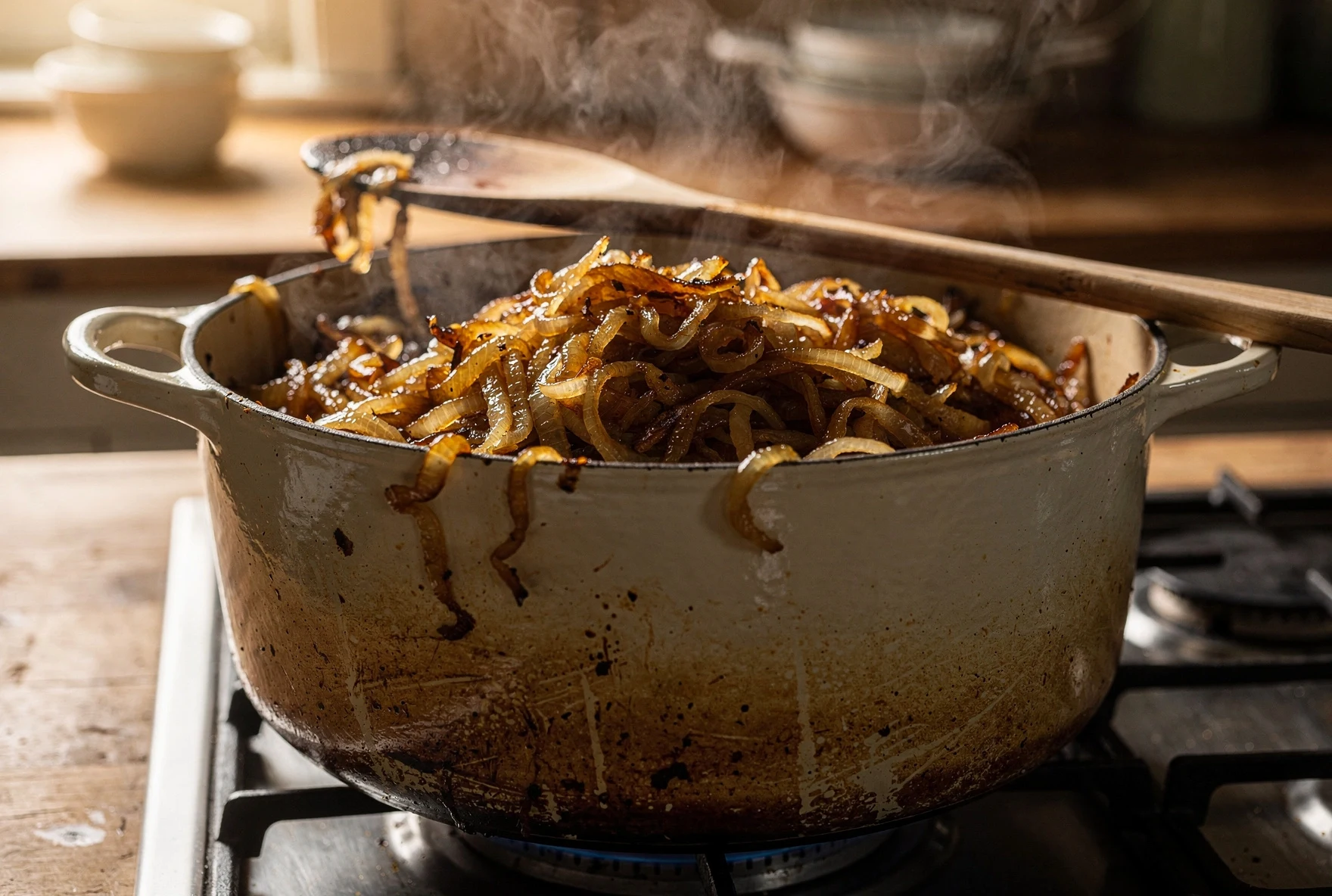
Pour off all but about 2 tablespoons of rendered chicken fat. Lower heat to medium. Add all four sliced onions with a generous pinch of salt. This is going to look like an insane amount of onion. Trust it.
Cook, stirring every few minutes, for 12-15 minutes. The onions will release moisture that deglazes the fond, turning from raw and sharp to soft, sweet, and almost jammy. They should be completely wilted and starting to turn gold at the edges. This step cannot be rushed. Underdone onions make the sauce taste raw and harsh.
Step 3: Build the Base
Add the minced garlic, sliced hot peppers, and tomato paste to the softened onions. Stir constantly for 1-2 minutes until the garlic is fragrant and the tomato paste darkens slightly — this cooks out its tinny raw flavour.
Add the chopped tomatoes (or canned whole tomatoes, crushing them with your hands as you add them). Cook 5 minutes, stirring occasionally, as the tomatoes break down and merge with the onions. Add the ground coriander, blue fenugreek, dried marigold, black pepper, and bay leaves.
Step 4: Braise (35-40 Minutes)
Return the chicken pieces to the pot, pressing them down into the sauce. The liquid from the tomatoes and onions should come about halfway up the chicken — you don't want them submerged. Bring to a gentle simmer, cover, and lower the heat.
Cook for 35-40 minutes. Check once or twice — the sauce should be gently bubbling, not aggressively boiling. When done, the chicken should be completely tender (the meat will pull easily from the bone) and the sauce should have thickened into a rich, clingy consistency. If the sauce is too thin, remove the lid for the last 10 minutes.
Step 5: The Herb Finish
This is what makes chakhokhbili chakhokhbili. Roughly chop the cilantro (stems and all — the stems have more flavour), parsley, and any basil or tarragon you're using. Stir the entire mass of herbs into the pot. Cook uncovered for just 2-3 minutes — long enough for the herbs to wilt into the sauce but not so long that they lose their colour and fragrance.
Remove from heat. Taste. Adjust salt. Let it sit for 5 minutes before serving — this resting time lets the sauce tighten up slightly and the herbs infuse further.
Visual Doneness Cues
| What to Check | Undercooked | Perfect | Overcooked |
|---|---|---|---|
| Chicken | Firm, resists pulling from bone | Falls off bone with gentle tug | Disintegrating, mushy texture |
| Sauce | Thin, watery, pale | Thick, coats spoon, deep orange-red | Paste-like, dark, stuck to pot |
| Onions | Still visible as distinct slices | Melted into sauce, barely visible | Completely dissolved (fine, actually) |
| Herbs | Raw, sitting on top | Wilted in, bright green | Army green, flavour cooked out |
| Aroma | Raw onion/tomato | Herb-forward, deep, complex | Flat, one-note tomato |
How to Serve Chakhokhbili
In Georgia, chakhokhbili comes to the table in the pot or in a clay ketsi, still steaming. Everyone tears bread and scoops. That's the correct way to eat it — the sauce is the point, and bread is the delivery mechanism.
| Accompaniment | Why It Works | Notes |
|---|---|---|
| Shotis puri | The classic — tears perfectly for sauce-scooping | The #1 pairing in Georgia |
| White rice | Absorbs the sauce beautifully | More common in restaurants than homes |
| Mchadi | Cornbread adds sweetness against the acid | Western Georgian tradition |
| Elarji | Stretchy cheese cornmeal is ridiculously good here | Megrelian pairing |
| Fresh herb plate | Raw tarragon, basil, and green onions | Standard Georgian table accompaniment |
| Georgian wine | Saperavi or a dry rosé | The acidity of the stew pairs well with dry reds |
Regional Variations
Like every Georgian dish, chakhokhbili shifts depending on who's cooking and where. The base technique is the same — sear chicken, cook onions, add tomatoes, braise, finish with herbs — but the details change.
| Region | Key Differences | Heat Level |
|---|---|---|
| Imereti (West) | Considered the origin region. More tarragon and basil, lighter on spice | Mild |
| Samegrelo | Adds adjika paste for heat, sometimes walnuts in the sauce | Hot |
| Kakheti (East) | Heavier on tomato, less herbs, sometimes dried marigold dominant | Medium |
| Tbilisi (modern) | Restaurant versions may add bell peppers, wine, or butter for richness | Variable |
The Adjika Question
Some cooks — particularly in western Georgia — add a spoonful of adjika paste to their chakhokhbili. If you've had chashushuli, you know how transformative adjika can be in a tomato-based stew. In chakhokhbili, adjika adds a roasted pepper depth and a lingering, slow-building heat that complements the fresh herbs perfectly.
If you have adjika (Megrelian or Abkhaz-style — the thick paste, not the Russian ketchup-like sauce marketed as "adjika"), stir in 1-2 teaspoons when you add the tomato paste. Start with one teaspoon. Taste. It should add warmth and complexity without overpowering the herb-forward character of the dish.
If you don't have adjika, don't worry about it. The dish is complete without it. The hot green peppers provide enough heat for a standard chakhokhbili.
Storage and Leftovers
🥶 Refrigerator (3-4 Days)
Chakhokhbili improves overnight as the flavours meld. Cool completely, store in an airtight container. Reheat gently on the stove with a splash of water if the sauce has thickened too much. Add a small handful of fresh cilantro when reheating — it refreshes the whole dish.
🧊 Freezer (2-3 Months)
Freezes well. Pull chicken from bones before freezing for easier reheating. Thaw overnight in the fridge. The sauce texture holds up perfectly. Fresh herbs won't survive the freeze — add new ones when you reheat.
Common Mistakes
❌ Skimping on Onions
Four onions for one chicken sounds like a lot. It is. That's the point. The onions are the sauce. Cut the onion quantity and you get a thin, acidic tomato broth instead of the silky, sweet base that defines good chakhokhbili.
❌ Using Boneless Breast
Breast meat dries out in a braise. Dark meat on the bone is the correct choice — the connective tissue melts into gelatin and enriches the sauce. If you must use breast, add it only in the last 15 minutes.
❌ Adding Herbs Too Early
The fresh herbs go in at the very end — last 2-3 minutes. Cook them for 30 minutes and they turn army green, lose all fragrance, and add a bitter, swampy flavour. This is the single most common way to ruin the dish.
❌ Rushing the Onions
The 12-15 minute onion cook is not negotiable. If you add tomatoes to onions that are still raw and crunchy, the sauce will have a harsh, sharp bite that no amount of simmering will fix.
❌ Skipping the Sear
Some recipes skip searing and just dump everything in the pot. You can do that. You'll get a perfectly edible stew. But you won't get the deep, complex flavour that comes from the Maillard reaction on the chicken skin and the fond it leaves behind.
❌ Adding Water or Stock
Unlike some stews, chakhokhbili doesn't need added liquid. The massive amount of onions and the tomatoes generate all the braising liquid you need. Adding water or stock dilutes the concentrated flavour that makes the dish special.
Where to Eat Chakhokhbili in Georgia
The thing about chakhokhbili is that it's better at home than in most restaurants. It's a home-cooking dish at heart — the kind of thing someone's mother makes perfectly and a restaurant makes adequately. That said, if you want to try it out:
Shavi Lomi (Tbilisi)
Modern Georgian cooking done right. Their chakhokhbili is herb-forward and well-balanced. One of the few restaurants that treats this dish as a star, not an afterthought. ~18-22 GEL.
Ezo (Tbilisi)
Traditional recipes executed well. Their version uses generous herbs and a thick, properly reduced sauce. Good courtyard setting. ~15-18 GEL.
Any Sachashnikilo
Small family-run restaurants ("sachashnikilo" literally means "place to eat") in smaller towns often make the best chakhokhbili. It's on every menu. Ask which dishes are made fresh that day.
Guesthouse Dinners
If you stay at a guesthouse outside Tbilisi and the host offers dinner, say yes. Chakhokhbili is one of the standard dishes. It'll be made with chickens that were probably walking around yesterday.
Nutrition
| Nutrient | Per Serving | % Daily Value |
|---|---|---|
| Fat | 16g | ~20% |
| Fiber | 3g | ~11% |
| Vitamin C | 35mg | ~39% |
| Iron | 2.5mg | ~14% |
Frequently Asked Questions
Can I make chakhokhbili in a slow cooker?
Yes. Sear the chicken and cook the onions on the stove first, then transfer everything to the slow cooker for 3-4 hours on low. Add herbs in the last 10 minutes. The result is decent but you lose the fond development and sauce concentration that stovetop gives you.
I hate cilantro. Can I still make this?
You can, but you'll be making a fundamentally different dish. Cilantro is the soul of chakhokhbili. If you have the genetic thing where cilantro tastes like soap, double the parsley and add extra basil and tarragon. It won't be the same, but it'll still be good chicken in tomato sauce.
How do I pronounce chakhokhbili?
cha-KHOKH-bi-li (ჩახოხბილი). The "kh" is a guttural sound from the back of the throat — like the "ch" in Scottish "loch" or German "Bach." Most non-Georgian speakers say "cha-kok-billy" and that's close enough to be understood.
Can I use turkey instead of chicken?
Turkey thighs work well — they're similar in fat content and texture to chicken thighs. Use bone-in turkey thighs and increase the cooking time to 50-55 minutes. Turkey breast will have the same drying-out problem as chicken breast.
Is chakhokhbili spicy?
Mildly. The standard version has a gentle warmth from the hot green peppers. It's nowhere near as fiery as chashushuli or Megrelian-style dishes. You can omit the hot peppers entirely for a no-heat version, or add adjika paste if you want more kick.
Written by The Georgian Eats Team
We've eaten more chakhokhbili than we can count — from restaurant versions in Tbilisi to home-cooked pots in Imeretian villages where the chickens were still in the yard that morning. This recipe reflects what we've learned from Georgian home cooks who treat this dish as the standard weeknight dinner it is.
Last updated: February 2026.
Related Articles
Chicken Tabaka
Georgia's other iconic chicken dish — spatchcocked and pan-fried under a weight until impossibly crispy.
Chashushuli
Georgia's spicy beef and tomato stew — the no-water braising method that creates the richest sauce.
Satsivi
Cold chicken in walnut sauce — the New Year's centrepiece and Georgia's most elegant poultry dish.
Georgian Spices Guide
Blue fenugreek, dried marigold, khmeli-suneli — everything you need to know about the Georgian spice cabinet.