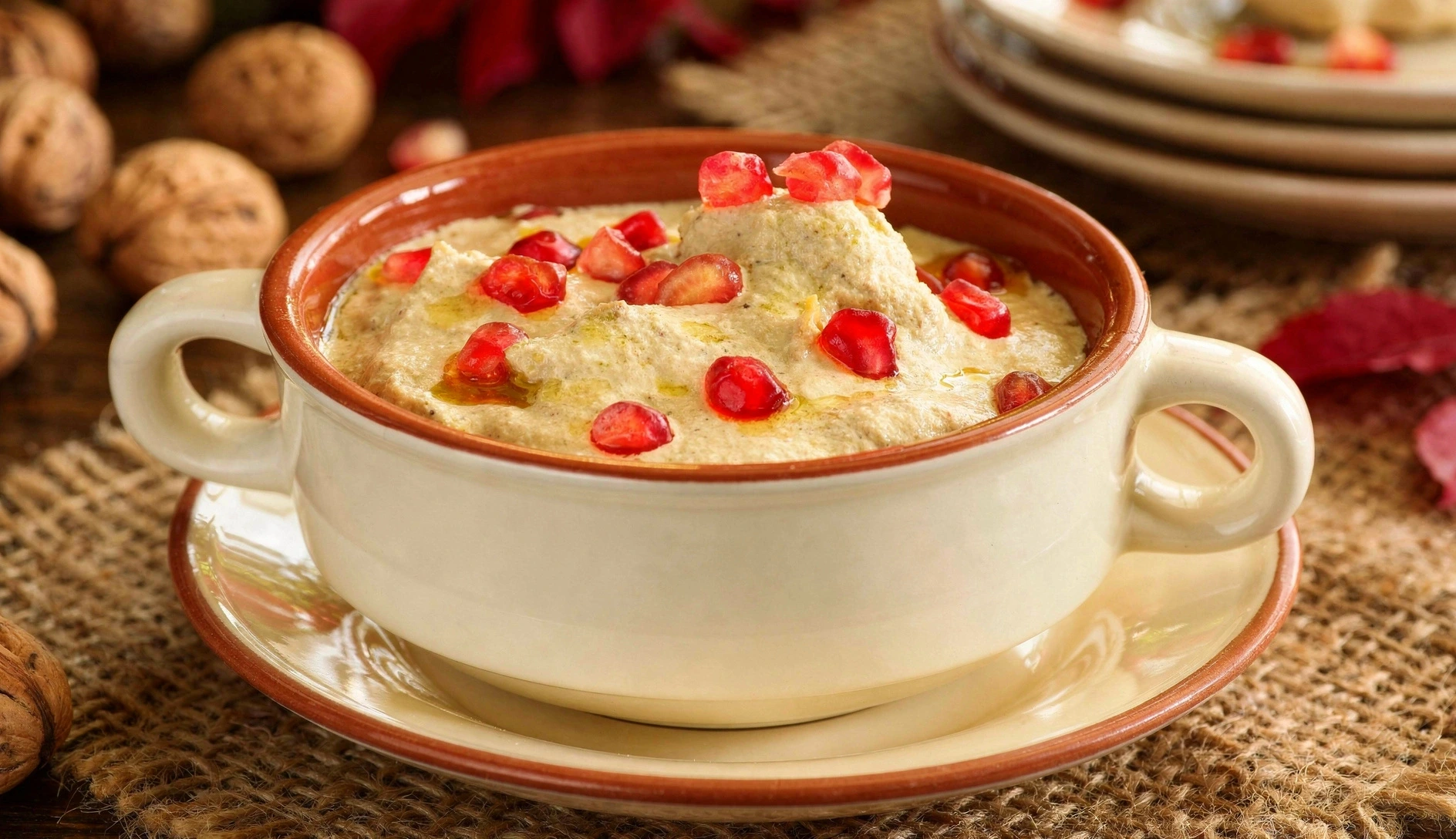
Satsivi is the dish that separates people who've eaten Georgian food from people who understand it. While the world obsesses over khachapuri and khinkali — fair enough, they're both brilliant — satsivi is the one that Georgian grandmothers argue about. It's poached chicken or turkey submerged in a thick, cold walnut sauce spiked with garlic, blue fenugreek, cinnamon, and a hit of vinegar. The name literally comes from "tsivi" (ცივი), meaning cold. You make it. You let it sit overnight. You eat it cold the next day. That's not a suggestion — that's the whole point.
Satsivi Quick Facts
- Georgian name: საცივი (sa-TSI-vi)
- Origin: All of Georgia — every region claims it
- Key ingredients: Chicken or turkey, walnuts, garlic, blue fenugreek, cinnamon
- Served: Cold or room temperature — never hot
- When: New Year's Eve and Christmas, but made year-round
- Prep + cook time: 30 min prep, 30 min cooking, 4+ hours chilling
- Cost in Georgia: 12–20 GEL in restaurants (~$4.50–7.50 USD)
- Difficulty: Moderate — the walnut sauce texture is everything
Why This Dish Matters
Every Georgian family has a satsivi recipe. Not a recipe they follow — a recipe they defend. The arguments are endless. Chicken or turkey? How much garlic? Do you use egg yolks to thicken the sauce or is that cheating? Should it be set like a soft custard or pourable like a thick gravy? There is no resolution to these debates and there never will be.
Satsivi is New Year's food the way turkey is Thanksgiving food, except Georgians take their holiday table far more seriously. On December 31st and January 7th (Georgian Christmas, following the Orthodox calendar), the satsivi has been chilling in the fridge since the day before. It sits on the supra table next to gozinaki (honey-fried dough), churchkhela, and enough food for twenty people even when there are six. The walnut sauce should be thick enough to coat the back of a spoon but loose enough to pool around the chicken. Getting that right is what separates a good satsivi from one that people talk about years later.
Outside of the holidays, satsivi appears in restaurants year-round. It's a fixture of any decent Georgian menu. But restaurant satsivi and homemade satsivi are different animals. Restaurant versions tend to be warm and sauce-heavy. Homemade satsivi — the real thing — is cold, dense with walnuts, and complex in a way that reveals new flavors the longer you eat it. The garlic mellows overnight. The fenugreek deepens. The cinnamon, which seemed too subtle when you tasted the sauce fresh, suddenly makes sense.
Ingredients
Serves 6–8. This recipe uses a whole chicken, which is the most traditional approach. You can substitute 1 kg bone-in, skin-on thighs — they're more forgiving and arguably tastier. Boneless breasts work but tend to dry out and lack the body that bones give the broth.
| Ingredient | Amount | Notes |
|---|---|---|
| Whole chicken | 1.5–1.8 kg (3.5–4 lbs) | Or 1 kg bone-in thighs |
| Walnut halves | 400g (4 cups) | Fresh, not stale — the whole dish depends on this |
| Yellow onion | 2 medium, finely diced | Cook until completely soft, no color |
| Garlic | 6–8 cloves | Grated on a microplane or mashed in mortar |
| Blue fenugreek (utskho suneli) | 1 tbsp | The earthy, nutty backbone — not optional |
| Ground coriander | 1 tsp | Freshly ground if possible |
| Ground cinnamon | ½ tsp | Subtle warmth — don't overdo it |
| Cayenne pepper | ¼ tsp | Gentle heat — adjust to taste |
| Khmeli suneli | 1 tsp | Optional but adds complexity |
| White wine vinegar | 2 tbsp | Brightens the sauce — essential |
| Egg yolks | 2 (optional) | Traditional thickener — makes sauce silkier |
| Salt | To taste | Season both the broth and the sauce |
The Walnut Rule
Buy the best walnuts you can afford. Taste one before you start. If it's bitter or stale, the entire dish is ruined — no amount of spice will save it. In Georgia, people buy fresh walnuts from the market in autumn and store them in shells. If you're outside Georgia, shelled halves from a trusted source work fine. Avoid pre-ground walnut meal — you need to control the texture.
Equipment
Food Processor
The fastest way to grind walnuts to the right consistency — like wet sand, not powder. Pulse, don't blend continuously or you'll get walnut butter.
Large Heavy Pot
For poaching the chicken. A Dutch oven works perfectly. You need enough room for the whole bird to be submerged.
Deep Serving Dish
Clay or ceramic is traditional. The chicken sits in the sauce overnight, so you need something deep enough that the sauce covers everything.
Fine Mesh Strainer
For straining the chicken broth. Clean broth = smooth sauce. Optional if your broth is already clear.
Step-by-Step Recipe
Step 1: Poach the Chicken
Place the whole chicken in a large pot. Add cold water to cover by about 3 cm (1 inch). Add 1 tablespoon of salt, a bay leaf, and a few black peppercorns. Bring to a boil over medium heat, uncovered. The moment it starts boiling, reduce to a bare simmer — you want lazy bubbles, not a rolling boil.
Skim any foam and impurities that rise to the surface in the first 10 minutes. This is the difference between a clean, golden broth and a cloudy, dull one.
Simmer for 40–50 minutes until the chicken is cooked through (internal temp 74°C/165°F at the thickest part of the thigh). If using bone-in thighs, 25–30 minutes is enough. Remove the chicken and set it aside to cool. Strain the broth through a fine mesh strainer and reserve — you'll need about 500 ml (2 cups) for the sauce.
Don't Rush the Poach
A gentle simmer keeps the meat tender. Aggressive boiling toughens chicken and makes the broth cloudy. If you're using thighs, they're more forgiving — but still, low and slow. Some Georgian cooks turn the heat off entirely after 10 minutes of simmering and let the residual heat finish the job.
Step 2: Make the Walnut Base
While the chicken poaches, grind the walnuts. Pulse in a food processor until you have a texture like coarse, damp sand. You want some fine particles for body and some larger bits for texture. If you go too far and it starts clumping into walnut butter, add a splash of the chicken broth to loosen it.
In a mortar and pestle (or the food processor), combine the ground walnuts with the grated garlic, blue fenugreek, coriander, cinnamon, cayenne, and khmeli suneli. Mix until the spices are evenly distributed. Set aside.
Step 3: Cook the Onion and Build the Sauce
Heat 2 tablespoons of oil or butter in a large skillet over medium heat. Add the diced onions and cook until completely soft and translucent — about 7–8 minutes. Don't let them brown at all. You want them to melt into the sauce, not add any caramelized flavor.
Add the walnut-spice mixture to the softened onions and stir for about a minute, just until the spices become fragrant. This brief toasting wakes up the coriander and fenugreek.
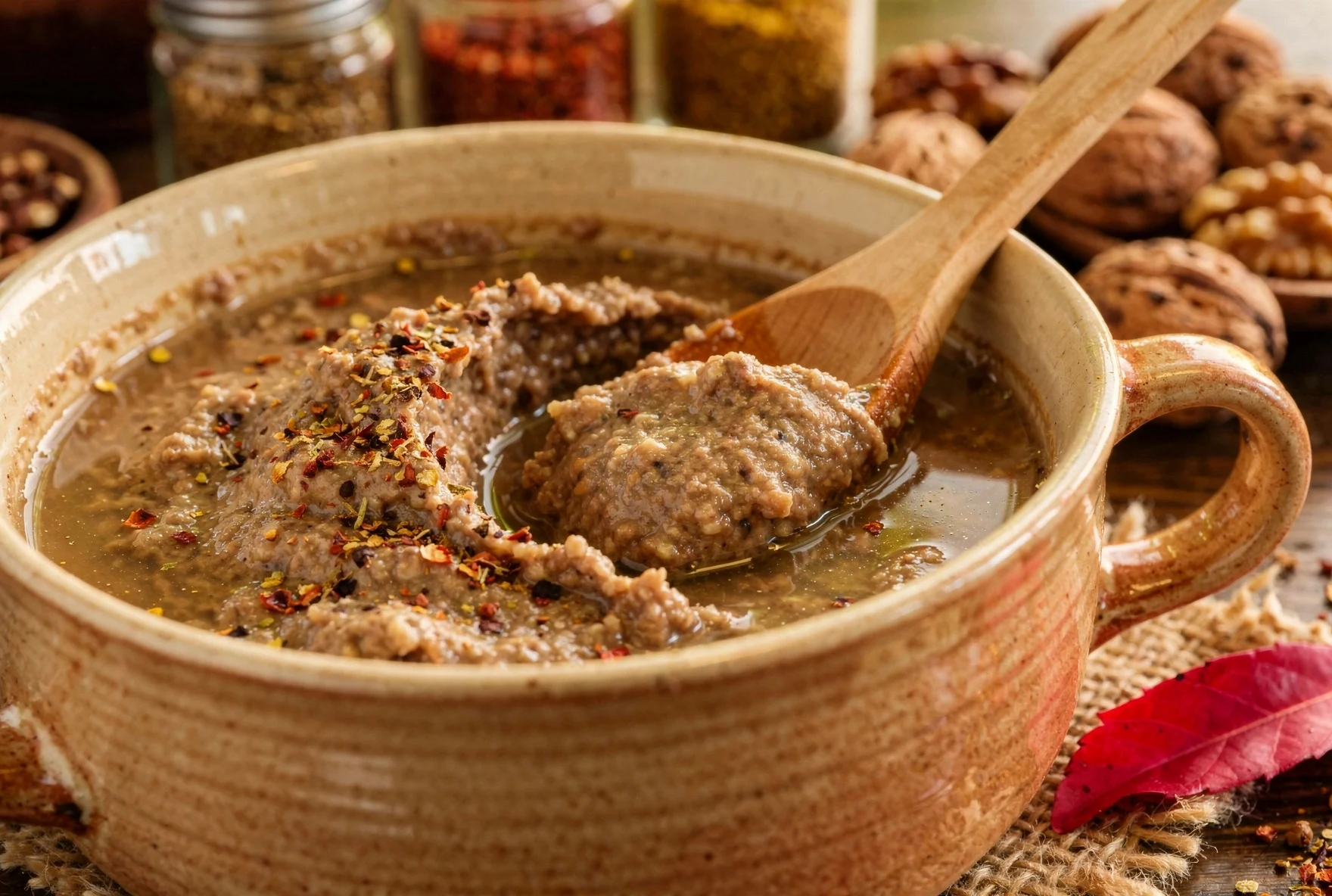
Gradually stream in 500 ml (2 cups) of the strained chicken broth, stirring continuously. The sauce should come together into a thick, smooth consistency — thicker than gravy but thinner than hummus. If it's too thick, add more broth 50 ml at a time. If it's too thin, let it simmer for a few minutes to reduce.
Bring the sauce to a gentle simmer and cook for 10–12 minutes, stirring occasionally. The sauce will darken slightly and the flavors will meld.
Step 4: Add the Vinegar (and Optional Egg Yolks)
Remove the sauce from heat. Stir in the white wine vinegar — this is the brightness that cuts through all that richness. Taste and adjust: you might want more salt, more garlic, a touch more vinegar. The sauce should taste slightly more intense than you'd expect because the flavors will mellow significantly once cold.
If you're using egg yolks (traditional, not mandatory): whisk them in a small bowl. Temper them by whisking in a few spoonfuls of the warm sauce, then add the tempered yolks back to the pot, stirring constantly. This gives the sauce a silkier body and a subtle richness. Don't add the yolks to sauce that's too hot or they'll scramble.
Step 5: Combine, Chill, and Serve
Shred or cut the cooled chicken into large pieces — thigh-sized chunks work well. Remove the skin if you prefer (most Georgian cooks keep it on for turkey satsivi, split on chicken). Place the chicken pieces in a deep clay or ceramic dish. Pour the walnut sauce over the chicken, making sure every piece is submerged.
Cover and refrigerate for at least 4 hours. Overnight is better. The sauce will thicken as it chills and the walnut oils set — this is exactly what you want. The flavors deepen enormously during this rest.
Serve cold or at room temperature, straight from the dish. Garnish with pomegranate seeds and chopped fresh cilantro if you like. Eat with shotis puri (Georgian bread) or mchadi (cornbread). The bread is for scooping up the sauce — and you will want to scoop up every last bit.
Cold Means Cold
Yes, restaurants in Tbilisi sometimes serve satsivi warm. That's a concession to tourists and impatient diners. The real experience is cold — the walnut sauce sets into something between a thick gravy and a soft spread, the flavors are fully integrated, and the chicken has absorbed the sauce overnight. If you've only had warm satsivi, you haven't had satsivi.
Tips for Perfect Satsivi
Toast the Walnuts (Optional)
Some Georgian cooks lightly toast the walnuts in a dry pan before grinding. This deepens the nutty flavor but risks bitterness if overdone. 3–4 minutes over medium heat, shaking the pan, is plenty.
Over-Season the Sauce
When you taste the sauce warm, it should seem slightly too salty and too garlicky. Cold food needs more seasoning — flavors dull as temperature drops. What seems aggressive at 60°C is perfect at 8°C.
Save Extra Broth
The poaching broth is liquid gold. Freeze whatever you don't use for the sauce — it's perfect for lobio, kharcho, or any soup. Never pour Georgian chicken broth down the drain.
The Texture Test
Dip a wooden spoon in the finished sauce. Run your finger down the back. If the line holds clean without the sauce running back together immediately, it's the right thickness. If it's too thin, simmer longer. Too thick, add broth.
Common Mistakes
| Mistake | Why It Matters | Fix |
|---|---|---|
| Using stale walnuts | Bitter, rancid flavor ruins everything | Taste before grinding — should be sweet and creamy |
| Over-grinding walnuts | Turns into walnut butter — greasy and dense | Pulse in short bursts, check every 3–4 pulses |
| Serving it hot | Misses the entire point — flavors haven't melded | Minimum 4 hours chilling, overnight is best |
| Under-seasoning | Cold food tastes blander than hot food | Season while warm, knowing it'll be served cold |
| Skipping the vinegar | Sauce becomes one-dimensional and heavy | The acid is essential for balance — don't omit it |
| Browning the onions | Adds caramelized flavor that doesn't belong | Low heat, patience — translucent, not golden |
Variations
| Variation | What Changes | Notes |
|---|---|---|
| Turkey satsivi | Whole turkey instead of chicken | The most traditional for New Year's — richer, more festive |
| Fish satsivi | Poached fish (usually sturgeon) in walnut sauce | A western Georgian variation — lighter and more delicate |
| Vegetable satsivi | Cauliflower, eggplant, or green beans in walnut sauce | Use vegetable stock instead of chicken broth |
| Egg-free version | Skip the egg yolks | Many families don't use them — the sauce is slightly less silky but still excellent |
| Quick weeknight | Rotisserie chicken + walnut sauce | Shortcut that works — shred the chicken, make the sauce from boxed broth, chill 2 hours |
When to Eat Satsivi
Satsivi is inseparable from the Georgian New Year. On December 31st, the table is a monument to excess — satsivi is the cold centerpiece alongside warm dishes like kupati (sausages) and roast pork. It stays on the table for days, because in Georgian tradition, the supra table stays laid for visiting guests well into January.
But satsivi isn't only holiday food. It's a perfect summer dish — rich but served cold, which makes it ideal for hot weather when you don't want to eat anything steaming. It's also a practical cook-ahead meal: make it on a Saturday, eat it all week. The flavor actually improves over the first 2–3 days.
The New Year's Debate: Chicken vs Turkey
For New Year's Eve, the traditional choice is a whole turkey — grander, more festive, feeds a bigger crowd. But most families now use chicken because turkeys are harder to find and more expensive. Neither is wrong. Lore has it that the wealthier the family, the bigger the bird. A whole duck is also an option, though less common. What matters is the sauce — get that right and nobody will complain about the protein.
What to Serve with Satsivi
| Accompaniment | Why It Works |
|---|---|
| Shotis puri (Georgian bread) | Essential — the bread is for scooping up sauce. This is non-negotiable. |
| Mchadi (cornbread) | The slightly sweet, crumbly texture contrasts beautifully with the rich walnut sauce. |
| Fresh herb platter | Cilantro, tarragon, basil, and green onions — eaten between bites as a palate cleanser. |
| Pickled vegetables | Pickled jonjoli, peppers, or cucumbers — the acid cuts the richness perfectly. |
| Simple tomato-cucumber salad | Chopped with herbs and a touch of oil. Light and fresh against the dense sauce. |
Where to Eat Satsivi in Tbilisi
Barbarestan
Menu changes daily based on a 19th-century cookbook. When satsivi appears, it's the refined, old Tbilisi version with deep spicing. Upscale but worth it.
Shavi Lomi
Modern Georgian with a creative twist. Their satsivi might surprise you — same soul, updated technique. Popular with locals and expats.
Sakhli #11
Traditional family-style restaurant in the old town. Homestyle satsivi in a ceramic bowl — not trying to impress, just trying to feed you properly.
Culinarium Khasheria
Chef Tekuna Gachechiladze's restaurant — one of the best in Tbilisi. If satsivi is on the menu, order it without hesitation.
Nutrition
Satsivi is calorie-dense — walnuts are fat-rich and the sauce is generous. But it's the good kind of fat: mostly polyunsaturated and monounsaturated fatty acids. Walnuts are also an excellent source of omega-3s, manganese, and copper. The fact that you're eating it cold means you tend to eat slowly and savor it rather than wolfing it down.
| Nutrient | Per Serving |
|---|---|
| Carbohydrates | ~10g |
| Fiber | ~4g |
| Sodium | ~350mg |
| Omega-3 (ALA) | ~2.5g |
Storage
Refrigerator
Keeps beautifully for 4–5 days. The flavor improves on day 2. Keep the chicken submerged in sauce in an airtight container.
Freezer
Freezes well for up to 2 months. Thaw overnight in the fridge. The sauce may separate slightly — stir gently to recombine.
Reheating
Don't. Satsivi is meant to be eaten cold or at room temperature. If you must warm it, gentle heat on the stovetop — never microwave.
Leftover Sauce
Excellent as a dip for bread, spread on sandwiches, or spooned over roasted vegetables. Too good to throw away.
Frequently Asked Questions
Can I use boneless chicken breasts?
You can, but bone-in pieces give the broth more body and the meat stays juicier. If using breasts, poach them gently — they go from tender to dry in minutes. Pull them at exactly 74°C internal temp.
What can I substitute for blue fenugreek?
Regular fenugreek seeds (ground) work but are stronger — use half the amount. Some people use a pinch of dried dill seed as a substitute, though it's not the same. If you're making Georgian food regularly, order blue fenugreek online — it's essential to the cuisine.
Do I have to serve it cold?
Traditionally, yes. The name literally means "cold thing." But if you genuinely prefer it warm, nobody's going to arrest you. Just know that the flavors are designed to shine at cold temperatures — the garlic mellows, the sauce firms up, and the spices integrate in a way that doesn't happen when hot.
Is satsivi the same as bazhe?
No. Bazhe is a walnut sauce too, but it's thinner, more garlicky, used as a dipping sauce, and served with fried chicken or fish. Satsivi is a complete dish — the chicken cooks and rests in the sauce. Think of bazhe as a condiment and satsivi as a main course.
Can I make satsivi vegan?
The walnut sauce itself is naturally vegan (skip the egg yolks). Substitute roasted cauliflower, mushrooms, or eggplant for the chicken, and use vegetable stock. It won't be satsivi in the traditional sense, but the walnut sauce is so good it works with almost anything.
Written by The Georgian Eats Team
We've spent years eating satsivi at New Year's supras, arguing about the right walnut-to-garlic ratio, and learning from Georgian grandmothers who've been making this dish longer than we've been alive. This recipe is the distillation of those conversations and meals.
Last updated: February 2026.
Related Articles
Shkmeruli: Garlic Chicken in Milk Sauce
Another iconic Georgian chicken dish — this one served hot with enough garlic to clear a room.
Pkhali: Walnut-Herb Vegetable Bites
More walnut magic — vegetables bound with the same kind of spiced walnut paste that makes satsivi special.
20 Georgian Dishes You Need to Try
The complete guide to Georgian cuisine — what to order, how to eat it, and what makes it unlike anything else.
The Georgian Supra
The feast where satsivi shines — toasts, tamada, and how to survive a Georgian dinner table.