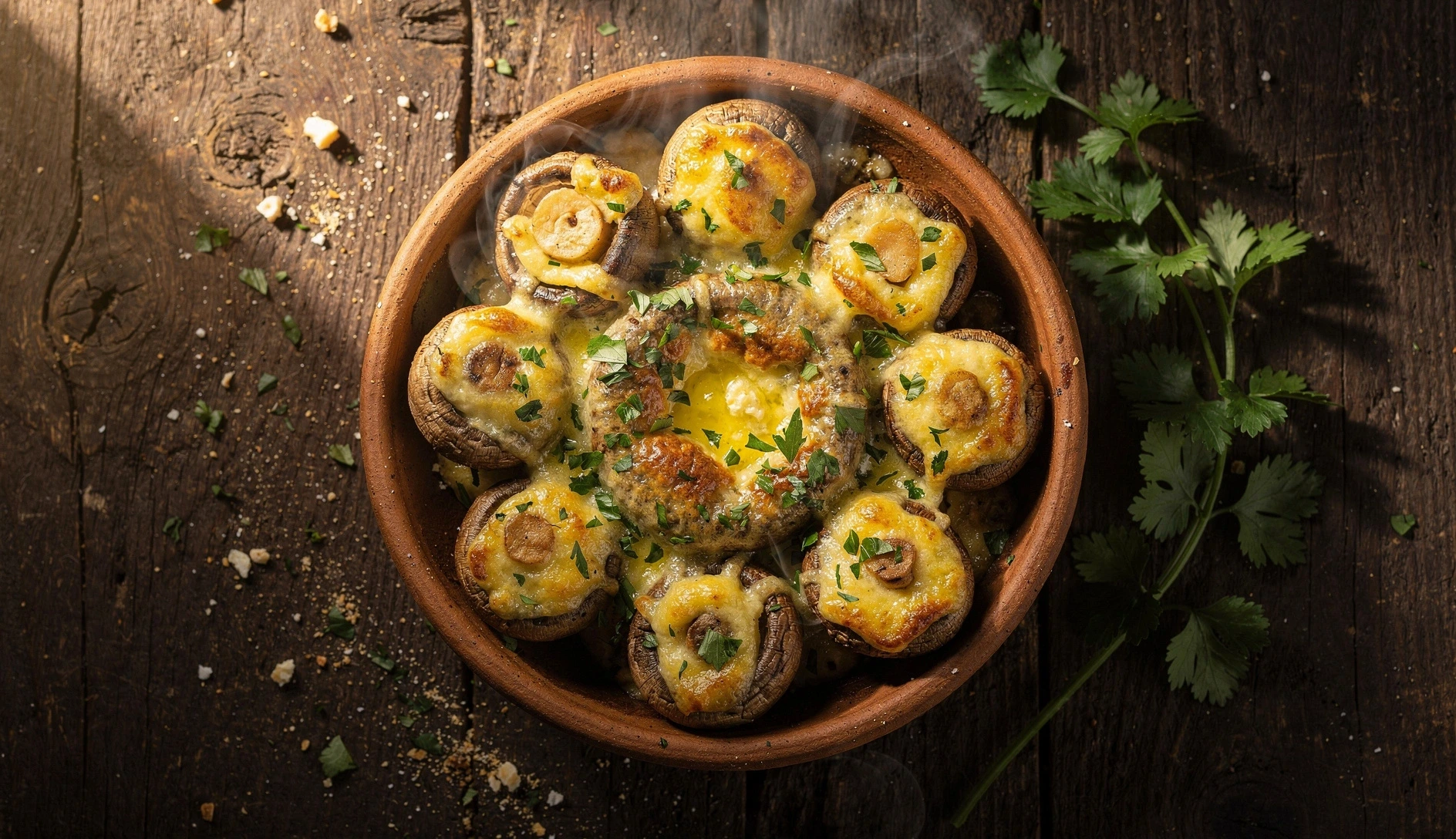
Every Georgian restaurant has soko ketsze on the menu. Every table orders it. And every time it arrives — a clay dish of mushrooms swimming in foaming butter with cheese stretched between them like molten bridges — someone at the table says, "this is the best thing I've eaten." It's not complicated. It's mushrooms, butter, and cheese baked in a clay pot. That's it. The magic is in the vessel, the temperature, and the fact that Georgia has never heard of moderation when it comes to butter.
Soko Ketsze Quick Facts
- Georgian name: სოკო კეცზე (SO-ko KETS-zeh)
- Meaning: "Mushrooms on a ketsi" — ketsi is the clay dish
- Type: Hot appetizer / starter
- Prep time: 10 minutes
- Cook time: 25 minutes
- Difficulty: Genuinely easy — one of the simplest Georgian dishes
- Diet: Vegetarian (gluten-free if you skip the bread — which you won't)
Why This Dish Deserves Your Attention
Georgian cuisine has some genuinely complex recipes. Khinkali requires dough-folding mastery. Satsivi demands walnut sauce precision. Chakapuli needs exactly the right tarragon-to-plum ratio. Soko ketsze requires none of that. You put mushrooms in clay. You add butter. You add cheese. You bake it. And somehow the result rivals dishes that take three times the effort.
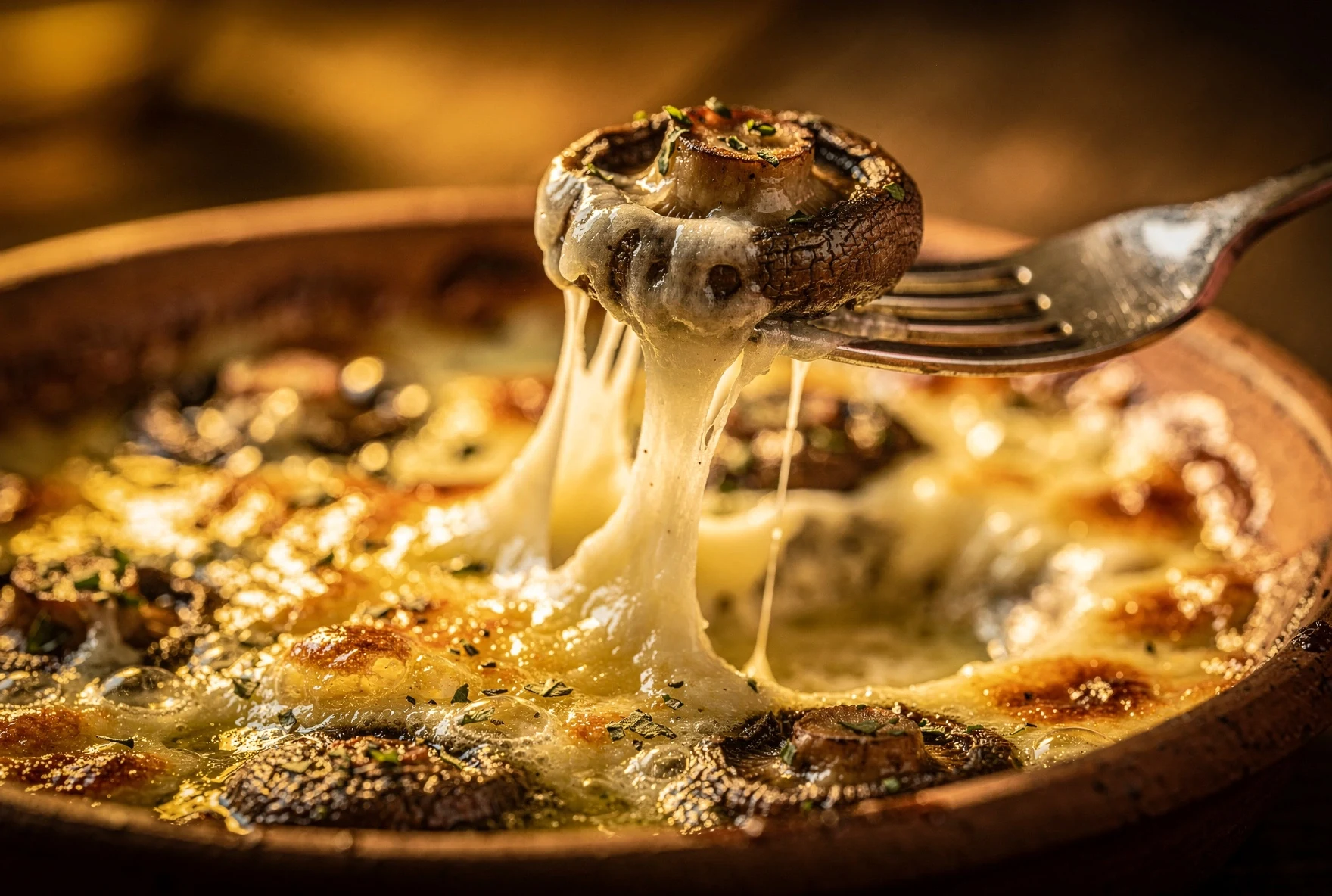
The appeal is threefold. First, it's one of the few Georgian dishes that's genuinely vegetarian without feeling like an afterthought. Second, the ketsi clay dish does something to the mushrooms that a regular baking sheet simply can't — the clay holds and radiates heat evenly, the mushrooms stew in their own juices and the butter, and everything concentrates into this intensely savory pool at the bottom. Third, there's the cheese-pull factor. Georgian sulguni is a stretched-curd cheese that melts into long, elastic strings. When the dish arrives at your table bubbling, and you pull a mushroom out trailing a two-foot strand of cheese, something primal happens in your brain.
The Ketsi: Why the Dish Matters
The name literally means "mushrooms on a ketsi" — the clay dish is half the recipe. A ketsi (კეცი) is a flat, unglazed clay pan used across Georgian cooking. Ojakhuri comes in a ketsi. So does shkmeruli. Grilled meats arrive in one. The clay is porous, so it absorbs fat over years of use — a well-seasoned ketsi is to Georgian cooking what a well-seasoned cast iron skillet is to American cooking.
The clay matters because it distributes heat slowly and evenly. Metal heats fast and creates hot spots. Clay heats gradually, holding temperature long after you pull it from the oven. This means the mushrooms continue cooking at your table, the cheese stays molten, and the butter keeps gently sizzling. The presentation isn't just visual — it's functional.
No Ketsi? No Problem
A cast iron skillet is the best substitute. A small Le Creuset or any oven-safe ceramic dish works too. You lose the slow-release heat of unglazed clay, but the dish will still be excellent. What you shouldn't use: a glass baking dish (heats unevenly, no sizzle) or a regular baking sheet (butter runs everywhere, no pooling effect).
Ingredients Breakdown
| Ingredient | Amount | Notes |
|---|---|---|
| White button mushrooms | 500g (~12–16 large) | Large caps only — you need the cavity for stuffing |
| Unsalted butter | 120g | Yes, really. This isn't the time for restraint |
| Sulguni cheese | 150g | Grated or thinly sliced — melts better |
| Garlic | 2 cloves, minced | Optional but recommended — adds depth |
| Black pepper | Freshly ground | After baking, not before |
| Salt | To taste | Go easy — sulguni is already salty |
| Fresh herbs | Small handful | Cilantro or flat-leaf parsley — for finishing only |
Choosing the Right Mushrooms
In Georgia, this is made with champignon mushrooms — the white button mushrooms you find in every supermarket worldwide. That's part of the beauty: this isn't a dish that demands foraging or specialty ingredients. The mushroom itself is mild, almost bland, which is exactly the point. It's a vessel for butter and cheese, and the oven transforms its texture from squeaky-raw to silky-tender.
Best Choice: Large White Button
The classic. Size matters here — you need caps at least 5cm across to hold enough butter and cheese. Small mushrooms won't work. Go to the market, not the pre-packed bags.
Also Great: Cremini / Baby Bella
Same species, slightly more flavor, slightly firmer texture. If your store has large cremini, use them. They hold up better during the two-stage bake and have a deeper, earthier taste.
Portobello caps work if you want to go large — one or two big portobellos per person, each loaded with a serious amount of cheese. It's not traditional but it's delicious. What you should avoid: shiitake (too distinctive in flavor, wrong texture), oyster mushrooms (too thin, no cavity), and anything dried (this is strictly a fresh mushroom dish).
The Sulguni Question
Sulguni is Georgia's most famous cheese. It's a brined, stretched-curd cheese — think mozzarella's saltier, tangier cousin. When it melts, it stretches into those dramatic strings. When it browns, it develops crispy edges. For soko ketsze, it's the ideal cheese because it melts without disappearing into a puddle of grease.
| Cheese | Melt Quality | Stretch | Works? |
|---|---|---|---|
| Sulguni | Excellent — melts evenly, holds shape | Very high | ✅ The original |
| Low-moisture mozzarella | Great — browns well, pools slightly | High | ✅ Best substitute |
| Fresh mozzarella | Too wet — releases water | Medium | ⚠️ Workable but watery |
| Provolone | Good melt, stronger flavor | Medium-high | ✅ Different but good |
| Cheddar | Melts into a greasy pool | None | ❌ Wrong dish |
Finding Sulguni Outside Georgia
Russian, Turkish, and Eastern European grocery stores often carry sulguni. In the US, look at stores like NetCost or any store with a Georgian/Russian section. Online retailers ship it too. If you truly can't find it, low-moisture mozzarella from the deli section (block, not the pre-shredded bags) is the closest match. The pre-shredded stuff has anti-caking starch that prevents proper melting.
Step-by-Step Instructions
Step 1: Preheat Everything
Set your oven to 200°C (390°F). If you're using a clay ketsi, put it in the cold oven and let it heat up with the oven. Clay can crack from thermal shock — never put a cold ketsi into a hot oven or a hot ketsi onto a cold surface. If you're using cast iron, you can preheat it on the stovetop instead.
Step 2: Prep the Mushrooms
Wipe each mushroom with a damp cloth or paper towel. Don't run them under water — mushrooms are sponges and will absorb liquid, which means they'll steam instead of roast. Twist out the stems gently. You want to widen the natural cavity slightly without breaking through the cap. A small spoon helps — scrape out the dark gills too if you want a cleaner look and more room for cheese.
Save the stems. Chop them finely, sauté with garlic and butter, and spread on toast. Or freeze them for soup stock. Throwing them away is wasteful.
Step 3: Butter the Dish
Pull the hot ketsi from the oven (use thick oven mitts — clay holds heat). Drop about 40g of butter into the dish and swirl it around as it melts and foams. The sizzle means it's hot enough. Arrange the mushrooms in the buttered dish, cavity-side up, packed snugly together. They'll shrink during cooking so it's fine if they touch.
Step 4: First Bake — The Butter Stage
Cut the remaining 80g of butter into small cubes. Place one or two cubes inside each mushroom cavity. Don't be conservative. The butter will melt down into the mushroom, soaking into the flesh and pooling in the bottom of the ketsi. This butter pool is the soul of the dish.
Bake uncovered for 15 minutes. When you check, the mushrooms should have released liquid, the butter should be melted and bubbling, and the mushrooms should have softened and shrunk slightly. If they still look raw, give them 5 more minutes.
Step 5: The Cheese Stage
Pull the ketsi out. Grate or thinly slice the sulguni (grating is easier and melts faster). Stuff each mushroom cavity generously with cheese — pack it in, mound it slightly above the rim. If you're using garlic, scatter the minced garlic over the cheese now. The residual heat will start melting the bottom layer immediately.
Return to the oven for 8–10 minutes. You're looking for the cheese to fully melt, bubble actively, and develop patches of golden brown on top. If your oven has a broil setting, switch to broil for the last 2 minutes to get those caramelized cheese edges — but watch it carefully. Broilers go from golden to burnt in thirty seconds.
Step 6: Serve Immediately
Pull from the oven. Grind black pepper over the top. Scatter a few leaves of fresh cilantro or parsley. Carry it to the table in the ketsi (set it on a wooden board — clay will scorch your table). The butter should be sizzling and the cheese still molten. Serve with fresh shotis puri or mchadi for dipping into the butter pool. The bread is non-negotiable — that garlicky, mushroom-infused butter at the bottom of the dish is arguably better than the mushrooms themselves.
How to Know It's Done
| What to Check | Not Ready | Perfect | Overdone |
|---|---|---|---|
| Butter | Still melting, barely simmering | Actively foaming, small bubbles | Brown and smoking |
| Cheese | Partially melted, still holds shape | Fully melted, bubbling, golden patches | Dark brown, hardening at edges |
| Mushrooms | Firm, pale, still releasing water | Soft, shrunken, slightly golden | Wrinkled, dried out, chewy |
| Butter pool | Watery, diluted by mushroom liquid | Clear golden, concentrated, sizzling | Dark, acrid smell |
How to Serve and What to Pair
Soko ketsze is a starter, not a main course. In a Georgian meal, it comes out first alongside other appetizers — badrijani nigvzit, pkhali, fresh herbs, cheese, and bread. It's meant to be shared. Two or three people crowding around one ketsi, tearing bread, dipping it in the butter, pulling cheese-laden mushrooms — that's the experience.
| Pairing | Why It Works | Recipe |
|---|---|---|
| Shotis puri | The bread soaks up the butter pool — essential | Recipe → |
| Mchadi | Crispy cornbread with rich butter — comfort food squared | Recipe → |
| Dry white wine | Rkatsiteli or Kisi — cuts through the richness | Grape guide → |
| Badrijani nigvzit | Walnut-stuffed eggplant — different textures, both vegetarian | Recipe → |
| Pkhali platter | Fresh walnut-herb bites balance the richness | Recipe → |
| Tkemali | A drizzle of sour plum sauce — sharp acid against buttery mushrooms | Recipe → |
Variations You'll Find in Georgia
The base recipe barely changes across the country — mushrooms, butter, cheese in a ketsi is pretty universal. But restaurants put their own spin on it:
🧀 Double Cheese
Some restaurants mix sulguni with imeruli (a softer, creamier Georgian cheese). The result is creamier, less stretchy, but richer. If you can find both cheeses, a 60/40 sulguni-to-imeruli ratio works well.
🌶️ With Adjika
A spoonful of adjika mixed into the butter before baking. The chili paste melts into the butter pool, giving the whole dish a gentle heat and deeper color. Common in western Georgia.
🧄 Heavy Garlic
Instead of a light sprinkle, some places crush 4–5 cloves into the butter before baking. The garlic practically melts into the dish. If you love garlic, this is the way — just warn your dinner companions.
🥩 With Meat
Not traditional, but some modern restaurants serve a version with minced meat (usually pork or veal) stuffed under the cheese. It's closer to a completely different dish at that point, but it exists.
Restaurant vs. Homemade
Soko ketsze is one of those rare dishes where the restaurant version and the home version can be almost identical. The main difference: restaurants use professional ovens that run hotter and more evenly, and they have actual ketsi dishes that have been seasoned over years of daily use. A new ketsi from a tourist shop doesn't compare to one that's absorbed a decade of butter.
In restaurants, the dish typically costs 8–15 GEL (about $3–5 USD), which is absurdly cheap. At home, you're spending roughly the same on ingredients but making twice as much. The real advantage of making it at home is that you control the butter-to-mushroom ratio. Restaurants sometimes go light on the butter (shocking for Georgia, I know). At home, you can use the amount this dish truly deserves.
Critical Tips
🔥 Preheat the Ketsi
A cold dish means slow, uneven cooking. The mushrooms should sizzle the moment they touch the surface. This is the single biggest difference between a good and great result.
💧 Don't Wash the Mushrooms
Wipe with a damp cloth only. Waterlogged mushrooms will steam instead of roast, releasing too much liquid and diluting the butter. You want concentrated flavor, not a mushroom soup.
🧈 Two-Stage Baking
Butter first, cheese second. If you add cheese from the start, it over-browns and toughens while the mushrooms are still raw. The two-stage approach gives you tender mushrooms AND perfectly melted cheese.
🍞 Serve with Bread
The butter pool at the bottom is not a byproduct — it's a feature. Without bread to soak it up, you're missing half the dish. Fresh Georgian bread, crusty sourdough, or even good toast will do.
⏱️ Speed Is Everything
This dish goes from perfect to mediocre in about 5 minutes as the cheese solidifies and the butter stops bubbling. Get it from oven to table as fast as possible. No Instagram staging — eat first, photograph later.
🧂 Salt Carefully
Sulguni is a brined cheese — it's already salty. Taste the cheese before adding any salt. Between the cheese and salted butter, you often need zero additional salt. Over-salting this dish is the most common mistake.
Common Mistakes
❌ Small Mushrooms
Those pre-packed cocktail mushrooms are too small. You need caps big enough to hold a cube of butter and a mound of cheese. If the mushroom fits in your tablespoon, it's too small.
❌ Skimping on Butter
If 120g feels excessive, you're thinking about this dish wrong. The butter doesn't just cook the mushrooms — it creates the sauce. Reduce the butter and you remove the entire point of soko ketsze.
❌ Pre-Shredded Cheese
Those bags of pre-shredded mozzarella are coated in potato starch to prevent clumping. That starch also prevents proper melting. Buy a block and grate it yourself — takes 30 seconds.
❌ Adding Cheese Too Early
The mushrooms need 15 minutes alone to release liquid, shrink, and absorb butter. Adding cheese at the start means the cheese overcooks while the mushrooms undercook. Patience.
❌ Glass Baking Dish
Glass doesn't hold heat the way clay or cast iron does. Your mushrooms will stop sizzling the moment they leave the oven. The table presentation — still bubbling, still sizzling — is half the experience.
❌ Letting It Sit
This isn't a stew that improves with resting. Soko ketsze has about a 5-minute window of perfection. After that, the butter congeals, the cheese rubberizes, and the magic evaporates. Oven to table, immediately.
Where to Eat Soko Ketsze in Tbilisi
Shavi Lomi
Their version uses generous garlic and butter, served in a well-seasoned ketsi. Consistently excellent. The whole menu is worth exploring.
Barbarestan
Upscale take on the classic — still mushrooms and cheese in a ketsi, but with noticeably better ingredients. The mushrooms taste like actual mushrooms, not water.
Ezo
Cozy courtyard restaurant in Old Town. Their soko ketsze comes out impossibly hot, swimming in butter. Order it alongside their badrijani and bread basket.
Any Neighborhood Sakhli
Honestly, this dish is hard to mess up. Even average Georgian restaurants make a solid version. The real gems are the hole-in-the-wall places where the ketsi has been in service for 20 years.
Nutrition
Let's be honest: this is not health food. It's butter-drenched mushrooms topped with melted cheese. That said, mushrooms are genuinely nutritious — high in B vitamins, selenium, and antioxidants. And in the context of a Georgian meal where this is one small dish among many, the per-person portion is reasonable.
Frequently Asked Questions
Can I make this without a clay ketsi?
Absolutely. A small cast iron skillet is the best alternative — it holds heat nearly as well as clay. A ceramic baking dish works too. The key is something that retains heat so the dish keeps sizzling at the table. Avoid glass or thin metal.
Is soko ketsze vegan-friendly?
The traditional version is not — it's loaded with butter and cheese. You could theoretically use vegan butter and a plant-based mozzarella, but the stretch and flavor won't be the same. Mushrooms roasted in olive oil with garlic would be a good vegan-friendly dish — just don't call it soko ketsze.
Can I prep it in advance?
You can clean and stem the mushrooms a few hours ahead, and grate the cheese. But don't assemble and bake until right before serving. This dish lives and dies by timing — it must go from oven to table immediately. There's no "make ahead and reheat" version that's any good.
How do you pronounce soko ketsze?
SO-ko KETS-zeh. The "tz" is like the "ts" in "cats." In Georgian script: სოკო კეცზე. "Soko" means mushroom, "ketsze" means "on a ketsi." You'll also see it spelled "soko kecze" or "soko ketsi" online — all the same dish.
Can I use portobello mushrooms?
Yes, and they work beautifully. One large portobello per person, each loaded with a serious amount of cheese and butter. You may need to increase bake time by 5 minutes since they're thicker. The flavor is actually richer than button mushrooms, though the presentation is different.
Written by The Georgian Eats Team
We've eaten soko ketsze at dozens of restaurants across Tbilisi and made it at home more times than we can count. The version in this recipe is our best attempt at the platonic ideal — the right amount of butter, the right mushroom size, the two-stage bake that makes the difference between good and great.
Last updated: February 2026.
Related Articles
Badrijani Nigvzit
Fried eggplant rolled around garlicky walnut paste — another great vegetarian starter.
Ojakhuri
Another ketsi classic — pork and potatoes served sizzling in the same clay dish.
Shkmeruli
Garlic chicken in milk and butter — Georgia's other butter-forward masterpiece.
Georgian Cheese Guide
Everything about sulguni, imeruli, and the other cheeses that define Georgian cooking.