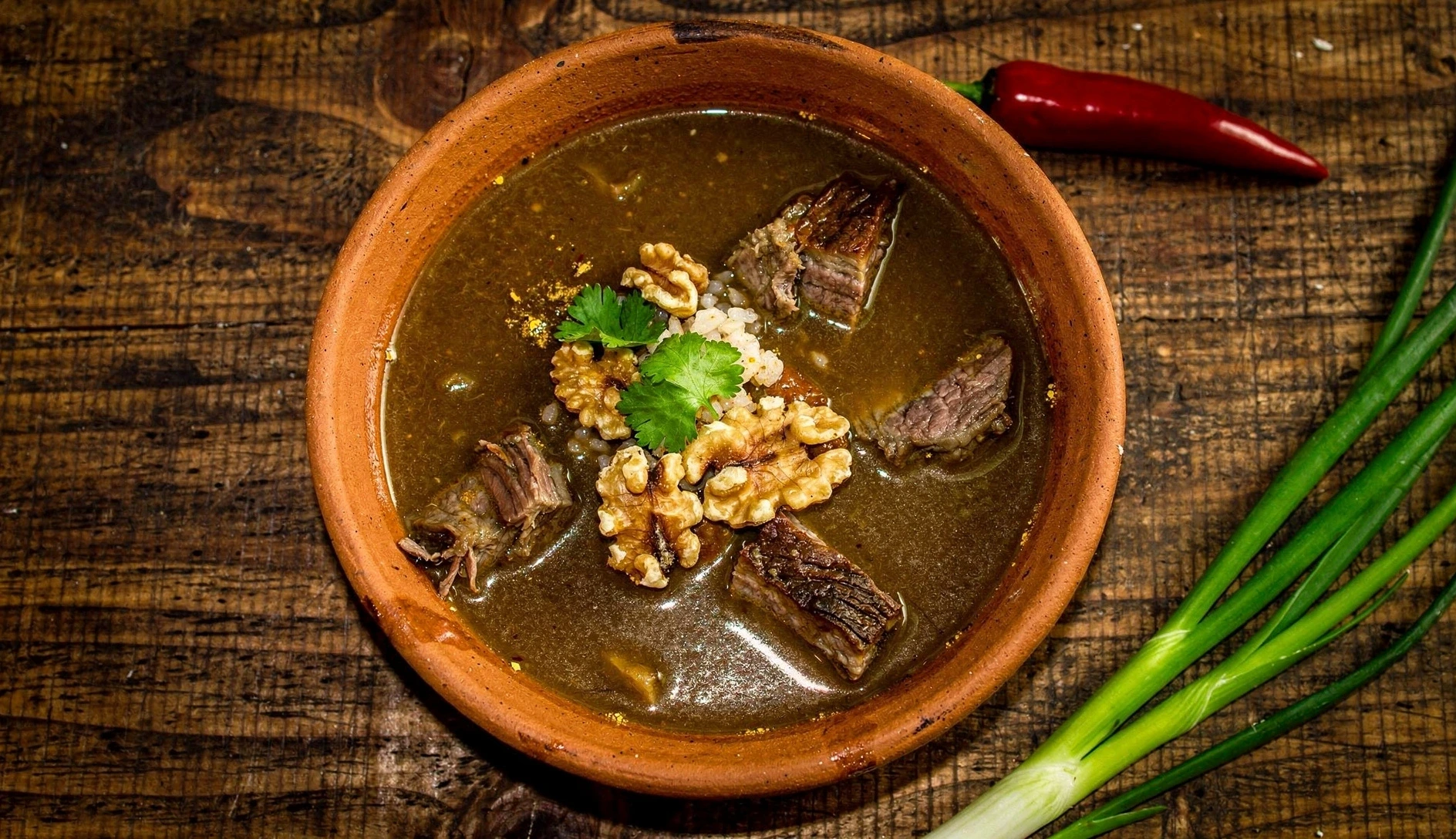
Kharcho is the soup Georgians argue about. Not whether it's good — that's settled — but what goes in it. Ask ten cooks and you'll get ten recipes, each one the "real" version. The common thread: beef that's been simmered until it falls apart, a broth thickened with ground walnuts, sour plum paste that cuts through the richness, and enough spice to warm you from the inside out. It arrives at the table dark, fragrant, and thick enough that a spoon stands up in it. In a country of extraordinary soups, kharcho might be the king.
Kharcho Quick Facts
- Georgian name: ხარჩო (khar-CHO)
- Origin: Found across Georgia — every region has its own version
- Key ingredients: Beef, rice, walnuts, sour plum paste (tklapi/tkemali), khmeli-suneli
- Type: Thick spiced soup (some regions make it as a stew)
- Prep + cook time: 20 min prep, 2.5–3 hours cooking
- Cost in Georgia: 12–20 GEL in restaurants (~$4–7 USD)
- Difficulty: Easy — mostly passive simmering time
Why This Soup Matters
Kharcho occupies a strange place in Georgian cuisine. It's simultaneously one of the most famous dishes and one of the most misunderstood. Outside Georgia, it's often lumped in with generic "beef soups." Inside Georgia, it's treated with a reverence that borders on religious. Every family has a recipe. Every region claims theirs is the original. The debates can get heated.
The name itself — ხარჩო — comes from the Georgian word for "beef" (though etymologists argue about this). The full traditional name, dzrokhis khortsis kharcho, literally translates to "cow's meat kharcho," which tells you everything about priorities. This is, first and foremost, a beef dish. The walnuts thicken it. The sour plum sharpens it. The spices perfume it. But the beef is the star.
What separates kharcho from, say, a good Hungarian goulash or a French pot-au-feu is the walnut-sour plum axis. Ground walnuts give the broth a velvety, almost creamy body without any dairy. Tklapi — dried sour plum leather — or tkemali sauce adds a tart, fruity acidity that keeps the richness in check. It's the kind of balance that takes centuries to figure out, and Georgian cooks nailed it.
Using tklapi instead of bottled sauce
If you want the older-school souring agent rather than a spoonful of sauce, use tklapi. Tear in a small strip, let it dissolve into the broth, then taste before adding more. It gives kharcho a deeper sour plum note without extra liquid.
The Great Kharcho Debate
Before we get to the recipe, you need to understand that "kharcho" is really a family of dishes, not a single recipe. The main split:
| Style | Region | Texture | Key Difference |
|---|---|---|---|
| Classic Kharcho | Eastern Georgia (Kartli, Kakheti) | Soup with rice | Brothy with rice, lighter on walnuts |
| Megrelian Kharcho | Samegrelo (Western Georgia) | Thick stew, no rice | Walnut-heavy, served over ghomi (polenta) |
| Imeretian Kharcho | Imereti (Central Georgia) | Medium thickness | More tomato-forward, milder spicing |
| Chicken Kharcho | Various | Lighter soup | Chicken instead of beef, quicker cook time |
| Fish Kharcho | Western Georgia (coastal) | Light soup | Freshwater fish, very herby |
This recipe gives you the classic version — a proper soup with rice, walnuts, and sour plum paste. It's the one you'll find in most Tbilisi restaurants and the one most Georgian grandmothers would recognize as "real" kharcho. The Megrelian stew version is worth knowing about (and I'll cover the differences), but start here.
Ingredients
Serves 6 generously. Kharcho is not a dish you make in small quantities — it gets better the next day, and you'll want leftovers.
| Ingredient | Amount | Notes |
|---|---|---|
| Beef chuck or brisket | 1 kg (2.2 lbs) | Bone-in preferred. Fatty cuts work best — the fat renders into the broth. |
| Onions | 3 medium | Yellow or white, finely diced |
| Walnuts | 150g (1¼ cups) | Ground to coarse sand texture |
| Rice | 100g (½ cup) | Short-grain or round rice. Rinsed well. |
| Tomato paste | 2 tbsp | Good quality, concentrated |
| Fresh tomatoes | 2 medium | Peeled and diced. Canned fine in winter. |
| Tkemali or tklapi | 3 tbsp tkemali OR 2 sheets tklapi | Sour plum sauce or dried plum leather — the soul of the dish |
| Garlic | 6–8 cloves | Minced or pounded in mortar |
| Khmeli-suneli | 2 tsp | Georgia's signature spice blend. Non-negotiable. |
| Ground coriander | 1½ tsp | Freshly ground if possible |
| Blue fenugreek (utskho suneli) | 1 tsp | Earthy, slightly bitter. Essential Georgian spice. |
| Ground marigold (imeruli shaprani) | 1 tsp | Adds color and mild floral note. Sub turmeric if desperate. |
| Cayenne or adjika | ½–1 tsp | To taste. Kharcho should have warmth, not fire. |
| Fresh cilantro | Large bunch | Stems in the soup, leaves for garnish |
| Bay leaves | 2–3 | Remove before serving |
| Salt and black pepper | To taste | Season gradually as broth reduces |
The Sour Plum Question
Tkemali (sour plum sauce) or tklapi (dried plum leather) is what makes kharcho kharcho. Without it, you just have beef and walnut soup. If you can't find either, your best substitute is 2 tablespoons of tamarind paste mixed with 1 tablespoon of pomegranate molasses. It won't be identical, but it'll get you close. A squeeze of lemon at the end is the emergency fallback, but please try harder than that.
Equipment
Heavy-Bottom Pot or Dutch Oven
5–6 liter capacity minimum. Even heat distribution matters for the long simmer. Cast iron or enameled cast iron is ideal.
Food Processor or Mortar
For grinding walnuts. You want coarse sand, not walnut butter. Pulse in short bursts if using a food processor.
Step-by-Step Recipe
Step 1: Simmer the Beef (1.5–2 hours)
Cut the beef into 3–4 cm chunks. Place in your pot, cover with 2 liters of cold water. Bring to a boil over medium-high heat. You'll see a lot of grey foam rise to the surface — skim this off with a spoon. This is protein scum and leaving it makes the broth cloudy and bitter.
Once skimmed, add the bay leaves and a teaspoon of salt. Reduce heat to a gentle simmer — you want lazy bubbles, not a rolling boil. Cover and cook for 1.5 to 2 hours, until the beef is very tender and starts pulling apart with a fork. Check occasionally and add water if the level drops below the meat.
Browning vs. Boiling
Traditional Georgian method: boil the meat directly, no browning. Some modern recipes brown the beef first for deeper flavor. Both are legitimate. The traditional method gives you a cleaner, more delicate broth; browning gives more depth. I give the traditional method here because that's how it's done in most Georgian kitchens, and the walnuts and spices provide plenty of depth on their own.
Step 2: Build the Base (15 minutes)
While the beef simmers (or once it's tender), heat a tablespoon of sunflower oil in a separate pan. Cook the diced onions over medium heat until soft and translucent — about 8 minutes. Don't rush this. The onions should be sweet and almost jammy, not browned.
Add the tomato paste and stir constantly for 2 minutes. The paste will darken and caramelize slightly. Add the diced fresh tomatoes and cook until they break down and release their liquid, another 5 minutes.
Step 3: Add the Walnuts and Spices (5 minutes)
In a small bowl, combine the ground walnuts, khmeli-suneli, ground coriander, blue fenugreek, ground marigold, cayenne, and minced garlic. Add this mixture to the onion-tomato base and stir for 2 minutes over medium heat. The kitchen will smell extraordinary at this point — toasted walnuts meeting warm spices is one of those smells that makes you understand why Georgians take their cooking so seriously.
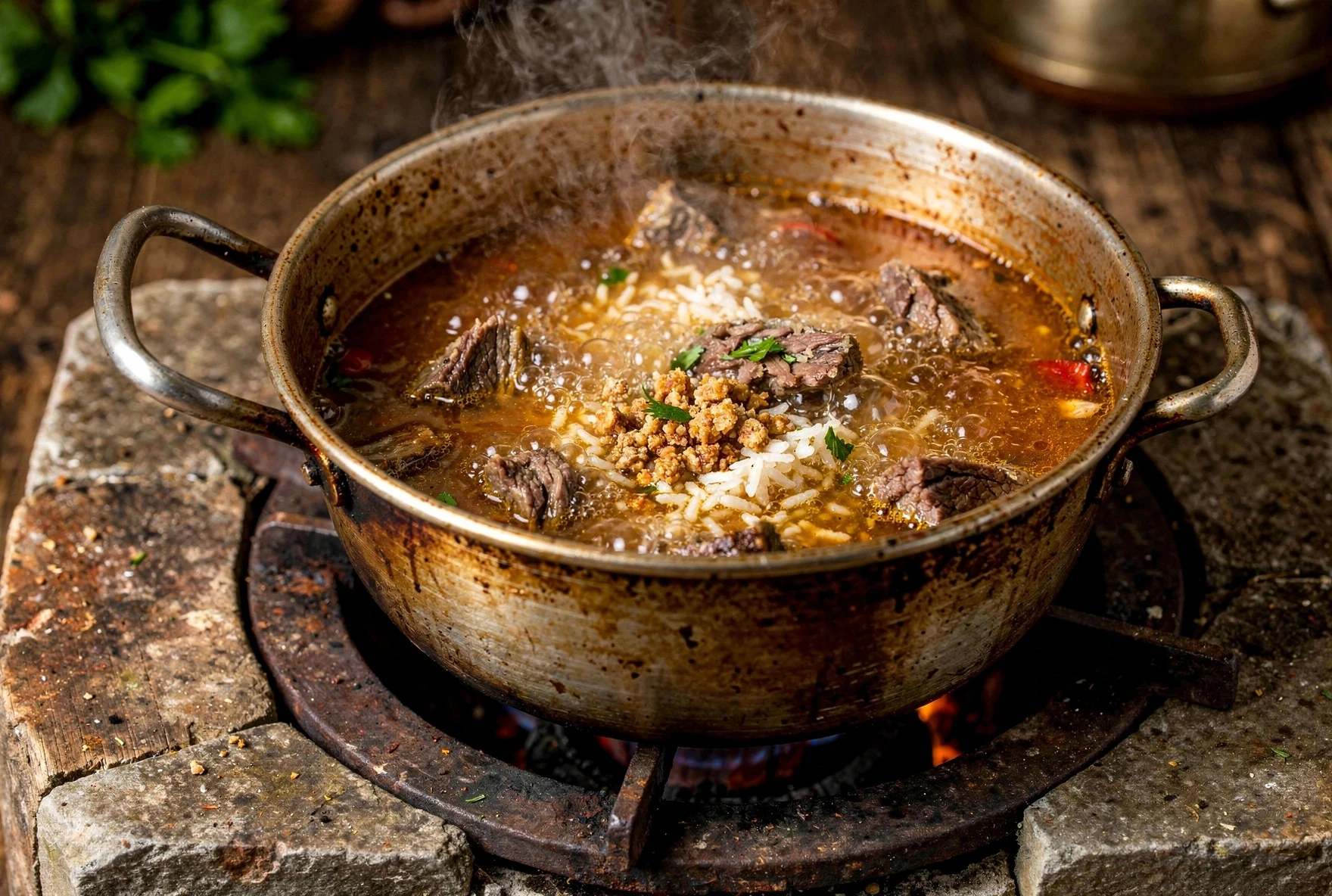
Step 4: Combine and Finish (30–40 minutes)
Scrape the entire onion-walnut-spice mixture into the pot with the beef and broth. Add the rinsed rice and the tkemali sauce (or tklapi, dissolved in a bit of warm broth). Stir everything well. If using tklapi, tear it into small pieces and let it dissolve — it'll take a few minutes.
Bring back to a gentle simmer. Cook uncovered for 25–30 minutes, stirring occasionally. The rice will absorb liquid and the walnuts will thicken the broth. You're looking for a consistency thicker than a regular soup but thinner than a stew — the spoon should leave a brief trail when dragged through it.
Finely chop the cilantro stems and stir them in during the last 10 minutes. Taste and adjust salt, pepper, and sourness (add more tkemali if you want more tang). Remove the bay leaves.
Step 5: Rest and Serve
Turn off the heat and let the kharcho sit for 10–15 minutes. Like most stews and thick soups, it improves with a short rest as the flavors meld and the rice absorbs just a bit more liquid.
Ladle into deep bowls. Pile fresh cilantro leaves on top. Serve with crusty Georgian shotis puri (or any good bread) and, if you're feeling traditional, a glass of dry red Saperavi.
Tips for the Best Kharcho
🥩 Choose Fatty Beef
Chuck or brisket with visible marbling. Lean cuts make watery, sad kharcho. The fat renders and enriches the broth. Bone-in pieces are even better — the bones add body.
🌰 Grind Walnuts Correctly
Coarse sand texture, not paste. If you over-process them, the oils release and the soup gets greasy instead of velvety. Pulse in a food processor or pound in a mortar.
🍚 Rice Timing Matters
Add the rice at the right time — too early and it turns to mush and over-thickens; too late and it stays crunchy. 25–30 minutes of simmering is the sweet spot.
😋 Next-Day Kharcho
Kharcho is better on day two. The flavors deepen overnight. It'll thicken — add a splash of water when reheating and adjust seasoning. The rice will be softer, the walnuts more integrated.
Common Mistakes
| Mistake | Why It Ruins Things | Fix |
|---|---|---|
| Using lean meat | Thin, flavourless broth | Chuck, brisket, or short ribs. Fat is flavour. |
| Skipping the sour element | Flat, one-dimensional taste | Tkemali or tklapi is essential. Tamarind paste works as backup. |
| Boiling instead of simmering | Tough meat, cloudy broth | Lazy bubbles only. Patience pays off here. |
| Over-processing walnuts | Greasy, oily texture | Pulse briefly or use mortar. Stop at coarse sand. |
| Not enough spice | Missing the warmth that defines kharcho | Don't be shy with khmeli-suneli and coriander. Add at the walnut stage so spices bloom. |
| Too much rice | Turns into porridge, not soup | ½ cup is enough. Rice is a supporting character here. |
Variations
| Variation | What Changes | Notes |
|---|---|---|
| Megrelian Kharcho | No rice, double the walnuts, thicker consistency | Served over ghomi (Georgian polenta). More of a stew than soup. |
| Chicken Kharcho | Whole chicken pieces replace beef | Lighter, faster (1 hour total). Good for weeknight cooking. |
| Veal Kharcho | Veal instead of beef | More delicate. Popular in Kakheti region. |
| Fish Kharcho | Freshwater fish, more herbs, lighter broth | Western Georgia specialty. Fish goes in last 15 minutes. |
| Vegetarian Kharcho | Mushrooms or cauliflower, vegetable stock | Not traditional but surprisingly good. Double the walnuts for body. |
The Megrelian Version Is Worth Exploring
If you love walnuts, the Megrelian kharcho from the Samegrelo region is extraordinary. Skip the rice entirely. Double the walnuts to 300g. Cook it lower and slower until the walnut paste practically melts into the beef. The result is less a soup and more a thick, rich stew that you ladle over ghomi — Georgian corn polenta. It's what Georgian comfort food aspires to be.
What to Serve Alongside
| Pairing | Why It Works |
|---|---|
| Shotis puri (Georgian bread) | The thick, crusty bread soaks up the walnut broth perfectly |
| Saperavi (dry red wine) | The tannins stand up to the richness. Georgia's flagship red grape. |
| Mchadi (cornbread) | Dense, slightly sweet corn flatbread. A classic pairing in western Georgia. |
| Pickled vegetables (mkhali) | The acidity and crunch contrast the rich, thick soup |
| Ghomi (polenta) — Megrelian style | Specifically for the thicker Megrelian version. The polenta absorbs the walnut gravy. |
Where to Eat Kharcho in Tbilisi
Shavi Lomi
A modern take on Georgian classics in a relaxed Old Town setting. Their kharcho uses a house spice blend and comes with freshly baked bread. Reservations recommended on weekends.
Café Littera
Fine dining in the Writers' House courtyard. Their kharcho is refined but authentic — clear broth, tender beef, restrained walnut. One of Tbilisi's best restaurants period.
Machakhela
Reliable chain with multiple locations. Their kharcho is consistently good and very traditional. Big portions, fair prices — the working-lunch version.
Samikitno (Dezerter Bazaar area)
The no-frills canteen-style restaurants near the bazaar serve honest, grandmother-level kharcho for 8–12 GEL. No English menus. Point and eat. Some of the best in the city.
Georgian Spice Guide for Kharcho
If you're cooking Georgian food outside Georgia, sourcing the right spices is half the battle. Here's what you're looking for:
| Spice | Georgian Name | Flavour | Substitute |
|---|---|---|---|
| Khmeli-suneli | ხმელი-სუნელი | Complex, warm, slightly sweet | No real substitute. Buy online — it's cheap and keeps well. |
| Blue fenugreek | უცხო სუნელი | Earthy, slightly bitter, nutty | Regular fenugreek at ¼ the amount (much stronger) |
| Ground marigold | იმერული შაფრანი | Mild floral, golden color | Turmeric (for color) — skip the floral notes |
| Ground coriander | ქინძი | Citrusy, warm | Widely available — buy whole seeds and grind fresh |
| Adjika | აჯიკა | Hot, garlicky chili paste | Cayenne + smoked paprika + garlic in a pinch |
Nutrition
| Nutrient | Per Serving |
|---|---|
| Carbohydrates | 22g (from rice, tomato, walnuts) |
| Fiber | 3g |
| Iron | ~4mg (25% DV) |
| Allergens | Tree nuts (walnuts) |
Storage and Leftovers
🧊 Refrigerator
3–4 days in an airtight container. Kharcho genuinely improves after a night in the fridge. Add a splash of water when reheating.
❄️ Freezer
Up to 3 months. The rice will be softer after thawing but the flavor holds beautifully. Thaw overnight in fridge.
🔥 Reheating
Stovetop over low heat. Add water or stock as needed — the rice keeps absorbing liquid. Microwave works but stir halfway.
🌿 Refresh the Garnish
Always add fresh cilantro when serving leftovers. A squeeze of lemon or dash of tkemali brightens reheated kharcho.
Frequently Asked Questions
Can I use a pressure cooker or Instant Pot?
Yes. Pressure cook the beef for 35–40 minutes on high pressure with the water, bay leaves, and salt. Then release pressure, add the onion-walnut-spice mixture and rice, and simmer on sauté mode for 20 minutes. You'll cut the total time to about an hour.
What's the difference between kharcho and chanakhi?
Both are beef-based Georgian dishes, but they're quite different. Kharcho is a soup with walnuts, rice, and sour plum. Chanakhi is a layered stew baked in clay pots with potatoes, eggplant, and tomatoes. Chanakhi has no walnuts or sour element.
Do I really need tklapi or tkemali?
If you want it to taste like kharcho, yes. The sour plum element isn't optional — it's what distinguishes this from "beef and walnut soup." Tamarind paste is the best substitute. In an emergency, pomegranate molasses diluted with a little lemon juice works too.
Is kharcho spicy?
Warm, not hot. Traditional kharcho has gentle warmth from the spice blend — it shouldn't make you sweat. The cayenne or adjika is adjustable. Start with ½ teaspoon and add more if you want heat.
Can I make it without walnuts?
Technically yes, but then it's not really kharcho — the walnuts are a defining characteristic. If you have a tree nut allergy, you could try sunflower seed butter as a thickener, but the flavor profile will be very different.
Written by The Georgian Eats Team
Based in Tbilisi, where ordering kharcho at five different restaurants in the same week counts as "research." We've eaten through the classic soup version, the Megrelian stew version, and several questionable attempts at "fusion kharcho" that we won't be recommending.
Last updated: February 2026.
Related Articles
Chakapuli: Spring Lamb Stew
Georgia's other iconic stew — lamb with tarragon and sour plums.
Satsivi: Cold Chicken in Walnut Sauce
Another walnut masterpiece — poached chicken in cold spiced sauce.
20 Georgian Dishes You Need to Try
The complete guide to Georgian cuisine — what to eat and how to eat it.
Georgian Grape Varieties: 15 Grapes to Know
Pair your kharcho with the right Saperavi — here's the complete guide.