You'll hear the word before you sit down. Supra. Literally "tablecloth" in Georgian — borrowed centuries ago from Persian — but the word has grown far beyond its origin. A supra is Georgia's answer to dinner, but calling it dinner is like calling a symphony background music.
A supra is a structured feast with a toastmaster, a sequence of toasts, more food than seems physically possible, and wine that flows until the toasts are done (which can be hours). It was inscribed on Georgia's Intangible Cultural Heritage list in 2017, but Georgians didn't need UNESCO to tell them it mattered. The supra is how this country celebrates, mourns, bonds, and passes time with the people it loves.
If you're visiting Georgia, you will end up at a supra — whether at a friend's home, a rural guesthouse, or a wedding with 300 people. Here's everything you need to know so you don't just survive it, you enjoy it.
What Exactly Is a Supra?
At its core, a supra is a communal meal led by a tamada (toastmaster) where food, wine, and structured toasts create a shared experience that can last anywhere from two to eight hours.
There are two types:
🎉 Keipi (Festive Supra)
Celebrations — weddings, birthdays, holidays, welcoming guests, harvest festivals, or just because it's Saturday. The toasts here are called sadghegrdzelo ("for long life").
🕊️ Kelekhi (Mourning Supra)
Held after funerals. Same structure, different tone. Toasts honor the deceased and comfort the living. These are called shesandobari ("for forgiveness").
Both follow the same fundamental rules: a tamada leads, guests follow the toast sequence, and the table is loaded with food. The difference is mood, not structure.
The supra you're most likely to encounter as a visitor is the festive kind — and the most common trigger for one is simply having guests. Georgians don't need a holiday to throw a supra. Your arrival might be reason enough.
The Tamada: Master of Ceremonies
Every supra has a tamada, and the tamada is not optional. This person runs the evening. They decide the order of toasts, set the pace, and keep the energy right — celebratory but not chaotic, emotional but not maudlin.
The tamada is either chosen by the host or elected by the guests at the table. The job typically goes to someone who is:
- Eloquent — they need to speak beautifully and at length on each toast topic
- Respected — the table follows their lead, so social standing matters
- A drinker — they must drink with every toast and show no signs of losing composure
- Culturally literate — they should know the traditional toast sequence and adapt it to the occasion
A great tamada is part poet, part MC, part priest. They weave personal stories, historical references, and genuine emotion into each toast. A bad one just lists names and rushes through. Georgians take this distinction seriously — being asked to serve as tamada is an honor.
The tamada is almost always male
Traditionally, the role has been overwhelmingly male. This is changing slowly in urban Georgia, but at most supras you attend — especially in rural areas or at formal events — the tamada will be a man. It's one of the more gendered aspects of the tradition.
The Toast Sequence: How It Works
This is the part that confuses most foreigners. The supra isn't free-form drinking. It follows a structured sequence of toasts, each introduced by the tamada.
Here's how a round works:
- The tamada proposes a toast topic — say, "To our families" — and speaks about it for one to five minutes
- Guests raise their glasses but don't drink yet
- The toast passes around the table (generally counter-clockwise). Each guest who wants to speak raises their glass, adds their own words on the topic, then drains their glass
- If you don't want to speak, you can simply drink after someone says something that resonates
- The tamada introduces the next toast topic, and the cycle repeats
Eating during toasts is fine. Talking during someone else's toast is not. This is important — when someone is speaking, you listen.
The Alaverdi
Sometimes the tamada will offer an alaverdi — a chance for a specific guest to expand on the current toast. If the tamada gestures to you and says "alaverdi," it means: your turn, say something. Don't panic. Sincerity beats eloquence. A simple "I'm grateful to be here, and I toast to your wonderful family" is perfect.
Traditional Toast Order
The specific toasts vary by region and tamada, but a festive supra generally follows this pattern:
| # | Toast Topic | Notes |
|---|---|---|
| 1 | To God / Peace | Nearly always first. Even secular Georgians respect this |
| 2 | To Georgia | The homeland, its beauty, its struggles, its future |
| 3 | To the occasion | The reason for gathering — birthday, holiday, guest arrival |
| 4 | To parents / ancestors | Deep respect for elders, living and deceased |
| 5 | To the deceased | A solemn moment — glasses are not clinked for this toast |
| 6 | To family / children | The future generation, health, happiness |
| 7 | To friends | Often the most emotional — stories, memories, gratitude |
| 8 | To love | Romantic love, love of life, love between people |
| 9 | To guests | If foreigners are present, this toast gets extra attention |
| 10+ | Free topics / humor | Later toasts get looser — jokes, stories, spontaneous themes |
| Final | Kvelatsminda (All Saints) | Signals the supra is ending. Then a toast to the tamada. |
Never clink glasses during the toast to the deceased
This is the one rule every foreigner should know. When the tamada toasts to those who have passed, drink solemnly without touching glasses. Clinking is for celebration. This toast is for remembrance.
Wine at the Supra
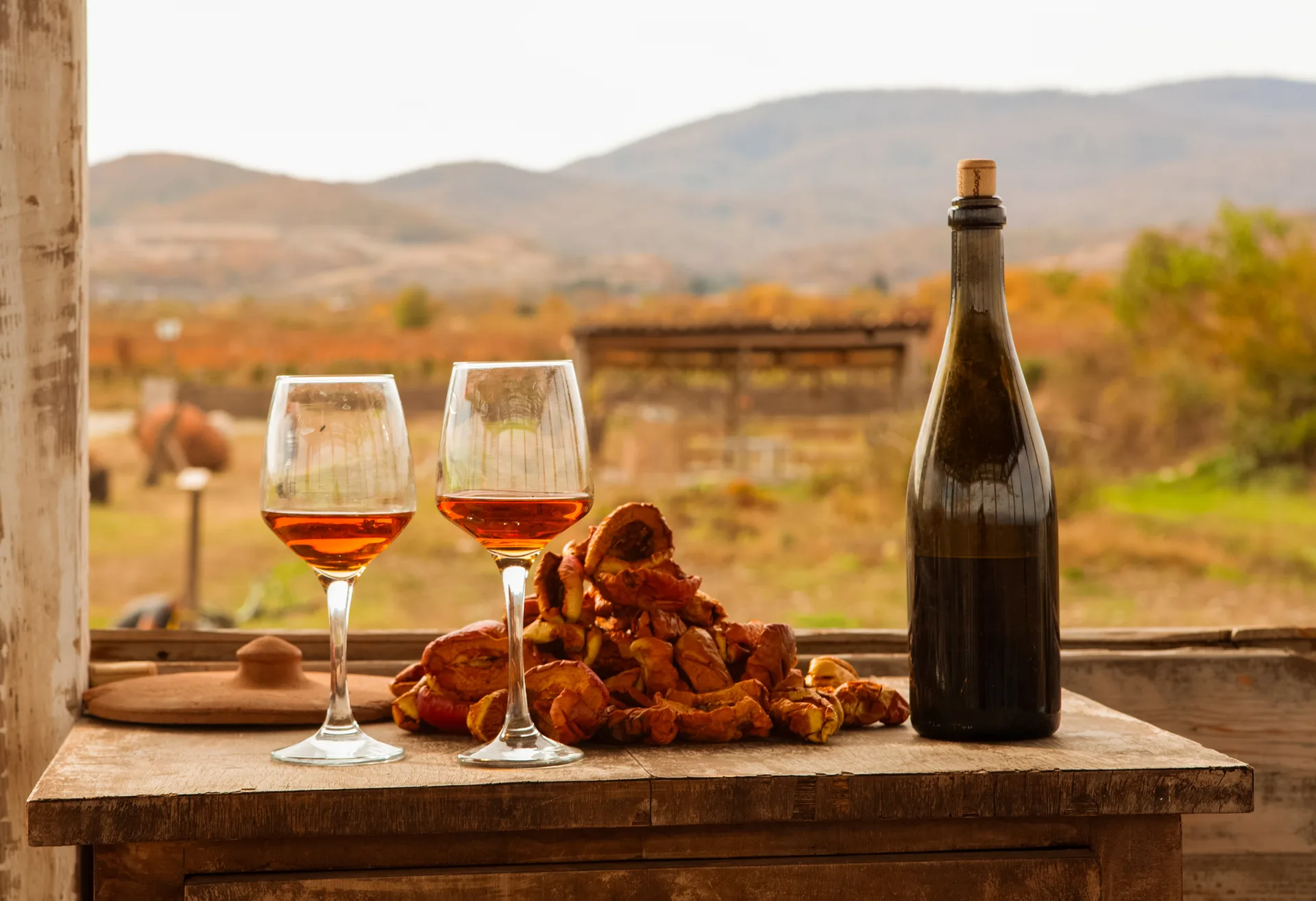
Georgia has been making wine for roughly 8,000 years — the oldest continuous winemaking tradition on Earth. Wine is not a beverage at a supra; it's a sacrament. The entire toast structure revolves around it.
Key things to know:
- Glasses are filled full. You toast with a full glass. Toasting with a half-full glass is considered disrespectful.
- You drain the glass. After your toast, you empty it. Not a sip — the whole thing. (This is why supra glasses tend to be small.)
- Women get a pass. The draining rule is flexible for women and guests. You can sip if you need to, and nobody will judge you harshly.
- The kantsi (drinking horn) is sometimes used at traditional supras. You can't set it down — it has no flat base — so you must drink it all at once.
- Homemade wine is extremely common. In rural Georgia, almost every family makes their own wine. It's usually served in clay pitchers.
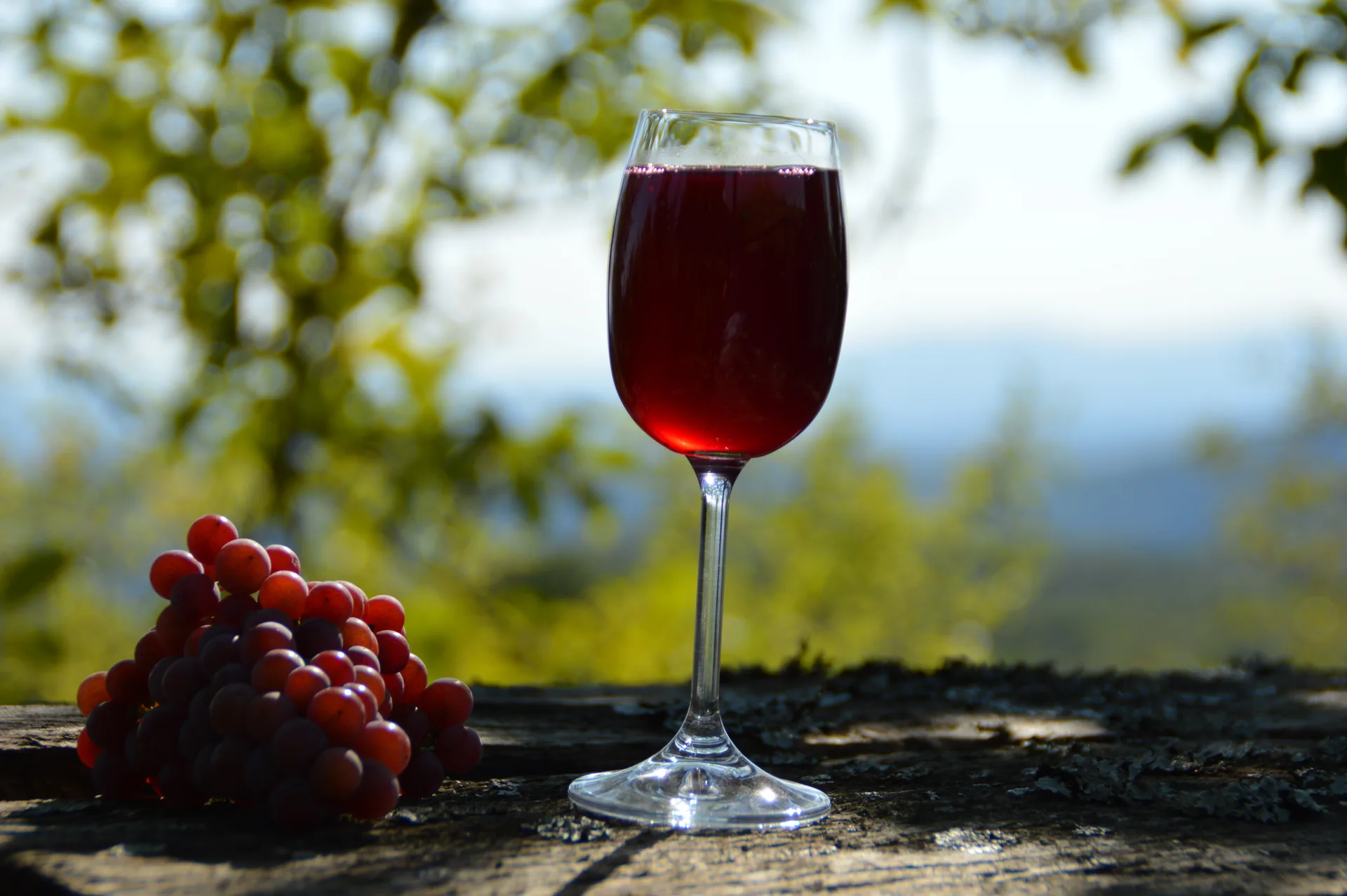
The most common wines at a supra are Saperavi (a bold, dry red unique to Georgia) and Rkatsiteli (a white grape often made in the amber/orange qvevri style). Georgia has over 500 endemic grape varieties, so the selection varies wildly by region.
How much wine are we talking?
At a proper supra with 10-15 toasts, expect to drink the equivalent of 1-2 bottles of wine over several hours. Some supras go harder. This is why eating continuously is not just allowed — it's essential. The food is there to sustain you through the wine.
The Food: What's on the Table
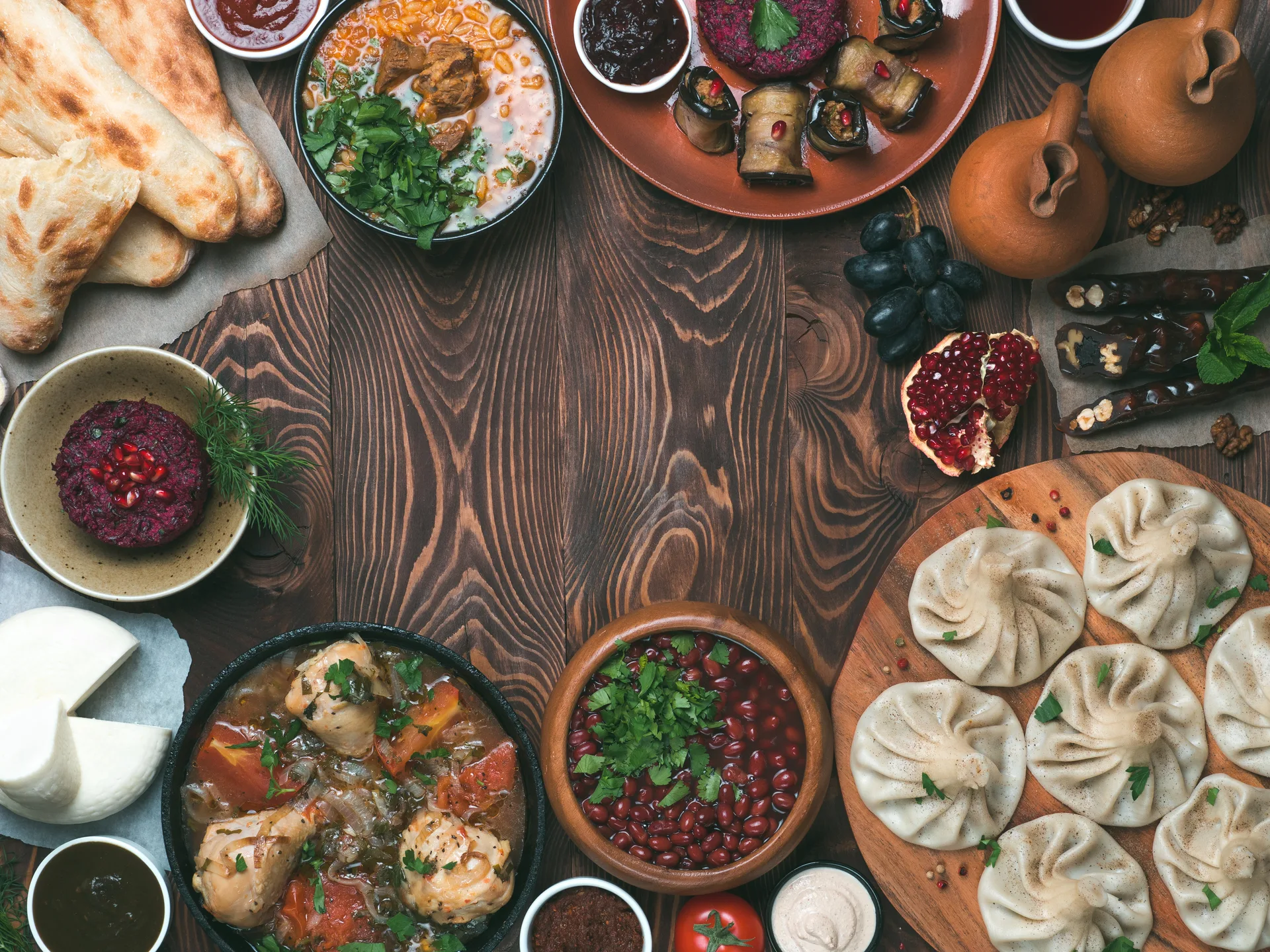
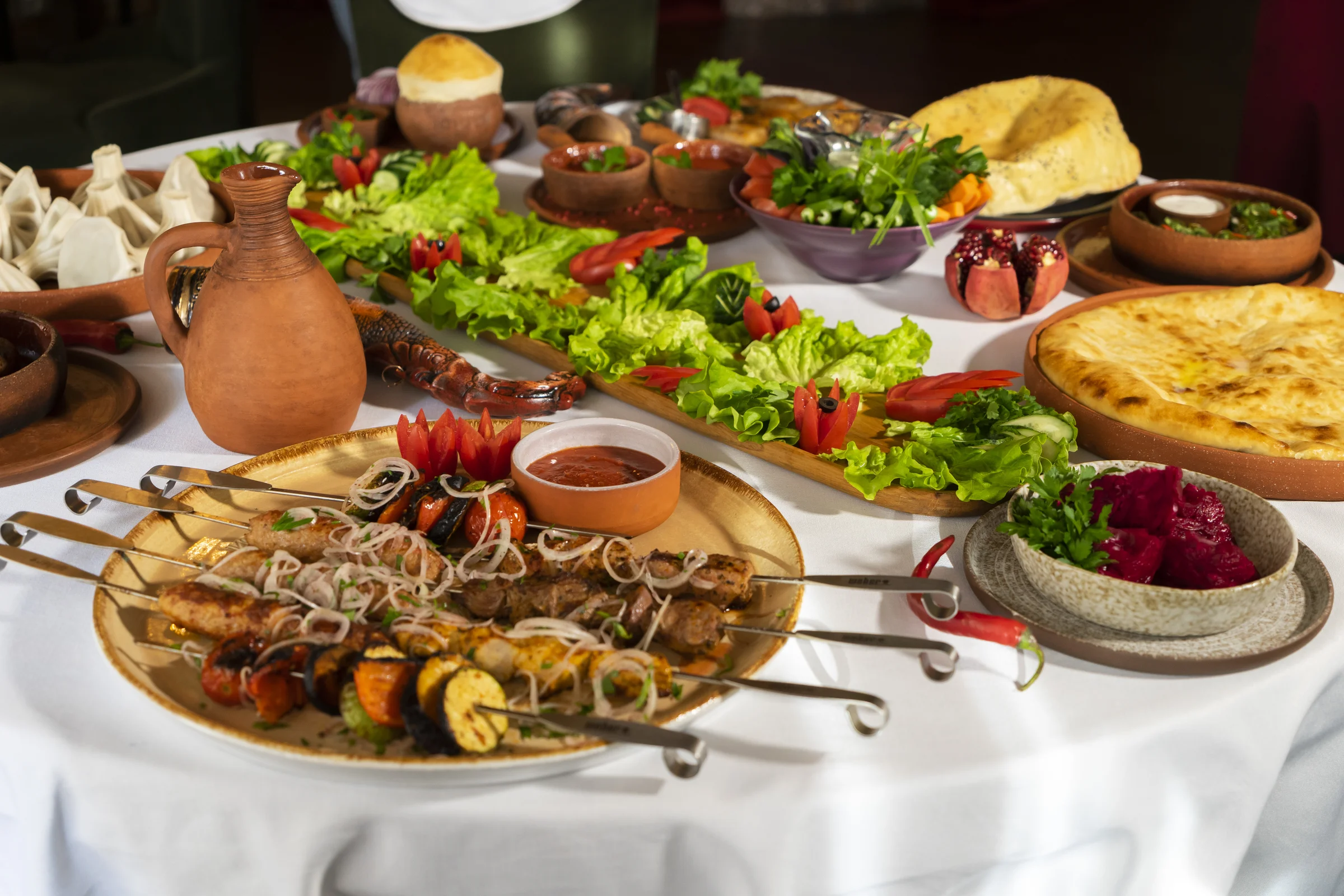
A supra table is loaded before you sit down and stays loaded throughout. Dishes aren't served in courses — everything appears at once (with hot dishes arriving throughout). The visual abundance is the point. An empty table would shame the host.
Here's what you'll typically find:
| Category | Dishes |
|---|---|
| Cold starters | Pkhali (walnut-paste vegetable balls), badrijani (eggplant rolls), assorted pickles, fresh herbs, cheese |
| Bread & cheese | Khachapuri (various regional styles), tonis puri (clay oven bread), lobiani (bean-filled bread) |
| Hot mains | Mtsvadi (grilled meat over grapevine coals), khashlama (boiled beef), kupati (sausages), chicken in walnut sauce (satsivi or bazhe) |
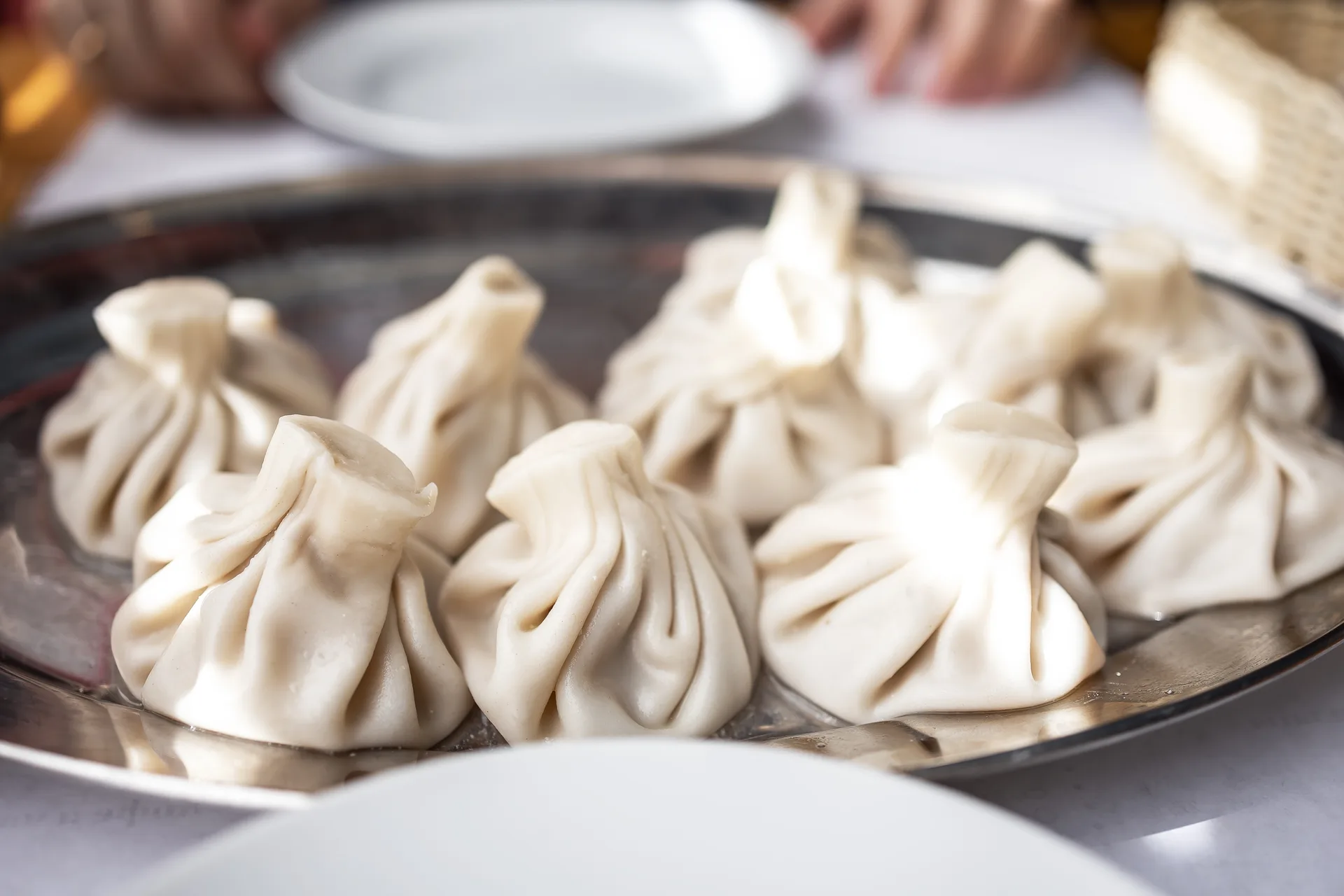
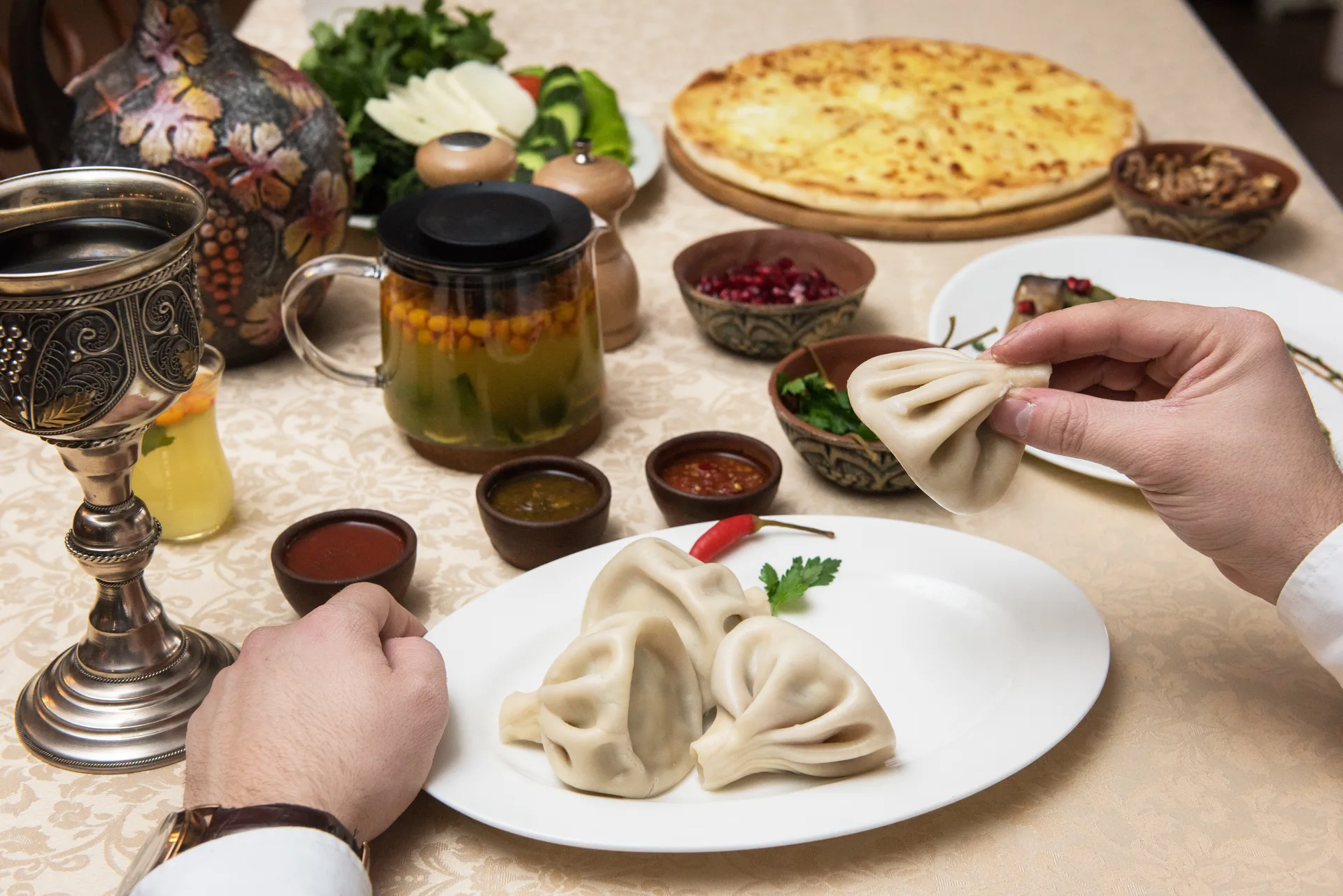
| Dumplings | Khinkali — served steaming hot, eaten with your hands |
| Stews | Chanakhi (lamb stew), chakapuli (tarragon lamb), lobio (bean stew in a clay pot) |
| Sauces | Tkemali (sour plum), adjika (spicy pepper paste), satsebeli (tomato-walnut) |
| Sweets | Churchkhela (walnut-grape candy), tatara (grape pudding), dried fruits, matsoni with honey |
The spread varies by region. In Kakheti (the wine region), you'll see more nuts, wine-based desserts, and fresh walnuts. In Adjara, expect more dairy. In Imereti, expect ghezhalia (fresh cheese with mint) and more corn-based dishes. A supra in the mountains of Svaneti might include kubdari (meat-filled bread) and thick, tangy matsoni.
The Unwritten Rules (What Nobody Tells You)
Georgian hospitality is generous, but it comes with expectations. Here are the rules nobody puts in a brochure:
🚫 Don't drink between toasts
You drink when the tamada says to drink. Sipping your wine randomly while someone is talking is a faux pas. Wait for the toast.
🍞 Eat. Constantly.
The food isn't decoration. You'll need it to absorb the wine. Pace yourself by eating between every toast. The locals know this.
🗣️ Silence during toasts
When someone is speaking, everyone listens. Cross-table chatter during a toast is disrespectful. Save your conversation for the breaks.
🥂 Don't propose your own toast
Only the tamada introduces new topics. You can add to the current toast during your turn, but don't change the subject. Wait for the alaverdi.
🪦 No clinking for the dead
Already mentioned, but it bears repeating. The toast to the deceased is solemn. Touch glass to table, not to other glasses.
🚶 Leaving early is awkward
A supra is an event, not a drop-in. Leaving before the final toasts can be seen as insulting. Plan to stay at least 2-3 hours.
How to Survive (and Enjoy) Your First Supra
If you've never been to a supra, here's practical advice from people who've been to dozens:
- Eat before the wine starts. Load up on bread, cheese, and pkhali the moment you sit down. You'll thank yourself later.
- Pace the wine. You don't have to drain every glass if you're clearly a guest and not Georgian. Take hearty sips instead. Nobody will push you hard (usually).
- Prepare something to say. You'll likely get an alaverdi. A short, sincere statement about gratitude, Georgia, or the people at the table works perfectly. It doesn't need to be long.
- Don't fill your own glass. In Georgia, you fill others' glasses and they fill yours. Reaching for the bottle to top yourself off looks odd.
- Watch what the locals do. If everyone stands, stand. If they clink, clink. If they don't clink, don't.
- Say "gaumarjos" (გაუმარჯოს). This means "victory" and is the standard cheers. It's the one Georgian word you absolutely must know at a supra.
- Compliment the food. Nothing makes a Georgian host happier. Be specific — "this khachapuri is incredible" beats "great dinner."
- Plan your exit. Take a taxi. You will not be driving.
The "I don't drink" situation
It's completely possible to attend a supra without drinking alcohol. Ask for lemonade (Georgian homemade lemonade — limonati — is excellent) or mineral water. A good tamada will accommodate you. You may get some gentle ribbing, but genuine pressure is rare in modern Georgia, especially with foreigners. Health and religious reasons are universally respected.
How Supras Differ by Region
Georgia is a small country with massive regional variation, and supras reflect that:
| Region | Supra Character |
|---|---|
| Kakheti | The wine heartland. Expect the longest supras, the most wine (often from the host's own qvevri), and dishes heavy on walnuts and grapes. Toasts tend to be the most formal and poetic. |
| Tbilisi | Urban supras are slightly shorter and more relaxed. You might see beer alongside wine (scandalous in Kakheti). The food mixes regional dishes from all over Georgia. |
| Imereti | Known for lighter, more aromatic food. Expect ghezhalia, elarji (cheesy cornmeal), and more vegetable-forward dishes. The wine is often white — Tsolikouri or Tsitska. |
| Adjara | Coastal influence means fish dishes, more dairy, and the famous Adjarian khachapuri with egg and butter. Supras here can be particularly lavish. |
| Svaneti | Mountain supras are hearty and rustic. Kubdari (meat bread), Svan salt spice blend, thick matsoni. Fewer toasts, more singing. The polyphonic singing tradition often emerges naturally. |
The Music: When the Table Starts Singing
Around toast seven or eight, something magical often happens: someone starts singing. Georgian polyphonic singing — three-part vocal harmony with no instruments — is a UNESCO Masterpiece of Intangible Heritage, and the supra is where it lives.
It's not a performance. Nobody announces it. Someone begins, others join, and suddenly the table is making sounds that feel ancient and overwhelming. The most common supra songs include:
- Mravalzhamier (მრავალჟამიერ) — "Many Years," a drinking song wishing long life
- Chakrulo (ჩაკრულო) — a complex ceremonial song from Kakheti (it was sent into space on the Voyager Golden Record)
- Suliko (სულიკო) — a melancholic love ballad that nearly every Georgian knows
If you can't sing, just listen. The sound of Georgian polyphony echoing off the walls of a room full of wine and food and emotion is one of the most profoundly human experiences you can have. It doesn't require understanding Georgian to feel it.
The Modern Supra: How It's Evolving
The supra isn't frozen in time. In Tbilisi especially, things are shifting:
- Shorter supras are becoming more common, especially for weeknight gatherings — two hours instead of five
- Women as tamada is still rare but no longer unheard of in progressive circles
- Less pressure to drink — younger Georgians are more respectful of personal limits
- Restaurant supras let visitors experience the format without a family connection (several Tbilisi restaurants offer organized supra dinners)
- Beer and chacha (grape brandy) are increasingly mixed in alongside wine
But the core — the tamada, the structured toasts, the communal spirit — hasn't changed. Georgians in their twenties still attend supras regularly. It's not a tourist attraction or a museum piece. It's how family dinners work.
Where to Experience a Supra as a Visitor
The best supra is the one you're spontaneously invited to. But if that doesn't happen, you have options:
🏡 Guesthouses in wine country
Stay at a family guesthouse in Kakheti (Sighnaghi, Telavi, or smaller villages). Many hosts will invite you to their table for a proper supra with homemade wine straight from the qvevri.
🍷 Organized supra dinners
Several restaurants and tour companies in Tbilisi offer supra experiences for groups. These are more staged but still give you the tamada, the toasts, and the feast. Expect to pay $30-60 per person.
🎊 Weddings and holidays
If you make Georgian friends, a wedding invitation might follow. Georgian wedding supras are the ultimate version — 300+ guests, a professional tamada, and a feast that makes regular supras look modest.
🍇 Rtveli (grape harvest)
Visit in September-October during the grape harvest. Rtveli is celebrated with massive supras in Kakheti. Some wineries and guesthouses invite visitors to participate in the harvest and the feast that follows.
Essential Georgian Phrases for the Supra
| Georgian | Pronunciation | Meaning |
|---|---|---|
| გაუმარჯოს | Gau-mar-jos | Cheers! (literally "victory") |
| სადღეგრძელო | Sad-ghe-grdze-lo | Toast / "for long life" |
| თამადა | Ta-ma-da | Toastmaster |
| ალავერდი | A-la-ver-di | Your turn to add to the toast |
| მადლობა | Mad-lo-ba | Thank you |
| ძალიან გემრიელია | Dza-lian gem-rie-lia | Very delicious |
| ბოდიში | Bo-di-shi | Excuse me / sorry |
Thinking of Giving One Yourself?
Knowing the words above is one thing; standing up and actually delivering a toast is another, and it's the moment where getting it slightly wrong is most visible. If the tamada hands you an alaverdi and you'd rather not freeze, EasyGeorgian's guide to how to give a toast at a supra is worth ten minutes: it lays out the shape a toast follows, the vocabulary that comes up again and again, what to steer clear of, and two short example toasts you can adapt without pretending to be fluent.
Why the Supra Matters
The supra survives because it does something that most modern cultures have lost: it forces people to sit together, look each other in the eye, say meaningful things about the people and ideas they value, and stay there for hours doing it. No phones. No rushing. No splitting the bill and heading out.
In a world that's increasingly efficient at avoiding deep human interaction, the supra is a blunt instrument of connection. It's heavy, it's long, it's more wine than you wanted — and it works. People leave supras feeling bonded. The toast structure, which might seem rigid from the outside, is actually a framework that gives even shy people permission to say something meaningful.
Every traveler who visits Georgia remembers their first supra. It's not the food they talk about (though the food is remarkable). It's the feeling of being pulled into a circle of warmth by people they just met, in a language they don't speak, and somehow understanding every word.
Written by The Georgian Eats Team
We live in Georgia, eat at these tables, and have sat through more supras than we can count. This guide is based on years of firsthand experience, not research papers.
Last updated: February 2026.