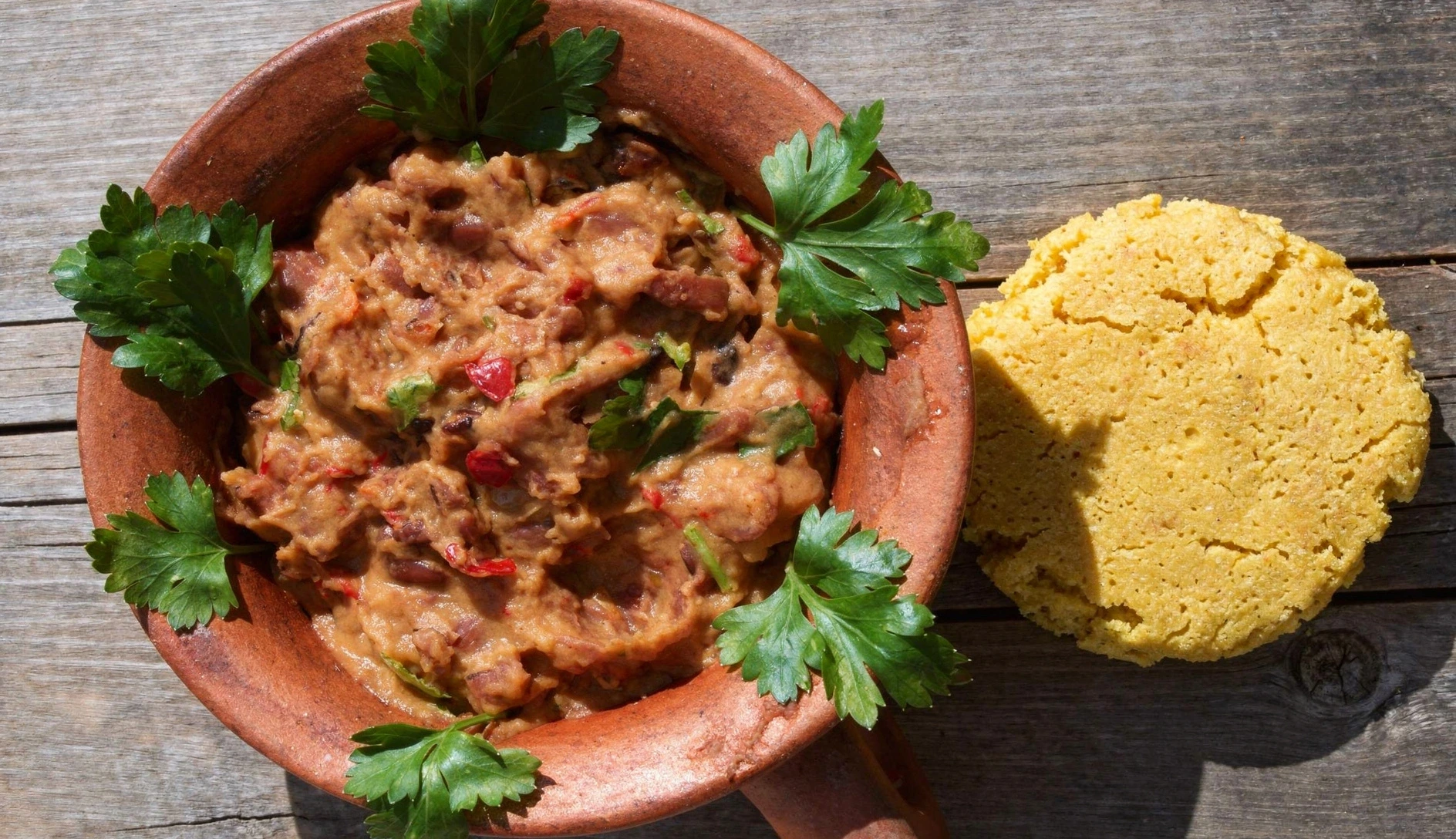
Lobio is the dish that proves you don't need meat to dominate a table. A thick, smoky stew of red kidney beans slow-cooked with walnuts, garlic, blue fenugreek, and enough cilantro to make a salad nervous — served in a clay pot with a slab of cornbread on the side. It's comfort food at the molecular level, and every family in Georgia makes it differently. This is how you make it right.
Lobio Quick Facts
- Georgian name: ლობიო (LOH-bee-oh)
- Meaning: Simply "beans" — the dish IS the ingredient
- Origin: Nationwide, with strongest roots in Kakheti and Racha
- Key ingredient: Dark red kidney beans + walnuts + blue fenugreek
- Prep time: 15 minutes (plus overnight soak)
- Cook time: 1.5–2 hours
- Serves: 4–6 people
- Diet: Vegan (and one of Georgia's best dishes, period)
- Cost in Georgia: 8–12 GEL (~$3–4 USD) at a restaurant
- Serve with: Mchadi (cornbread), pickled vegetables, fresh herbs
Why Lobio Matters More Than You Think
If you asked a Georgian to name their most important dishes, khachapuri and khinkali would come first. But ask what they actually eat most often, and the honest answer is lobio. It's the Tuesday night dinner. The post-church lunch. The thing grandmothers make in industrial quantities every fasting season — which, in the Georgian Orthodox calendar, is roughly half the year.
Georgia's Orthodox fasting traditions ban meat, dairy, and eggs for over 200 days annually. That means Georgian cuisine has developed one of the most sophisticated plant-based cooking traditions in the world, centuries before anyone invented the word "vegan." Lobio sits at the center of it.
The word "lobio" literally means "beans" in Georgian — borrowed from the Greek lobós. There's no fancy name, no poetic description. The dish is so fundamental that it doesn't need one. You say "lobio" and everyone knows exactly what's coming: a thick, aromatic stew that smells like home.
The Four Faces of Lobio
Like most Georgian dishes, there isn't one lobio — there are dozens. But four main styles dominate:
🏺 Lobio Nigvzit
Most Common
The classic: beans mashed with ground walnuts, blue fenugreek, garlic, and cilantro. Thick, rich, served in a clay pot. This is the recipe below — the one you'll find in every restaurant.
🥗 Lobio Kirkazhi
Kakhetian Style
A cold bean salad from the Kakheti wine region. Whole beans, raw onion, vinegar, and loads of fresh herbs. Lighter, sharper, perfect for summer — basically Georgian three-bean salad, but better.
🍅 Lobio Tkemali
Western Georgia
Beans cooked with tkemali — Georgia's iconic sour plum sauce. The tartness cuts through the earthiness of the beans. If you love a good acid hit, this is your version.
🟢 Lobio Mtsvane
Green Bean Version
Made with green beans instead of kidney beans, often stewed with tomatoes and served warm or cold. Completely different texture and flavor — almost a side dish rather than a main.
What You'll Need
The ingredient list is short, but the quality of a few key items matters enormously. Cheap walnuts or stale fenugreek will tank the whole dish.
| Ingredient | Amount | Notes |
|---|---|---|
| Dried dark red kidney beans | 500g (~1 lb) | Dark red, not light. Soak overnight. |
| Walnuts | 150g (~1 cup) | Must be fresh — taste one first. Rancid = ruined. |
| Onions | 2 large | Yellow onions, finely diced. |
| Garlic | 5–6 cloves | Crushed in a mortar, not pressed. |
| Fresh cilantro | 1 large bunch | Stems and leaves — both go in. |
| Blue fenugreek (utskho suneli) | 1 tablespoon | THE key spice. Not regular fenugreek — see note below. |
| Bay leaves | 3 | Added during bean cooking. |
| Sunflower oil | 3 tablespoons | For sautéing onions. Georgians use sunflower, not olive. |
| Black pepper | 1 teaspoon | Freshly ground. |
| Red chili flakes | ½ teaspoon | Optional but traditional. Georgian chili is mild. |
| Salt | To taste | Season after cooking — beans absorb a lot. |
| Pomegranate seeds | For garnish | Optional but gorgeous. Adds tartness and color. |
Blue Fenugreek Is NOT Regular Fenugreek
This trips up almost every non-Georgian cook. Blue fenugreek (utskho suneli, უცხო სუნელი) is a completely different plant from the yellow fenugreek in your spice rack. It has a mild, nutty, slightly sweet flavor — nothing like the pungent maple-syrup smell of regular fenugreek. If you can't find it, the Georgian spice blend khmeli suneli contains it. Amazon and specialty spice shops stock it. Do not substitute regular fenugreek — it will overpower the dish.
Equipment
You don't need much, but one item is non-negotiable in spirit if not in practice:
Essential
- • Large heavy-bottomed pot (5L / 5qt+)
- • Mortar and pestle (or food processor)
- • Wooden spoon for mashing
- • Skillet for onions
Traditional
- • Clay pot (ketsi) — for serving. Lobio served in a clay pot tastes different. The clay absorbs moisture and adds a subtle earthiness. Worth finding one online.
- • Wooden bowl for mashing
Step-by-Step Recipe
Step 1: Soak the Beans (Night Before)
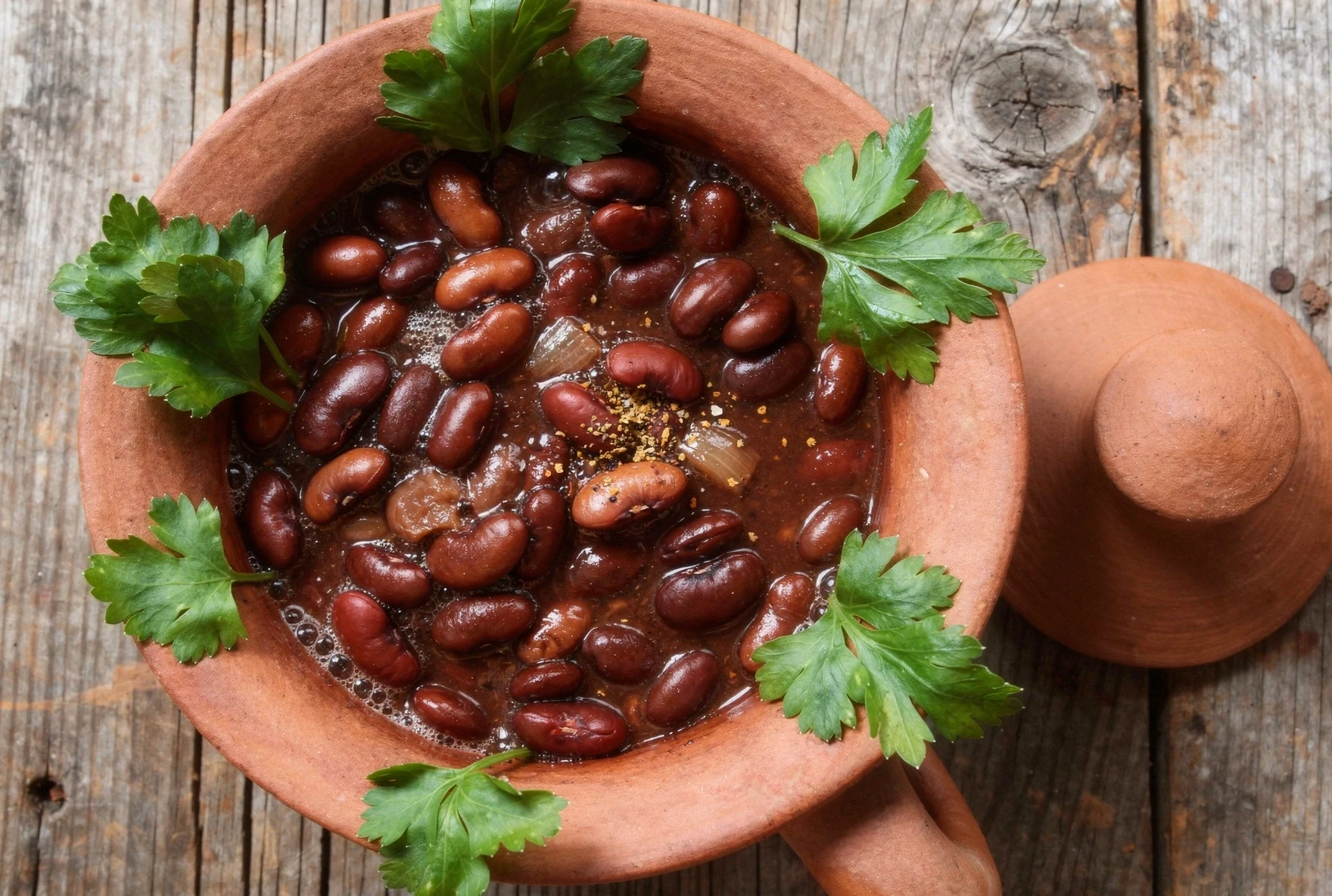
Rinse 500g of dried dark red kidney beans under cold water. Pick out any stones or shriveled beans. Place in a large bowl, cover with at least 10cm (4 inches) of cold water, and leave overnight — minimum 8 hours, up to 12.
The beans will roughly double in size. If any float to the top, discard them.
Short on Time?
Quick-soak method: Cover beans with water, bring to a rolling boil for 2 minutes, then turn off the heat, cover, and let sit for 1 hour. Drain and proceed. It's not as good as overnight, but it works. Canned kidney beans work too — use 3 cans (400g each), drained and rinsed. Skip straight to Step 3, but reduce the final cook time since they're already soft.
Step 2: Cook the Beans
Drain the soaked beans and place them in a large pot with fresh cold water — about 1.5 liters (6 cups). Add 3 bay leaves. Do not add salt yet — salt toughens the skins during cooking.
Bring to a boil over high heat, then reduce to a gentle simmer. Skim off any foam that rises in the first 10 minutes. Cook uncovered for 1 to 1.5 hours until the beans are completely tender — they should crush easily between your fingers. The timing depends on the age of your beans; older beans take longer.
When done, drain the beans into a bowl, but save 250ml (1 cup) of the cooking liquid. You'll need it. Remove the bay leaves.
Step 3: Prepare the Walnut-Spice Paste
While the beans cook, prepare the flavor base. In a mortar and pestle (or food processor), grind together:
- 150g walnuts
- 5–6 garlic cloves
- 1 tablespoon blue fenugreek
- 1 teaspoon black pepper
- ½ teaspoon red chili flakes
- ½ teaspoon salt
- Half the cilantro bunch (stems included, roughly chopped)
Pound or pulse until you get a coarse paste — not completely smooth. You want some walnut texture remaining. This paste is the soul of the dish. It should smell warm, nutty, and herby.
Step 4: Sauté the Onions
Heat 3 tablespoons of sunflower oil in a skillet over medium heat. Add the finely diced onions and cook for 8–10 minutes, stirring occasionally, until they're soft, golden, and starting to caramelize at the edges. Don't rush this — the sweetness of properly cooked onions matters.
Step 5: Mash and Combine
This is where lobio becomes lobio. Take your cooked beans and mash about half of them with the back of a wooden spoon or a potato masher. You want a mix of creamy mashed beans and whole beans — this dual texture is what separates great lobio from mediocre.
Add the walnut-spice paste and the sautéed onions (with their oil) to the beans. Pour in the reserved cooking liquid. Stir everything together thoroughly.
Step 6: Final Simmer
Transfer the mixture back to the pot (or stay in the same one). Cook over medium-low heat for 10–15 minutes, stirring frequently — the bottom burns easily. The lobio should thicken into a consistency that's somewhere between refried beans and a thick stew. It should hold its shape on a spoon but still flow.
Taste and adjust: more salt, more pepper, more garlic. It should taste deeply savory, nutty, and aromatic.
Step 7: Finish and Serve
Stir in the remaining fresh cilantro (roughly chopped). If you have clay pots, ladle the lobio into them. Garnish with a few pomegranate seeds and a sprig of cilantro.
Serve immediately with mchadi (Georgian cornbread) or shotis puri (Georgian bread). Pickled vegetables — especially pickled green tomatoes or jonjoli — are the traditional sidekick.
Mchadi: The Cornbread You Must Make Alongside
Eating lobio without mchadi is like eating soup without a spoon — technically possible, but you're missing the point. Mchadi is Georgia's cornbread: dense, golden, slightly sweet patties made from nothing but cornmeal, water, and salt. They're pan-fried until crispy outside and soft inside.
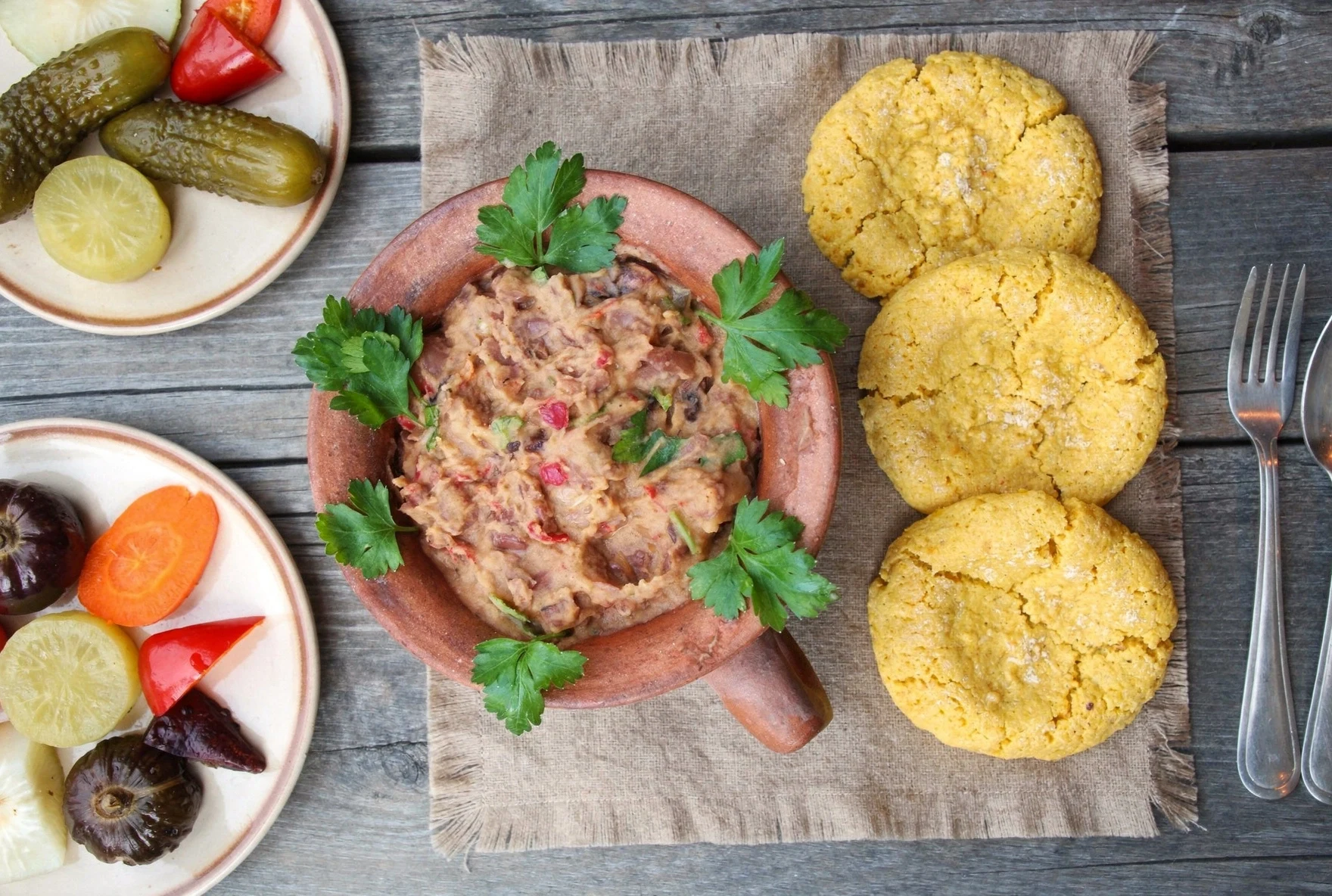
The technique is simple: mix fine white cornmeal with warm salted water until it forms a thick dough (no flour, no eggs, no dairy). Shape into palm-sized patties about 1.5cm thick. Fry in sunflower oil over medium heat for 4–5 minutes per side until deeply golden.
Break the mchadi open, stuff a piece of sulguni cheese inside (if you're not fasting), and use it to scoop up the lobio. This is the correct method and it's incredible.
| Quick Mchadi Recipe | Details |
|---|---|
| Ingredients | 2 cups fine white cornmeal, 1 cup warm water, ½ tsp salt |
| Method | Mix to thick dough → shape patties → fry in oil 4–5 min/side |
| Makes | 6–8 patties |
| Tip | Wet your hands before shaping — the dough is sticky |
Tips That Actually Matter
🥜 Toast the Walnuts
Lightly toast walnuts in a dry pan for 3–4 minutes before grinding. This deepens the flavor dramatically and is what most restaurant kitchens do. Don't skip it.
🫘 Bean Quality Matters
Old beans (sitting on a shelf for years) take forever to cook and never fully soften. Buy from a store with turnover. Georgian markets sell perfect beans — if you're there, stock up.
🔥 Day Two Is Better
Lobio, like most bean stews, improves overnight. The flavors meld, the texture thickens, and the walnuts soften further. Make it the day before if you can. Reheat gently with a splash of water.
🏺 The Clay Pot Effect
It's not just presentation. Unglazed clay absorbs excess moisture and adds a subtle mineral taste. If you use a clay pot, warm it slightly before ladling in the hot lobio to prevent cracking.
Nutrition Profile
Lobio is quietly one of the most nutritious comfort foods on earth. The combination of beans and walnuts creates a complete protein — all essential amino acids covered without a gram of meat.
| Nutrient | Per Serving | % Daily Value |
|---|---|---|
| Iron | 5.2mg | 29% |
| Folate | 180μg | 45% |
| Potassium | 620mg | 13% |
| Omega-3 (ALA) | 1.3g | From walnuts |
| Fat | 14g | Mostly unsaturated (walnuts) |
Variations Worth Trying
Once you've mastered the classic, these riffs are all traditional and all worth exploring:
| Variation | What Changes | When to Use |
|---|---|---|
| Add tkemali | Stir in 2–3 tbsp sour plum sauce at the end | When you want tartness to cut the richness |
| Pomegranate molasses | 1 tbsp in the walnut paste | Adds sweet-sour depth — common in some families |
| Smoked meat | Add diced smoked pork or bacon at the onion stage | Non-fasting version — deeply savory |
| Baked in ketsi | Transfer to clay pot, top with cheese, bake 15 min at 200°C | Party/special occasion — the cheese-topped version is indulgent |
| Cold salad style | Don't mash — keep whole beans, add vinegar, raw onion | Summer, or when you want a lighter dish |
Where to Find Georgian Spices
The biggest challenge for cooking lobio outside Georgia is sourcing blue fenugreek. Here's where to look:
Online
- • Amazon — Search "utskho suneli" or "blue fenugreek." Several Georgian importers sell it.
- • Etsy — Small Georgian spice sellers often have the freshest stock.
- • Burlap & Barrel — High-end single-origin spice company that sometimes stocks it.
In Georgia
- • Dezerter Bazaar (Tbilisi) — Ground floor spice section. Vendors will grind fresh blends for you.
- • Any bazroba (market) — Even small-town markets have spice vendors with blue fenugreek.
- • Supermarkets — Goodwill, Carrefour, Nikora all carry packaged Georgian spices.
The Khmeli Suneli Shortcut
If you truly can't find blue fenugreek on its own, buy khmeli suneli — Georgia's all-purpose spice blend. It contains blue fenugreek, coriander, marigold, savory, and several other herbs. Use 1.5 tablespoons of khmeli suneli in place of the blue fenugreek. The flavor won't be identical (it'll be more complex, less focused), but it'll be closer than any other substitute.
Common Mistakes (and How to Avoid Them)
| Mistake | Why It Happens | Fix |
|---|---|---|
| Beans still hard | Added salt during cooking, or beans are old | Never salt beans while boiling. Buy fresh beans. |
| Too dry | Threw out the cooking liquid | Always save 1 cup of bean water. Add more if needed. |
| Flat flavor | Skipped the walnut paste or used stale spices | The walnut paste is not optional. Fresh spices only. |
| Tastes like curry | Used regular fenugreek instead of blue | Blue fenugreek only. Or use khmeli suneli blend. |
| Mushy paste | Mashed all the beans | Only mash half. Texture contrast is the goal. |
Storing and Reheating
Lobio keeps beautifully — it's arguably a better leftover than a fresh dish.
Fridge
Lasts 4–5 days in an airtight container. The flavor intensifies each day. Reheat gently on the stovetop with a splash of water — microwave works but stovetop is better.
Freezer
Freezes well for up to 3 months. Let cool completely before portioning into freezer bags. Thaw overnight in the fridge, then reheat on the stovetop. Add fresh cilantro after reheating.
Eating Lobio in Georgia
If you're visiting Georgia, you'll encounter lobio everywhere. Here's what to know:
Every traditional restaurant (sakhli or family-style eatery) serves lobio. It's typically priced between 8–14 GEL ($3–5 USD) and arrives in a clay pot with a side of mchadi and pickled vegetables. Don't order it at a fancy restaurant — this is home cooking, and the simpler the place, the better the lobio.
At a supra (Georgian feast), lobio is always present among the cold dishes that are already on the table when you sit down. It's part of the opening act — the supporting cast that makes the meat dishes shine by contrast.
During fasting season (roughly 200 days per year in the Georgian Orthodox calendar), lobio moves from supporting cast to lead role. Restaurants offer expanded fasting menus, and lobio becomes the centerpiece. If you visit during Lent (roughly March–April), you'll see the full range of lobio variations everywhere.
Where to Eat Lobio in Tbilisi
The best lobio is at no-name family restaurants, but if you want a reliable starting point: Machakhela (chain, consistent), Shavi Lomi (modern twist), or walk into any sakhinkle (dumpling house) that also serves side dishes. Look for clay pots on other tables — if you see them, order one.
Written by The Georgian Eats Team
We've been eating lobio in Tbilisi for years — from roadside clay pots in Kakheti to grandmothers' kitchens in Racha. This recipe is the one we keep coming back to.
Last updated: February 2026.
Related Articles
Khinkali: Georgia's Legendary Soup Dumplings
The definitive guide to making real Georgian soup dumplings at home.
Adjarian Khachapuri
The boat-shaped cheese bread that ruins all other bread forever.
The Georgian Supra
A complete guide to the world's greatest feast tradition.
Georgian Cheese Guide
Every variety worth knowing — from stretchy sulguni to pungent guda.