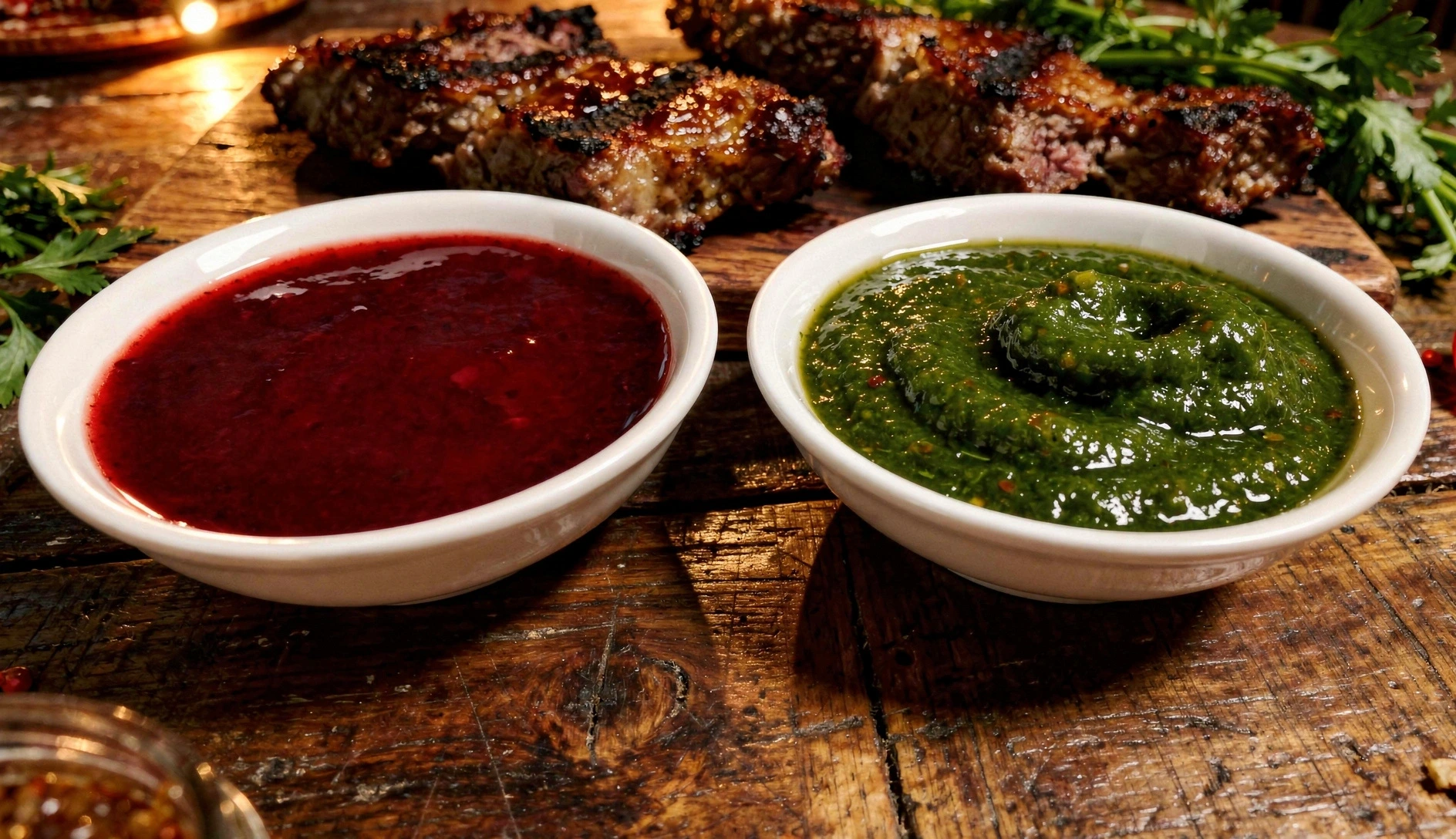
Every Georgian table has tkemali. Not might have — has. This tart, herb-packed plum sauce is to Georgia what ketchup is to America, except it's actually good. Made from sour cherry plums that grow wild across the Caucasus, tkemali is the sharp, punchy counterpoint to all those rich, walnut-heavy, cheese-loaded dishes that define Georgian cooking. A spoonful next to grilled meat, a drizzle over fried potatoes, a dip for fresh bread — it makes everything better. Two versions exist: green (from unripe plums, bracingly tart) and red (from ripe plums, slightly sweeter). Georgians use both interchangeably and argue endlessly about which is superior. They're both right.
Tkemali Quick Facts
- Georgian name: ტყემალი (tke-MA-li)
- What it is: Sour plum sauce — Georgia's universal condiment
- Key ingredients: Sour plums, garlic, cilantro, dill, coriander, salt
- Two versions: Green (unripe plums, spring) and red (ripe plums, late summer)
- Prep + cook time: 15 min prep, 30 min cooking
- Yield: ~650ml from 1kg of plums
- Difficulty: Very easy — barely harder than boiling water
Why Tkemali Matters
Georgian cuisine runs on sauces. While the West defaults to cream, butter, and tomato, Georgia built its sauce tradition around walnuts, herbs, and fruit. Tkemali is the crown jewel of that tradition — a condiment so fundamental that most Georgians can't imagine eating khinkali, shkmeruli, or a simple plate of fried potatoes without it on the table.
The word "tkemali" actually refers to the cherry plum itself (Prunus cerasifera), a small, intensely sour fruit that grows wild across the Caucasus. These aren't the sweet plums you find in Western supermarkets. They're small, hard, and so tart they'll make your eyes water if you bite into one raw. That acidity is the whole point. When cooked down with garlic and fresh herbs, it transforms into something complex — fruity, sharp, herbaceous, and deeply savory all at once.
Every Georgian family makes tkemali. In late spring, when green plums appear, kitchens across the country fire up for the first batch. Then again in late summer when the plums turn red. Jars get filled, labeled, and stored. Some families make fifty liters in a season. It's not excessive — it's necessary.
Green vs. Red Tkemali
The eternal debate. Both versions use the same base technique, but they hit differently:
| Feature | Green Tkemali | Red Tkemali |
|---|---|---|
| Plums | Unripe green cherry plums | Ripe red/purple cherry plums |
| Season | Late April – May | July – August |
| Flavor | Bracingly tart, sharp, bright | Tart-sweet, mellower, more complex |
| Color | Olive green to bright green | Deep burgundy to dark red |
| Best With | Grilled meats, fried potatoes | Pork, poultry, roasted vegetables |
| Popularity | The purist's choice | Slightly more versatile |
The recipe below works for both. The only difference: if using ripe red plums, they'll need slightly less cooking time and the sauce will be naturally less tart. Taste as you go and adjust.
Can't Find Sour Plums?
Cherry plums are hard to source outside the Caucasus. Your best substitutes: underripe regular plums (the hardest, sourest ones at the market), greengage plums, or even gooseberries in a pinch. The key is sourness — if your plums are sweet, add a squeeze of lemon juice to compensate. Avoid fully ripe, sweet plums — you'll end up with jam, not tkemali.
Ingredients
Tkemali is a short ingredient list that punches way above its weight. Everything here is doing real work — there's no filler.
| Ingredient | Amount | Notes |
|---|---|---|
| Sour plums | 1 kg (2.2 lb) | Green cherry plums ideal; unripe regular plums work |
| Garlic | 8–10 cloves | This isn't the place to be shy with garlic |
| Fresh cilantro | 1 large bunch (~25g) | Stems and leaves, finely chopped |
| Fresh dill | ½ bunch (~20g) | Fronds only, finely chopped |
| Ground coriander | 1 tsp | Freshly ground is noticeably better |
| Dried red pepper flakes | ½–1 tsp | Optional; traditional in some regions |
| Salt | 1–2 tsp | Start with 1 tsp, taste and add more |
| Water | As needed | For simmering; reserve cooking liquid |
Traditional Herb Additions
Many Georgian cooks add pennyroyal (ombalo) — a wild mint variety that grows in the Caucasus. It adds a distinct herbal, slightly medicinal note that's hard to replicate. Outside Georgia, use a small amount of dried peppermint as a rough substitute. Summer savory and tarragon also appear in some family recipes. The cilantro-dill base is non-negotiable; everything else is regional preference.
Equipment
Essential
Large saucepan or pot, fine-mesh sieve or food mill, wooden spoon, slotted spoon
For Storage
Glass jars with lids (sterilized if preserving), funnel for clean pouring
Step-by-Step Recipe
Step 1: Simmer the Plums
Place the plums in a large pot and add cold water until they're just covered. Bring to a gentle simmer over medium heat — don't boil aggressively, or the plums will burst and leach flavor into the water instead of concentrating it in the sauce.
Cook for about 20 minutes, until the plums are very soft and a knife slides through them with zero resistance. They should be on the verge of falling apart but not completely disintegrated. The skins will split and the flesh will turn mushy — that's exactly what you want.
Remove the plums with a slotted spoon and set aside. Save the cooking liquid — you'll use it to adjust the sauce consistency later.
Step 2: Make the Plum Purée
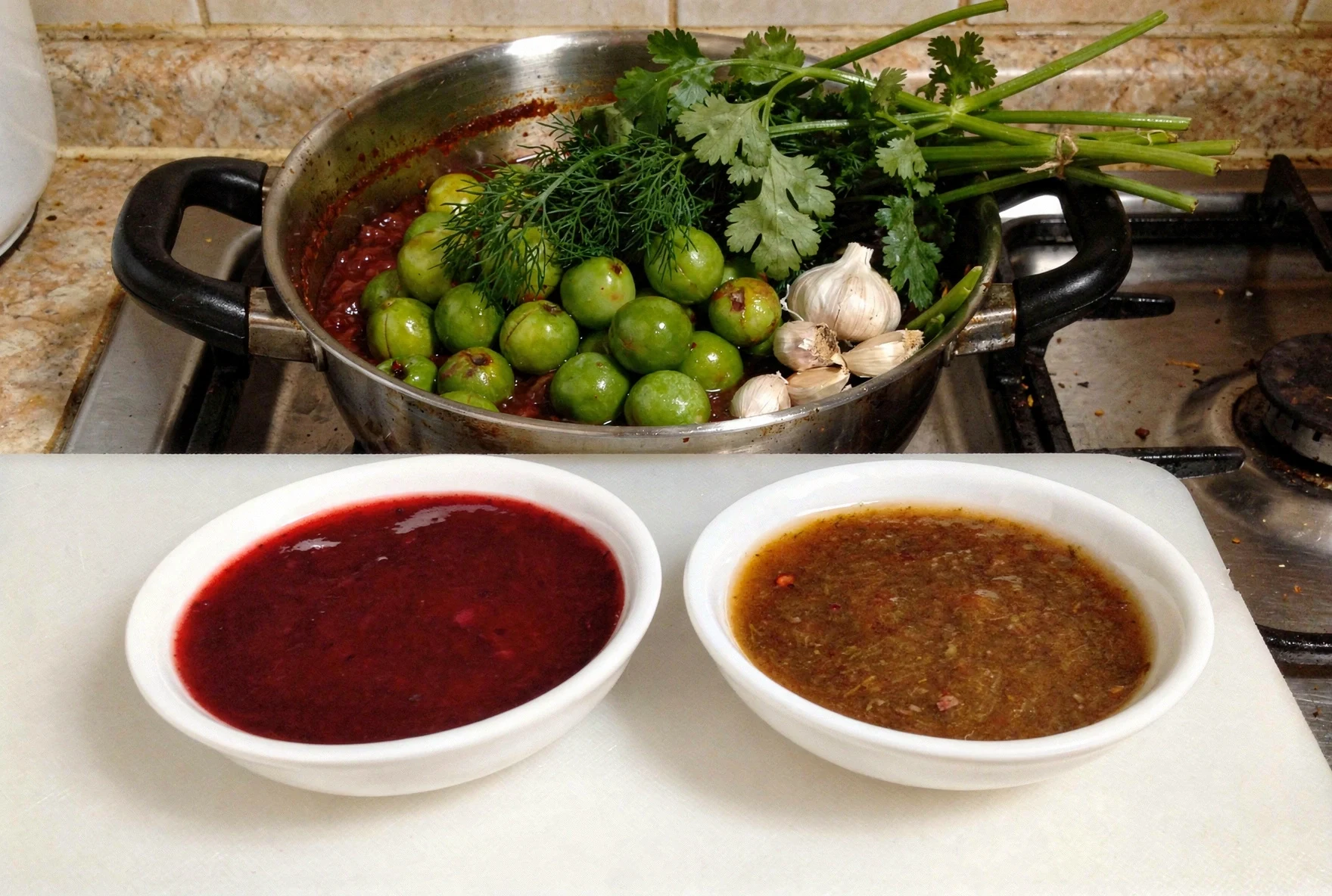
Set a fine-mesh sieve over a clean pot or large bowl. Working in batches, press the softened plums through the sieve using the back of a wooden spoon or ladle. Push firmly — you want to extract every bit of pulp. The skins and stones stay behind in the sieve; the smooth purée falls through.
If you have a food mill, even better — it makes this step faster and more efficient. Some cooks use an immersion blender first, then strain out the stones. Whatever method gets you a smooth, pourable purée.
You should end up with roughly 600–700ml of thick plum purée from 1kg of plums. If it's too thick to pour easily, add a splash of the reserved cooking liquid.
Step 3: Season the Sauce
Place the pot with the plum purée over medium-low heat. Mince the garlic finely (or crush it with a pinch of salt using the flat of your knife — the Georgian way) and add it to the purée. Stir in the chopped cilantro, dill, ground coriander, and pepper flakes if using.
Add 1 teaspoon of salt and stir everything together. The kitchen should smell incredible at this point — tart fruit, garlic, fresh herbs hitting hot liquid.
Step 4: Simmer and Adjust
Let the sauce simmer gently for 5–10 minutes, stirring occasionally, until the herbs have wilted into the sauce and the flavors have melded. The raw garlic edge should soften but not disappear entirely.
Now taste. This is the critical moment. You're looking for:
- Tartness: Should be pronounced but not punishing. If it's too sour, a pinch of sugar helps (Georgians rarely add sugar, but they also have access to the right plums).
- Salt: Should be well-seasoned. Under-salted tkemali tastes flat and one-dimensional.
- Consistency: Pourable like ketchup, not thick like jam. Add reserved cooking liquid a tablespoon at a time if needed.
- Garlic: Should be assertive. If in doubt, add more.
Step 5: Cool and Store
Remove from heat and let the tkemali cool completely. The flavors will continue to develop as it cools — it'll taste even better the next day.
Transfer to clean glass jars. In the fridge, it'll keep for 2–3 months easily. For longer storage, see the canning section below.
The Next-Day Rule
Tkemali is good right off the stove, but it's significantly better after 24 hours in the fridge. The acidity mellows slightly, the herbs infuse more deeply, and the flavors knit together. If you can resist, wait a day before serving. Georgian grandmothers will tell you it needs at least three days. They're probably right.
Tips for Perfect Tkemali
🍋 Sourness Is Everything
The whole point of tkemali is its tartness. If your plums aren't sour enough, the sauce will taste like fruity herb paste. Choose the hardest, most unripe plums you can find.
🧄 Don't Cook the Garlic
Add garlic to the simmering purée, not to oil first. You want raw garlic's punch, slightly softened by the residual heat — not roasted garlic sweetness.
🌿 Fresh Herbs Only
Dried cilantro and dried dill are sad imitations. Fresh herbs are essential. The only dried ingredient that works here is ground coriander seed.
💧 Save That Water
The plum cooking liquid has flavor and pectin. Use it to thin the sauce — never use fresh water. It's the difference between a sauce that tastes integrated and one that tastes diluted.
Common Mistakes
| Mistake | Why It Happens | How to Fix |
|---|---|---|
| Using sweet plums | Can't find sour cherry plums | Add lemon juice; choose the hardest, most unripe plums available |
| Sauce too thick | Didn't add enough cooking liquid | Add reserved plum water a tablespoon at a time |
| Sauce too thin | Added too much water or plums burst in pot | Simmer longer to reduce; next time, simmer gently |
| Flat, boring flavor | Under-salted or not enough garlic | Salt generously; garlic should be assertive, not subtle |
| Tastes like herb soup | Too many herbs relative to plum | Herbs should accent, not dominate; stick to the amounts listed |
| Doesn't keep well | Contaminated jar or unsterilized equipment | Use clean, sterilized jars; a thin layer of oil on top helps |
What to Eat With Tkemali
The short answer: everything. The slightly longer answer:
| Pairing | Why It Works |
|---|---|
| Mtsvadi (grilled meat) | The classic pairing — acid cuts through smoky, fatty char |
| Fried potatoes | Every Georgian's guilty pleasure; tkemali > ketchup, always |
| Khinkali | Some dip khinkali in tkemali instead of eating plain — try it |
| Roasted chicken | Especially with shkmeruli — the garlic doubles down beautifully |
| Fresh bread | Torn shotis puri with a pool of tkemali — perfect snack |
| Lobio | A spoonful on top adds brightness to the earthy beans |
| Eggs (any style) | Scrambled, fried, or in an omelette — the Georgian hot sauce |
Variations and Regional Twists
| Variation | What's Different | Notes |
|---|---|---|
| Classic Green | Unripe plums, maximum tartness | The recipe above; the purist's tkemali |
| Red Tkemali | Ripe plums, slightly sweeter and more complex | Same method; reduce cooking time by 5 min |
| Megrelian Style | Extra garlic, pennyroyal (ombalo), and chili | Spicier and more pungent; Western Georgia's take |
| With Khmeli-Suneli | Adds the signature Georgian spice blend | Not strictly traditional but common and delicious |
| Gooseberry Tkemali | Uses gooseberries instead of plums | Good option outside Georgia; similar tartness profile |
Preserving and Canning
Making tkemali in small batches for the fridge is easy. But if you want to preserve it Georgian-style — enough to last through winter — here's how to do it properly:
Sterilize the Jars
Boil glass jars and lids for 15 minutes. Keep them hot — never pour hot sauce into cold glass. Let jars dry completely before filling.
Fill While Hot
Pour the tkemali into hot jars while the sauce is still simmering. Leave about 1cm headspace. Pour a thin layer of sunflower or olive oil on top before sealing.
Seal and Invert
Screw lids on tightly, then flip the jars upside down and cover with a towel. Let them cool completely in this position — creates a vacuum seal.
Store Cool and Dark
Properly canned tkemali lasts 12+ months in a cool, dark pantry. Once opened, treat like any sauce — refrigerate and use within 2–3 weeks.
Nutrition
Tkemali is surprisingly nutritious for a condiment — it's essentially concentrated fruit and herbs with no added fat or sugar.
| Nutrient | Per 2 tbsp (~30g) |
|---|---|
| Calories | ~25 kcal |
| Carbohydrates | 6g |
| Sugar | 4g (natural) |
| Fat | <0.5g |
Where to Buy Tkemali
If you're in Georgia, tkemali is everywhere — every supermarket, every market stall, every grandmother's kitchen. Outside Georgia, it's harder but not impossible:
In Georgia
Any supermarket (Goodwill, Nikora, Carrefour). Market stalls at the Dezerter Bazaar in Tbilisi sell homemade versions — taste before buying. 500ml jar costs 3–8 GEL (~$1–3).
Outside Georgia
Russian/Eastern European grocery stores often stock Georgian brands. Online retailers carry Kula, Marani, and other brands. Amazon has options but check freshness dates.
Frequently Asked Questions
Is tkemali the same as plum sauce?
Not at all. Chinese plum sauce is sweet with star anise and ginger. Tkemali is sour, garlicky, and herb-forward. They share the fruit base but are completely different condiments with different purposes.
Can I make tkemali with regular plums?
Yes, but choose the most unripe, sour ones you can find. Fully ripe sweet plums won't give you the right flavor. Greengage plums or even gooseberries are better substitutes if your plums are too sweet.
How long does homemade tkemali last?
In the fridge: 2–3 months easily. Properly canned with sterilized jars and oil seal: 12+ months in a cool pantry. The high acidity acts as a natural preservative.
What's ombalo (pennyroyal)?
A wild mint variety native to the Caucasus that adds a distinctive herbal-medicinal note to tkemali. Hard to find outside Georgia — substitute with a pinch of dried peppermint. It's nice to have but not essential.
Is tkemali healthy?
Remarkably so. It's essentially concentrated fruit with herbs and garlic — no added sugar, no fat, rich in vitamin C and antioxidants. It's one of the healthiest condiments you can eat, certainly beating ketchup on every metric.
Written by The Georgian Eats Team
Based in Tbilisi, where we go through a suspicious amount of tkemali every month. We've tested this recipe with both proper Georgian cherry plums and the best substitutes available abroad — it works either way.
Last updated: February 2026.
Related Articles
Shkmeruli: Garlic Cream Chicken
The garlic-loaded chicken dish that pairs perfectly with a spoonful of tkemali.
Kharcho: Spiced Beef and Walnut Soup
Another dish where sour plum does the heavy lifting — this time as tklapi in the broth.
Chakapuli: Spring Lamb with Tarragon
Uses the same sour plums — whole, not pureed — for Georgia's quintessential spring dish.
20 Georgian Dishes You Need to Try
The complete guide to Georgian cuisine — including tkemali's role in every meal.