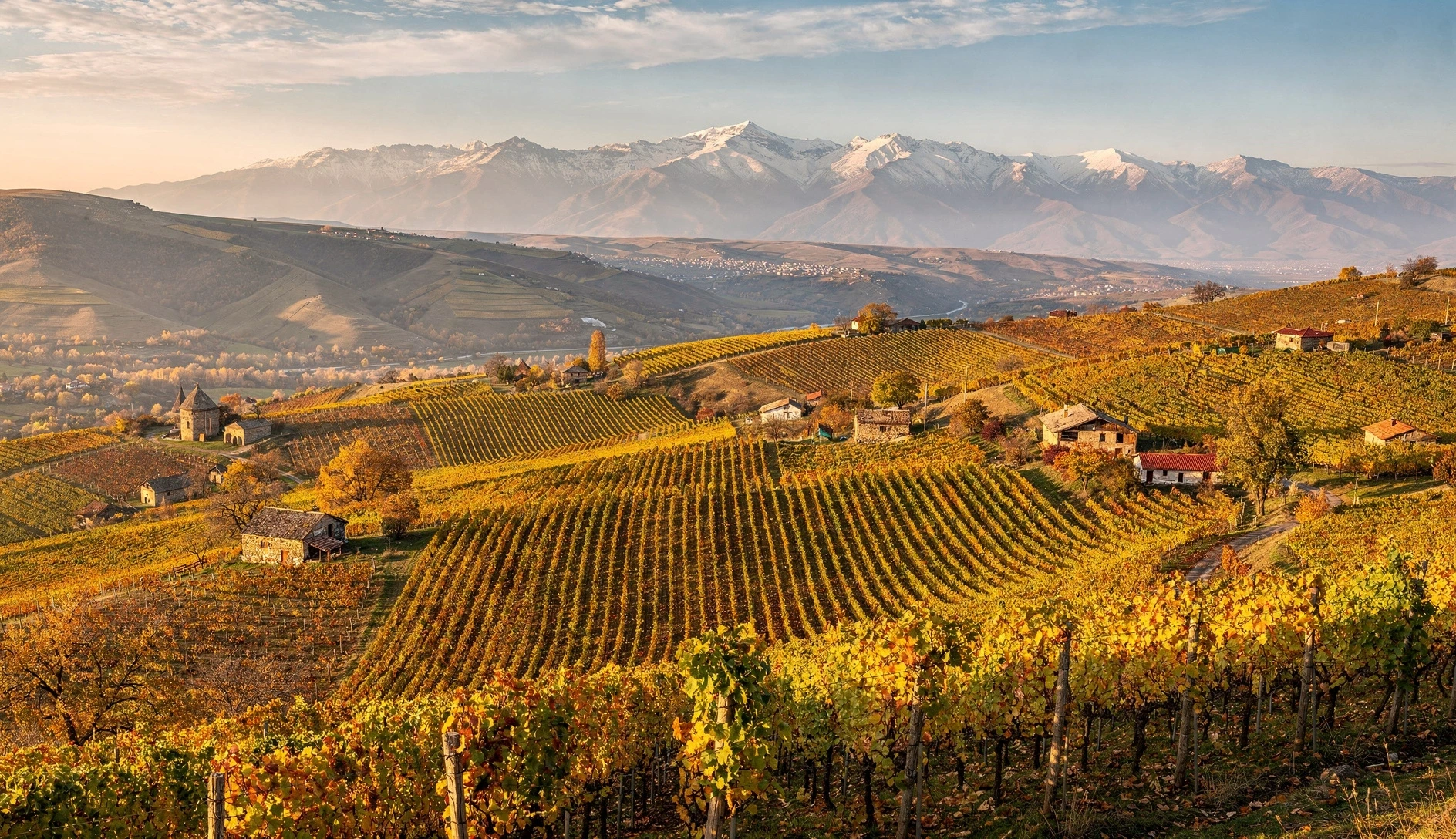
Georgia has five main wine regions, 30 protected appellations, and roughly 45,000 hectares of vineyards. But the numbers don't tell you what you actually need to know: where to go, what to drink when you get there, and why a bottle from one valley tastes completely different from a bottle made 50 kilometers away. This guide does.
How This Guide Is Organized
Each region section covers: geography and climate, key grape varieties, major appellations (PDOs), what the wines taste like, and where to go tasting. If you're planning a wine trip, start with Kakheti. If you're a wine nerd who wants the deep cuts, skip to Racha-Lechkhumi.
The Five Regions at a Glance
| Region | Location | Key Grapes | Style | PDOs |
|---|---|---|---|---|
| Kakheti | East | Saperavi, Rkatsiteli, Mtsvane, Kisi | Full-bodied, amber, dry & semi-sweet | 18 |
| Kartli | Central | Chinuri, Goruli Mtsvane, Tavkveri | Sparkling, crisp, lighter | 4 |
| Imereti | West | Tsolikouri, Tsitska, Krakhuna, Otskhanuri Sapere | High-acid, lighter, elegant | 1 |
| Racha-Lechkhumi | Northwest | Aleksandrouli, Mujuretuli, Usakhelouri | Semi-sweet, rare, high-altitude | 3 |
| Adjara & Black Sea | Southwest | Chkhaveri, Tsolikouri | Light rosé, subtropical influence | 1 |
Kakheti — The Heartland (70% of Georgian Wine)
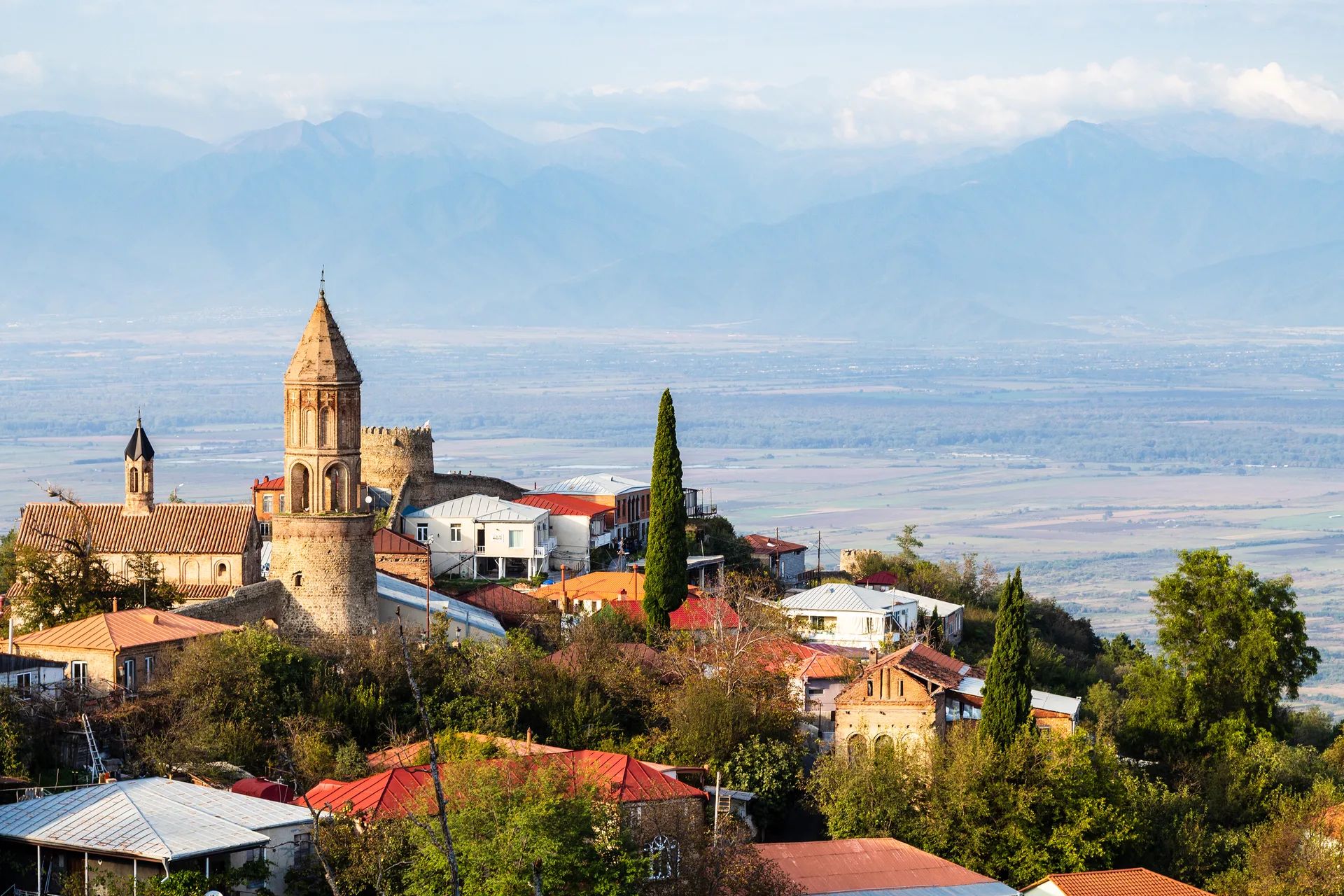
If Georgia is the cradle of wine, Kakheti is the nursery. This eastern region produces roughly 70% of all Georgian wine and contains 18 of the country's 30 protected appellations. The Alazani Valley — a wide, flat corridor flanked by the Greater Caucasus mountains to the north and the Gombori Range to the south — is where most of the action happens.
The climate is continental with hot summers and cold winters. Elevation ranges from 350 to 800 meters above sea level. Soils are primarily alluvial and humus-carbonate — rich enough to support vigorous vine growth without irrigation. The Alazani and Iori river basins provide the water, and the mountains provide the temperature swings that give Kakhetian wines their intensity.
Key Grape Varieties
Saperavi dominates the reds — a teinturier grape (red flesh, not just red skin) that produces deeply colored, tannic wines capable of aging 15+ years. Rkatsiteli is the white workhorse — high acid, versatile, transformed by qvevri into amber wines with honey and dried apricot character. Mtsvane Kakhuri adds floral aromatics and is often blended with Rkatsiteli. Kisi, a recent darling of natural wine circles, makes exceptional amber wine with stone fruit and herbal notes.
Major Appellations
| Appellation | Grape(s) | Style | What to Expect |
|---|---|---|---|
| Tsinandali | Rkatsiteli + Mtsvane | Dry white | Elegant, oak-aged, citrus and white flowers. Georgia's most famous white wine — established by Prince Chavchavadze in the 1830s using European techniques. |
| Mukuzani | Saperavi | Dry red | Oak-aged minimum 3 years. Dark fruit, spice, firm tannins. Georgia's most structured red — rewards patience. |
| Kindzmarauli | Saperavi | Semi-sweet red | Naturally semi-sweet (cold stops fermentation). Dark cherry, pomegranate, velvet texture. Extremely popular — and extremely counterfeited. |
| Napareuli | Saperavi (red) / Rkatsiteli (white) | Dry red or white | Underrated. Reds have dark plum and chocolate; whites are mineral-driven with good acid. |
| Kvareli | Saperavi | Dry red | Softer than Mukuzani, with ripe berry fruit and velvety tannins. More approachable young. |
| Akhasheni | Saperavi | Semi-sweet red | Similar to Kindzmarauli but softer. Plum jam, sweet spice. Good entry point for semi-sweet skeptics. |
| Gurjaani | Rkatsiteli + Mtsvane | Dry white | Fuller than Tsinandali, with more body and a slightly bitter almond finish. Underappreciated. |
| Teliani | Cabernet Sauvignon | Dry red | Yes, Cabernet — planted in the 19th century. Dark currant, cedar, tobacco. Georgia's best non-indigenous varietal wine. |
| Tibaani | Rkatsiteli | Amber (qvevri) | One of the newer PDOs (2012). Amber wine with extended skin contact — honey, walnut, dried fruit. |
The Kindzmarauli Problem
Kindzmarauli is one of the most counterfeited wines in the world. The actual Kindzmarauli micro-zone produces around 3-4 million bottles per year, but far more than that appear on store shelves globally. If the price seems too good (under $8-10 in stores), it's probably not real Kindzmarauli. Buy from reputable producers: Khareba, Kindzmarauli Corporation, Telavi Wine Cellar, or directly from the region.
Where to Go Tasting in Kakheti
Sighnaghi
The "City of Love" perched above the Alazani Valley. Beautiful old town, multiple wine bars and cellars within walking distance. Pheasant's Tears restaurant is a must. Best for: casual tasting with spectacular views.
Telavi
Kakheti's capital and the commercial wine hub. Large wineries (Teliani Valley, Shumi) offer structured tours. Tsinandali Estate — Prince Chavchavadze's historic property — is here. Best for: winery tours and history.
Kvareli
Home to Kindzmarauli and Kvareli appellations. Khareba Winery's tunnel cellar carved into the mountain is the region's most dramatic tasting room. Best for: large-scale wineries and Saperavi deep dives.
Small Producers
The real magic is in family cellars. Iago's Wine (Chardakhi), Our Wine (Sighnaghi), Lagvinari, and dozens of unmarked homes where the winemaker is also the farmer. Ask your guesthouse — they'll know someone.
Kartli — The Experimenter
Kartli sits in central Georgia, stretching from the outskirts of Tbilisi westward through the Mtkvari (Kura) River valley toward Gori. It's split into two sub-regions: Shida (Inner) Kartli and Kvemo (Lower) Kartli. This region has always lived in Kakheti's shadow, but that's changing — partly because Kartli winemakers are doing things nobody else in Georgia attempts.
The climate is drier and more continental than Kakheti. Vineyards sit at 500-800 meters, with significant day-night temperature swings that preserve acidity. Soils are volcanic in places — particularly around Bolnisi in the south — which gives wines a mineral edge you don't find elsewhere in Georgia.
Key Grape Varieties
Chinuri is Kartli's signature white grape — high acid, green apple, often made into pétillant naturel (pet-nat) or traditional method sparkling wine. It's Georgia's answer to Champagne, except nobody outside Georgia has heard of it. Goruli Mtsvane is the other important white — floral and honeyed, usually blended with Chinuri. Tavkveri, a pink-skinned grape, makes light rosés and is increasingly popular as a standalone wine.
Major Appellations
| Appellation | Grape(s) | Style | What to Expect |
|---|---|---|---|
| Atenuri | Chinuri, Goruli Mtsvane | Sparkling white | Georgia's only sparkling wine PDO. Naturally sparkling via méthode ancestrale — green apple, yeast, fine bubbles. Produced in the Ateni gorge near Gori. |
| Bolnisi | Various (Saperavi, Rkatsiteli, local) | Dry red & white | Newer PDO in Kvemo Kartli. Volcanic soils give wines a distinctive mineral quality. German-origin community here historically made European-style wines. |
Kartli's Sparkling Secret
Atenuri sparkling wine deserves far more attention than it gets. Made from Chinuri grapes in the narrow Ateni gorge, it undergoes secondary fermentation in bottle — similar to Champagne but using indigenous grapes. The result is crisp, bone-dry, with persistent bubbles and a saline finish. It's one of Georgia's most exciting wines and costs a fraction of what comparable European sparkling wines run. Look for bottles from Bagrationi or Iago Bitarishvili.
Where to Go Tasting in Kartli
Kartli isn't set up for wine tourism the way Kakheti is — there are no manicured tasting rooms every few kilometers. That's part of the appeal. Château Mukhrani, a restored 19th-century estate near Mtskheta, is the most polished option and makes excellent Saperavi and Goruli Mtsvane. The Ateni gorge near Gori has a handful of small producers making sparkling Chinuri. And the Bolnisi district to the south, settled by German colonists in the 1800s, has a handful of wineries exploring the area's volcanic soils.
Imereti — The Other Tradition
If Kakheti is Georgia's Bordeaux, Imereti is its Burgundy — lighter, more acid-driven, and obsessed with terroir even if it doesn't use that word. Located in western Georgia with Kutaisi as its capital, Imereti has a distinctly different winemaking tradition from the east.
The key difference is skin contact. In Kakheti, white wines fermented in qvevri typically spend 5-6 months on skins and stems. In Imereti, skin contact is shorter — a few weeks to a couple months — and stems are usually removed. The result is amber wines that are lighter, more aromatic, and higher in acid than their Kakhetian counterparts.
Key Grape Varieties
Tsolikouri is western Georgia's Rkatsiteli — the backbone white grape. High acid, citrus and green herb character, makes excellent wine both European-style and in qvevri. Tsitska is crisper and more mineral, often blended with Tsolikouri (the combination is sometimes called "Tsitska-Tsolikouri," which sounds like a tongue twister because it is). Krakhuna is the aromatic one — tropical fruit, honey, waxy texture. And Otskhanuri Sapere is Imereti's red grape — lighter than Saperavi, with sour cherry and earthy notes, somewhat reminiscent of Pinot Noir.
The Imeretian Method
| Feature | Kakhetian Method | Imeretian Method |
|---|---|---|
| Skin contact | 5-6 months | 2-8 weeks |
| Stems included | Yes (whole clusters) | Usually removed |
| Color | Deep amber/orange | Light gold to pale amber |
| Tannin | Significant, grippy | Moderate, softer |
| Acidity | Moderate | High, bright |
| Best with | Rich meats, aged cheeses | Lighter dishes, fish, vegetables |
Why Imereti Wines Win Over Skeptics
If someone tells you they don't like amber wine, give them an Imeretian one. The shorter skin contact and higher acidity make these wines much more approachable than the heavy, tannic Kakhetian style. A good Tsolikouri or Krakhuna from Imereti has more in common with a textured white Burgundy than with the deep amber wines most people associate with Georgia.
Where to Go Tasting in Imereti
Wine tourism in Imereti is less developed than Kakheti but catching up fast. Kutaisi is the base — Georgia's second city has excellent restaurants pouring local wines. The Baghdati and Zestafoni areas are the heart of Imeretian winemaking. Baia's Wine makes some of the country's best natural wines and is a pilgrimage site for orange wine enthusiasts. Several family producers around Baghdati welcome visitors with no reservation needed — just show up with an empty stomach.
Racha-Lechkhumi — The Hidden Treasure
This is Georgia's most exclusive wine region, and it's not because of marketing. Racha-Lechkhumi sits in the mountainous northwest, hemmed in by the Greater Caucasus. Vineyards cling to steep slopes at 500-900 meters, yields are low, and the region's most famous wines are naturally semi-sweet — a style that happens because cold mountain temperatures halt fermentation before all the sugar converts to alcohol.
Getting here takes effort. The roads are winding, there's no airport, and public transport is sparse. But the wines are unlike anything else in Georgia — or anywhere else, really.
Key Grape Varieties
Aleksandrouli and Mujuretuli are the twin stars — always blended together to make Khvanchkara, Georgia's most prestigious wine. Aleksandrouli provides structure and dark fruit; Mujuretuli adds aromatic complexity. Separately, each makes decent wine. Together, they make something extraordinary.
Usakhelouri is one of the rarest grapes in Georgia — possibly the world. Its name literally means "nameless" in Georgian. Only a few hectares remain, mostly in the Lechkhumi district. The wine is naturally semi-sweet, delicate, with wild strawberry and rose petal notes. If you find a bottle, buy it. You may not see another.
Major Appellations
| Appellation | Grape(s) | Style | What to Expect |
|---|---|---|---|
| Khvanchkara | Aleksandrouli + Mujuretuli | Semi-sweet red | Georgia's most famous wine. Dark cherry, raspberry, pomegranate with restrained sweetness balanced by acidity. Stalin's favorite — though that's a marketing line, not a quality endorsement. |
| Tvishi | Tsolikouri | Semi-sweet white | Made from Tsolikouri grown in the Tvishi micro-zone of Lechkhumi. Apricot, quince, honeysuckle. More delicate and floral than its dry counterparts from Imereti. |
| Usakhelouri | Usakhelouri | Semi-sweet red | Extremely rare. Wild strawberry, rose, subtle spice. One of the most expensive Georgian wines — and worth every lari if you can find an authentic bottle. |
Fake Khvanchkara Is Everywhere
Like Kindzmarauli, Khvanchkara suffers from massive counterfeiting. The actual Khvanchkara micro-zone is tiny — a few hundred hectares. If you're buying in Tbilisi, stick to reputable wine shops like Vinotel, Wine Underground, or 8000 Vintages. In restaurants, ask where the wine was sourced. Genuine Khvanchkara starts at around 35-50 GEL ($12-18) and goes up from there.
Where to Go Tasting in Racha-Lechkhumi
This isn't a drive-through wine region. Getting to Ambrolauri (Racha's capital) takes 5-6 hours from Tbilisi, and the road through the Nakerala Pass is dramatic but demanding. Once there, the Royal Khvanchkara Winery near Khvanchkara village is the main producer. Several family cellars in the villages around Ambrolauri welcome visitors — locals are incredibly hospitable, and a tasting often turns into a full supra. Lechkhumi is even more remote but worth the detour for Tvishi and Usakhelouri. Base yourself in Ambrolauri and explore from there.
Adjara & the Black Sea Coast
Georgia's southwestern coast has a subtropical climate — warm, humid, lots of rain. These aren't conditions that typically produce great wine, and honestly, Adjara has never been considered a serious wine region. But it has one grape worth knowing about: Chkhaveri.
Chkhaveri is a pink-skinned variety that makes light, dry rosé wines with strawberry and citrus character. It's a beach wine — refreshing, low alcohol, meant for seafood and sunshine. The Guria region just north of Adjara also grows Chkhaveri and arguably makes better versions, with more acidity and structure.
There's also a growing micro-industry of Samegrelo wines from the Ojaleshi grape — deeply colored, tannic reds that are gaining cult status among Georgian wine enthusiasts. Salkhino Ojaleshi is the PDO to look for.
Chkhaveri Rosé
Light, dry, strawberry-scented. Perfect with Black Sea fish dishes. Look for bottles from Iberieli or Zurab Topuridze's family winery in Guria. Best drunk young and cold.
Ojaleshi
Dark, tannic, wild berry character from Samegrelo. One of Georgia's rarest and most interesting reds. Often compared to Nebbiolo for its tannin structure. Extremely limited production.
Understanding Qvevri — The Thread That Connects All Regions
Every Georgian wine region uses qvevri — large clay vessels buried in the ground — but they use them differently. Understanding this is the key to understanding Georgian wine.
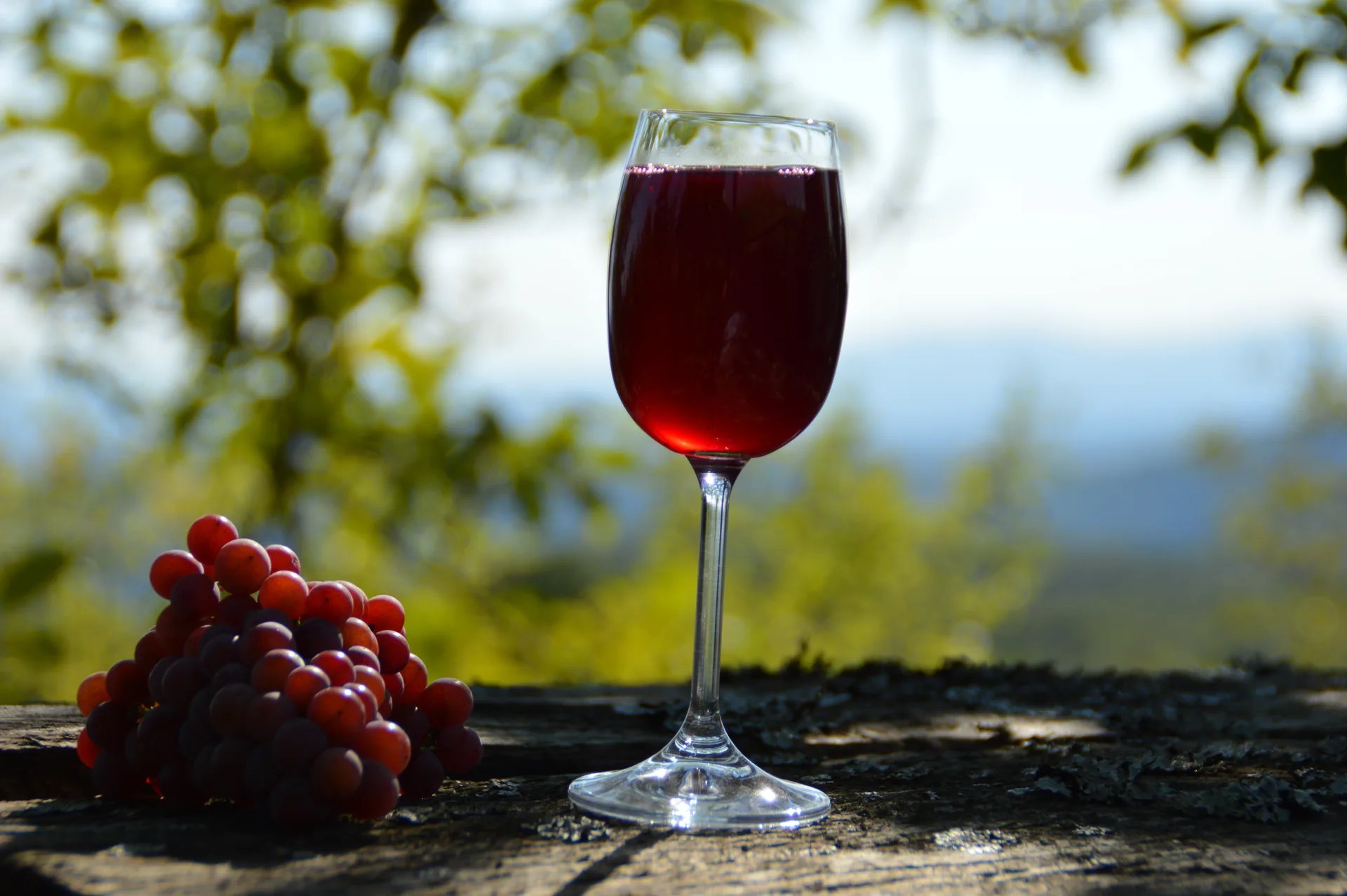
A qvevri is shaped like a giant egg, ranging from 200 to 3,000+ liters. The vessel is buried up to its neck in the floor of a marani (wine cellar), keeping the temperature naturally stable. Grapes — sometimes whole clusters with stems — go in, and the qvevri is sealed with a stone lid and beeswax. Fermentation happens naturally from wild yeasts. After months of skin contact, the wine is racked off the sediment into a clean qvevri for aging.
In 2013, UNESCO added traditional Georgian qvevri winemaking to its Intangible Cultural Heritage list — a recognition that this isn't just a production method but a cultural practice stretching back millennia.
| Region | Qvevri Use | Result |
|---|---|---|
| Kakheti | Full skin contact (5-6 months), stems included | Deep amber, high tannin, full body |
| Imereti | Shorter skin contact (2-8 weeks), stems removed | Light gold, moderate tannin, bright acid |
| Kartli | Mix of qvevri and European methods | Variable — from crisp whites to sparkling |
| Racha | Cold-interrupted fermentation in qvevri | Naturally semi-sweet with residual sugar |
Planning a Georgian Wine Trip
Best Time to Visit
| Season | Best For | Notes |
|---|---|---|
| Sep–Oct (Rtveli) | Harvest season, maximum energy | The grape harvest is a national event. Families gather, grapes are crushed (sometimes by foot), feasts are non-stop. Book accommodation early. |
| May–Jun | Perfect weather, green vineyards | Warm days, cool nights. Vineyards lush but not yet fruit-heavy. All tasting rooms open. Best balance of weather and crowds. |
| Jul–Aug | Hot, peak tourist season | Kakheti hits 35-40°C. Visit early morning or late afternoon. Better for Imereti/Racha where altitude moderates heat. |
| Nov–Mar | Quiet, cellar tastings | Vines dormant, vineyards bare. But marani tastings are more intimate and wineries have more time for you. Some producers in Racha close for winter. |
Suggested Wine Region Itineraries
Weekend: Kakheti Only (2-3 days)
Day 1: Tbilisi → Sighnaghi (wine bars, Pheasant's Tears). Day 2: Telavi area (Tsinandali Estate, Shumi Winery, small producers). Day 3: Kvareli (Khareba tunnel, Kindzmarauli tasting) → Tbilisi. This covers the essentials.
Full Tour: East to West (7-10 days)
Days 1-3: Kakheti deep dive. Day 4: Kartli (Château Mukhrani, Ateni gorge). Days 5-6: Imereti (Kutaisi, Baghdati, Baia's Wine). Days 7-8: Racha (Ambrolauri, Khvanchkara village). This is the definitive Georgian wine pilgrimage.
Practical Tips
| Tip | Details |
|---|---|
| Hire a driver | Georgia has zero tolerance for DUI (0.0% BAC). A driver for a full day in Kakheti costs 80-120 GEL ($30-45). Worth every lari. |
| Bring cash | Many family cellars don't accept cards. ATMs in Sighnaghi and Telavi, but villages may not have them. |
| Eat before you drink | Georgians don't do tastings on an empty stomach. Most wineries will feed you — sometimes a full supra. Don't fight it. |
| Buy at the source | Wine is dramatically cheaper at the winery. A bottle that costs 25 GEL in Tbilisi might be 10-12 GEL at the cellar door. Bring extra luggage space. |
| Learn basic Georgian | "Gaumarjos" (cheers) and "madloba" (thanks) go a very long way. Many small producers don't speak English. |
Common Mistakes
🍷 Only visiting big wineries
The large producers (Teliani Valley, Khareba, Tbilvino) are fine for an introduction. But the soul of Georgian wine is in family cellars where three generations share one marani. Ask your guesthouse to connect you.
🚫 Judging qvevri wine by European standards
Amber wine has tannin, oxidative notes, and texture that can seem like faults if you're expecting Chardonnay. Approach with an open mind — this is a different tradition, not a flawed one.
💸 Buying cheap semi-sweets at the airport
Tbilisi Airport wine shops are overpriced and stocked with mass-market brands. Buy from wine shops in the city (Vinotel, 8000 Vintages, Wine Underground) or directly from producers.
🗺️ Skipping everything except Kakheti
Kakheti is essential but it's only one piece. Imeretian wines are lighter and more food-friendly. Kartli has sparkling. Racha has Georgia's most prestigious reds. Each region tells a different story.
🍇 Ignoring white grapes
Saperavi gets all the attention, but Georgia is fundamentally a white wine country. The amber wine tradition exists because Georgians have been making extraordinary whites for 8,000 years. Don't sleep on Kisi, Mtsvane, or Tsolikouri.
🚗 Driving yourself between tastings
Georgia has a 0.0% blood alcohol limit for drivers. Zero tolerance means zero — not "one glass is fine." Hire a driver, join a tour, or designate a sober friend. The fines are brutal and the police check often.
Frequently Asked Questions
What is Georgia's best wine region for visitors?
Kakheti is the most accessible and has the most developed wine tourism infrastructure. Sighnaghi and Telavi have hotels, restaurants, and wineries within easy reach. For a more adventurous experience with fewer tourists, try Imereti around Kutaisi.
What is amber (orange) wine?
Amber wine is white wine made with extended skin contact — the grape skins stay in the juice during fermentation, giving the wine its golden-amber color, tannin structure, and complex flavors. Georgia pioneered this style 8,000 years ago, long before it became trendy in Western natural wine bars.
How many appellations does Georgia have?
As of 2025, Georgia has 30 Protected Designations of Origin (PDOs). Eighteen are in Kakheti, four in Kartli, one in Imereti (Sviri), three in Racha-Lechkhumi (Khvanchkara, Tvishi, Usakhelouri), and one each in Samegrelo (Salkhino Ojaleshi) and Guria. The system follows EU regulatory standards.
Is Georgian wine natural wine?
Traditional qvevri wine is about as natural as wine gets — wild yeast fermentation, no additives, minimal intervention. But not all Georgian wine is made this way. Large producers use modern equipment, cultured yeasts, and sulfites. If you want the traditional style, look for "qvevri" on the label or buy from small family producers.
Can I visit wineries without a tour?
Large wineries (Khareba, Shumi, Teliani Valley) welcome walk-ins during business hours and offer structured tours. Family cellars are more informal — you can often just knock on the door, but calling ahead is polite. Your guesthouse can arrange introductions. During Rtveli (September-October), many families actively invite visitors to help with the harvest.
Written by The Georgian Eats Team
We've spent years visiting Georgian wine regions — from the polished tasting rooms of Kakheti to family maranis where the winemaker pours straight from the qvevri. Our recommendations come from direct experience, not wine databases.
Last updated: February 2026.
Related Articles
Georgian Grape Varieties: 15 Grapes You Need to Know
Tasting notes, food pairings, and what to order for every major Georgian grape.
Georgian Wine for Beginners
Qvevri method, key varieties, amber wine, and where to taste — everything you need to start.
The Georgian Supra: A Complete Guide
The traditional Georgian feast where wine flows freely and toasts never end.
Georgian Food Guide: What to Eat & Why
The definitive guide to every dish you'll encounter at a Georgian table.