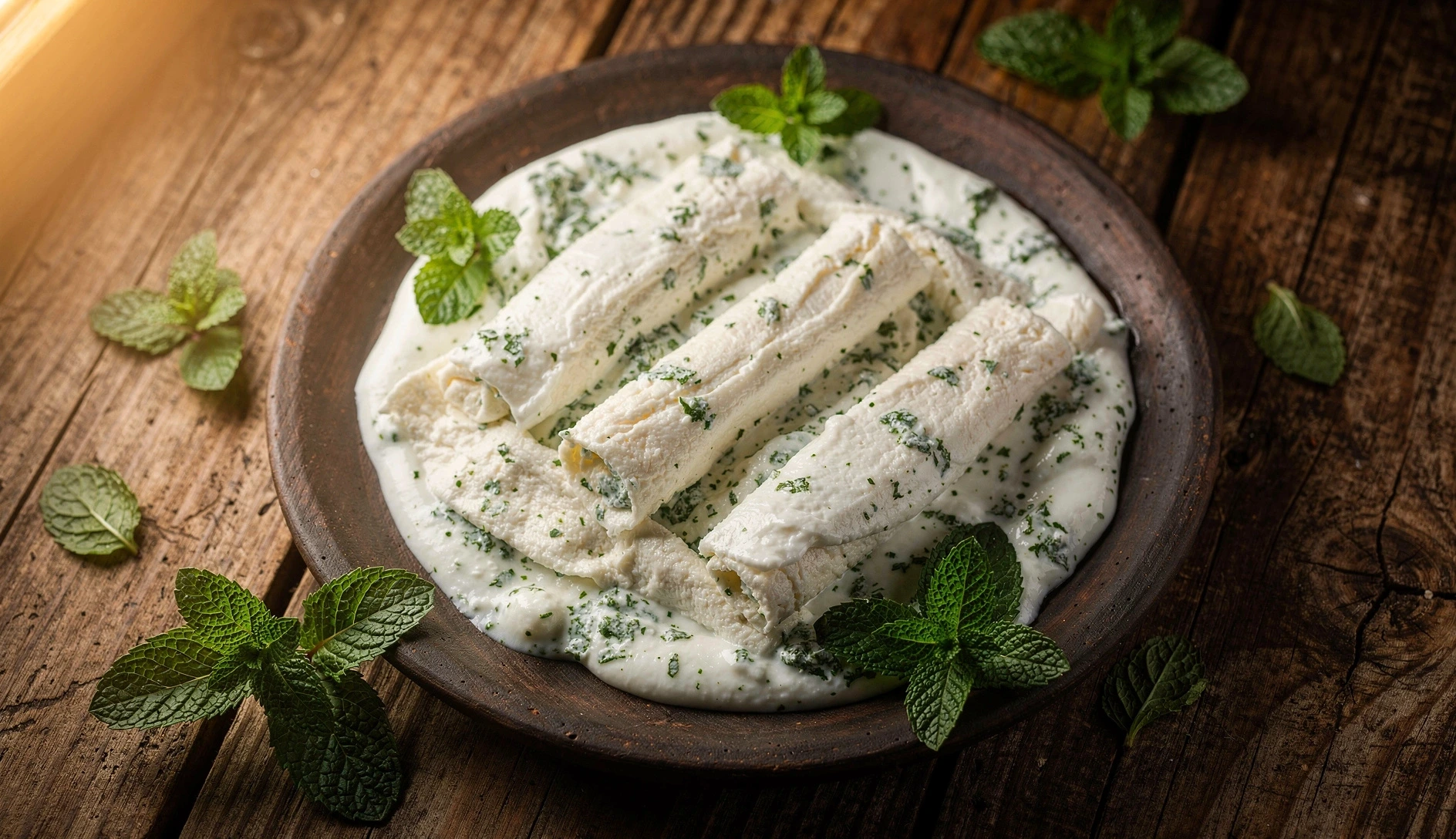
Gebzhalia is one of those dishes that makes you realize how little of Georgian cuisine most people know. While the world has heard of khachapuri and khinkali, this Megrelian appetizer — soft cheese rolls stuffed with crushed mint and bathed in a tangy matsoni sauce — remains almost unknown outside Georgia. Which is a shame, because it's extraordinary. The combination of warm, stretched cheese with cool, minty, slightly sharp sauce is unlike anything in Western cooking. And it takes about 30 minutes.
Gebzhalia Quick Facts
- Georgian name: გებჟალია (geb-ZHAL-ee-ah)
- Origin: Samegrelo region, western Georgia
- Type: Cold appetizer
- Key flavors: Fresh mint, tangy matsoni, mild cheese
- Active time: 20-25 minutes
- Total time: 30 minutes + 30 min chilling
- Serves: 4-6 as appetizer
- Cost in Georgia: 5-8 GEL (~$2-3)
- Vegetarian: Yes
What Gebzhalia Actually Is
Gebzhalia is a cold cheese dish from Samegrelo — the same region that gave Georgia Megrelian khachapuri, elarji, and an almost religious devotion to cheese. The name comes from the Megrelian word for "boiled" or "scalded" — referring to the technique of softening fresh cheese in boiling water until it becomes pliable enough to roll.
The concept is simple: soften cheese in hot water, flatten it, spread a paste of crushed fresh mint, garlic, and hot green pepper across the surface, roll it up, slice it into portions, and drown those portions in a tangy matsoni-based sauce flecked with more mint. Serve cold. The result is a dish where every bite delivers soft, mild cheese against sharp, cooling mint against tangy, creamy sauce. It's elegant, refreshing, and takes about half an hour from start to table.
Megrelians serve gebzhalia as an appetizer at supra (feast) tables, alongside badrijani nigvzit and pkhali. It's also a common warm-weather dish — the cold sauce and fresh mint make it ideal for summer. In Tbilisi restaurants, it usually appears under "Megrelian specialties" and costs 8-15 GEL.
Samegrelo: Georgia's Cheese Capital
Understanding gebzhalia means understanding Samegrelo. This coastal western region is where Georgia's cheese culture reaches its peak. Sulguni cheese was invented here. Imeretian cheese is the everyday workhorse, but Megrelians take it further — smoking it, braiding it, stretching it into strings, burying it in fresh cornmeal (elarji), piling it on top of bread (Megrelian khachapuri), and softening it in hot water to roll around herbs (gebzhalia).
The technique of softening cheese in boiling water is not unique to gebzhalia — it's the same process used to make mozzarella (pasta filata). But where Italian cheesemakers use this technique to shape new cheese, Megrelians use it to transform already-made cheese into something completely different. The boiling water leaches out excess salt, softens the texture from firm to pillowy, and makes the cheese pliable enough to roll around a filling. It's a transformation, not just a preparation method.
Gebzhalia vs. Similar Dishes
| Feature | Gebzhalia | Badrijani Nigvzit | Pkhali | Mozzarella Caprese |
|---|---|---|---|---|
| Base | Softened cheese rolls | Fried eggplant | Ground vegetables | Fresh mozzarella slices |
| Key flavor | Mint + tangy matsoni | Walnut paste + garlic | Walnut + herbs | Basil + olive oil |
| Texture | Soft, creamy, cold | Silky, rich | Dense, compact | Soft, fresh |
| Served | Cold, in sauce | Cold, rolled | Cold, shaped into balls | Cold, layered |
| Difficulty | Easy-moderate | Moderate | Easy | Very easy |
| Region | Samegrelo | All Georgia | All Georgia | Campania, Italy |
I include caprese because gebzhalia occupies a similar niche — a fresh, cold cheese dish that relies on the quality of its ingredients rather than complex technique. The difference is that gebzhalia has more going on: the cheese is transformed through heat, the mint paste adds genuine spice and aroma, and the matsoni sauce provides an acidic counterpoint that caprese doesn't have. It's what would happen if caprese grew up and moved to the mountains.
Choosing the Right Cheese
🥇 Best: Fresh Imeretian or Sulguni
If you're in Georgia, use fresh Imeretian cheese (იმერული ყველი) from the bazaar — the kind that's still soft and slightly salty. Sulguni also works perfectly. Both soften beautifully in hot water and have the right mild, milky flavor. Fresh sulguni (not smoked) is traditional.
🌍 International Substitute
Use low-moisture mozzarella (300g) mixed with feta (200g). The mozzarella provides the stretchiness when heated; the feta adds the salt and tang that Georgian cheese has. Do not use fresh mozzarella balls — they have too much water and will fall apart. Block mozzarella is what you want.
Cheese Temperature Matters
The cheese must be hot enough to become truly pliable — like warm taffy. If it's still firm and crumbly, it hasn't softened enough. Keep working it in the hot water. The moment it stretches when you pull it, it's ready. Once it cools, it firms up and becomes impossible to roll.
Full Ingredients
| Ingredient | Amount | Notes |
|---|---|---|
| Fresh cheese | 500g | Imeretian, sulguni, or mozzarella+feta blend |
| Matsoni or yogurt | 400g | Full-fat, plain — no sweetened yogurt |
| Cottage cheese or ricotta | 200g | Adds body to the sauce — blend smooth if lumpy |
| Milk | 500ml | Or use 200-300ml of the cheese-softening water |
| Fresh mint | 80g (2 bunches) | Only fresh — dried mint is a completely different flavor |
| Hot green peppers | 2-3 | Georgian green peppers; jalapeño works fine |
| Garlic | 3-4 cloves | Fresh, crushed — not granulated |
| Salt | To taste | Go easy — the cheese brings its own salt |
Mint Is Not Optional
Mint is what makes gebzhalia gebzhalia. Without it, you just have cheese in yogurt sauce — fine, but not the same dish. Use a generous amount of fresh spearmint. The crushed paste should be fragrant enough to fill the kitchen. If your mint looks tired and wilted, wait until you can get fresh bunches.
Step-by-Step Instructions
Step 1: Make the Mint Paste
Strip the mint leaves from their stems — you want leaves only, no woody stems. Finely chop the leaves. Seed the green peppers (leave seeds in for more heat) and mince them. Peel and mince the garlic. Combine everything in a mortar with a generous pinch of salt and crush with a pestle until you have a rough, very fragrant green paste. The salt helps break down the cell walls of the mint, releasing the essential oils.
Divide this paste in half. One half goes inside the cheese rolls. The other half goes into the sauce. This double-mint approach — mint both inside and surrounding — is what gives gebzhalia its signature flavor where every component carries the herb.
Step 2: Soften the Cheese
Slice the cheese into pieces about 1cm thick — this helps it soften evenly. Bring a large pot of water to a rolling boil. Drop in all the cheese slices at once. Immediately start working them with a wooden spoon, pressing and stirring.
After about 2 minutes at a boil, turn off the heat. Keep working the cheese for another 2-3 minutes. You'll feel it change — first the pieces will soften, then they'll start to merge, and finally the whole mass will become stretchy and pliable. Think of it like kneading dough: when you can pull a piece and it stretches rather than breaks, it's ready.
Step 3: Roll and Fill
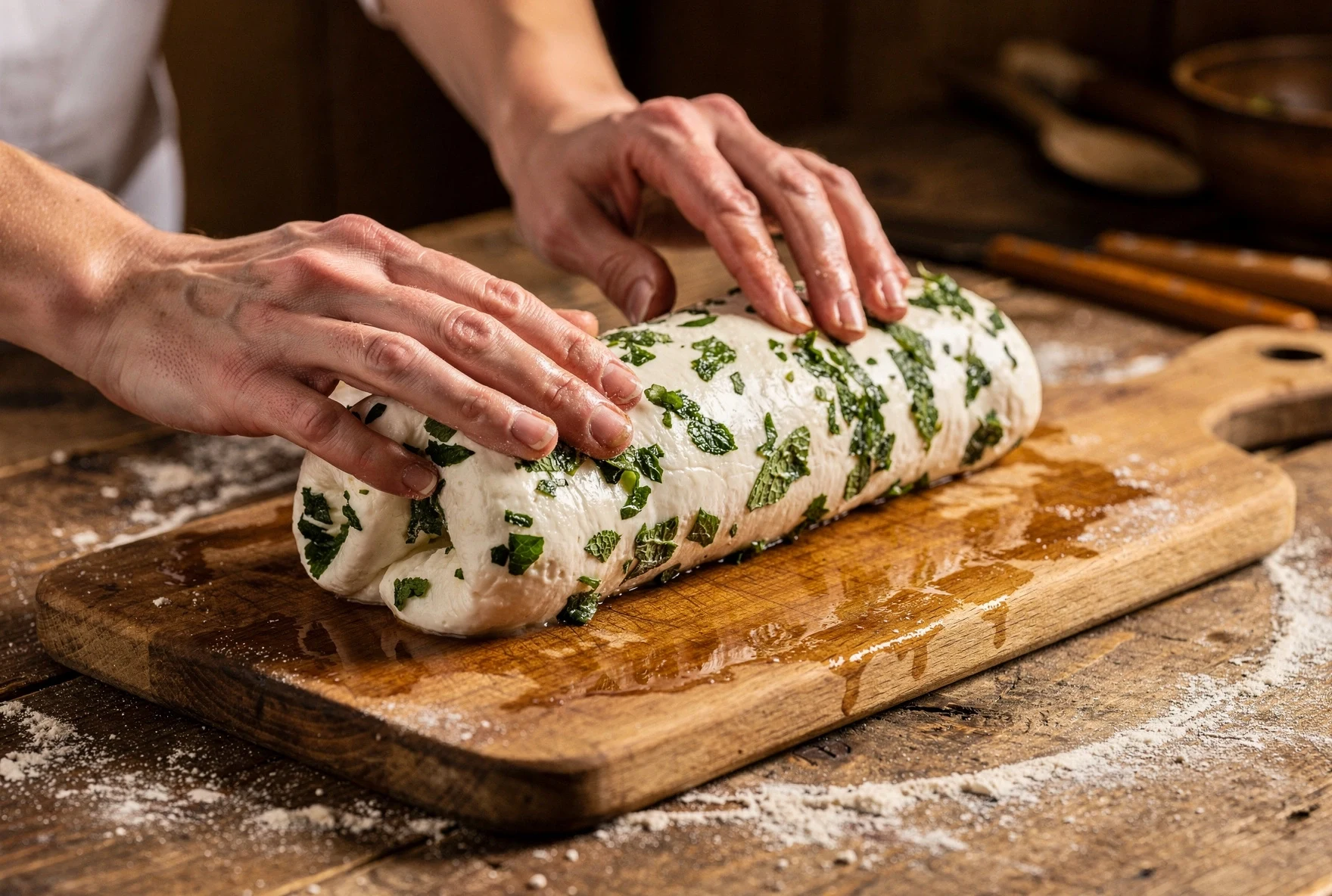
Working quickly while the cheese is still hot (wet your hands to prevent sticking), transfer the cheese mass to a wet cutting board or wet countertop. Knead it briefly, then press and roll it flat — aim for a rough rectangle about 5-6mm thick. It doesn't need to be beautiful. If it tears, just press the edges together.
Spread half of the mint paste evenly across the surface. Now roll it up tightly into a log, like you're making a Swiss roll. If the cheese has cooled and stiffened, briefly dip it back in the hot water for 30 seconds to re-soften. Once rolled, cut the log into portions about 3-4cm wide. You'll get 8-12 pieces depending on length.
Step 4: Make the Sauce
In a mixing bowl, combine the matsoni, cottage cheese (or ricotta), and the second half of your mint paste. Add 200-300ml of the hot water you used to soften the cheese — this is starchy and slightly salty, which enriches the sauce. Some traditional recipes use milk instead. Either works, but the cheese water adds more flavor.
Stir until smooth and well combined. The consistency should be like a pourable yogurt sauce — not watery, not thick. If it's too thick, add more liquid. If it's too thin, add more cottage cheese. Taste and adjust salt.
Step 5: Assemble and Chill
Arrange the cheese rolls in a serving dish — a shallow bowl or deep plate works best. Pour the matsoni-mint sauce over them, making sure each piece gets a good coating. Garnish with fresh mint leaves. Cover and refrigerate for at least 30 minutes before serving. Gebzhalia is always served cold — the chilling firms up the cheese rolls slightly and lets the sauce and cheese flavors merge.
Visual Doneness Cues
| Stage | What You See | What It Means |
|---|---|---|
| Cheese just added to water | Slices floating, still firm | Not ready — keep stirring |
| 2 minutes in | Edges softening, pieces sticking together | Getting there — turn off heat, keep working |
| 4-5 minutes total | One cohesive mass, stretchy when pulled | Ready — remove immediately |
| Overworked | Rubbery, bouncy, tight | Too long in hot water — still usable but chewier |
Sauce Variations
🥛 Matsoni Version (Traditional)
Matsoni (მაწონი) is Georgia's fermented milk product — tangier than yogurt, thinner than sour cream. The traditional gebzhalia sauce uses matsoni with cottage cheese and the cheese-softening water. This gives the most authentic, sharply tangy result. If you're in Georgia, buy matsoni at any supermarket or bazaar.
🥣 Cottage Cheese Version
Some Megrelian families skip the matsoni and use a sauce of cottage cheese thinned with milk. This version is milder, creamier, and less tangy. If you prefer a gentler flavor, use 400g cottage cheese, 500ml whole milk, and the mint paste. Blend until smooth for a more elegant texture.
How to Serve Gebzhalia
| Pairing | Why It Works | Recipe |
|---|---|---|
| Shotis puri or tonis puri | Essential — you need bread to scoop up the sauce | Shotis puri → |
| Mchadi (cornbread) | Traditional Megrelian pairing — the cornbread's sweetness complements the tangy sauce | Mchadi → |
| Badrijani nigvzit | Two cold appetizers that complement — walnut richness against mint freshness | Badrijani → |
| Elarji | The full Megrelian experience — stretchy cheese-cornmeal alongside cheese rolls | Elarji → |
| White or amber wine | Crisp Tsinandali or Rkatsiteli — the acidity mirrors the matsoni | Wine guide → |
| Pkhali platter | Three cold appetizers: gebzhalia + pkhali + badrijani = the ultimate supra starter | Pkhali → |
Tips and Common Mistakes
❌ Using dried mint
Dried mint has a completely different, dusty flavor. Fresh spearmint is non-negotiable. If you can't find it, postpone making gebzhalia until you can.
❌ Not softening cheese enough
If the cheese is still crumbly or breaking apart, it needs more time in the hot water. It should be genuinely stretchy — think warm mozzarella, not feta.
❌ Rolling too slowly
The cheese firms up as it cools. Work quickly once it's out of the water. If it stiffens, dip it back in the hot water for 30 seconds. Wet your hands and board to prevent sticking.
❌ Serving warm
Gebzhalia is a cold dish. The chilling time isn't optional — it lets the cheese firm enough to hold its shape and lets the matsoni sauce penetrate. Minimum 30 minutes in the fridge.
❌ Watery sauce
If you add too much liquid, the sauce becomes a thin soup. Add liquid gradually. You want a pourable consistency like thin yogurt, not water. The cottage cheese provides body.
❌ Skimping on garlic
The garlic in the mint paste provides a sharp counterpoint to the mild cheese and tangy sauce. Three cloves minimum. The paste should be assertive — the cheese and matsoni will mellow it out.
Storage
🧊 Refrigerator: 2-3 Days
Store in the sauce in a sealed container. The cheese will continue absorbing sauce and become more flavorful overnight. Honestly, day-two gebzhalia is often better than day-one. The cheese absorbs the mint and matsoni flavors more deeply.
❄️ Freezer: Not Recommended
The matsoni sauce separates when frozen and thawed, and the cheese texture changes. This is a make-and-eat dish. The ingredients are cheap and the process is fast — just make a fresh batch.
Where to Eat Gebzhalia in Georgia
🏪 Tbilisi Restaurants
Look for restaurants advertising Megrelian cuisine. Kakhelebi on Erekle II street, Shavi Lomi in Vera, and Amra (specifically Megrelian) all serve excellent gebzhalia. Expect to pay 8-15 GEL per portion.
🏔️ In Samegrelo
Zugdidi is the capital of Samegrelo, and any restaurant there will have gebzhalia. Guesthouse hosts throughout the region make it fresh — often with cheese they made that morning. The Samegrelo version is usually spicier and uses more green pepper.
🛒 Dezerter Bazaar
Tbilisi's main market has everything you need: fresh Imeretian cheese, sulguni, huge bunches of fresh mint, green peppers, and matsoni. Buy the cheese from the dairy section and make gebzhalia the same day for the freshest result.
📌 How to Spot Good Gebzhalia
Good gebzhalia has visibly green-flecked cheese from the mint paste, a sauce that's creamy (not watery), and cheese that's soft but holds its shape when cut. If it looks like dry white cheese on a plate with some yogurt drizzled on top, send it back.
Nutrition
| Nutrient | Per Serving |
|---|---|
| Calories | ~320 kcal |
| Protein | 22g |
| Fat | 20g |
| Carbohydrates | 12g |
| Calcium | ~40% daily value |
| Sodium | ~600mg (varies by cheese salt level) |
Frequently Asked Questions
Can I use regular mozzarella from the supermarket?
Yes, but use low-moisture mozzarella (the block kind), not fresh mozzarella balls. Fresh mozzarella has too much water and will dissolve rather than stretch. Block mozzarella melted in hot water behaves almost identically to sulguni. Mix with some feta for the right salt/tang balance.
Can I skip the green peppers?
You can, but the subtle heat from the peppers is part of what makes gebzhalia more interesting than just "cheese in yogurt." If you don't like heat, use one pepper with seeds removed. The quantity here is mild — it's a background note, not a spice bomb.
Is gebzhalia vegetarian?
Yes. Traditional gebzhalia uses only cheese, dairy, and herbs — no meat, no animal rennet (Georgian cheeses typically use vegetable rennet). It's one of the best vegetarian dishes in Georgian cuisine, which tends to be meat-heavy.
Can I make this ahead for a dinner party?
Absolutely — gebzhalia is an ideal make-ahead dish. Prepare it in the morning, refrigerate, and serve that evening. It actually improves with a few hours in the fridge as the flavors merge. Just don't make it more than a day ahead, or the sauce can thin out.
How do you pronounce gebzhalia?
geb-ZHAL-ee-ah (გებჟალია). The "zh" sounds like the "s" in "pleasure" or the "j" in French "je." Stress is on the second syllable. In Megrelian, the name relates to "boiled" or "scalded" — referring to the cheese-softening technique.
Written by The Georgian Eats Team
We live in Georgia and eat Megrelian food regularly — including gebzhalia that ranges from transcendent to disappointing. This recipe reflects what works at home with accessible ingredients, not a sanitized version stripped of its character.
Last updated: February 2026.
Related Articles
Megrelian Khachapuri
The double-cheese version from the same region that created gebzhalia.
Elarji
Samegrelo's impossibly stretchy cheese-cornmeal dish.
Badrijani Nigvzit
Eggplant rolls with walnut paste — the perfect supra companion to gebzhalia.
Georgian Cheese Guide
Everything about sulguni, Imeretian, and the other cheeses that make Georgian cuisine special.