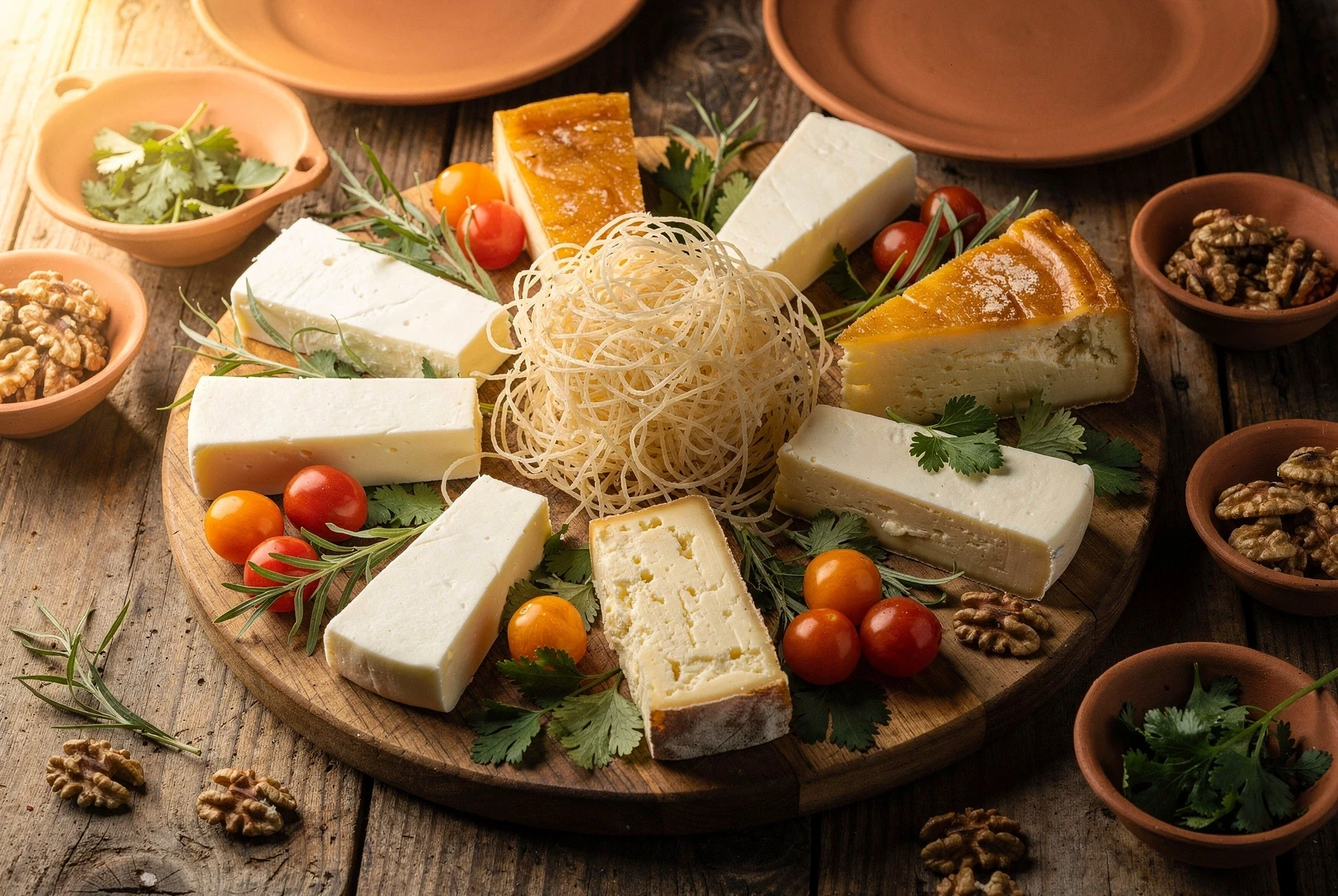
Georgian cheese gets flattened into one lazy sentence far too often: salty white cheese used in khachapuri. That is technically not false, but it misses the point by a mile. Georgia has hundreds of regional cheeses, and the interesting part is not the number. It is how differently they behave. Some squeak and stretch. Some crumble and punch you in the face with sheepy funk. Some are best eaten an hour after they are made. Some need smoke, mountain air, or a sheepskin bag to make sense.
If you eat in Georgia for more than a few days, cheese stops being a side note. It is breakfast with tomatoes and herbs. It is the structure inside khachapuri. It is the thing torn into hot beans, folded into bread, or eaten with nothing more than cucumbers and a glass of amber wine. A good Georgian meal often looks simple on paper. In reality, the quality of the cheese decides whether that simple plate feels forgettable or irresistible.
How to Read Georgian Cheese Properly
The easiest way to get lost is to approach Georgian cheese with Western cheese-board logic. Georgia is not trying to build a French-style progression from mild to washed-rind to blue. A lot of Georgian cheese is made to be eaten with bread, herbs, beans, wine, and hot dishes. Function matters as much as prestige.
So instead of asking which cheese is “the best,” ask four better questions: is it fresh or aged, is it brined or smoked, is it meant for the table or for cooking, and which region made it? Those four questions already get you closer to what matters than most generic guides do.
Quick rule
If a Georgian cheese is mild and elastic, it probably wants bread or heat. If it is crumbly, pungent, or aggressively salty, it usually wants wine, herbs, or a smaller supporting role. Do not expect every cheese to work as a snack cube on a board.
The Six Cheeses That Matter Most
There are many more than six cheeses worth knowing, but these are the ones that give you real orientation. If you understand these properly, Georgian bakery counters, markets, and restaurant menus stop feeling random.
Sulguni
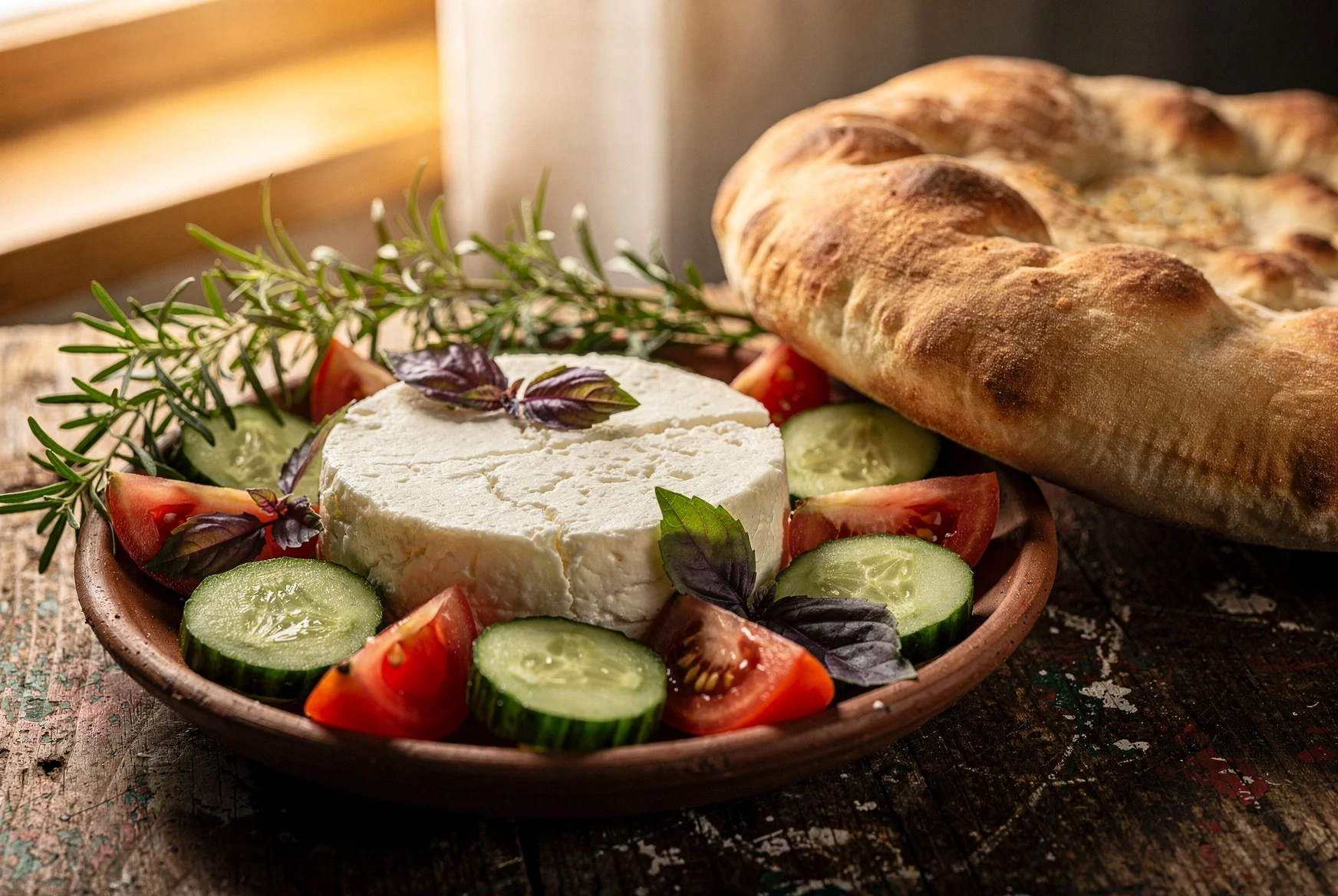
Sulguni is the workhorse. Semi-firm, brined, slightly sour, salty, and elastic. It is the cheese most people outside Georgia vaguely mean when they talk about Georgian cheese. Good sulguni tears into soft layers and has a pleasant spring to it. Bad sulguni feels rubbery and one-note.
The version from Samegrelo is the one people speak about with real affection, especially when buffalo milk enters the picture. Smoked sulguni is its own thing entirely: firmer, drier, and much more savory. With bread, tomatoes, and a little tarragon, smoked sulguni can outshine fancier cheeses because it knows exactly what it is doing.
Imeruli
Imeruli is gentler. It is fresh, soft, lightly brined, and milky rather than dramatic. This is the cheese that makes Imeretian khachapuri work. It melts without getting greasy and gives you that creamy, slightly salty interior without hijacking the dough. If sulguni is the extrovert, imeruli is the one that makes the room function.
Freshness matters more here than complexity. A very fresh imeruli can be almost delicate. Leave it too long in brine and it turns from lovely to blunt.
Guda
Guda is mountain cheese with actual personality. Traditionally associated with Tusheti and made from sheep's milk, it is aged in a sheepskin bag. That detail matters because the bag is not just packaging. It gives guda its gamey, earthy, animal edge. People who like clean dairy sweetness sometimes bounce off it. People who like strong alpine cheeses tend to get interested fast.
This is not the cheese to start with if you want easygoing. It is the one you buy when you want to understand why Georgian mountain food can feel so old and unsmoothed by modern taste.
Tenili
Tenili looks theatrical and earns it. The cheese is pulled into long, fine strands, then treated with brine and cream before being stored. The result is silky, rich, and oddly elegant. It is one of the few Georgian cheeses that feels almost ceremonial when it arrives at the table.
Tenili is not an everyday cheese in the way sulguni is. It is the kind of cheese that makes people pause, touch it, pull at it, and ask questions. When it is good, it tastes buttery and lactic rather than aggressively salty.
Dambalkhacho
Dambalkhacho is the one people remember. It starts from curds or cottage-cheese-like dairy, is dried, smoked, then aged in clay so mold can do its work. The finished cheese has a funky, deep, almost blue-cheese-adjacent power to it, but with a Georgian accent: smoky, earthy, and more rustic than polished.
This is not a universal crowd-pleaser. It is a real cheese for people who want the weird stuff. Georgia needs more attention for cheeses like this, because they make it obvious the country is doing far more than bread cheese.
Nadughi
Nadughi is technically closer to a fresh whey cheese, but leaving it out would be silly because you will run into it constantly. Think of it as a ricotta-like dairy element that often gets mixed with mint and rolled into thin cheese sheets. In restaurants it shows up as one of the lighter, cooler counterpoints on the table.
It is not the most dramatic cheese in Georgia. It is one of the most useful. On a heavy table of meat, bread, and walnuts, nadughi is the thing that keeps the whole meal from collapsing under its own weight.
| Cheese | Region | Milk | Texture | Best use |
|---|---|---|---|---|
| Sulguni | Samegrelo | Cow or buffalo | Elastic, layered | Table cheese, melting, khachapuri |
| Imeruli | Imereti | Cow | Soft, crumbly | Khachapuri, salads, breakfast plates |
| Guda | Tusheti | Sheep | Crumbly, aged | Tasting cheese, wine, mountain dishes |
| Tenili | Meskheti | Cow or sheep | Fine strands | Celebration table, cheese courses |
| Dambalkhacho | Pshavi | Cow | Soft interior, aged rind | Small tasting portions, wine |
| Nadughi | Nationwide | Usually cow whey | Soft, creamy | Rolls, spreads, light cold dishes |
What to Order First in Georgia
If you are traveling and want the shortest path to understanding the cheese culture, order in this order: fresh sulguni, smoked sulguni, imeruli khachapuri, nadughi with mint, then something more forceful like guda or dambalkhacho if you spot it. That sequence moves from friendly to serious without wrecking your palate on the first round.
Start here
Fresh sulguni with tomatoes, cucumbers, herbs, and hot bread. This is the baseline Georgian cheese plate and it is usually a better first order than some overloaded fusion starter.
Then move to heat
Try a proper Imeretian or Megrelian khachapuri next. The difference between table cheese and melting cheese becomes obvious once it hits dough.
For curious eaters
Ask whether the kitchen has guda, tenili, or dambalkhacho. These are the cheeses that stop Georgian dairy from feeling interchangeable with anyone else's.
Worth skipping
Anonymous “cheese platter” orders in mediocre restaurants. If the staff cannot tell you which cheeses are on it, it is probably not the place to learn anything.
Cheese and Khachapuri
You cannot talk about Georgian cheese seriously without talking about khachapuri. But the lazy version of that sentence is “khachapuri uses Georgian cheese.” The more useful version is this: different cheeses create different khachapuri personalities, and once you notice that, the dish becomes much more interesting.
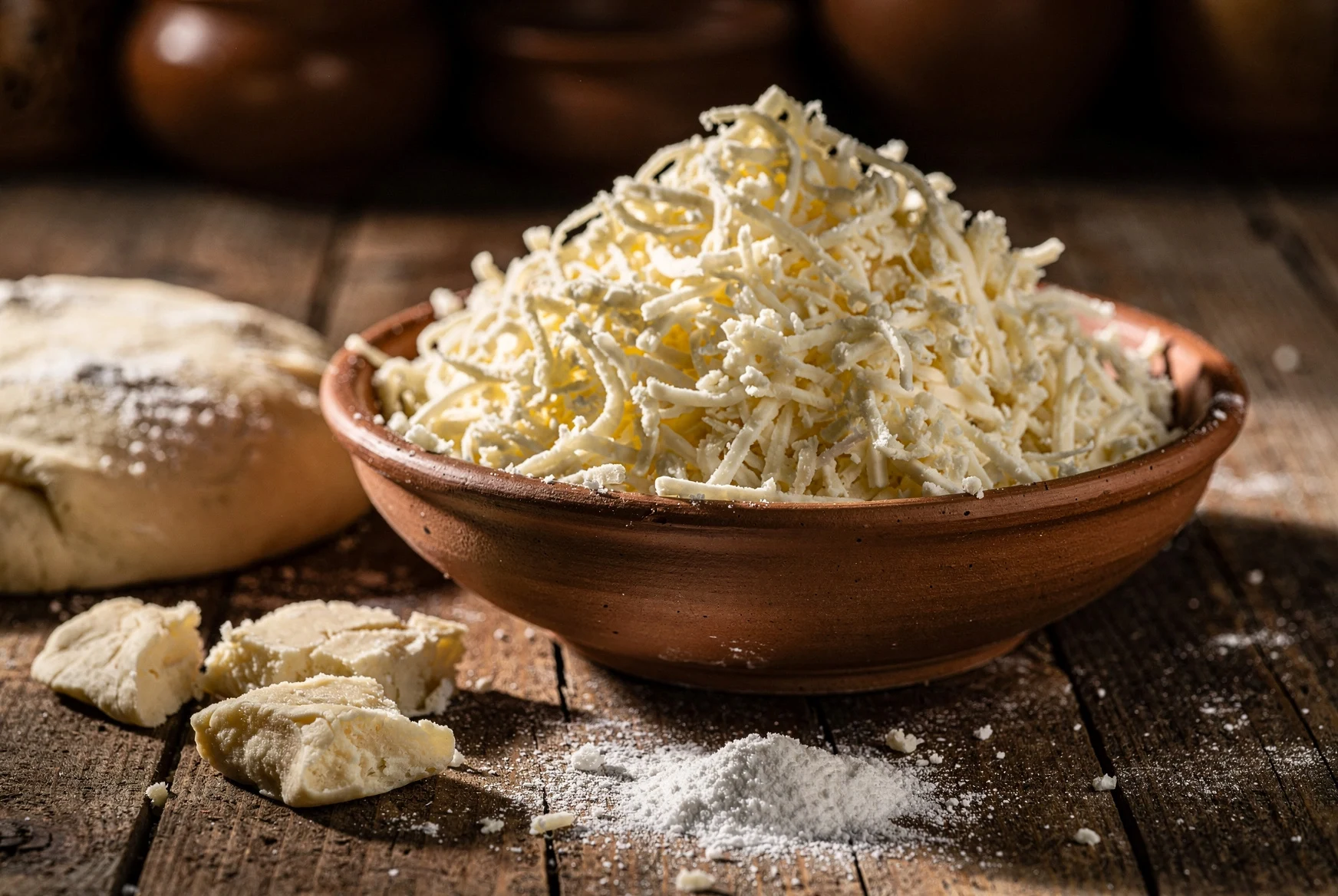
Imeretian khachapuri wants a balanced filling that melts softly and stays creamy. Megrelian khachapuri leans harder into salt, richness, and excess because it puts more cheese on top as well as inside. Adjarian khachapuri usually works best with a blend, because you need stretch, salt, and body without turning the center into a greasy mess. That is why a lot of bakers combine sulguni and imeruli rather than relying on one cheese alone.
| Dish | Cheese logic | What you taste |
|---|---|---|
| Imeretian khachapuri | Mostly imeruli or mild fresh cheese | Creamy, milky, balanced, everyday |
| Megrelian khachapuri | More sulguni, plus extra cheese on top | Saltier, richer, more aggressively cheesy |
| Adjarian khachapuri | Blend of cheeses for melt and structure | Loose molten center, stretchy edges, buttery finish |
| Gebzhalia | Soft cheese rolled around nadughi-style filling | Cool, minty, tangy, fresh |
| Elarji | Heavy use of sulguni or similar melting cheese | Elastic, rich, deeply comforting |
How to Buy Georgian Cheese at Markets
The good news is Georgian markets are straightforward. The less good news is quality varies wildly, and not every white round on a stall deserves your money. You want to taste, ask where it is from, and pay attention to texture more than labels.
Fresh sulguni should feel moist but not wet, layered rather than dense, and pleasantly salty instead of harsh. Imeruli should look fresh and milky, not tired and yellowing. Smoked cheeses should smell like smoke and dairy, not smoke and refrigerator. With strong cheeses like guda, accept some funk. That is the point. But ammonia-like harshness is a bad sign rather than rustic charm.
Best buying move
Ask for a small taste and buy less of several cheeses rather than a huge piece of one. Georgian cheeses reveal themselves best in comparison, and market vendors are used to people tasting before they commit.
What to Drink With Georgian Cheese
Wine pairings here do not need to get pretentious. Fresh sulguni and imeruli work well with crisp whites, young ambers, or a light red that stays out of the way. Smoked sulguni likes more structure. Guda needs something with backbone. Dambalkhacho wants a wine strong enough to survive the conversation.
| Cheese | Best match | Why it works |
|---|---|---|
| Fresh sulguni | Dry white or light amber | Enough acidity for the salt, enough texture for the dairy |
| Smoked sulguni | Amber wine or light red | Smoke needs grip, not just freshness |
| Imeruli | Young white | Keeps the pairing clean and breakfast-like |
| Guda | Saperavi or firm amber | The cheese is too strong for delicate wine |
| Dambalkhacho | Structured red or oxidative amber | You need intensity on both sides |
For Home Cooks Outside Georgia
If you cannot buy Georgian cheese where you live, do not let that stop you from cooking. Just do not pretend every substitute is equally good. For khachapuri, the most practical approach is usually a blend: low-moisture mozzarella for stretch, feta for salt, and maybe a little farmer's cheese or ricotta for softness. That gets you closer than using one supermarket cheese and calling it done.
For cold cheese plates, though, substitution gets weaker. Sulguni has a distinct layered elasticity that mozzarella does not quite match. Imeruli is gentler than feta. Guda has no clean supermarket twin. So for recipes, approximate intelligently. For tasting culture, accept that substitutes are only a sketch.
Best khachapuri substitute blend
Roughly half low-moisture mozzarella, one-third feta, one-sixth farmer's cheese or ricotta. Adjust salt after tasting because feta brands vary a lot.
Worst mistake
Using only cheddar or only pre-shredded pizza cheese. You get grease, wrong flavor, and none of the soft saline character Georgian breads need.
What Is Overrated and What Is Underrated
The overrated thing is not any specific cheese. It is the habit of treating khachapuri cheese as the whole story. If you only chase the molten center shot, you miss the colder, quieter cheeses that show more range.
The underrated things are smoked sulguni bought from a good market vendor, nadughi in a properly balanced cold dish, and any chance to try real mountain cheeses in the region they come from. Georgia's cheese culture becomes far more impressive the moment you get beyond the obvious tourist plate.
Final Verdict
If you want the shortest honest summary, it is this: Georgian cheese is less polished than Western Europe at its most famous, but often more alive. It is a cuisine's working dairy rather than a museum piece. It belongs in bread, beside herbs, with hot beans, under smoke, near mountains, and on tables where people actually eat. That is exactly why it is worth taking seriously.
Written by The Georgian Eats Team
We spend a lot of time in Georgian bakeries, markets, and family-style restaurants where cheese is never treated as a garnish. This guide is built around how these cheeses actually taste and how Georgians actually use them.
Last updated: March 2026.
Related Articles
Khachapuri: The Definitive Guide
Every major style explained, from Imeretian daily bread to Adjarian boats and Megrelian excess.
Imeretian Khachapuri Recipe
The everyday round cheese bread that shows why fresh, balanced cheese matters more than sheer quantity.
Gebzhalia Recipe
Soft cheese rolls in minty matsoni sauce — one of the coolest, smartest dairy dishes in western Georgia.
Georgian Wine for Beginners
The fastest route to understanding what to pour with salty, smoky, fresh, and funky Georgian cheeses.