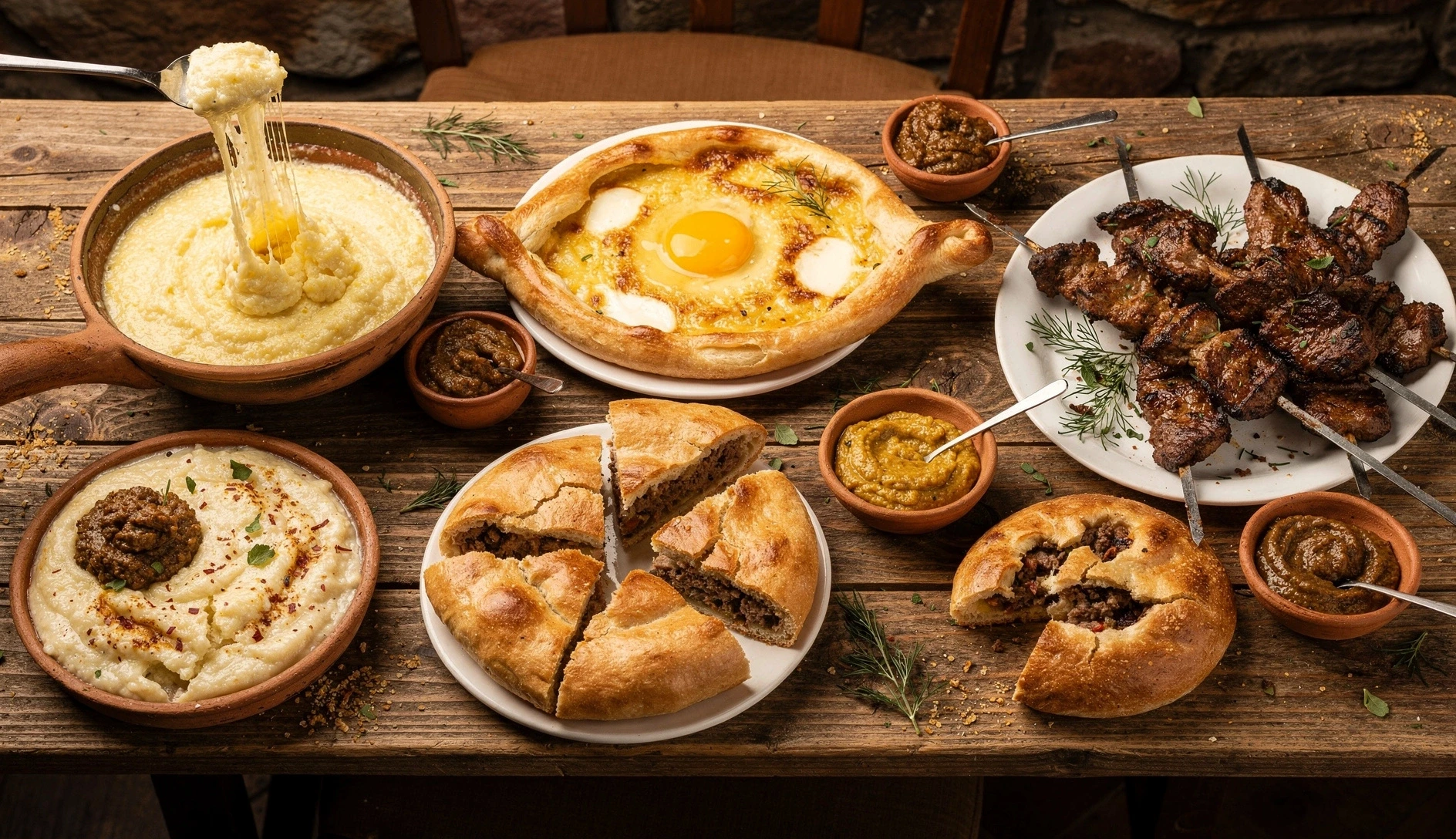
People talk about "Georgian food" as if it's one thing. It isn't. Order kharcho in Tbilisi and in Zugdidi and you'll get two fundamentally different soups. The khachapuri changes shape, filling, and philosophy depending on which valley you're in. Even the level of heat — Megrelians eat food that would make a Kakhetian sweat — varies wildly across a country smaller than South Carolina.
Georgia has at least eight distinct regional cuisines, shaped by geography, climate, trade routes, and the stubbornness of grandmothers who refuse to adopt any recipe from the next province over. The west is walnut-heavy, spicy, and corn-based. The east is wheat-bread territory, heavier on grilled meats, and built around wine culture. The mountains have their own logic entirely — calorie-dense survival food designed for people who spend half the year snowed in.
This guide maps it all out. Not the tourist-menu version of Georgian food, but the real regional differences that even many Georgians from other parts of the country don't fully appreciate.
The Great Divide: Western vs Eastern Georgia
Before getting into individual regions, you need to understand the fundamental split in Georgian cuisine. The Likhi mountain range cuts the country roughly in half, and it divides two very different food cultures.
Western Georgia — Samegrelo, Guria, Imereti, Adjara, Svaneti — is subtropical and humid. Corn grows easily, walnuts are everywhere, and the climate historically bred malaria. The response? Aggressive use of hot peppers and spices, believed to ward off disease. Western food is spicy, walnut-heavy, and built on cornmeal (ghomi) rather than wheat bread.
Eastern Georgia — Kakheti, Kartli, Mtskheta-Mtianeti — is drier, continental, and wheat-growing country. The food is milder, more meat-forward, and deeply intertwined with wine culture. Bread replaces cornmeal, and while walnuts still appear, they're less dominant.
| Feature | Western Georgia | Eastern Georgia |
|---|---|---|
| Staple grain | Corn (ghomi, mchadi, elarji) | Wheat (tonis puri, shotis puri, lavash) |
| Spice level | Hot — heavy use of peppers and adjika | Mild to moderate — herbs over heat |
| Primary protein | Poultry, pork, cheese-as-protein | Beef, lamb, pork |
| Walnut usage | In almost everything — sauces, fillings, garnish | Present but less dominant |
| Cheese style | Sulguni, smoked sulguni, nadughi | Imeretian, guda, tushuri |
| Cooking fats | Walnut oil, butter | Animal fat, sunflower oil, butter |
| Wine tradition | Lighter whites, some reds (Ojaleshi) | Dominant — Saperavi, Rkatsiteli, qvevri amber |
| Signature sauce | Adjika, bazhe, satsebeli | Tkemali, tklapi (dried plum leather) |
Tbilisi is the melting pot
The capital doesn't have its own strong regional cuisine — it borrows from everywhere. Tbilisi restaurants serve Megrelian, Kakhetian, Adjarian, and Svan food side by side. This is great for eating, but it means most tourists experience a blended version of Georgian food and never realize how different the regions actually are.
Samegrelo (Mingrelia): The Spice Capital
If Georgian cuisine has a region that punches hardest, it's Samegrelo. Megrelian food is aggressively seasoned, built on heat and walnuts, and unapologetically rich. There's a historical explanation: Samegrelo's humid subtropical climate was historically malaria-prone, and locals used heavy spicing — particularly hot peppers — as a preventive measure. Whether or not the science holds up, the culinary tradition stuck.
Megrelian cooking uses more adjika (the fiery chili-herb paste) than any other region. Walnuts aren't a garnish here — they're a structural ingredient, ground into sauces, stuffed into cheese, and stirred into stews. And the cheese. Samegrelo produces most of Georgia's sulguni, and they use it with abandon.
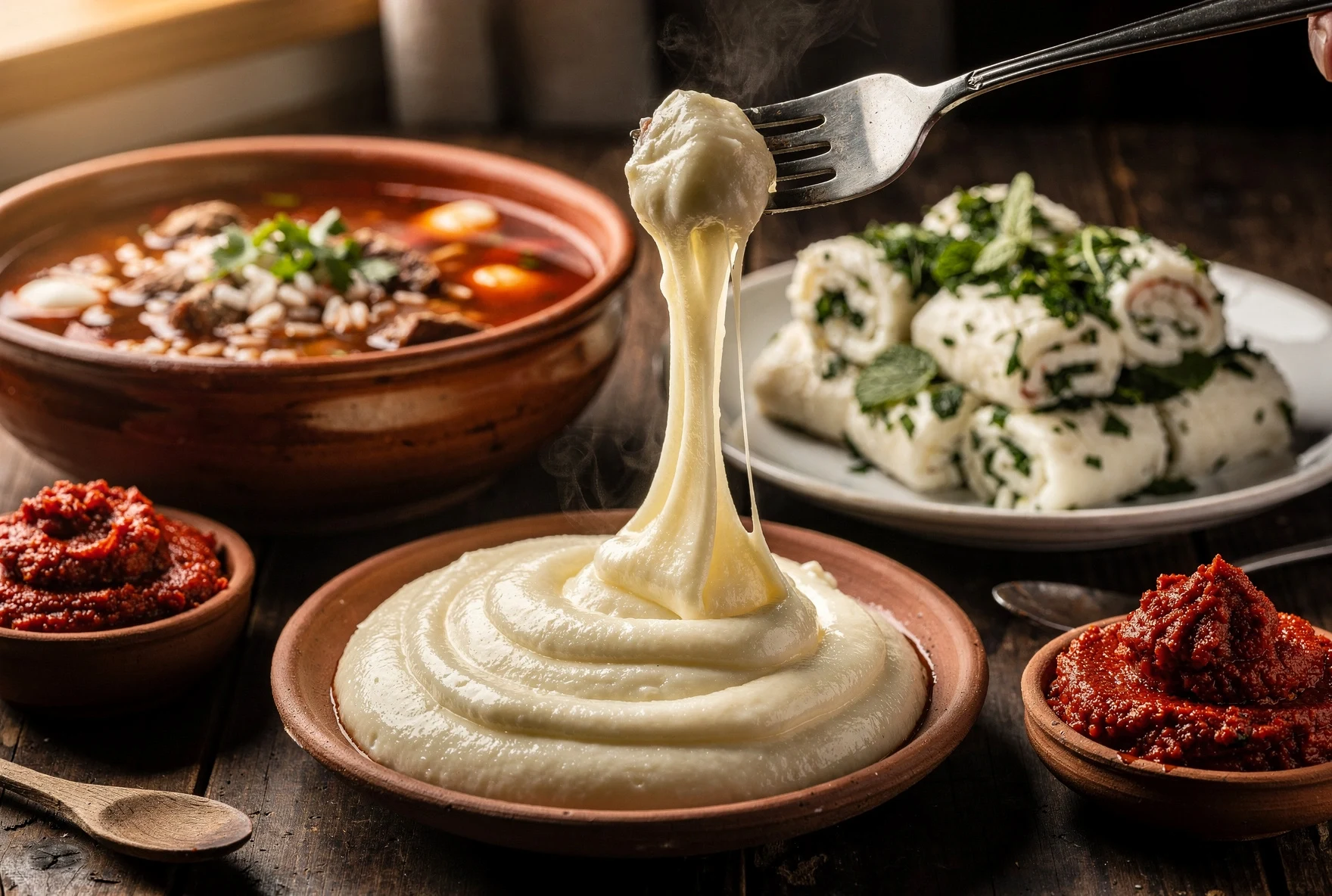
Signature Dishes
Elarji
Coarsely ground cornmeal stirred with an absurd amount of sulguni cheese until it becomes a stretchy, elastic mass. Imagine polenta crossed with mozzarella — but heavier. Served as a side to basically everything, especially with bazhe sauce. Not a daily dish — it's reserved for holidays and honored guests. Full recipe →
Gebzhalia
Fresh cheese (from the same milk as sulguni) rolled with mint leaves, then bathed in a tangy matsoni sauce. Elegant, light, and completely at odds with the heavy-hitting reputation of Megrelian food. The word "bja" means milk in Megrelian — that tells you everything. Full recipe →
Megrelian Kharcho
The Megrelian version is a thick, dry-ish beef stew with ground walnuts and heavy spicing — not the soupy rice-based version Tbilisi restaurants serve. Uses more adjika, more garlic, and less liquid than the Imeretian version. Full recipe →
Megrelian Khachapuri
The same round shape as Imeretian, but with cheese melted on top as well as inside. Double the cheese, double the richness. The cheese on top gets a golden, slightly crispy crust. Full recipe →
Adjika: Samegrelo's defining condiment
Adjika was granted Intangible Cultural Heritage status in 2018. The real stuff — raw peppers ground with garlic, herbs, blue fenugreek, and salt — bears almost no resemblance to the commercially bottled sauces sold in supermarkets. Every family has their own recipe, and debates about whose is better can last entire evenings. Make your own →
Other Megrelian specialties worth knowing: ghomi (plain cornmeal porridge — the base that elarji is built on, served as an everyday starch), puchkholia (crumbled fresh cheese mixed into hot ghomi with garlic and pepper), and kupati made with heavier spicing than the versions elsewhere in the country.
Svaneti: Mountain Survival Food
Svan cuisine is built around one reality: winter. Upper Svaneti sits at 1,500-2,200 meters above sea level. Villages like Ushguli were historically cut off from the rest of Georgia for five to six months of the year by snow. When you can't leave your valley from November to April, your food needs to be calorie-dense, long-lasting, and made from whatever you can store.
The result is the most distinctive sub-cuisine in Georgia — heavy on preserved meats, spice blends designed to mask months of storage, and cornmeal dishes that fuel people through brutal winters. Svaneti's isolation also preserved cooking techniques that have disappeared elsewhere in the country.
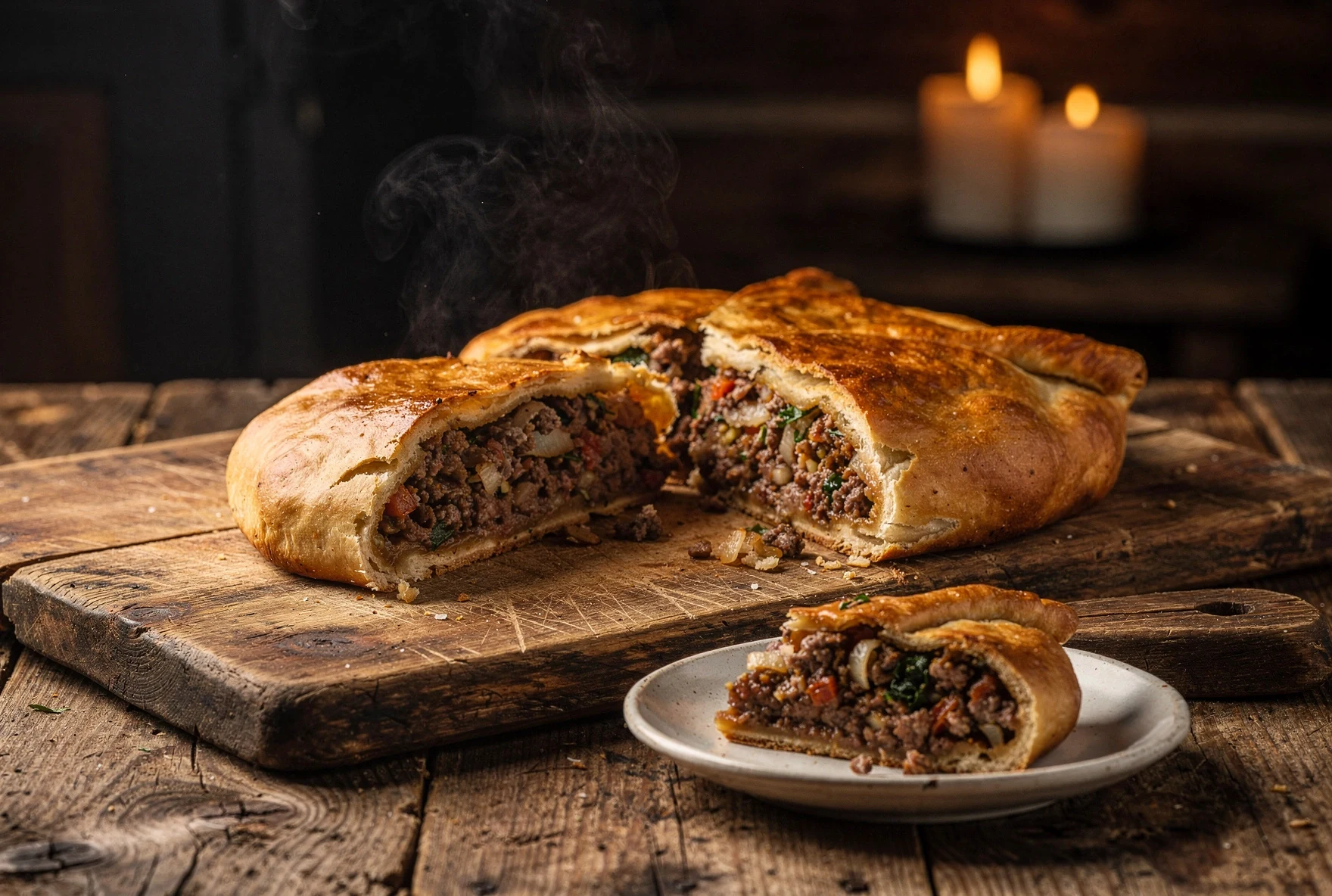
Signature Dishes
Kubdari
The iconic Svan meat bread. Hand-chopped beef and pork (never ground — the texture matters) mixed with cumin, coriander, blue fenugreek, dill seeds, and crushed red pepper, then sealed in yeasted dough and baked. The spice blend is aggressively aromatic — you can smell kubdari baking from down the street. Full recipe →
Chvishtari
Corn flour mixed with sulguni cheese, formed into thick patties, and pan-fried until golden with a crispy crust and molten cheese center. Simpler than kubdari but possibly more addictive. The cheese-to-corn ratio should be roughly 1:1 — anything less and it's just cornbread. Full recipe →
Pkhlovani
A stuffed mountain bread filled with cooked greens, herbs, and cheese. It gets lazily described as spinach khachapuri, but that misses the point: the best versions are thinner, greener, and more balanced than the cheese-first breads from lower regions. Full recipe →
Tashmijabi
Mashed potatoes beaten with young sulguni until stretchy and elastic — the potato answer to elarji. A Svan comfort dish that still feels more mountain guesthouse than Tbilisi menu, and one of the cleanest examples of what Svanetian salt is for. Full recipe →
Svan Khinkali
Smaller than the lowland version, less intricately pleated, and often filled with a potato-cheese mixture rather than just meat. Some villages make them with wild herbs gathered from alpine meadows. The dough tends to be thicker — function over form.
Svanetian salt: the region's secret weapon
Svanetian salt isn't just salt with stuff mixed in — it's a precise blend of garlic, blue fenugreek, dried marigold, coriander, dill, cumin, and hot pepper ground with coarse salt. Each family has their own ratio. It goes on everything: eggs, potatoes, meat, bread. It's one of the best food souvenirs you can bring home from Georgia. More on Georgian spices →
Adjara: Where Georgia Meets Turkey
Adjara sits on the Black Sea coast in Georgia's southwest corner, sharing a border with Turkey. That proximity matters. Adjarian cuisine is the most Turkish-influenced in Georgia — you'll find borano, sinori, and pakhlava alongside more recognizably Georgian dishes. The region also splits into two food cultures: coastal Adjara (around Batumi) is lighter, more fish-forward, and herb-heavy, while mountainous Adjara is dairy-rich and calorie-dense.
Adjara is a Muslim-majority region historically, and while most modern Adjarians are Orthodox, the food still reflects that heritage. You'll find less pork here than in other Georgian regions, and butter and ghee play a bigger role than elsewhere.
Signature Dishes
Adjarian Khachapuri
The boat-shaped one that made Georgian food Instagram-famous. Open-topped, filled with sulguni and Imeretian cheese, topped with a raw egg and butter chunk that you mix into the hot cheese. Eaten by tearing pieces from the ends and dipping. Everywhere in Georgia now, but it was born here. Full recipe →
Borano
Chopped cheese (usually sulguni or Adjarian checili) fried in an almost absurd amount of butter or ghee until melted and bubbling. Served in the pan. It's basically a cheese fondue made with clarified butter. Shameless and wonderful. One of the most calorie-dense things in Georgian cuisine, which is saying something.
Sinori
Thin sheets of unleavened dough rolled around nadughi (a fresh cottage cheese similar to ricotta), then arranged in a baking dish and soaked in butter. Some versions add matsoni. Light, creamy, and one of the more refined dishes in Georgian cuisine — nothing like the butter-bomb reputation of most Adjarian food.
Chirbuli
Georgia's answer to shakshuka — eggs poached in a spiced tomato sauce with walnuts. The Adjarian version often uses more walnuts and fresh herbs (cilantro, basil, dill) than the Tbilisi standard. A breakfast staple in Batumi's old town. Full recipe →
Also worth knowing: iakhni (a rich stew similar to kharcho, associated with the Kobuleti area), khavitsi (corn porridge cooked in ghee — mountain Adjara's breakfast), malakhto (mashed kidney beans with walnuts and unripe grape juice), and pakhlava (the Georgian version of baklava, soaked in honey rather than the rose-syrup versions from further east).
Imereti: The Everyday Kitchen
If Samegrelo is Georgian cuisine at its most intense and Adjara at its most indulgent, Imereti is the region that feels most like home cooking. The Imeretian table is the backbone of what most people think of as "Georgian food" — this is where khachapuri in its most common form comes from, where lobio and pkhali are perfected, and where the cooking is more about balance than extremes.
Imereti sits in central-western Georgia, between the mountains and the coast. The climate is mild, the soil is good, and the food reflects that abundance without the aggressive spicing of Samegrelo or the butter-heavy tendencies of Adjara.
Signature Dishes
| Dish | What It Is | Why It Matters |
|---|---|---|
| Imeretian Khachapuri | Round, closed, filled with Imeretian cheese | The original, most common, daily-bread version |
| Lobio | Red bean stew with walnuts and blue fenugreek | The definitive bean dish — every family has their version |
| Pkhali | Vegetable-walnut balls (spinach, beet, green bean) | Imeretian snack perfected — eaten across the country |
| Chakhokhbili | Chicken braised in tomato with masses of herbs | Weeknight dinner for half the country |
| Soko Ketsze | Mushrooms baked with butter and sulguni in clay | Simple, universally loved — every restaurant menu |
| Kupati | Pork sausage with fenugreek and coriander | Grilled over charcoal — an Imeretian staple |
Imeretian cheese: the most important cheese in Georgia
Imeruli kveli (Imeretian cheese) is a mild, slightly tangy fresh white cheese that's used in the standard khachapuri, crumbled into salads, and eaten on its own with bread. It's Georgia's mozzarella equivalent — the workhorse cheese that shows up everywhere. Don't confuse it with sulguni (which is Megrelian and has a very different, stretchy texture). Full cheese guide →
Kakheti: The Wine Region's Table
Kakheti is Georgia's wine heartland — producing roughly 70% of the country's wine — and its food reflects that identity. This is where you eat mtsvadi (grilled meat) while drinking Saperavi from a qvevri-aged batch. The cuisine is meat-heavy, built around open-fire cooking, and designed as much for the vineyard worker's lunch as for the elaborate supra feast.
Kakhetian food tends to be simpler in technique than western Georgian cooking — less walnut-based sauces, fewer complex spice blends, and more reliance on the quality of the meat and the skill of the fire. The region is also the birthplace of churchkhela (the grape-and-walnut candy), pelamushi (grape pudding), and many of the dried fruit traditions that define Georgian desserts.
Signature Dishes
Mtsvadi
Grilled meat — usually pork, sometimes beef or lamb — cooked over grapevine-ember coals. Kakhetians are obsessive about their fire technique. The meat is cut thick, seasoned with nothing but salt and onion juice, and the grapevine coals add a subtle sweetness you won't get from regular charcoal. Full recipe →
Chakapuli
Spring lamb (or veal) stewed with enormous amounts of fresh tarragon, unripe plums or tkemali, and white wine. A seasonal dish that peaks during Easter when tarragon is young and the plums are still sour. Arguably the most aromatic dish in all Georgian cooking. Full recipe →
Kakhetian Khinkali
The Kakhetian version uses more herbs in the meat filling — parsley, cilantro, and especially pennyroyal (ombalo). The dough is thinner than the Svan version. Kakhetians consider their khinkali the original, though every region makes that claim.
Churchkhela & Pelamushi
Both made from concentrated grape juice (tatara). Churchkhela: walnuts (or hazelnuts) threaded on a string, dipped in thickened grape juice, and dried for weeks. Pelamushi: the same juice, thickened with flour into a dense pudding. Made during the autumn grape harvest. Churchkhela guide →
Food and wine pairing, Kakhetian style
Kakhetians don't think about "pairing" in the European fine-dining sense. It's simpler: heavy food goes with strong wine. Mtsvadi calls for Saperavi (a big, tannic red). Lighter dishes pair with Rkatsiteli (white) or amber wine. The whole concept of a supra is built around wine flowing continuously alongside an escalating procession of dishes. Learn about amber wine →
Guria: Poultry and Christmas Traditions
Guria is a small region tucked between Imereti and Adjara, and its cuisine often gets overlooked. That's a mistake. Gurian food is poultry-obsessed — chicken and turkey dominate in a way you don't see elsewhere in Georgia. The region also has the most distinctive holiday food tradition in the country.
What Makes Gurian Food Different
Gurian Ghvezeli
A crescent-shaped khachapuri filled with cheese AND hard-boiled eggs. Eaten specifically on Christmas Day (January 7 in the Georgian Orthodox calendar). The egg inside the dough symbolizes the birth of Christ. You'll almost never find this on a restaurant menu outside Christmas season.
Satsivi
While satsivi is eaten across Georgia, Guria claims it. Turkey or chicken in a cold walnut sauce spiced with fenugreek, cinnamon, and cloves. The key is serving it cold — the sauce sets into a thick, rich coating. A New Year's centerpiece. Full recipe →
Guria shares much with Imereti — kupati, mchadi, pkhali, kuchmachi are all standard here. The main distinction is the emphasis on poultry and the Gurian ghvezeli tradition, which is genuinely unique.
Kartli: The Heartland
Kartli (including the Mtskheta-Mtianeti area) is Georgia's historical heartland — this is where the country's oldest capital cities stood, where the Silk Road passed through, and where the cuisine reflects centuries of cultural exchange. Kartli doesn't have the dramatic signature dishes of Samegrelo or Svaneti, but it's the region that codified many "standard" Georgian dishes.
| Dish | Kartli's Version |
|---|---|
| Khinkali | Larger, beef-pork mix, heavily spiced with cumin and black pepper. The "city" khinkali. |
| Ojakhuri | "Family-style" pork and potatoes. Pan-fried separately, combined in a ketsi. Kartli's everyday dinner. |
| Shotis Puri / Tonis Puri | The tone oven bread tradition is strongest here. Every neighborhood bakery fires up at dawn. |
| Shkmeruli | Named after the village of Shkmeri in Racha (bordering Kartli). Garlic chicken in milk — adopted as a Kartli favorite. |
| Chanakhi | Lamb and eggplant slow-baked in individual clay pots. A Kartli classic that requires patience. |
Kartli is also the region most influenced by Tbilisi's cosmopolitan melting pot. The capital city doesn't produce a distinct "Tbilisuri" cuisine so much as absorb and refine dishes from every other region. If you eat at a typical Tbilisi restaurant, you're eating a Kartli-influenced mix of the whole country.
The Mountain Regions: Tusheti, Khevsureti, and Pshavi
The high Caucasus mountain regions of Tusheti, Khevsureti, and Pshavi are Georgia's most isolated food cultures. These areas are accessible only a few months per year (the roads typically open in June and close by October), and their cuisines reflect a pastoral, semi-nomadic lifestyle built around sheep, cheese, and hardy grains.
Tushuri Guda Cheese
Sheep's milk cheese aged inside a sheepskin bag (guda). The sheepskin imparts a distinctive, slightly funky flavor that divides people — you either love it or you find it overwhelming. It's the most "wild" cheese in Georgia, and it's increasingly hard to find the real, traditionally made version.
Kotori (Tushetian Khinkali)
Tusheti's version of khinkali uses a mix of cheese and herbs rather than meat as the primary filling. Made with local wild herbs and the region's distinctive sheep cheeses. Thicker dough, fewer pleats, more about substance than elegance.
Khevsuri Khinkali
Khevsureti's version is notably different — flat, almost like a stuffed flatbread rather than the pleated purse shape. Filled with wild herbs, nettles, or cheese. Reflects the ultra-practical mountain approach: less fuss, same idea.
Dried Meat (Basturma)
Air-dried, spiced beef or lamb — essential winter protein in communities cut off by snow for months. Sliced thin and eaten with bread and cheese. Similar in concept to Italian bresaola or Armenian basturma, but with Georgian spicing.
Sheep are everything
In Tusheti and the surrounding mountain regions, the entire food culture revolves around sheep — mutton, sheep cheese, sheep yogurt, dried sheep meat. Cattle don't thrive at these altitudes, so beef is rare. If you visit Omalo or any Tushetian village, expect lamb and sheep's-milk products at every meal.
Racha-Lechkhumi: The Hidden Gem
Racha is Georgia's smallest wine region and one of its least-visited areas, but it punches above its weight culinarily. The cuisine bridges western and eastern traditions — corn and wheat both appear, spice levels are moderate, and the cooking shows influence from the surrounding mountain regions.
Racha is most famous for two things: Khvanchkara, Georgia's most prized semi-sweet red wine (reportedly Stalin's favorite), and shkmeruli, the garlic chicken dish named after the village of Shkmeri. The region also produces excellent smoked ham (lori) and has strong pork-curing traditions that feel more European than the rest of Georgia.
| Rachian Specialty | What It Is |
|---|---|
| Shkmeruli | Whole young chicken pressed flat, fried crispy, then braised in milk with garlic. The real version uses so much garlic it turns the sauce pale yellow. |
| Rachuli Lori (Ham) | Dry-cured, smoked pork ham. The closest thing Georgia has to prosciutto. Sliced thin and served as a supra appetizer. |
| Lobiani (Rachuli style) | Racha's bean bread is considered the benchmark. Richer dough, more generous filling, often served on Barbaroba (Dec 17). |
| Khvanchkara Wine | Naturally semi-sweet red from Aleksandrouli and Mujuretuli grapes. Low production, high demand. Wine regions guide → |
The Khachapuri Map: Same Dish, Eight Interpretations
Nothing illustrates Georgian regional cuisine better than khachapuri. It's one dish with at least a dozen regional variations, and how a region makes its cheese bread tells you almost everything about its food philosophy.
| Region | Style | Shape | Key Difference |
|---|---|---|---|
| Imereti | Imeruli | Round, closed | The standard — cheese inside only |
| Adjara | Acharuli | Boat-shaped, open | Egg and butter on top, eaten by dipping |
| Samegrelo | Megruli | Round, closed | Cheese both inside AND melted on top |
| Guria | Guruli Ghvezeli | Crescent/half-moon | Includes hard-boiled egg — Christmas only |
| Svaneti | Svanuri | Round, thicker | Mashed potato mixed with the cheese filling |
| Ossetia | Khabizgina | Round, thin | Potato and cheese mix — borderline different dish |
| Adjara (mountain) | Borano | No bread — just cheese | Cheese fried in butter — khachapuri deconstructed |
| Pshavi | Pshavuri | Round, thick | Uses local mountain cheese — denser, more rustic |
Same Dish, Different Region: A Comparison
Beyond khachapuri, several dishes exist across multiple regions but with meaningful differences. Understanding these variations is key to understanding Georgian food culture — the same dish name can mean quite different things depending on where you are.
| Dish | Western Version | Eastern Version |
|---|---|---|
| Kharcho | Thick, dry, walnut-heavy, very spicy (Megrelian) | Soupy, rice-based, milder (Tbilisi standard) |
| Khinkali | Smaller, thicker dough, sometimes potato-cheese filling (Svan) | Larger, thinner dough, meat with cumin (Kakhetian/Kartli) |
| Kupati | Heavier spicing, more pepper and adjika (Megrelian) | Blue fenugreek and coriander focus (Imeretian) |
| Lobio | More walnuts, sometimes green (Imeretian) | Red beans, clay pot, milder seasoning (Kartli) |
| Kuchmachi | Hot, heavily spiced, more pepper (Megrelian) | Walnut and pomegranate focus (Imeretian/Gurian) |
Regional Tasting Tour: What to Eat Where
If you're traveling through Georgia and want to eat the right things in the right places, here's your cheat sheet. These are the dishes worth ordering specifically in their home region, where they'll be made with the most authority and the freshest local ingredients.
🏖️ In Batumi (Adjara)
Adjarian khachapuri (obviously), borano, sinori, chirbuli for breakfast, local fish from the market, Adjarian pakhlava. Skip the mtsvadi — that's not what this coast does best.
🌿 In Zugdidi (Samegrelo)
Elarji, gebzhalia, Megrelian kharcho, Megrelian khachapuri, puchkholia. Ask for real homemade adjika. Visit the Dadiani Palace, then eat.
🏔️ In Mestia (Svaneti)
Kubdari (always), chvishtari, tashmijabi, and Svan khinkali. Buy Svanetian salt to take home. Pair with a local beer at one of Mestia's small restaurants.
🍷 In Sighnaghi/Telavi (Kakheti)
Mtsvadi over grapevine coals, chakapuli (in spring), churchkhela from a roadside stand, chanakhi. Wine from every meal, ideally from a family marani (cellar).
🏛️ In Kutaisi (Imereti)
Imeretian khachapuri, lobio, kupati, pkhali assortment, chakhokhbili. Visit the Green Bazaar for Imeretian cheese. Everything here is solid, nothing extreme.
⛰️ In Omalo (Tusheti)
Guda cheese (the real thing, from the guesthouse), kotori, lamb everything. The remoteness means limited menus but maximum authenticity. Bring your own snacks for the drive in.
Common Questions
Which region has the spiciest food?
Samegrelo (Mingrelia) by a wide margin. Megrelian food uses adjika, hot peppers, and aggressive spicing in almost everything. Eastern Georgia is comparatively mild. If you can't handle heat, be careful ordering "Megrelian-style" anything.
Is Tbilisi food "authentic" Georgian cuisine?
Tbilisi is a melting pot that serves food from every region, but it's been adapted for a general audience. A Megrelian grandmother would probably find the Tbilisi version of kharcho too mild, and a Kakhetian would wonder why the mtsvadi isn't over grapevine coals. Authentic? Yes, but in the way that New York pizza is authentic — it's its own thing now.
What's the most underrated regional cuisine?
Racha. It's Georgia's least-visited major region, but the food — especially shkmeruli in its homeland, Rachuli lori (smoked ham), and the wine tradition — is outstanding. Khvanchkara alone is worth the trip.
Can I experience regional food without leaving Tbilisi?
Yes, to a degree. Restaurants like Oro (Megrelian), Salobie Bia (Imeretian), and various Svan restaurants on the Vake side of town specialize in regional cooking. The Dezerter Bazaar and Carrefour sell regional cheeses. But it's not the same as eating elarji in Zugdidi or kubdari in Mestia. Close, but not quite.
Why is western Georgian food spicier than eastern?
The most common explanation is malaria prevention — Samegrelo and the western lowlands had humid subtropical climates that bred mosquitoes, and heavy pepper use was believed to help ward off disease. Whether this is folk medicine or historical fact, the tradition is firmly established. Eastern Georgia's drier climate didn't produce the same conditions.
Written by The Georgian Eats Team
Based in Tbilisi with years of eating across every region — from Samegrelo's spice-forward kitchens to Tusheti's remote guesthouses. We've argued with grandmothers about the right way to make kharcho and lived to tell the tale.
Last updated: February 2026.
Related Articles
Georgian Food: 20 Dishes You Need to Try
The definitive guide to what to eat in Georgia.
Georgian Cheese: Every Variety Worth Knowing
From stretchy sulguni to funky guda — 250+ varieties.
Georgian Spices & Herbs: The Complete Guide
Khmeli suneli, utskho suneli, Svanetian salt, and more.
Georgian Wine Regions: A Complete Guide
Five regions, 30 appellations, 8,000 years of winemaking.