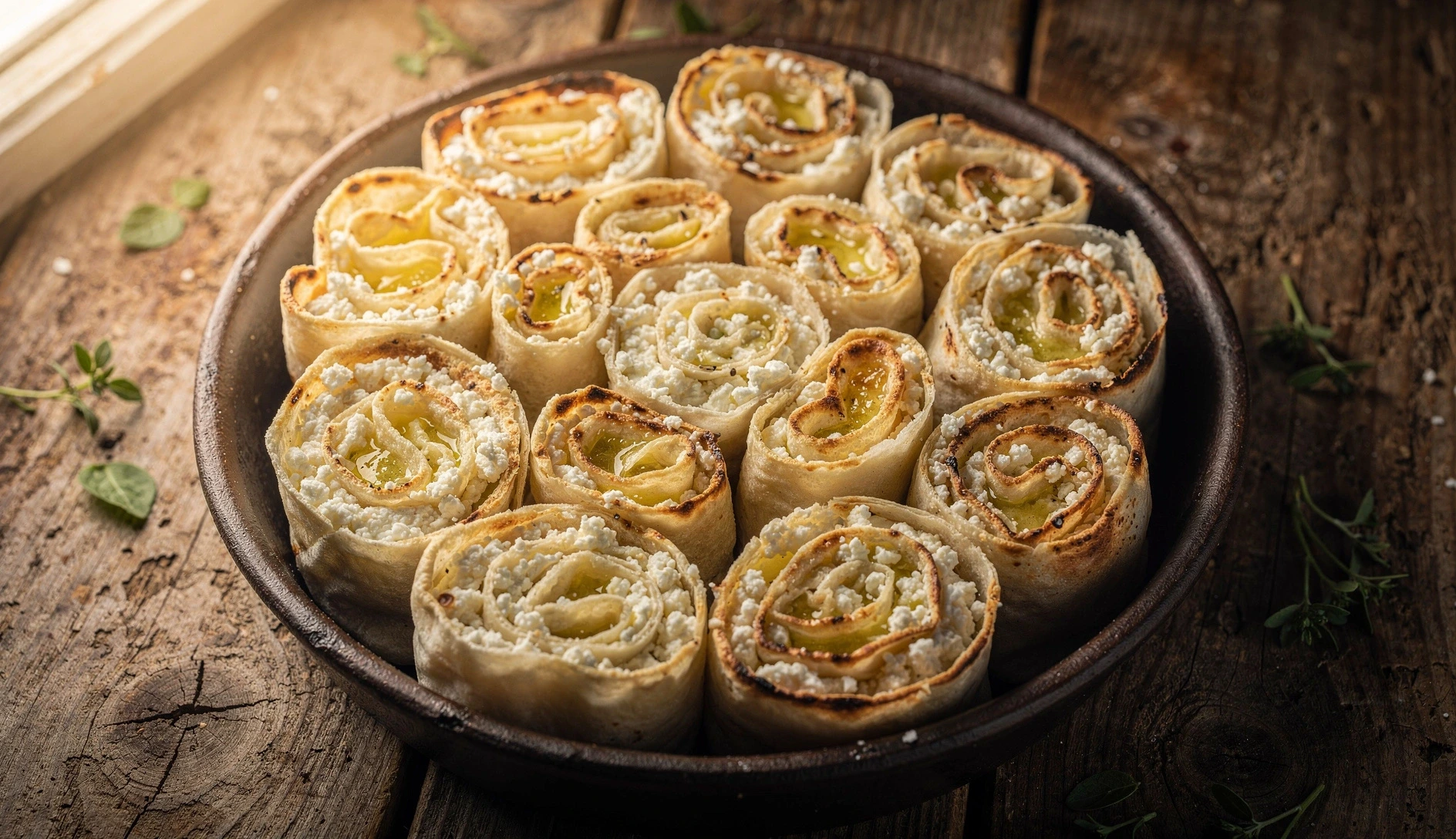
Sinori is the breakfast that Adjara doesn't want to share with the rest of Georgia. While the world obsesses over Adjarian khachapuri — that boat-shaped cheese bread with the egg — locals in Batumi and the surrounding villages are quietly eating something arguably better: rolled strips of thin lavash, packed tightly into a dish, and drowned in an obscene amount of garlic butter and nadughi, a soft fresh cheese that's somewhere between cottage cheese and ricotta. Baked until the tops crisp and the insides go completely soft with melted butter. It's simple. It's devastating. And it takes about 40 minutes.
Sinori Quick Facts
- Georgian name: სინორი (see-NOR-ee)
- Origin: Adjara region, southwestern Georgia
- Type: Breakfast / brunch dish
- Key flavors: Butter, garlic, fresh cheese, crispy-soft bread
- Active time: 15 minutes
- Total time: 40 minutes
- Serves: 4-6
- Cost in Georgia: 8-12 GEL (~$3-4)
- Vegetarian: Yes
What Sinori Actually Is
Sinori belongs to a family of dishes across the Caucasus and Near East that involve layering or rolling thin flatbread with butter and cheese, then baking or pan-cooking until the bread absorbs the fat and goes simultaneously crispy and soft. Think of it as Georgia's answer to börek — but wetter, richer, and less structured. There's no fussy phyllo layering here. You roll, you pack, you drown in butter, you bake.
The key ingredient that makes sinori distinctly Georgian is nadughi (ნადუღი) — a fresh, slightly tangy cheese made from whey leftover from Imeretian cheesemaking. Nadughi has a texture between cottage cheese and ricotta, with a mild, creamy flavor that plays beautifully against garlic and butter. Outside Georgia, ricotta or good-quality cottage cheese (drained) is the closest substitute.
In Adjara, sinori is breakfast food. Not brunch, not a light morning snack — proper, fill-you-up-until-dinner breakfast. It shows up at guesthouse tables in Batumi alongside chirbuli (eggs in tomato sauce) and strong black tea. It's also a popular choice for supras (feasts) as part of the bread-and-cheese course that starts the table before the meat arrives.
Ingredients
Sinori has one of the shortest ingredient lists in Georgian cooking. The quality of your butter and cheese matters enormously here — there's nothing to hide behind.
| Ingredient | Amount | Notes |
|---|---|---|
| Lavash flatbread | 4-5 sheets | Thin and pliable — the kind sold in large sheets, not thick pita |
| Unsalted butter | 200g (almost 2 sticks) | This is not a low-fat dish. Do not reduce. |
| Cottage cheese or ricotta | 300g | Substitute for nadughi — drain cottage cheese if very wet |
| Imeretian cheese or sulguni | 200g | Low-moisture mozzarella works; some use feta for tang |
| Garlic | 3-4 cloves | Minced — not optional, despite what some recipes say |
| Whole milk | 100-150ml | To thin the sauce — add gradually |
| Salt | To taste | Go easy — the cheeses contribute salt |
About Nadughi
Nadughi is a byproduct of Georgian cheesemaking — the fresh, creamy solids left after separating curds for Imeretian cheese. It has a mild, slightly sweet flavor and a texture somewhere between ricotta and fresh cottage cheese. If you can find it at a Georgian or Eastern European shop, use it. Otherwise, full-fat ricotta is the best substitute, followed by small-curd cottage cheese (drained in a sieve for 10 minutes to remove excess liquid).
Step-by-Step Instructions
Step 1: Prepare the Lavash Rolls
Cut your lavash sheets into strips roughly 8-10cm wide and 25-30cm long. The exact size doesn't matter — you're going for loose rolls that fit snugly in your baking dish. Roll each strip into a short, loose cylinder. Don't roll too tight — you want the butter sauce to seep between the layers.
Stand the rolls upright in a round oven-safe dish or cast-iron skillet (25-28cm diameter works well). Pack them in tightly enough that they hold each other upright, but don't crush them. You should see the spiral of the lavash when you look down from above. If you have extra strips, tuck them into any gaps.
Cast Iron or Ceramic?
Cast iron gives better browning on the edges and retains heat so the sinori stays warm longer at the table. A ceramic baking dish works fine too — you'll just get less crispiness. Whatever you use, make sure it's oven-safe and has sides at least 5cm high.
Step 2: Make the Butter-Cheese Sauce
Melt the butter in a saucepan over medium-low heat. Add the minced garlic and cook for 1-2 minutes — you want it fragrant but not brown. Burnt garlic will ruin this dish.
Add the cottage cheese (or ricotta) and stir until the mixture is smooth. It should look like a very rich, slightly grainy cream sauce. Add milk gradually — start with 100ml and add more if the sauce feels too thick. You want it pourable, like a thin béchamel. It needs to flow down between the lavash rolls, not sit on top. Season with salt, keeping in mind that the grated cheese topping will add more.
Step 3: Assemble and Bake
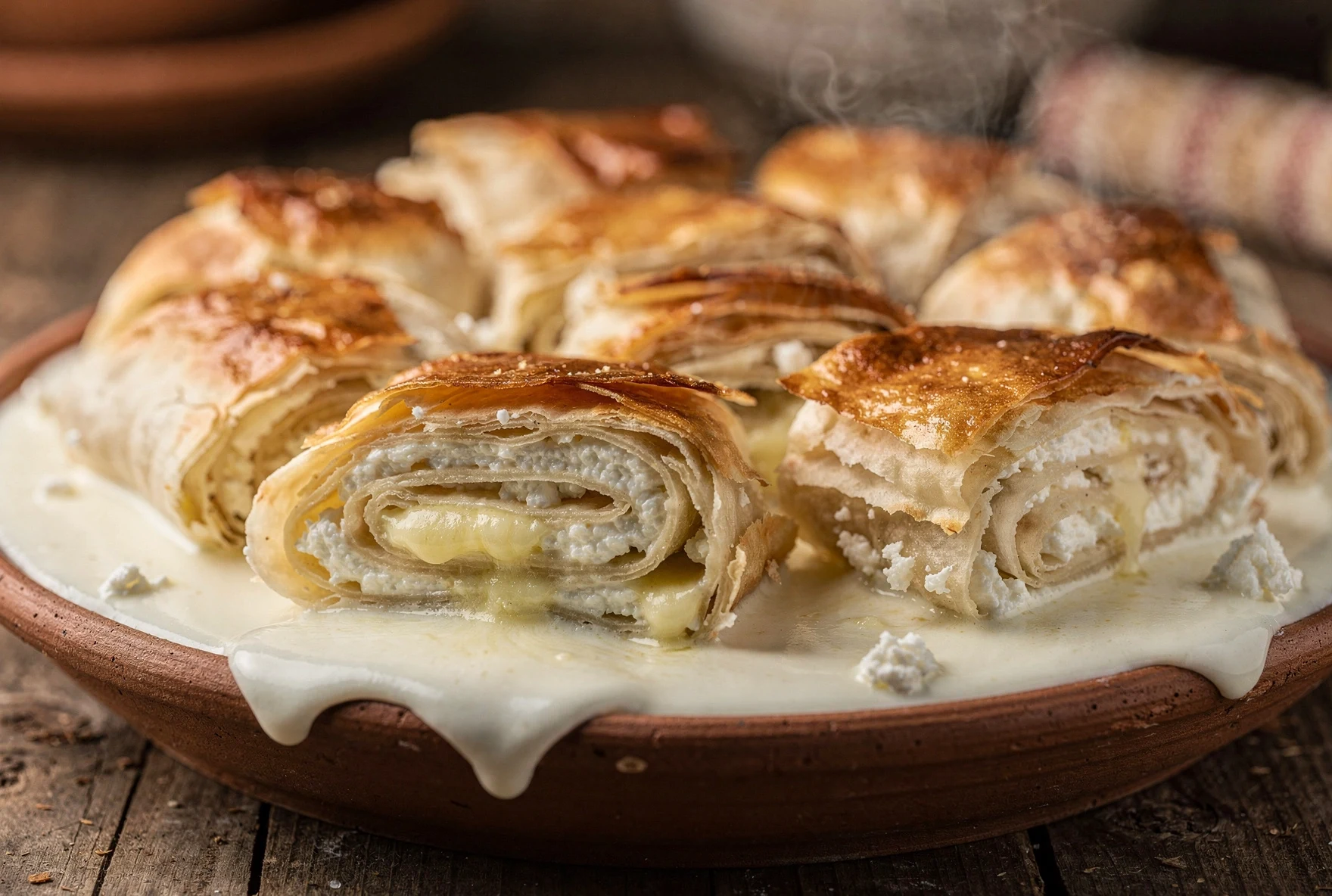
Preheat your oven to 180°C (355°F). Pour the butter-cheese sauce slowly and evenly over the lavash rolls. Use a spoon to nudge it into any gaps. The sauce should come about two-thirds of the way up the rolls — the tops should poke above the liquid so they crisp up.
Grate the Imeretian cheese (or mozzarella) over the top. Cover the dish with aluminum foil.
Bake covered for 15 minutes. The foil traps steam, softening the inner layers of lavash. Then remove the foil and bake another 8-10 minutes until the top is golden-brown and the cheese is bubbling. The edges of the lavash rolls should look toasty and slightly crisp, while the centers are soft and saturated with butter.
Step 4: Serve Immediately
Let the dish rest for 5 minutes — the sauce is volcanic straight from the oven. Scatter fresh mint or dill over the top if you like (both are traditional). Serve straight from the dish at the table.
Sinori does not reheat well. The magic is in the contrast between crispy tops and butter-soaked insides, and that contrast disappears once it cools. Make it, eat it, don't save it for later.
What It Should Taste and Feel Like
Good sinori has a clear texture contrast: the lavash edges that poke above the sauce are golden and lightly crisp, almost like a breadstick. Below the surface, the lavash has absorbed butter and cheese sauce until it's soft, almost custard-like, with distinct layers you can pull apart. The garlic should be present but not aggressive — a warm background note. The cottage cheese adds a mild tanginess that keeps the dish from being one-note rich.
The overall effect is something like a savory bread pudding made by someone who believes butter is a food group. It's rich. Genuinely, almost absurdly rich. That's why it works as breakfast — you eat a generous portion with strong black tea and you don't think about food again until dinner.
Variations
Stovetop Sinori
The older method: arrange the rolls in a deep skillet, pour the sauce over, cover, and cook on low heat for 10-12 minutes. You won't get the crispy top, but the texture is softer throughout — closer to how village grandmothers make it.
Sour Cream Version
Some cooks in Adjara replace part of the cottage cheese with matsoni or sour cream, giving the sauce a sharper tang. Use 150g cottage cheese + 150g sour cream instead of 300g cottage cheese.
Herb Sinori
Mix chopped fresh tarragon (tarkhuna) or cilantro into the butter-cheese sauce before pouring. The herbs infuse the rolls as they bake. Mint works especially well with the cottage cheese.
Homemade Dough
Traditional sinori uses hand-rolled thin dough, not store-bought lavash. The dough is flour, water, salt, and a little oil — rolled paper-thin. The result is slightly chewier and absorbs more sauce. Worth trying if you enjoy making pasta from scratch.
Cheese Substitution Guide
The cheese situation is the biggest challenge for making sinori outside Georgia. Here's what works:
| Georgian Cheese | Best Substitute | Notes |
|---|---|---|
| Nadughi (sauce) | Ricotta or cottage cheese | Ricotta is closest in texture; drain cottage cheese first |
| Imeretian (topping) | Low-moisture mozzarella | Mild, melts well — closest match |
| Sulguni (topping) | Provolone or string cheese | For a slightly tangier, stretchier result |
Finding Lavash
You need the thin, large-sheet lavash — the kind that comes folded or rolled in a plastic package. It should be pliable enough to roll without cracking. Most Middle Eastern, Armenian, or Turkish grocery stores carry it. In a pinch, flour tortillas work (large, thin ones), though the flavor is slightly different. Do not use thick pocketless pita — it won't absorb the sauce properly.
Tips for the Best Sinori
🧈 Don't Skimp on Butter
200g sounds like a lot. It is a lot. That's the point. The butter is not a cooking medium — it's the sauce. Reducing it means dry, disappointing lavash.
📐 Roll Loosely
Tight rolls won't absorb the sauce between layers. You want gaps for the butter to seep into. Think cinnamon roll looseness, not burrito tightness.
🔥 Watch the Garlic
Cook it gently until fragrant, no more. Burnt garlic in this much butter will make the entire dish taste acrid and bitter. If it starts to color, immediately add the cheese.
⏱️ Eat It Now
Sinori is a 20-minute dish from the moment it leaves the oven. After that, the lavash goes uniformly soggy and you lose the crispy-soft contrast that makes it special.
Where Sinori Comes From
Sinori is an Adjaran dish through and through. Adjara — the subtropical region along Georgia's Black Sea coast — has its own distinct culinary tradition shaped by the Ottoman influence that lasted until 1878. While much of Georgia's cooking centers on the tone (clay oven) and dry-heat cooking, Adjaran food leans toward richer, more butter-and-cheese-heavy preparations.
The name "sinori" likely comes from a local Adjaran dialect word, though its exact etymology is debated. What's not debated is its role: this is peasant food, designed to fuel long days of work with whatever was available — bread, butter, fresh cheese from that morning's milk. Every household in rural Adjara has their own version, and everyone's grandmother made the best one.
Sinori sits in a tradition alongside other Adjaran specialties like Adjarian khachapuri, borano (cheese fried in butter — another Adjaran dish that believes butter is a constitutional right), and iakhni (walnut-based stews). If you love one, you'll love them all.
What to Serve With Sinori
Sinori is rich enough to be the main event at breakfast or brunch. Here's what works alongside it:
Black Tea
Strong, hot, no milk — the tannins cut through the butter. This is the traditional pairing and it works perfectly.
Fresh Vegetables
Sliced tomatoes, cucumbers, and radishes alongside sinori provide the crunch and freshness your palate needs between bites.
Chirbuli
The tangy tomato-walnut sauce of chirbuli (Adjaran eggs in spiced tomato sauce) contrasts beautifully with sinori's richness.
Pickles
Georgian pickled vegetables — jonjoli, pickled peppers, or even simple vinegar cucumbers — provide the acidity to balance all that butter.
Frequently Asked Questions
Can I use phyllo dough instead of lavash?
You can, but it changes the dish — phyllo is crispier and more delicate, giving you something closer to börek than sinori. Lavash stays soft inside and chewy, which is the whole point. Flour tortillas are actually a better substitute than phyllo.
Can I make sinori ahead of time?
You can assemble it (rolls in dish, sauce on top) and refrigerate for up to 4 hours before baking. Add 5 minutes to the covered baking time if baking from cold. But once baked, eat it within 20 minutes.
Is sinori the same as achma?
No. Achma is a layered cheese pie from the same region — thin boiled dough sheets stacked with cheese and butter. Sinori uses rolled (not layered) flatbread and a pourable cheese-butter sauce. Different technique, different texture, same love of butter.
How many calories is this?
A lot. Roughly 450 per serving, mostly from butter and cheese. This is not health food. It's breakfast for people who do manual labor or plan to skip lunch. Enjoy it for what it is.
Where can I try sinori in Tbilisi?
Adjaran restaurants in Tbilisi sometimes have it — look for places specializing in Adjaran cuisine. It's not common on standard Georgian restaurant menus. For the real thing, visit Batumi and ask at any guesthouse.
Can I halve the butter?
You can try, but you'll get dry lavash rolls instead of sinori. The butter is the sauce — without enough of it, the bread doesn't absorb properly and you end up with something closer to cheesy breadsticks. If the butter amount bothers you, cut smaller portions instead.
Written by The Georgian Eats Team
We live in Georgia and eat this food daily. Our recipes come from home kitchens, market vendors, and years of watching Georgian cooks do their thing — not from brief recipe research.
Last updated: March 2026.
Related Articles
Adjarian Khachapuri
The boat-shaped cheese bread that made Adjara famous worldwide.
Achma
Adjara's layered cheese pie — sinori's more structured cousin.
Chirbuli
Adjaran eggs in spiced tomato and walnut sauce — the perfect sinori pairing.
Georgian Breakfast Guide
Everything Georgians eat in the morning — from sinori to leftover stew.