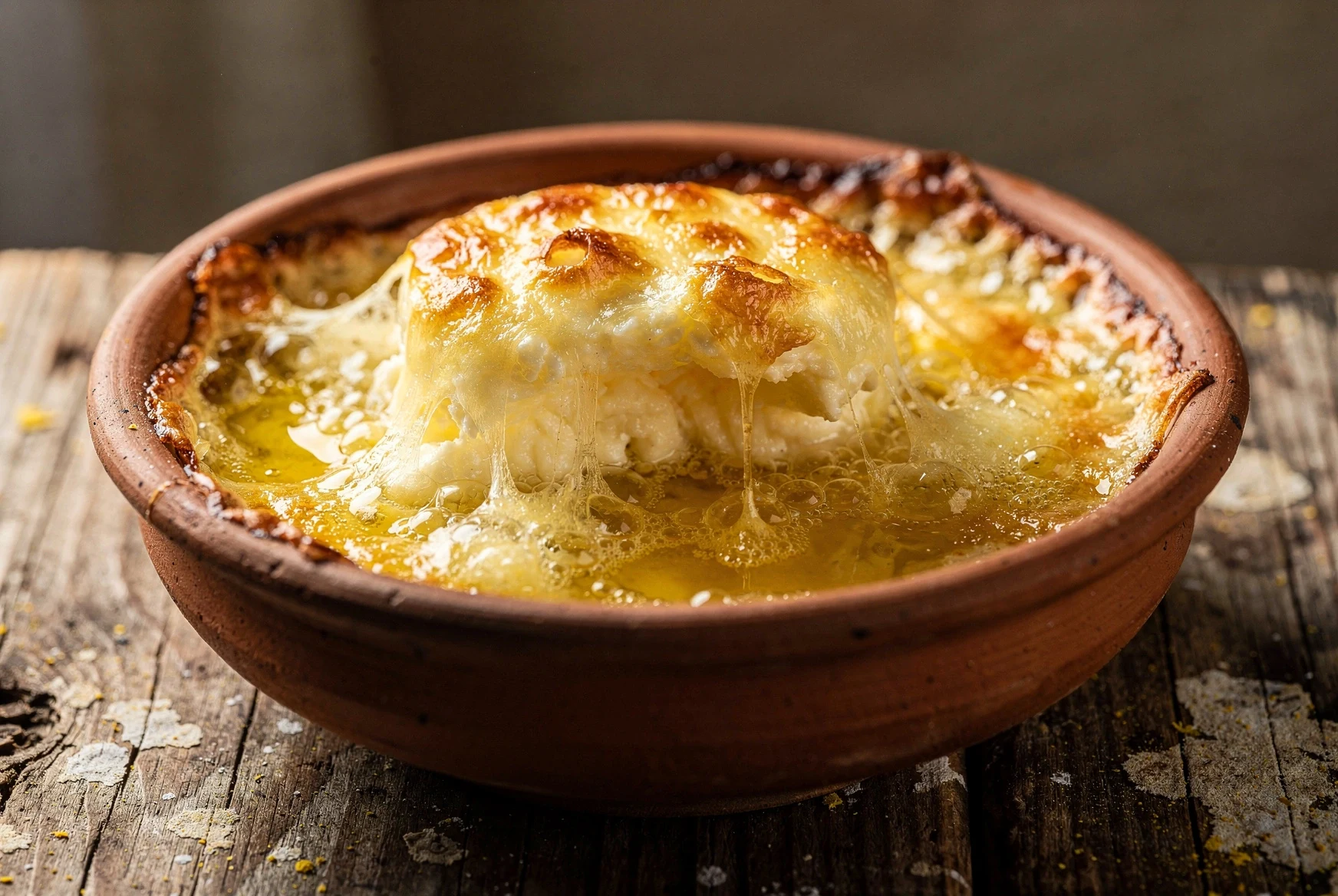
Borano is what happens when Adjara looks at cheese and decides moderation is for other regions. It is not a pie, not a dip, not fondue, and definitely not diet food. It is sulguni melted into a pool of butter until the whole thing turns stretchy, salty, rich, and frankly a little ridiculous. Served hot in a clay dish with bread nearby, it is one of those Georgian foods that seems too simple to deserve obsession right up until the first bite.
English-language borano recipes are usually either too vague or too polite. They tell you to melt some cheese in butter and stop there, which is how people end up with an oily mess or something that eats like mozzarella fondue. Good borano has a very specific character: it should be elastic without turning rubbery, salty without feeling brutal, and glossy with butter without breaking into a greasy puddle. This version is built for an ordinary home kitchen, with the texture cues that matter and the substitutions that are honest instead of fantasy.
Borano Quick Facts
- Region: Adjara, on Georgia's Black Sea coast
- Main ingredients: Sulguni cheese and butter
- Texture: Stretchy, molten, glossy, lightly bronzed
- How it is eaten: Hot, immediately, with bread or sometimes mchadi
- Hardest part: Controlling the heat so the cheese loosens instead of seizing
- Best use: Starter, breakfast-for-two, or a small table dish before something grilled
What Borano Actually Is
Borano comes from Adjara, the southwestern region that also gave Georgia Adjarian khachapuri, chirbuli, and a general habit of treating dairy with both affection and zero restraint. At its core, borano is a hot dish of cheese cooked in butter. That sounds almost insultingly simple, but the simplicity is the point. There are nowhere to hide mediocre ingredients and no sauce to rescue a bad texture.
The most traditional versions use Adjarian braided cheese or sulguni, softened with a little water and melted into what locals sometimes describe as a pan of burnt butter and cheese. In practice, you are looking for gently browned butter, not literal scorched bitterness. Some homes add boiled potato. Some do not. Some serve it as breakfast, others as a small hot appetizer. Nearly all good versions share the same logic: very few ingredients, eaten fast, while the cheese is still alive.
Ingredient Logic
Real borano lives or dies on the cheese. Sulguni is ideal because it is brined, elastic, and melts in a way that stays lively rather than turning into a one-note glue blob. If you are outside Georgia and cannot get sulguni, do not let anyone tell you that standard supermarket cheddar or random pizza cheese will do. They will not. The best realistic fallback is low-moisture mozzarella mixed with a little feta for salt and tang. Not identical. Still useful.
| Ingredient | Amount | What matters |
|---|---|---|
| Sulguni | 400 g | Salty, springy, and able to melt while still keeping some pull. |
| Unsalted butter | 80 g | Use unsalted because the cheese already brings plenty. Let the dairy taste like dairy. |
| Water | 2-3 tbsp | Helps loosen the cheese and stop the butter from racing away too fast. |
| Boiled potato | 1 small, optional | Old-school home addition in some versions. Useful if you want a more filling breakfast-style borano. |
The substitution that actually works
If sulguni is unavailable, use about 320 g low-moisture mozzarella plus 80 g feta. The mozzarella gives the stretch, the feta restores some of the brined sharpness. It is still not true borano, but it gets you much closer than using bland mozzarella alone.
Equipment You Need
A clay ketsi is ideal because it holds heat beautifully and looks right on the table, but a small heavy frying pan works perfectly well. What matters is surface area and heat control. A giant skillet spreads the cheese too thin. A flimsy pan makes the butter run ahead and the cheese catch in spots. Small and steady wins here.
Best choice
Small clay ketsi or 18-20 cm cast-iron skillet.
Avoid
Thin nonstick pans over high heat. They rush the butter and make the cheese go stringy in the wrong way.
How to Make Borano
This is one of the fastest Georgian dishes on the site, which means there is not much time to recover from bad heat decisions. Read the whole method once before you start.
Step 1: Prep the cheese
Cut the sulguni into thick strips or rough bite-size chunks. Do not grate it. Grated cheese melts too quickly and encourages a uniform slick mass instead of the more varied stretchy texture you want. If your sulguni is very salty from brine, pat it dry first.
Step 2: Brown the butter gently
Melt the butter over medium-low heat. Once it foams, let it cook just until it smells nutty and takes on a pale hazelnut tone. You are not making a dark beurre noisette. Borano wants butter with a little depth, not bitterness.
Step 3: Add cheese and a little water
Add the cheese and 2 tablespoons of water. The water looks strange the first time you do it, but it helps the cheese soften more evenly and keeps the butter from separating too aggressively at the start. Shake the pan gently or use a spoon to nudge the cheese, but do not stir like you are making risotto.
Within a minute or two, the edges will begin to slump. Some pieces will still hold shape while others stretch into the butter. That is good. Total homogeneity is not the goal.
Step 4: Decide on potato or no potato
If you are using boiled potato, this is when it goes in. Fold in a small handful of diced potato once the cheese has mostly softened. The potato should not dominate. It is there to absorb some buttery richness and make the dish feel more breakfast-table than bar snack.
Step 5: Finish fast and serve faster
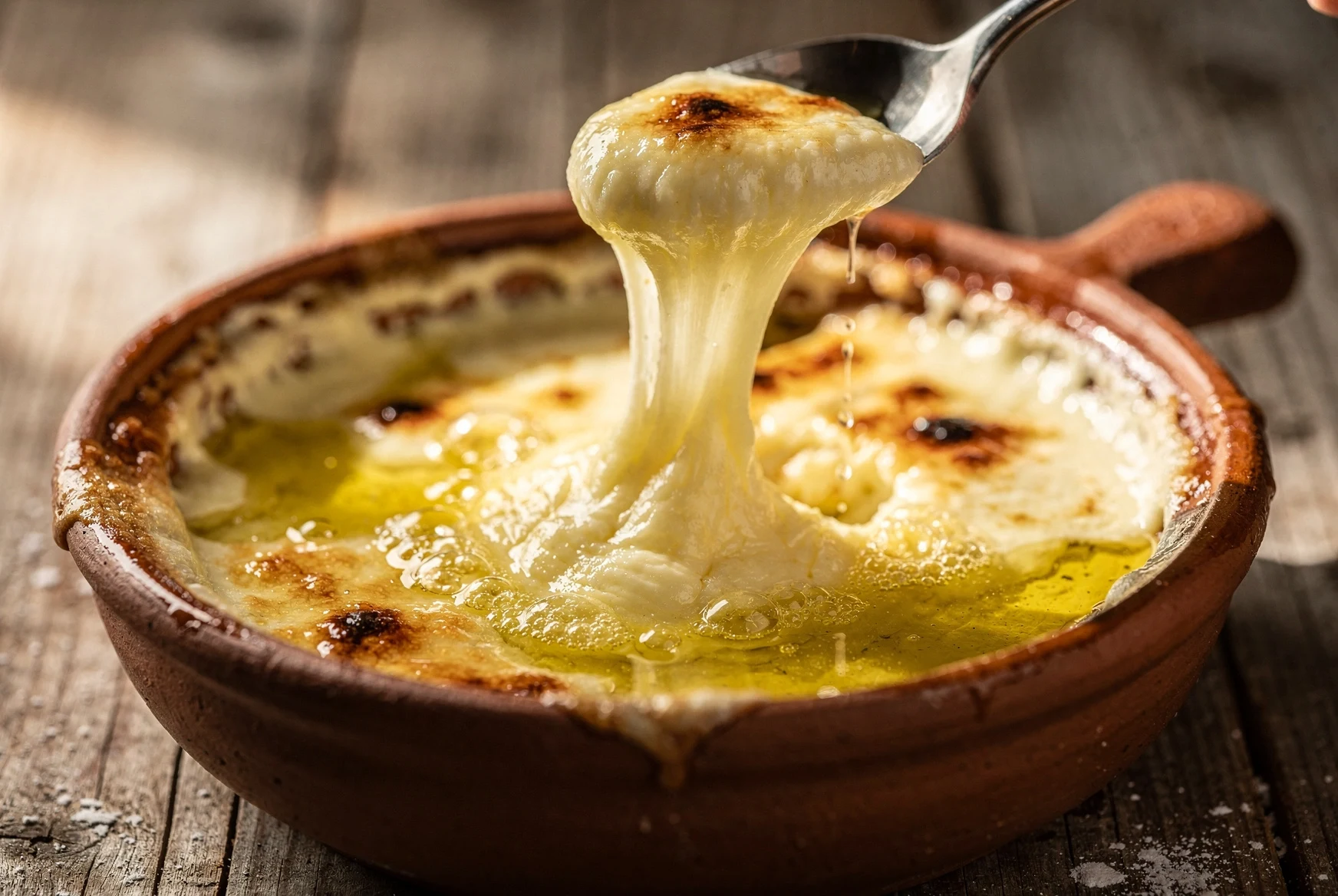
Cook for another 2-4 minutes until the cheese is molten, stretchy, and lightly bronzed in places, with butter shimmering around the edges. Finish with a little black pepper if you like. Then get it to the table immediately with warm bread.
The heat rule
If the butter is sputtering hard and the cheese tightens into ropes almost instantly, the heat is too high. Borano should relax into itself. It is a gentle melt, not a cheese emergency.
What Good Borano Looks Like
This is the difference between a Georgian table dish and a pan of oily sadness.
| Cue | What you want | What went wrong if you miss it |
|---|---|---|
| Cheese texture | Stretchy, glossy, still supple | Rubbery means too much heat or too much time |
| Butter | Pooling around the edges, lightly nutty | A greasy lake means the emulsion broke too hard |
| Top | A few bronzed spots, not a crust | Dark brown patches mean you stayed on the heat too long |
| Taste | Salty, buttery, slightly lactic, very rich | Flat usually means poor cheese; harsh means over-salted substitution |
How to Serve It
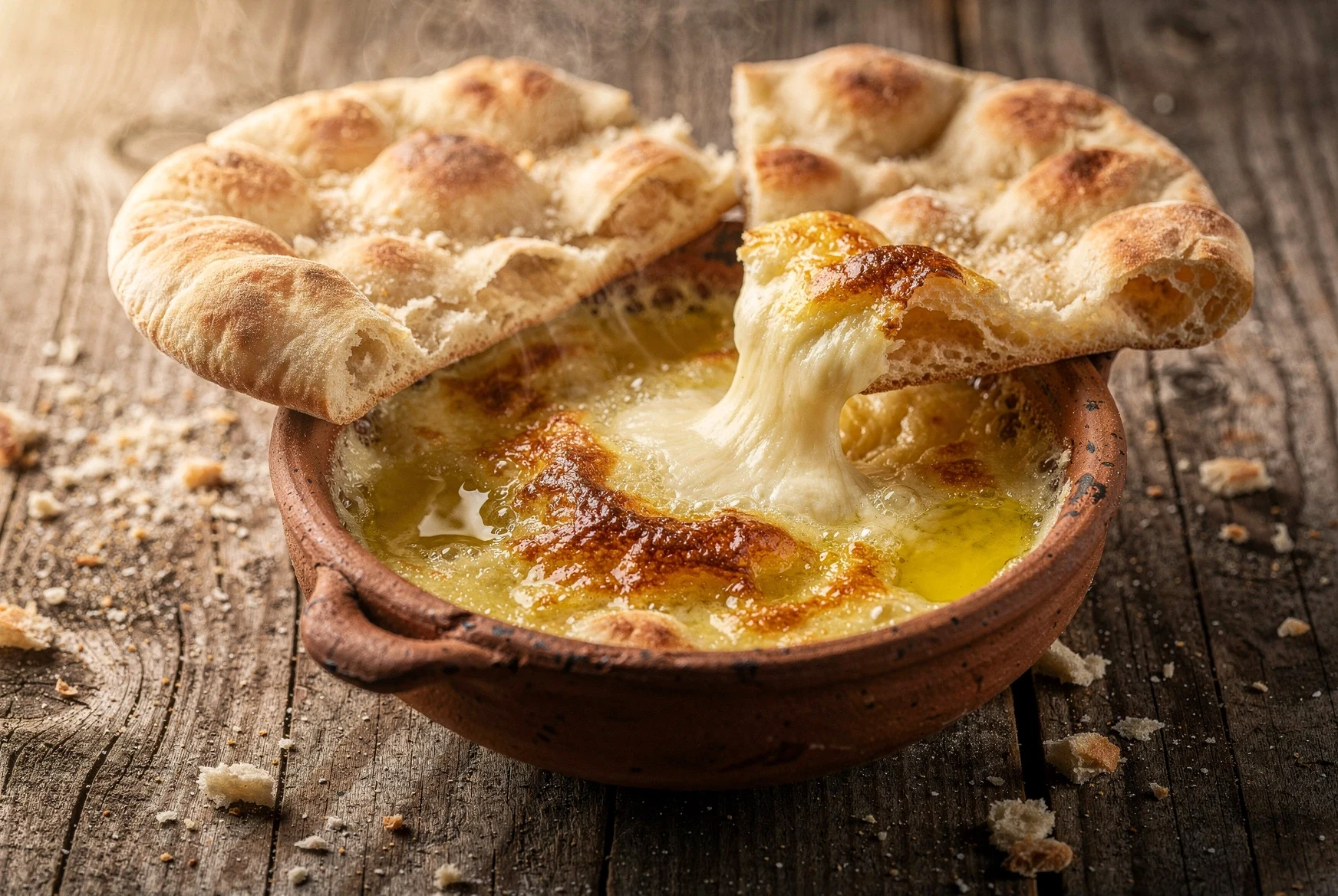
Borano is best when you stop pretending it needs a formal plate. Put the hot pan or ketsi on the table, tear bread, and eat. Shotis puri is excellent because the pointed crust and airy interior are good at dragging through butter without disintegrating. Mchadi is also strong if you want a more western Georgian pairing. Tea at breakfast makes sense. Dry white wine at night also makes sense. Nobody needs to overthink this.
Breakfast move
Serve borano with strong black tea, tomatoes, and bread. Keep the portion modest unless your entire morning plan is to lie down afterward.
Starter move
Put it on the table before grilled meats, salads, or a larger Adjarian-style spread. It works best as an opening act, not as part of a 12-dish excess parade.
Common Mistakes
Using bland cheese
Borano with plain mild mozzarella tastes like a compromise because it is one. Add salt and tang somehow or do not expect much.
Cooking too hot
High heat pushes the butter and cheese apart. You want a slow loosening, not a violent fry.
Serving too late
The window for peak borano is short. Wait ten minutes and it goes from seductive to stiff.
Overcomplicating it
No garlic confit, no cream, no five-cheese blend. Borano works because it is stubbornly simple.
Borano FAQ
Is borano the same as Georgian fondue?
That comparison is useful only up to a point. Both are hot melted cheese dishes, but borano is more direct, saltier, and more butter-driven. It is not built around wine, starch-thickened sauce, or a shared pot ritual.
Can I make it ahead?
Not really. You can prep the cheese and bread ahead, but the actual dish should be cooked right before serving.
Can I reheat leftovers?
You can, gently, in a small pan with a splash of water. But borano is one of those dishes that is clearly better fresh and clearly worse reheated.
Do I need a clay ketsi?
No. It helps with heat retention and atmosphere, but a small cast-iron or heavy skillet works very well.
What should I drink with borano?
Tea at breakfast, dry white wine later, or just water if you are being sensible. The dish itself is rich enough to dominate the table.
Written by The Georgian Eats Team
Adjara has a way of taking dairy and pushing it right to the edge of excess without tipping into nonsense. Borano is one of the cleanest examples: almost no ingredients, zero subtlety, and somehow still elegant when it is done properly.
Last updated: March 2026.
Related Articles
Adjarian Khachapuri
If borano is Adjara's butter-and-cheese flex, acharuli is the full theater version.
Chirbuli
Another Adjarian breakfast favorite, this time eggs in a walnut-rich tomato sauce.
Georgian Breakfast
Where borano fits into the broader Georgian morning table, and when breakfast is actually simple instead.
Georgian Cheese Guide
Sulguni, imeruli, guda, tenili, and the cheeses that make dishes like borano possible.