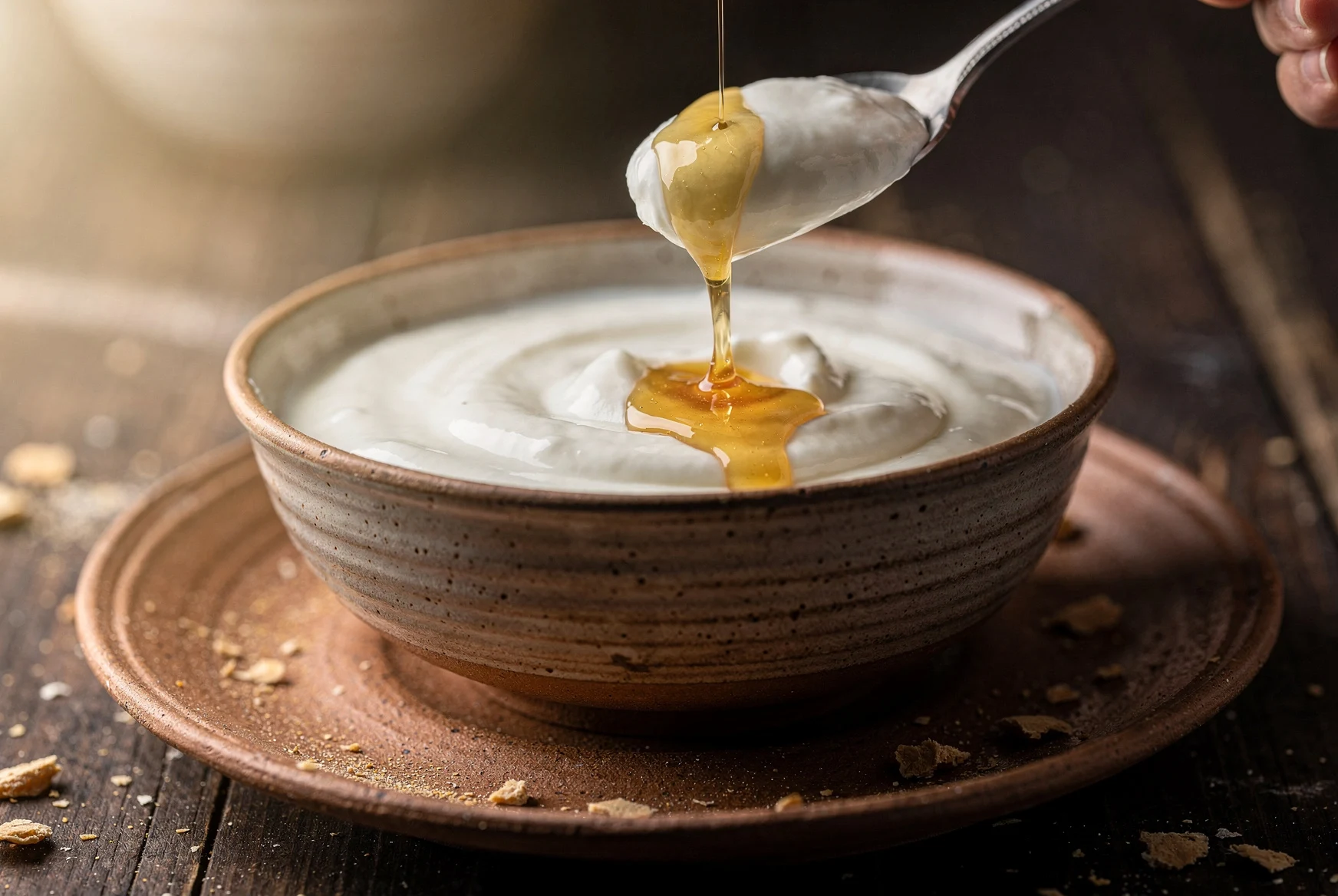
Matsoni is one of those Georgian foods that looks modest until you actually live around it. Then you notice it everywhere. At breakfast with honey. Next to lobio. On the table with stuffed grape leaves. In village kitchens, in plastic bottles from the bazaar, in chipped bowls in guesthouses, and in the fridge of basically anyone who still prefers real food to packaged nonsense. It is yogurt, yes — but saying matsoni is just yogurt is like saying khinkali are just dumplings. Technically true. Spiritually lazy.
Good matsoni is clean, gently sour, lightly elastic, and soothing in a way that supermarket yogurt rarely is. It should hold on a spoon but not sit there like concrete. It should taste like milk that became more interesting, not like vanilla dessert with a health halo. This recipe gives you the practical home-kitchen method that actually works outside Georgia, plus the texture cues and temperature discipline that matter more than any romantic folklore.
Matsoni Quick Facts
- Georgian name: მაწონი (matsoni)
- What it is: A cultured milk product in the yogurt family
- Texture: Spoonable, glossy, lightly wobbly
- Flavor: Clean, tangy, mildly buttery
- Typical use: Breakfast, sauces, marinades, cooling side dish
- Best milk: Full-fat milk, ideally not ultra-processed
- Most important step: Getting the inoculation temperature right
What Matsoni Actually Is
Matsoni sits in the broad Caucasian cultured-milk family that includes Armenian matsun and several regional yogurt traditions. In Georgia, though, it is not treated as a niche heritage product. It is everyday food. Children eat it. Adults eat it. Sick people eat it. People who just overdid the garlic at dinner eat it. It plays the same role that plain yogurt might play elsewhere, but with stronger cultural weight and, when homemade well, a better balance of tang and softness.
The important thing to understand is that homemade matsoni is usually part of a chain. One batch seeds the next. In Georgia, plenty of households do not obsess over bacterial taxonomy or fancy incubators; they keep a spoonful from the previous batch and make another liter. Outside Georgia, most people do not have real matsoni starter on hand, so the most practical method is to use a good plain yogurt with live cultures as your starter. Is that one hundred percent identical to village matsoni? No. Is it the right way to get something close, useful, and honestly delicious in a normal kitchen? Absolutely.
Ingredients
You need almost nothing here, which is why ingredient quality matters. There is nowhere to hide thin milk or dead starter.
| Ingredient | Amount | Notes |
|---|---|---|
| Whole milk | 1 liter | Full-fat gives the best body. Avoid flavored or sweetened milk, obviously. |
| Plain live-culture yogurt or matsoni | 2 tbsp | Unsweetened, unflavored, with active cultures. This is your starter. |
| Cream | 2 tbsp optional | Adds richness. Not necessary, but useful if your milk is leaner than ideal. |
The honest starter rule
If your starter tastes dull, your matsoni will taste dull. Use the best plain yogurt you can find for the first batch, then save a few spoonfuls of your homemade batch to start the next one. Batch two is usually better than batch one.
Equipment You Actually Need
No yogurt machine is required. Nice if you have one. Not remotely essential.
Useful
Small saucepan, whisk or spoon, jar or bowl with lid, kitchen thermometer, clean towel.
Optional but helpful
Warm oven with the light on, insulated cooler, or yogurt maker for a more predictable overnight set.
The only piece I would actually recommend buying if you plan to do this more than once is a thermometer. You can do it by feel, but by feel is how people also convince themselves they do not need to measure salt and then wonder why everything tastes flat. Matsoni is simple, and simple food punishes sloppiness.
How to Make Matsoni
This is the method that works consistently in a normal home kitchen.

Step 1: Heat the milk
Pour the milk into a clean saucepan and heat it gently over medium-low heat until it reaches 85-90°C / 185-194°F. Stir every so often so the bottom does not catch. You do not want a violent boil. You want the milk very hot, with steam rising and a skin beginning to form.
Why bother heating it that high if you are going to cool it again? Two reasons. First, it denatures milk proteins in a way that helps the finished matsoni set more smoothly. Second, it gives you a cleaner starting point for fermentation. Skip this and you can still get yogurt, but the texture is more likely to be grainy or thin.
Step 2: Cool to inoculation temperature
Take the pot off the heat and let the milk cool to 42-45°C / 108-113°F. This takes roughly 25-40 minutes depending on your pot and room temperature. If you are impatient, set the pot in a sink of cool water, but do not rush so hard that you drop the temperature too low.
This is the point where people either make matsoni or quietly murder the starter. Too hot, and the cultures die. Too cool, and fermentation drags or never properly sets. If you do not have a thermometer, dip a clean finger in for a quick second: it should feel very warm but not painfully hot.
Step 3: Mix the starter properly
Put the starter in a bowl. Add 3-4 tablespoons of the warm milk and whisk until completely smooth. Then pour that mixture back into the rest of the milk and stir gently but thoroughly.
Do not just drop cold yogurt straight into the pot and hope for the best. You will get little white starter clumps floating around like dairy tadpoles. Tempering it first gives you an even inoculation and a cleaner set.
Step 4: Keep it warm
Transfer the milk to a jar, bowl, or container with a lid. Cover it and keep it warm for 6-8 hours. You are aiming for a stable, cozy environment, not a sauna. A switched-off oven with only the light on often works. Wrapping the jar in a towel and placing it in an insulated bag also works. A yogurt maker works too, if you already own one.
Start checking around the 6-hour mark. The matsoni should look set around the edges, slightly wobbly in the center, and smell gently tangy. If it still looks like warm milk, give it more time. If it becomes sharply sour and separates heavily, you pushed it too far or the temperature ran too high.
The one temperature range that matters
For most home kitchens, 42-45°C / 108-113°F is the sweet spot for adding the starter. If you remember only one technical detail from this article, remember that one.
Step 5: Chill before eating
Once set, refrigerate the matsoni for at least 2 hours before serving. Warm matsoni is edible, but chilled matsoni has a cleaner texture and better spoonability. It also keeps the whey from loosening too much the moment you scoop it.
What Good Matsoni Looks Like
This matters because people often expect Greek-yogurt thickness and think they failed if they do not get it. That is the wrong benchmark.
| Cue | What you want | What it usually means if wrong |
|---|---|---|
| Texture | Soft, smooth, spoonable, lightly trembling | Too thin often means weak starter or too-cool incubation |
| Surface | Mostly even, maybe a little whey around edges | Heavy separation usually means overheating or over-fermenting |
| Smell | Fresh, milky, pleasantly tangy | Harsh sourness means it sat too long warm |
| Taste | Balanced tang, no sweetness, no bitterness | Flat flavor often points to lifeless starter |
If your batch is thinner than you wanted but tastes good, do not throw it out. Eat it. Use it in sauces. Use it in marinades. Then make another batch with better starter or slightly longer incubation. This is not sourdough where people start writing diary entries about hydration percentages. It is cultured milk. Improve calmly.
How Georgians Eat It
Matsoni at breakfast is the obvious move, but not the only one. A bowl with honey is the version most visitors notice first, because it is friendly and immediate. The tang meets the sweetness halfway and everybody wins.
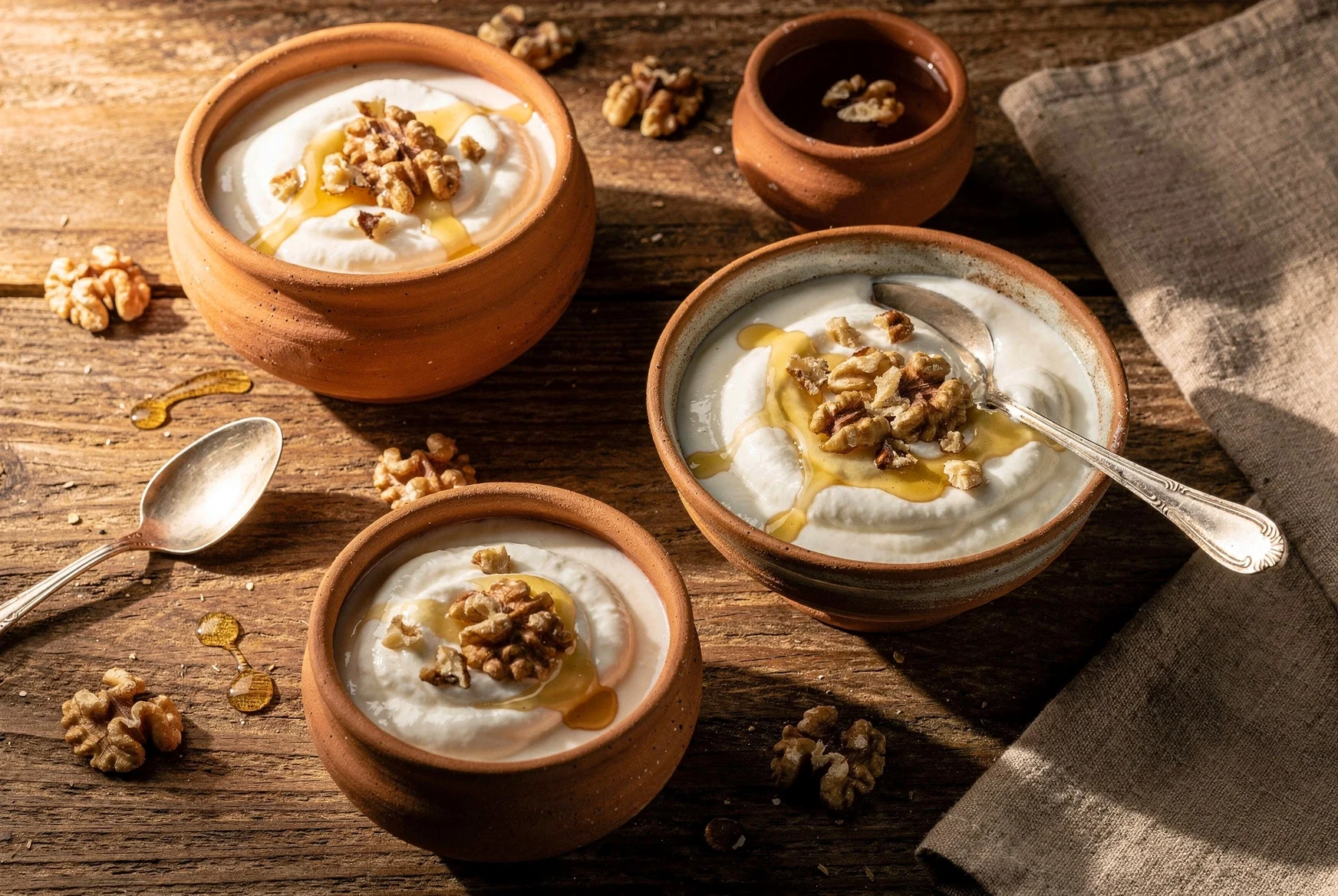
Breakfast bowl
Serve chilled with honey, walnut muraba, fig preserve, or chopped walnuts. Bread on the side is normal, not weird.
Cooling side dish
A bowl of matsoni beside beans, grilled meat, or garlicky dishes does the same job raita or plain yogurt might do elsewhere.
Sauce base
It shows up in sauces for dishes like tolma and in cold dairy-based accompaniments with herbs and garlic.
Marinade logic
Its acidity and dairy fat make it useful for tenderizing, especially with grilled meats and village-style cooking.
One thing worth saying plainly: Georgian matsoni is not normally dressed up into a wellness parfait with granola, chia, cacao nibs, bee pollen, and whatever else modern brunch culture uses to justify charging too much. Could you do that? Sure. Should you, if you want to understand how the food actually lives in Georgia? Not really.
Common Mistakes
Adding starter to milk that is too hot
The classic error. If the milk is above the safe range, you kill the cultures and end up wondering why nothing set.
Using sweetened yogurt as starter
Vanilla yogurt is not a starter. It is dessert pretending to help. Use plain live-culture yogurt only.
Incubating in a cold kitchen
If your room is chilly and you just leave the bowl on the counter, the set can be weak or uneven.
Judging it before chilling
Freshly set matsoni is looser. A proper chill firms it up and makes the texture easier to assess fairly.
Storage and the Next Batch
Matsoni keeps well in the fridge for about 4-5 days. It is often still edible after that, but the flavor gets sharper and the texture less elegant. Before you start eating from the finished batch like an animal with a spoon, set aside 2 tablespoons in a clean container for the next round. That is how the chain continues.
If a later batch suddenly turns weak, the starter may have lost vigor. Go back to a fresh plain yogurt and reset. There is no shame in that. Fermentation is not a morality play.
Serving Ideas
If you made a liter and are now wondering what to do beyond breakfast, here is the useful shortlist.
| Use | How to serve it | Good with |
|---|---|---|
| Sweet breakfast | With honey or preserves | Georgian breakfast spreads, bread, tea |
| Cooling bowl | Plain or with salt and herbs | Lobio, chashushuli, grilled meat |
| Sauce base | Stir with garlic, herbs, and salt | Tolma, potatoes, vegetables |
| Marinade | Whisk with garlic and spices | Chicken, pork, kebab-style grilling |
Matsoni FAQ
Can I use low-fat milk?
You can, but you will get a thinner and less satisfying result. Matsoni made from full-fat milk tastes more complete.
Is Greek yogurt a good starter?
Sometimes, yes, if it has live cultures and no additives that interfere. But many plain regular yogurts make a more predictable starter because they dissolve more easily.
Can I strain it?
Yes. If you hang it in cloth for a few hours, you get something thicker and closer to labneh territory. Useful, but no longer the everyday spoonable texture most people mean by matsoni.
Can I make it without a thermometer?
Yes, but you will be relying on feel and luck. For repeatable results, use a thermometer. This is one of those five-dollar tools that earns its keep immediately.
Is store-bought yogurt the same thing?
Close enough for practical cooking in many cases, not identical in flavor or feel. Good homemade matsoni has a cleaner tang and less supermarket blandness.
Written by The Georgian Eats Team
We treat matsoni as one of those small Georgian foods that explains the whole cuisine once you start paying attention: simple, practical, quietly excellent, and far better homemade than industrial versions.
Last updated: March 2026.
Related Articles
Georgian Breakfast
What Georgians actually eat in the morning, from bread and cheese to chirbuli and matsoni.
Tolma
Stuffed grape leaves that make perfect sense with a cold bowl of tangy matsoni on the side.
Lobio
Rich bean stew, mchadi, pickles, and a bowl of matsoni is one of the great Georgian table combinations.
Chirbuli
Georgia's breakfast egg dish, and a natural companion page if you are building an actual Georgian morning at home.