Tsinandali is the Georgian white wine almost everyone meets first, and there is a reason for that. When it is done well, it gives you the cleanest entry point into Georgian wine without sanding off the local character. You still get Kakheti fruit, the Rkatsiteli backbone, and the lift that Mtsvane brings to the blend, but the whole thing arrives in a shape most drinkers understand immediately: dry, bright, food-friendly, and not trying too hard to be a museum piece.
That makes Tsinandali useful. Not just famous, not just historic, useful. It is the bottle you can open with grilled fish, salty cheese, chicken, herbs, or khachapuri and feel confident you did not make a stupid choice. It is also the appellation that shows Georgia has more than one wine story. Yes, the qvevri tradition matters. Yes, amber wine is real and important. But Georgia also knows how to make polished white wine that still tastes like Georgia instead of international hotel-bar filler.
This guide covers what Tsinandali actually is, how the blend works, what it tastes like in real terms, why some bottles feel crisp and simple while others feel properly serious, what Georgian food suits it best, and how to buy a bottle without just grabbing the cheapest label that says Tsinandali in big letters.
What Tsinandali Actually Is
Tsinandali is both a place and a wine. The place is a village and microzone in Kakheti, eastern Georgia. The wine is a protected appellation white made primarily from Rkatsiteli with Mtsvane in the blend. If you want the blunt version, Tsinandali is Georgia's classic polished white: the bottle that proves Georgian wine can be elegant without becoming anonymous.
Historically, Tsinandali matters because it became the symbol of Georgia's more European-style white winemaking in the nineteenth century, especially through the Chavchavadze estate. That matters culturally, but what matters in the glass is simpler: the blend makes sense. Rkatsiteli brings acid, shape, and discipline. Mtsvane brings aroma, lift, and a softer front edge. Together they produce a wine that feels balanced in a way many single-variety wines do not.
Tsinandali quick facts
- Type: Georgian PDO white wine
- Main grapes: Rkatsiteli and Mtsvane
- Home region: Kakheti
- Style: dry white, usually fresh and structured rather than aromatic and flashy
- Why it matters: Georgia's most established classic white appellation
- Best for: first-time Georgian wine drinkers, fish, chicken, cheese, herbs, and khachapuri
Why the Rkatsiteli-Mtsvane Blend Works So Well
The whole point of Tsinandali is that neither grape has to do all the work alone. Rkatsiteli is one of the defining white grapes of Georgia, but it can run stern if left entirely to its own devices. The acid is useful, the structure is useful, the seriousness is useful — but not every dinner wants a lecture. Mtsvane fixes that. It adds blossom, citrus, and a more inviting aromatic top line without turning the wine soft or silly.
This is one of those blends that sounds obvious after the first good bottle. One grape builds the frame, the other opens the windows. That is why Tsinandali tends to work so well at the table. You get freshness and shape from Rkatsiteli, but enough lift from Mtsvane that the wine still feels alive with food instead of just sharp.
| Grape | What it contributes | Why Tsinandali needs it |
|---|---|---|
| Rkatsiteli | Acidity, structure, citrus, firmness | Keeps the wine dry, serious, and food-ready |
| Mtsvane | Aromatics, blossom, herbs, softness | Stops the blend from feeling too strict or flat |
| The blend together | Balance, clarity, easy table logic | Makes Tsinandali one of Georgia's most dependable whites |
How Tsinandali Tastes in Real Terms
Bad tasting notes make Tsinandali sound more boring than it is. You will usually see some combination of citrus, green apple, white flowers, and minerality, which is technically fine but not very useful. In real terms, good Tsinandali tastes like a dry white with enough snap to wake up a salty table, enough orchard fruit to keep it from feeling severe, and enough herbal or floral lift to remind you that Mtsvane is in the room.
The better versions have a proper spine. Not aggressive acidity, but a clean line that keeps the wine upright. You often get lemon peel, pear skin, green plum, maybe quince, and a restrained blossom note rather than anything exotically perfumed. Some bottlings lean cleaner and lighter; others spend time in oak or simply come from producers chasing more texture and breadth. Those bottles can move into richer territory without losing the essential Tsinandali shape.
What Tsinandali should never taste like is flabby. If the bottle feels shapeless, vaguely fruity, and forgettable, it is either a weak producer or a bottle built around the name rather than the standard. The appellation means something, but not every label carrying it deserves your loyalty.
The easiest way to think about it
Tsinandali is Georgia's answer to the question, "What if a classic dry white actually had enough backbone for real food?" It is not tropical, not buttery in the lazy sense, and not a qvevri amber lecture. It is the clean, useful middle ground that makes Georgian white wine make sense fast.
What Styles You Will Actually See
Not every Tsinandali tastes identical, and that is where some people get confused. The basic division is between fresh, modern, early-drinking Tsinandali and more serious, sometimes oak-touched or longer-aged versions. The first type is the everyday dinner white. The second type is where producers try to show that Tsinandali can age and carry more complexity.
| Style | What it feels like | Best use |
|---|---|---|
| Fresh young Tsinandali | Crisp, citrusy, light to medium-bodied, straightforward | Aperitif, grilled fish, salads, lighter cheese, weekday dinner |
| More textured / premium Tsinandali | Broader, more layered, sometimes oak-shaped, still dry | Roast chicken, richer seafood, khachapuri, more serious dinner table |
| Weak tourist-shelf Tsinandali | Anonymous fruit, loose shape, short finish | Best avoided |
Why Tsinandali Matters in Georgian Wine
Tsinandali matters because it keeps the Georgian wine conversation honest. Without it, people can start talking as if Georgia only makes one kind of important white: amber qvevri wine. That is lazy. Georgian wine is older and wider than that. Tsinandali shows the country can make disciplined, classic dry white wine without losing its identity.
It also matters because it is often the bottle that gets people through the front door. Not everyone is ready for tannic amber Rkatsiteli on day one. Tsinandali gives you the region, the grapes, the balance logic, and the food context in a far more approachable form. Once that clicks, the rest of Georgian wine opens up faster.
What to Eat with Tsinandali
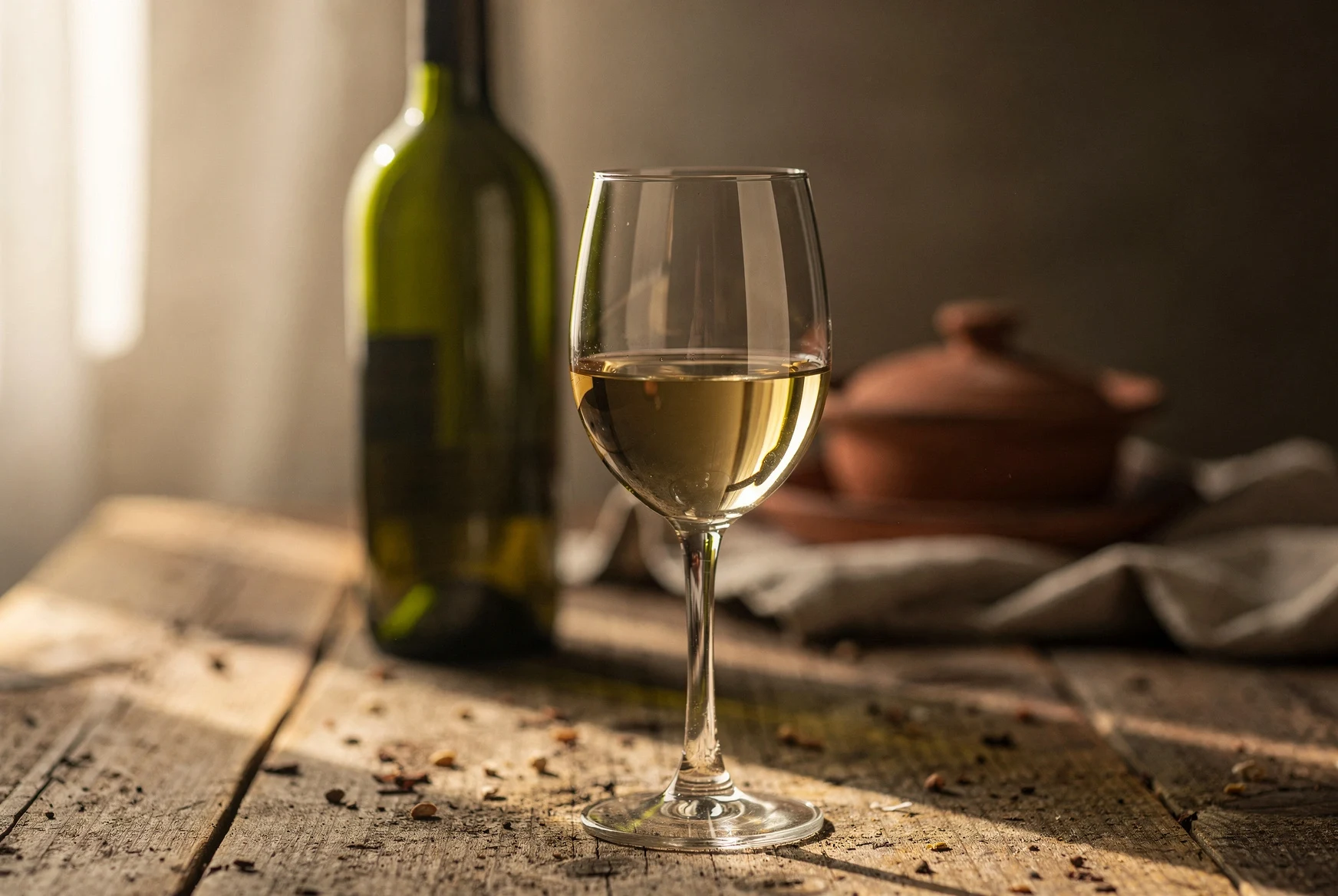
This is where Tsinandali earns its reputation. It is one of the safest Georgian wines to bring to a mixed table because it can handle salt, herbs, dairy, and lighter meats without drama. The classic lane is fish, chicken, fresh cheese, herbs, and breads. But it is also excellent with khachapuri, especially the less insane versions where the wine still has a chance to speak.
The reason it works is simple: Tsinandali has enough acid to cut through fat and enough texture to avoid disappearing next to Georgian food. That matters more here than it would in cuisines built around delicate sauces and polite portions.
| Dish | Why it works |
|---|---|
| Kalmakhi | Crisp acidity and citrus shape fit trout beautifully |
| Chicken tabaka | Cuts the fat and handles the garlic without needing heavy oak or sweetness |
| Imeretian khachapuri | Salt, cheese, and dry white acid is a classic no-brainer pairing |
| Matsoni and fresh cheese | The bright, dairy-friendly side of the blend shows up nicely here |
| Georgian salad | Tomato, cucumber, herbs, and walnut dressing still leave room for the wine |
| Bread, cheese, herbs table | Honestly one of the best simple-use cases for the bottle |
How to Buy a Good Bottle of Tsinandali
The first rule is not to treat Tsinandali as a throwaway supermarket category just because there are a lot of bottles. There are dependable everyday examples, yes, but there are also flat, forgettable ones that survive mostly because tourists recognize the name. Price is not everything, but if the bottle is suspiciously cheap and the producer tells you nothing useful, assume corners were cut.
The second rule is to decide what job you need the bottle to do. If you want a weekday white for dinner, a clean, younger Tsinandali is perfect. If you want something more layered for a proper meal, spend a bit more and buy from a producer with a reputation for precision rather than volume. The appellation is the starting point, not the whole answer.
Good beginner buy
A clean, mid-priced Tsinandali from a known producer. This is the easy way into Georgian white wine if amber feels like too much, too soon.
When to spend more
When the dinner matters or you want to understand what the appellation can really do beyond refreshment.
Red flag
A bottle selling only on the Tsinandali name with vague tasting fluff and no real sense of producer identity.
Best first comparison
Try Tsinandali beside a straight Rkatsiteli to understand exactly what Mtsvane improves in the blend.
Common Mistakes People Make with Tsinandali
The first mistake is assuming it is boring because it is famous. That is lazy wine thinking. Famous appellations become famous for a reason, and Tsinandali has survived because the blend genuinely works.
The second mistake is expecting it to behave like a big oak-led Chardonnay. Good Tsinandali is more restrained than that. It wins on balance, not on volume.
The third mistake is using it as an excuse never to move deeper into Georgian wine. Tsinandali is the front door, not the whole house. Once you understand it, move on to the grape guides, especially Rkatsiteli, Mtsvane, and the broader amber wine guide.
Do not serve it ice cold
Like a lot of dry whites, Tsinandali gets flattened if you fridge it into oblivion. Cool is good. Near-freezing is stupid. You want enough chill for freshness, but enough warmth for the blend to smell like something.
Final Verdict
Tsinandali is one of Georgia's most useful wines because it gives you a classic, table-ready white without disconnecting from the country that made it. The blend is smart, the food logic is obvious, and the good bottles do exactly what serious dinner wine should do: make the whole table work better.
If you want a first Georgian white to understand, buy Tsinandali. If you already know Georgian wine and have started ignoring it because it feels too obvious, come back and drink a better bottle. It usually rewards the second look.
Written by The Georgian Eats Team
We drink Georgian wine where it actually matters — with dinner, in Tbilisi wine bars, and at tables where bread, cheese, herbs, and fish decide quickly whether a white bottle deserves a second glass.
Last updated: March 2026.
Related Articles
Georgian Wine for Beginners
The clean primer on qvevri, regions, grapes, and how Georgian wine fits together.
Rkatsiteli Wine Guide
The backbone grape behind Tsinandali and one of the essential white wines of Georgia.
Mtsvane Wine Guide
The aromatic half of the classic blend — blossom, citrus, herbs, and why it matters.
Best Georgian Wines to Buy
Specific bottles worth buying across reds, ambers, whites, and semi-sweets.