If you only remember one Georgian grape, make it Saperavi. It is the bottle restaurants push first, the grape behind Georgia's best serious reds, and the reason so many people who think they don't care about Georgian wine suddenly start asking questions after one good glass. But Saperavi is not one thing. A cheap supermarket Saperavi and a proper Mukuzani might as well be distant relatives. Then you throw qvevri versions and naturally semi-sweet Kindzmarauli into the mix, and the same grape starts behaving like three different personalities.
This guide is for that exact confusion. What does Saperavi actually taste like? Why is it so dark? Which appellations matter? When should you drink Mukuzani instead of Kindzmarauli? And what Georgian food makes it feel complete rather than just impressive? Here's the practical version, without brochure fog.
What Is Saperavi?
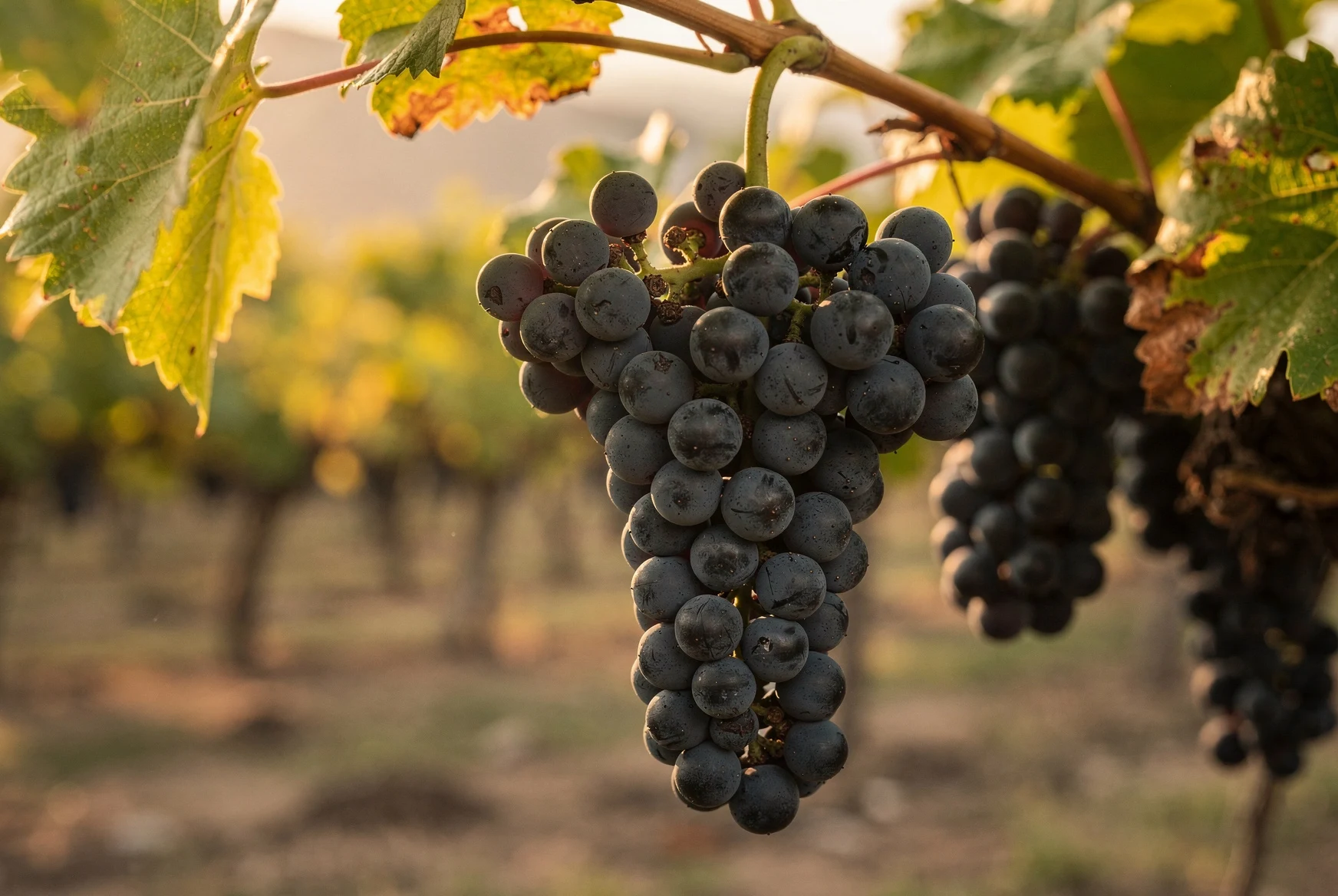
Saperavi is Georgia's flagship red grape, originally from Kakheti in the east. The name comes from the Georgian verb for dyeing or giving color, which is not subtle but is accurate. This is one of the rare teinturier grapes, meaning the flesh is red as well as the skins. Most red grapes have pale juice and get their color from skin contact. Saperavi starts dark and gets darker from there.
That explains why a serious glass of Saperavi looks almost black in low light and still keeps a deep ruby edge when you tilt it. It also explains why the better versions age so well. There is plenty of fruit, but there is also acidity, tannin, and pigment for days. Done well, it tastes powerful without becoming flabby. Done badly, it turns into the kind of heavy, sweet-ish red people buy once and never touch again.
The quickest way to understand Saperavi
Think dark fruit, sour cherry bite, proper tannin, and more acidity than most people expect from such a dark wine. If you are imagining something thick, sweet, and lazy, you are imagining the wrong bottle.
What Does Saperavi Taste Like?
At its best, Saperavi tastes like blackberry, black plum, morello cherry, cracked pepper, and something earthy underneath that feels closer to dark soil than polished oak furniture. Younger bottles often show a sharp, sour-cherry edge that keeps the fruit honest. With age, you start getting leather, dried herbs, cocoa, tobacco, and that slightly ferrous, blood-orange-adjacent thing that serious red drinkers tend to love.
The key point is balance. The good stuff is dark but not sleepy. There is always lift. Even oak-aged versions should still feel Georgian rather than like an imitation Napa cab. When Saperavi gets too internationalized, it loses the thing that makes it worth ordering in the first place.
| Style | What it usually tastes like | Who it suits |
|---|---|---|
| Young dry Saperavi | Blackberry, sour cherry, plum skin, firm tannin | People who like direct, food-friendly reds |
| Mukuzani | Darker fruit, oak spice, tobacco, longer finish | Cabernet and Rioja drinkers who want structure |
| Qvevri Saperavi | Earth, dried fruit, grip, less polish, more character | Natural wine drinkers and people bored of safe reds |
| Kindzmarauli | Black cherry, plum, soft tannin, natural sweetness | People who want sweetness with real acidity behind it |
| Napareuli | Softer red fruit, fresher acid, less brute force | Anyone who finds big reds exhausting |
Why Saperavi Is So Dark
Most red grapes are ordinary on the inside. Crush them and the juice comes out pale. Color builds during fermentation when the juice sits with the skins. Saperavi is different because the pulp is already colored. That is why even lighter-bodied examples still look much darker than people expect.
This matters in the glass, but it matters even more in the cellar. Saperavi has the raw material for wines that can take oak, bottle age, qvevri fermentation, or a bit of residual sugar without collapsing. The grape is naturally sturdy. That sturdiness is why Georgia keeps returning to it whenever the conversation gets serious.
Do not judge Saperavi by color alone
People often assume the darkest wine on the table will be the heaviest. With Saperavi, the better clue is the finish. Good Saperavi stays lively after the fruit passes. Bad Saperavi just sits there like jam in a suit.
Mukuzani, Kindzmarauli, Napareuli: What the Appellation Names Actually Mean
This is where many people get lost. They learn the grape name, then run into a bunch of Georgian place names on labels and assume they are producers. Often they are appellations or microzones. With Saperavi, those names matter because they usually tell you the style more clearly than the front-label marketing ever will.
| Name on the label | Type | What it signals |
|---|---|---|
| Mukuzani | Dry red appellation | More structure, more seriousness, usually oak and aging potential |
| Kindzmarauli | Naturally semi-sweet appellation | Ripe dark fruit, softer feel, sweetness balanced by acidity |
| Napareuli | Dry red appellation | Usually fresher and a little less hulking than the big Mukuzani style |
| Akhasheni | Semi-sweet appellation | Another sweeter Saperavi route, often plush and easygoing |
| Just “Saperavi” | Varietal bottling | Could be anything from a cheap daily bottle to a very good regional red |
If you like dry, structured reds, start with Mukuzani or a good straight dry Saperavi. If you are curious about Georgian semi-sweets but do not want dessert in a glass, Kindzmarauli is the smart place to start. If you already drink natural wine and want less gloss and more earth, look for qvevri Saperavi from a smaller producer.
How Saperavi Is Usually Made in Georgia
There is no single rulebook, but you will usually see three broad approaches. First is conventional dry red winemaking in stainless steel or neutral vessels, sometimes finished with oak. This is the most common everyday style and the easiest one to understand if you are coming from mainstream European wine.
Second is oak-aged, appellation-driven Saperavi, especially Mukuzani. This is where producers aim for structure, polish, and cellar potential. When it works, it is the Georgian red you can confidently pour for someone who thinks only France, Italy, or Spain make serious bottles.
Third is qvevri Saperavi. This is usually less polished, more tactile, and more interesting. You get earth, dried fruit, firmer grip, and a sense that the wine was made by a person rather than by a style committee. Not everyone prefers it. I usually do.
What to Buy First
If you are shopping in Tbilisi and just want a smart first bottle, do not overcomplicate it. Buy a clean mid-range dry Saperavi from a known producer before you go chasing mythology. A lot of people begin with semi-sweet Saperavi because the name Kindzmarauli is famous. That is fine if you already know you enjoy that style. If you want to understand the grape itself, start dry.
Best first dry bottle
A straightforward mid-range Saperavi from Marani, Château Mukhrani, Khareba, or Teliani-level producers. You want clean fruit, solid acidity, no obvious sugar.
Best first serious bottle
Mukuzani. This is where Saperavi starts showing why people age it and why the grape has international credibility.
Best first qvevri bottle
Look for a smaller producer at a serious wine shop or natural wine bar. If the staff can talk about the village and vintage without reaching for a script, you're in the right place.
Best first semi-sweet
A proper Kindzmarauli from a reputable producer. Avoid suspiciously cheap versions with tourist-shop energy.
The biggest Saperavi mistake
People buy the cheapest bottle with the darkest liquid and assume they have understood the grape. That is like judging all khachapuri by the saddest service-station slice. Spend a little more and the grape makes much more sense.
What Georgian Food to Pair With It
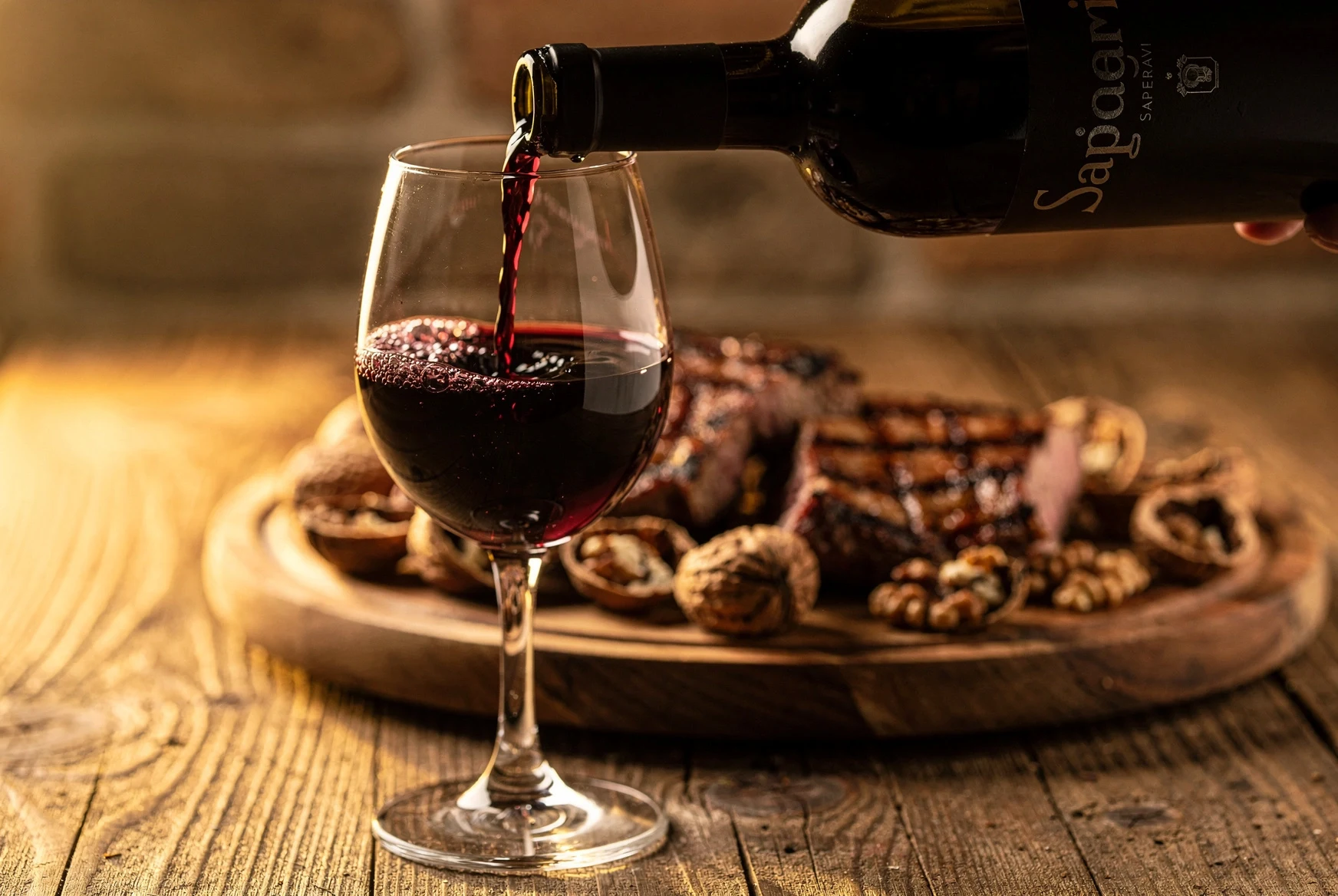
Saperavi is not a delicate little sipping red. It wants fat, smoke, char, spice, walnuts, and long conversations. The classic match is mtsvadi because grilled pork and Saperavi understand each other immediately. The smoke, salt, and meat fat soften the tannin while the acidity keeps the whole thing from getting heavy.
It also works beautifully with chashushuli, ojakhuri, and richer walnut-based dishes if the wine has enough freshness. I would not reach for an expensive, oak-heavy Mukuzani with delicate fish or a simple salad. That is misuse, not pairing.
| Dish | Best Saperavi style | Why it works |
|---|---|---|
| Mtsvadi | Dry Saperavi or Mukuzani | Char and tannin are natural allies |
| Ojakhuri | Young dry Saperavi | Potatoes and pork want fruit plus acid, not just power |
| Chashushuli | Mukuzani | Tomato, beef, and spice reward a structured red |
| Kuchmachi | Qvevri Saperavi | The earthy, mineral side fits organ meats and walnut perfectly |
| Satsivi | Kindzmarauli | Sweetness and acid handle the walnut richness better than brute-force tannin |
How to Serve Saperavi Without Flattening It
Do not serve it warm just because it is red. That common Georgian habit is survivable with basic table wine but wastes the better bottles. Aim for cool room temperature, roughly 16 to 18°C. If the bottle has been sitting in a warm flat, give it 20 minutes in the fridge before opening.
Young Saperavi also benefits from air more than people think. A quick decant or even a large-bowled glass helps the darker fruit come forward and keeps the tannin from feeling blunt. For Kindzmarauli, go slightly cooler. For old oak-aged Mukuzani, give it time rather than cold.
Young dry Saperavi
Serve at 16 to 17°C. Give it 20 to 30 minutes of air.
Mukuzani
Serve at 17 to 18°C. Decant if it feels shut down or heavily oaked.
Qvevri Saperavi
Do not overchill. Let the earthy side open slowly in the glass.
Kindzmarauli
Slightly cooler is better. Around 14 to 15°C keeps the sweetness tidy.
Is Saperavi Worth Buying Abroad?
Yes, if the importer knows what they are doing and the bottle has not been chosen purely because the word “ancient” sells. The problem outside Georgia is not that Saperavi travels badly. The problem is that many export selections are either too commercial or too random. You get a bottle that says Georgia, tastes sweet, and teaches you nothing useful.
If you are buying abroad, look for specific appellations, a real producer reputation, and importers who already handle natural wine or Eastern European wine seriously. If you are buying in Georgia, you have the opposite luxury: the good stuff is far cheaper, but you still need to avoid the dead zone of ultra-cheap bottles made for people who shop by label color.
Final Verdict
Saperavi deserves its reputation, but only if you meet it in the right place. A proper bottle shows exactly why Georgia is not just a cute wine-history fact. It shows that the country still makes reds with their own shape, their own texture, and their own logic. That matters. Too much wine now tastes globally fluent and locally empty.
If you want the cleanest first lesson, drink a good dry Saperavi with grilled meat. If you want the more serious side, open Mukuzani. If you want the weird, alive, more Georgian version, find a qvevri bottle from a producer who has opinions. And if someone tells you Saperavi is just “Georgia's cabernet,” ignore them and pour another glass.
Frequently Asked Questions
What does Saperavi wine taste like?
Good Saperavi usually tastes like blackberry, black plum, sour cherry, pepper, and earth, with strong color, firm tannin, and more acidity than many people expect from such a dark red.
Is Saperavi sweet or dry?
Usually dry, but Saperavi is also used for naturally semi-sweet styles such as Kindzmarauli and Akhasheni. The grape keeps enough acidity to carry sweetness better than most heavy reds do.
What is the difference between Saperavi and Mukuzani?
Saperavi is the grape. Mukuzani is a protected Georgian appellation for a more serious dry red style made from Saperavi, usually with more structure, aging potential, and oak influence.
What food goes best with Saperavi?
Grilled meat is the easy answer. Mtsvadi, chashushuli, ojakhuri, and kuchmachi all work beautifully because Saperavi likes smoke, fat, and savory depth.
Why is Saperavi so dark?
Because it is a teinturier grape. The pulp is red as well as the skins, so the wine starts with much more pigment than most red grapes can offer.
Should I start with Kindzmarauli?
Only if you already know you like naturally semi-sweet reds. If you want to understand Saperavi as a grape, start with a dry bottle first, then work outward.
Written by The Georgian Eats Team
We drink a lot of Georgian wine in the real setting it was built for: grilled meat, walnut dishes, noisy tables, and long arguments about which bottle was actually best. Saperavi is one of the few grapes here that can be everyday, serious, and slightly dangerous depending on who poured it.
Last updated: March 2026.
Related Articles
Georgian Grape Varieties
The broader field guide to Georgia's major red and white grapes.
Georgian Wine Regions
Where Saperavi changes shape from one part of Georgia to another.
Best Georgian Wines to Buy
Bottle-by-bottle recommendations, including where Saperavi earns its shelf space.
Wine & Food Pairing Guide
Dish-by-dish pairing logic for Saperavi, amber wines, and the Georgian table.