Tashmijabi is one of those Georgian dishes that sounds humble until it lands in front of you. On paper it is mashed potato with cheese. In practice it is a hot, glossy, stretchy bowl of mountain comfort that makes regular mashed potatoes feel underdressed. It comes out of Svaneti, where food is supposed to keep people full, warm, and reasonably happy when the weather is doing its best to be hostile. That means starch, dairy, salt, and absolutely no interest in restraint for its own sake.
If you have eaten elarji, the idea will make immediate sense. Tashmijabi works on the same emotional wavelength: a starchy base beaten with cheese until the whole thing turns stretchy and almost theatrical. The difference is that elarji starts with cornmeal and belongs to Samegrelo. Tashmijabi starts with potatoes and belongs to Svaneti. It is thicker, softer, more obviously comfort food, and much easier to make well at home.
Tashmijabi Quick Facts
- Region: Svaneti
- What it is: Hot mashed potatoes beaten with sulguni until stretchy
- Texture goal: Smooth, thick, glossy, and elastic enough to pull from the spoon
- Best seasoning: Svanetian salt
- Main mistake: Using the wrong cheese or watery potatoes
What Tashmijabi Actually Is
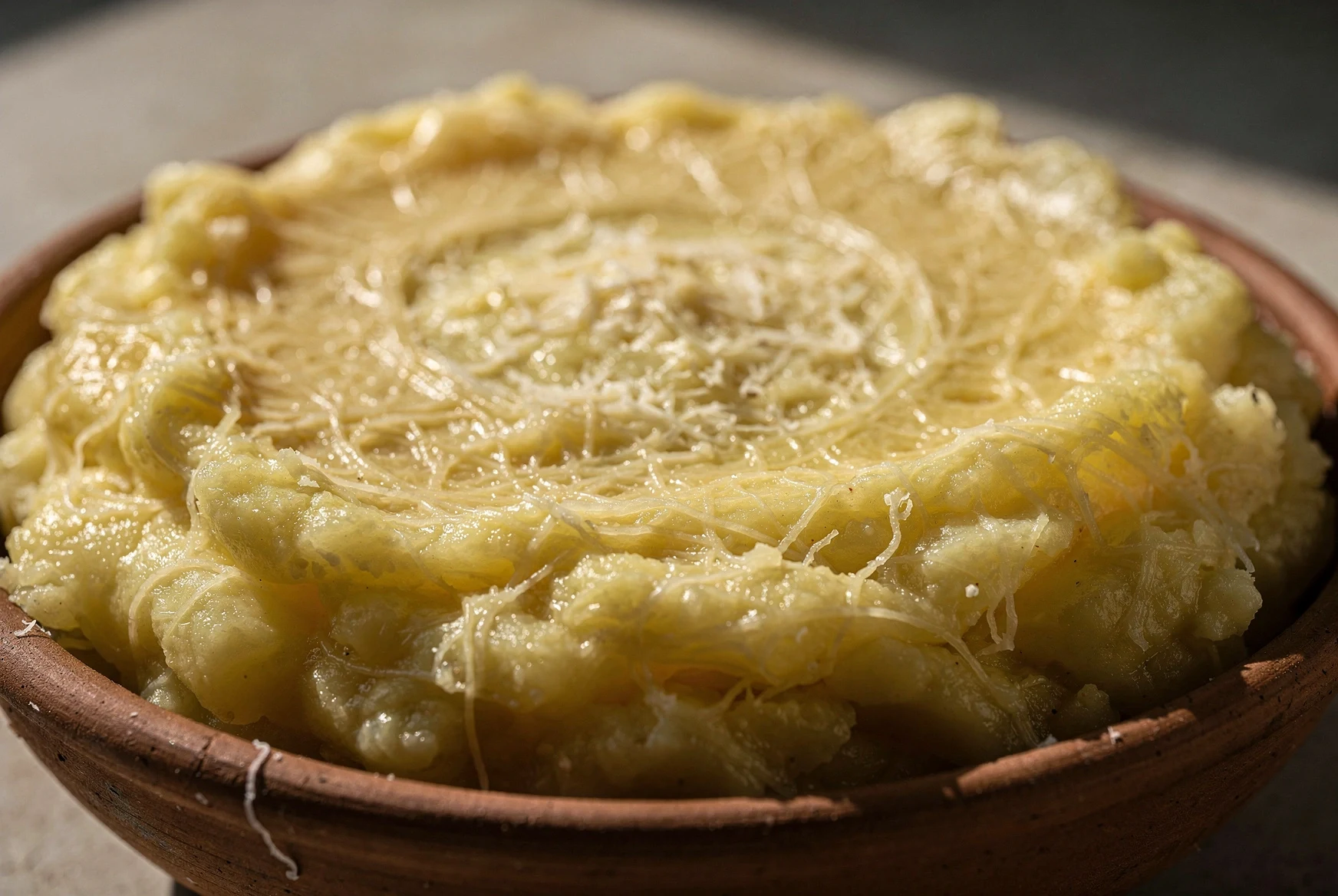
Tashmijabi is usually described as Svan mashed potatoes with cheese, which is technically true and still not quite enough. The key is not just adding cheese to potatoes. The key is beating young sulguni into hot mash until the mixture changes character. It stops being a bowl of mashed potatoes with bits of cheese in it and becomes one elastic mass, somewhere between a puree and a cheese pull. Good tashmijabi should droop from the spoon in ribbons, not sit there like ordinary mash with a dairy garnish.
That is why restaurant versions can be disappointing. A lazy one is just mashed potatoes topped with grated cheese. A good one is worked enough that the cheese integrates, seasons the potatoes from the inside, and gives the whole thing that unmistakable stretchy finish. It should taste dairy-rich and potato-forward at the same time. If one side completely buries the other, it is off.
Why It Matters in Svaneti
Svan food is built by geography. Winters are hard, the terrain is unforgiving, and nobody built the cuisine around delicate little side dishes. That is why the region gives you things like kubdari, chvishtari, and pkhlovani. Tashmijabi belongs in that company. It uses ingredients people actually had: potatoes, cheese, butter, salt. No part of it is decorative. It exists because it works.
It also tells you something useful about Georgian regional cooking. People who only know the usual export hits assume the cuisine is mostly khachapuri and khinkali. Spend any real time in the mountains and you realize Georgia is also a country of deeply local starch-and-dairy logic. The point is not always variety. Sometimes the point is taking two or three ingredients and pushing them until they become memorable.
The Cheese Question
This dish lives or dies on the cheese. Fresh sulguni is the best option because it melts smoothly, stretches properly, and brings the right salty tang. Older sulguni can still work, but it gets tougher and less cooperative. If you use a hard cheese that only melts into grease, you miss the whole point. If you use an ultra-wet cheese, the mash goes slack and sad.
Outside Georgia, the best fallback is low-moisture mozzarella with a smaller amount of feta for salt. It is still a compromise. Mozzarella gives you stretch, feta gives you character, but neither gives you the exact sour-salty balance of real sulguni. If you can find Georgian cheese at an Eastern European or Caucasian shop, this is the recipe where it is genuinely worth the trouble.
| Cheese option | Result | Verdict |
|---|---|---|
| Fresh sulguni | Salty, elastic, properly Georgian | Best option |
| Young imeruli + sulguni | Softer and slightly creamier | Very good if you want a gentler finish |
| Low-moisture mozzarella + feta | Decent stretch, acceptable salt | Best non-Georgian workaround |
| Cheddar or hard alpine cheese | Heavy, oily, wrong texture | Do not bother |
Grate or tear the cheese small
Big hunks take longer to melt and encourage overmixing. Smaller pieces disappear into the potatoes faster and give you a smoother, stretchier final bowl.
Choose the Right Potatoes
Floury potatoes are your friend here. You want something that cooks fluffy and dry enough to absorb butter and cheese without turning gluey. Russets work. Yukon Gold works if that is what you have. Waxy salad potatoes do not. They mash into a damp, dense texture that fights the cheese instead of welcoming it.
The other important thing is drying them well after boiling. Drain them, let the steam escape, and mash them hot. If the potatoes are carrying excess water, the mixture loosens before the cheese has a chance to build any body. That is how people end up adding more and more cheese trying to fix texture they ruined with water in the first place.
The Technique That Makes It Work
Make the potatoes first, mash them smooth, then move quickly while everything is still hot. Beat in butter and seasoning before the cheese. Once the sulguni goes in, keep the heat very low and stir or beat steadily with a wooden spoon. You are not just melting cheese. You are working the whole mixture until the starch and dairy bind properly.
Do not add lots of milk out of habit. This is not restaurant mashed potato. A spoonful or two of hot milk or potato water is fine if the pot feels too stiff to move, but the finished dish should be thick enough to mound on a plate. If it flows like puree, you have gone too far.
Correct texture
Smooth, dense, glossy, with visible stretch when lifted from the pot.
Wrong texture
Loose like cafeteria mash, or heavy and rubbery like overworked cheese paste.
Season It Like a Svan
If you have Svanetian salt, use it. This is one of the most natural places for it. The garlic, blue fenugreek, coriander, and dried herbs give the potatoes exactly the mountain-food edge they need. Plain salt works, but the dish becomes more generic immediately.
Black pepper is useful. Butter is useful. A little extra knob of butter melting on top is very useful if the weather outside is bad and you feel like leaning into the obvious. What you do not need is cream, garlic powder, sour cream, cheddar blends, or random modern garnish. This is not the place to get clever.
What to Serve With It
Tashmijabi can be a side, but it often behaves like a main. In mountain guesthouses it turns up next to meat, pickles, or a simple salad and then quietly dominates the table anyway. It works especially well with anything salty, smoky, or sharply acidic.
Best pairings
Kubdari, pickles, simple tomato salad, grilled meat, or just Svanetian salt and butter.
Less ideal pairings
Anything too creamy or saucy. Tashmijabi already does the richness job on its own.
Common Mistakes
Using waxy potatoes
They stay damp and dense, which makes the final texture pasty rather than fluffy and elastic.
Adding too much liquid
This should be thick mountain food, not silky French puree. Go carefully.
Using the wrong cheese
If it does not melt stretchy, the whole dish loses its identity.
Serving it late
Tashmijabi is best hot. Once it sits, the stretch fades and the surface tightens.
Tashmijabi vs Elarji vs Ghomi
These three dishes get compared constantly because they all live in the Georgian starch-and-dairy universe, but they are not interchangeable.
| Dish | Base | Region | Character |
|---|---|---|---|
| Tashmijabi | Potatoes | Svaneti | Soft, rich, stretchy mashed potato comfort |
| Elarji | Cornmeal | Samegrelo | Dense, dramatic, intensely cheesy, almost elastic beyond reason |
| Ghomi | Cornmeal | Western Georgia | Plainer base dish, usually topped with cheese rather than beaten fully with it |
Tashmijabi FAQ
Can I make it with mozzarella only?
Yes, but it will taste milder and less distinctly Georgian. Add a little feta for salt if needed.
Is it a side dish or a main?
Either. In the mountains it often behaves like both.
Can I make it ahead?
You can reheat it, but fresh is much better. The stretch is strongest right after cooking.
Do I really need Svanetian salt?
No, but it helps a lot. Without it, season carefully and consider a pinch of coriander and blue fenugreek.
Written by The Georgian Eats Team
We have eaten tashmijabi in mountain guesthouses where it arrived alongside pickles, bread, and enough salt to make it clear nobody was pretending this was spa food. The good versions all hit the same note: hot potatoes, young cheese, proper seasoning, and no watery nonsense.
Last updated: March 2026.
Related Articles
Elarji
The western Georgian cornmeal-and-cheese dish people confuse with this one all the time.
Ghomi
The plainer cornmeal base from western Georgia, best understood next to elarji and tashmijabi.
Kubdari
The other big Svan comfort dish: spiced mountain meat bread.
Georgian Spices & Herbs
Including Svanetian salt, which makes this dish taste like it knows where it comes from.