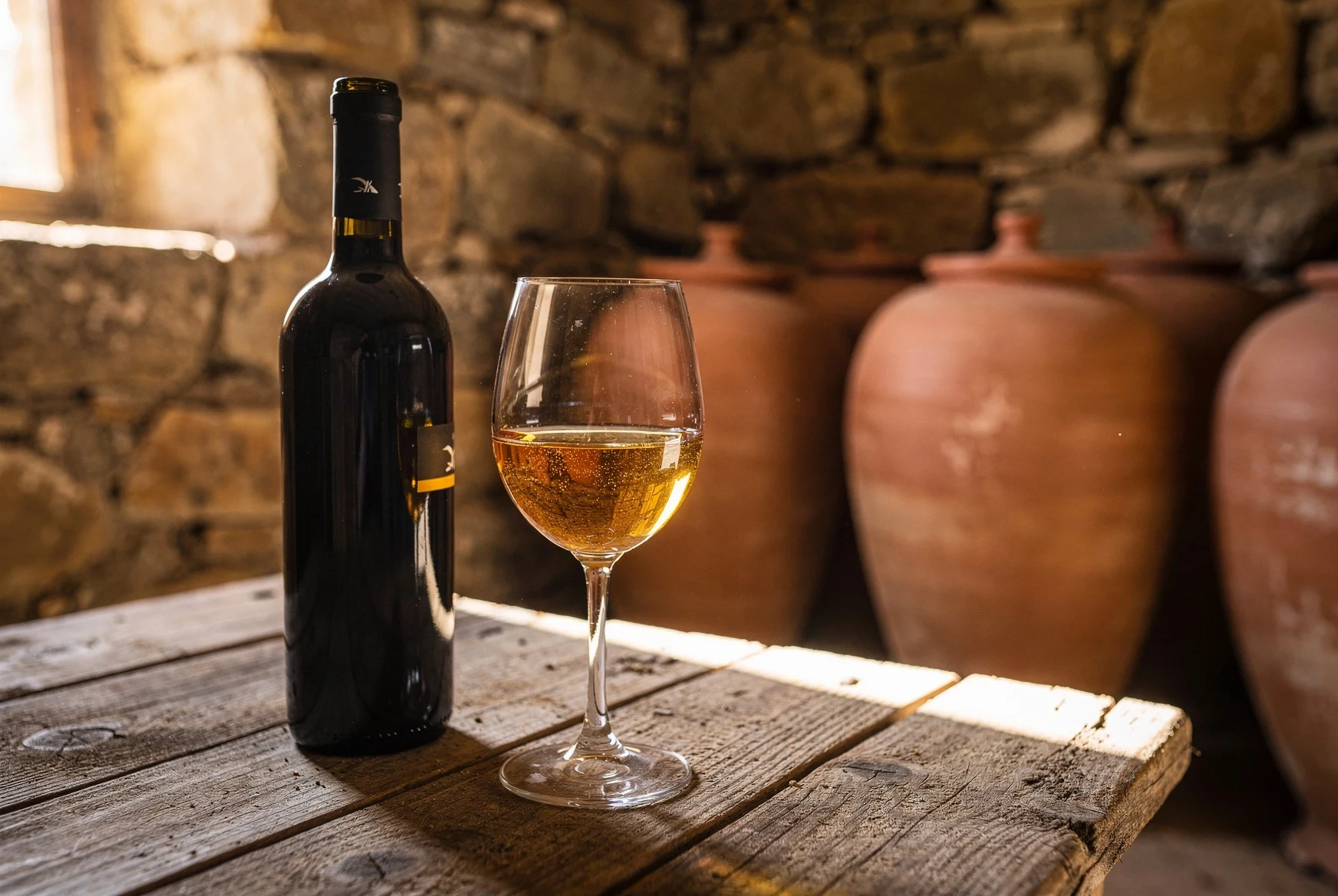
Rkatsiteli is the Georgian grape you keep drinking even when the label is trying to distract you with something else. Georgia has over 500 native grapes, and yes, plenty of them are more exotic on paper. But if you actually care about what built the country's white-wine identity, it starts here. Rkatsiteli is the workhorse, the reference point, the bottle behind half the conversations about amber wine, qvevri, Kakheti, and why Georgian whites do not behave like anyone else's.
It is also one of the most misunderstood grapes in the whole Georgian lineup. In lazy English-language writing, it gets treated as a neutral utility variety — something sturdy and old that mostly matters because people ferment it in clay. That misses the point. Bad Rkatsiteli can absolutely taste generic. Good Rkatsiteli does not. Good Rkatsiteli has cut, grip, dried-fruit depth, orchard fruit when made clean, tea-like tannin when left on skins, and exactly the sort of stern structure that Georgian food needs.
This guide is the practical version: what Rkatsiteli actually tastes like, why Kakheti still owns the conversation, when to buy the fresh steel-tank style and when to go full amber, what blends matter, and what to eat with it if you want the wine to make sense instead of just sitting there like an academic exercise.
What Rkatsiteli Actually Is
Rkatsiteli is an ancient Georgian white grape whose name roughly means red stem — a reference to the vine's reddish canes. It is most closely associated with eastern Georgia, especially Kakheti, and for long stretches of the Soviet period it spread far beyond Georgia because it was productive, cold-tolerant, and reliable. That broader planting history is partly why the grape's reputation gets blurry. Across the former Soviet wine world, it was often pushed into volume production. In Georgia, though, especially in serious hands, it remained something far more interesting.
The short version is this: Rkatsiteli gives you acidity first, structure second, fruit third. That order matters. It is not a lush perfume bomb. It is not a soft easy white trying to charm you in ten seconds. It has a firmer spine than that. In a clean European-style version, you get green apple, quince, yellow plum, citrus peel, and a stony or herbal edge. In qvevri, with skin contact, the grape turns into one of the great amber-wine varieties in the world: dried apricot, walnut skin, black tea, chamomile, honey, apple peel, and a savory bitterness that makes rich food taste sharper and more complete.
Rkatsiteli quick facts
- Georgian: რქაწითელი
- Name meaning: Red stem
- Main region: Kakheti
- Core trait: High acidity with strong structural grip
- Best-known styles: Dry white, qvevri amber, Tsinandali-style blends
- Best pairing lane: Cheese, walnut dishes, grilled chicken, beans, pickles, richer white-meat dishes
Why Rkatsiteli Matters More Than Most Grapes on the Site
Saperavi gets the glamour because it is dramatic. It is dark, obvious, and easy to pitch. Rkatsiteli is more foundational. If you want to understand why Georgian white wine is not just a side note to the reds, you need Rkatsiteli. If you want to understand why amber wine in Georgia tastes so complete and food-ready instead of just funky, you need Rkatsiteli. If you want to understand why so many Georgian tables can move between cheese bread, walnut pastes, beans, poultry, herbs, and pickles without changing the bottle every ten minutes, you need Rkatsiteli.
It also matters because it bridges the two main wine languages Georgia speaks today. On one side, there is the clean, international-facing style: stainless steel, freshness, orchard fruit, a little restraint, and easy restaurant utility. On the other, there is the older qvevri language: skins, tannin, oxidative edges, texture, and a wine that behaves almost like a white-red hybrid at the table. Rkatsiteli does both without feeling like it is being stretched past its personality.
| Style | What it tastes like | Texture | Best use |
|---|---|---|---|
| Fresh dry white | Green apple, quince, citrus peel, yellow plum | Lean to medium, crisp, linear | Fish, salads, lighter cheese dishes, aperitif |
| Oak-aged or richer dry white | Riper orchard fruit, honey, spice | Broader, rounder, still firm | Roast chicken, creamy dishes, fuller cheese plates |
| Qvevri amber | Dried apricot, walnut skin, black tea, chamomile, apple peel | Textured, tannic, savory | Walnut dishes, khachapuri, beans, poultry, pickles |
| Rkatsiteli-Mtsvane blend | Rkatsiteli structure plus floral lift | Balanced, more aromatic | Crowd-pleasing table wine, great first Georgian white |
How Rkatsiteli Tastes in Real Terms
The easiest mistake is describing Rkatsiteli too politely. People call it “crisp” and “food-friendly” and move on, which tells you almost nothing. The grape's defining feature is tension. Even when the fruit is ripe, there is a sort of backbone to it — acid, grip, and often a faintly stern edge that keeps it from getting sloppy. That is why it works so well with Georgian food, which is rarely shy about salt, herbs, garlic, sourness, walnut paste, or melted cheese.
In a fresh dry style, think orchard fruit rather than tropical fruit. Green apple and quince are the useful markers. Sometimes yellow plum. Sometimes lemon peel. Often a slight herbal line in the background. It can be genuinely refreshing, but it is not flirtatious in the way Sauvignon Blanc or Albariño can be. The good versions taste serious from the start.
In qvevri, everything gets deeper and more stubborn. The fruit turns drier and more concentrated: dried apple, dried apricot, baked quince, tea leaves, chamomile, bruised orchard fruit, honeycomb, walnut skin. The tannin matters as much as the aroma. That slight drying grip is exactly why amber Rkatsiteli can sit next to badrijani nigvzit, pkhali, or satsivi and not disappear.
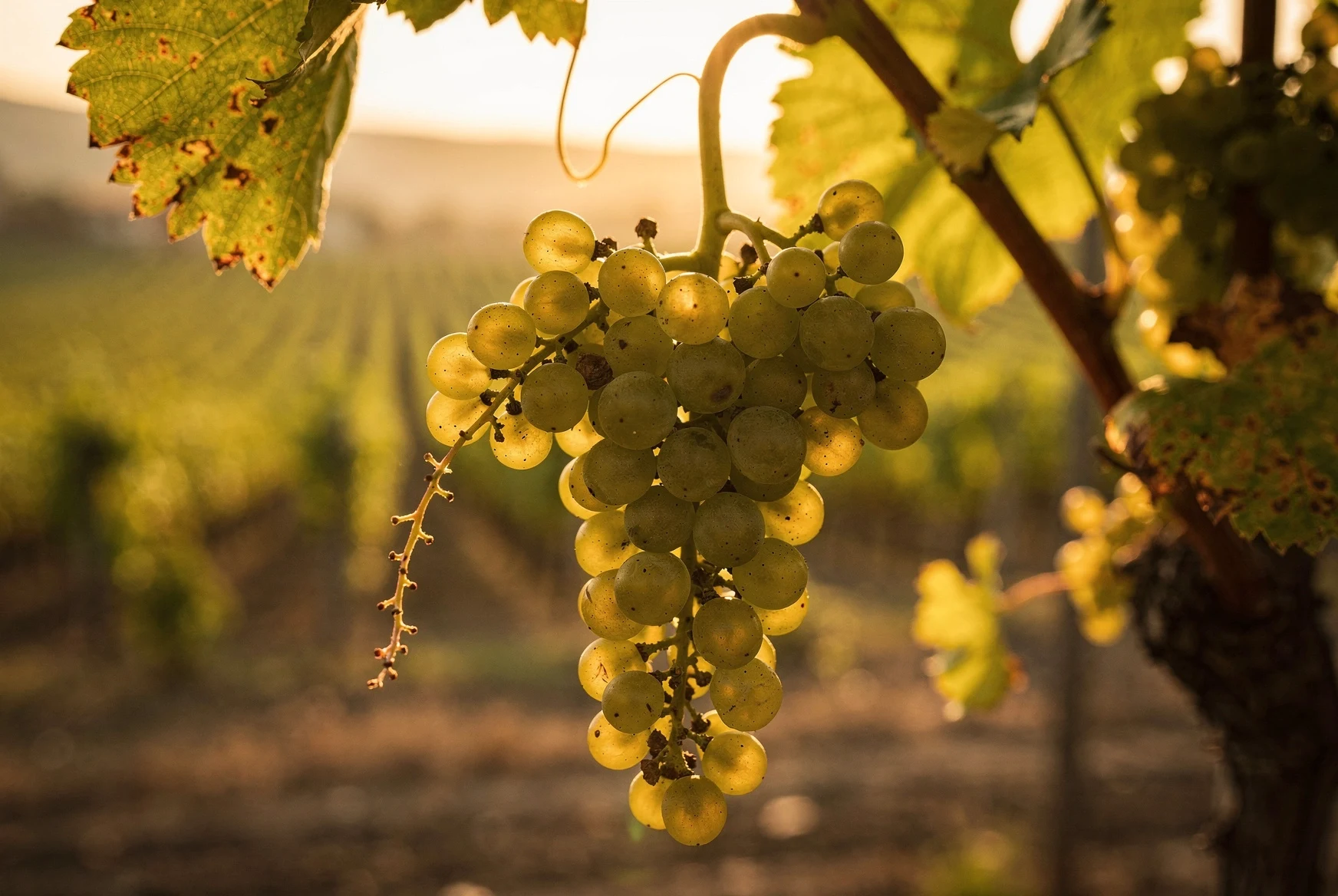
If you usually drink Chardonnay or Riesling
European-style Rkatsiteli will make more sense to you faster than full amber qvevri. But if you want the bottle that actually shows why Georgia matters, skip the safe version at least once and order an amber Rkatsiteli from a serious producer.
Where It Grows Best: Kakheti First, Then Everything Else
Rkatsiteli is not exclusively Georgian and not even exclusively Kakhetian, but Kakheti is still where the grape feels most fully itself. The hot summers, cool nights, and long ripening season help it hold acidity while still getting enough phenolic maturity to work beautifully in qvevri. That matters because amber wine made from under-ripe grapes can taste hard and angular in the bad way, not the good way.
Kakheti also has the infrastructure of tradition around the grape — family maranis, qvevri culture, and generations of knowing how much skin contact, extraction, and patience the grape can take. That cultural memory matters more than wine people like to admit. The same grape can be technically correct somewhere else and still feel a bit disconnected from the food and cellar logic that made it compelling in the first place.
That said, Rkatsiteli also shows up in more polished, export-friendly expressions and in classic white blends such as Tsinandali, where it is often paired with Mtsvane to soften its stricter edges and add floral lift. Those wines are useful, especially if you want an everyday Georgian white that does not demand a seminar before dinner.
Kakheti
Best for serious qvevri and amber expressions, plus the deepest dry varietal versions.
Tsinandali zone
Best for cleaner blended whites where Rkatsiteli gets aromatic help from Mtsvane.
Export-market bottlings
A mixed bag — some are fresh and useful, some flatten the grape into generic white wine.
Old-school family cellar wines
Where the grape often gets its best texture, weirdness, and authority — assuming the producer knows what they are doing.
Amber Rkatsiteli vs Dry White Rkatsiteli
If you only remember one thing from this guide, remember this: these are not tiny stylistic variations. They can feel like two different grapes.
Dry white Rkatsiteli is the more familiar shape. Crisp, straight, orchard-fruited, occasionally mineral, sometimes a bit severe if the producer chases freshness too hard. It is useful at the table, especially with fish, white cheeses, lighter poultry dishes, and simple starters. It can also be a very good house white in restaurants because it behaves itself.
Amber Rkatsiteli is the version that people either fall for or bounce off. It has tannin. It wants food. It can look almost copper-gold in the glass. It smells less like fresh fruit and more like dried fruit, tea, herbs, and skin. It often tastes older than it is, in a good way. It is not a glugging wine. It is the bottle you pour when the table has weight to it.
| Question | Choose dry white if… | Choose amber if… |
|---|---|---|
| You want something easy | Yes | No, but more rewarding |
| You are drinking without much food | Better choice | Can feel stern on its own |
| The table has walnuts, cheese, beans, garlic, pickles | Fine | Best choice |
| You want to understand Georgia properly | Partly | Absolutely |
Why the Rkatsiteli-Mtsvane Blend Works So Well
One reason Rkatsiteli shows up so often in blends is obvious once you taste it next to Mtsvane. Rkatsiteli brings acid, structure, and seriousness. Mtsvane brings perfume, softer fruit, and charm. Together they make more immediate sense to more drinkers. That is not a compromise in the bad sense. It is one of Georgia's genuinely smart blending habits.
If a varietal Rkatsiteli feels too strict for you, do not assume you dislike the grape completely. Try a Tsinandali or another Rkatsiteli-led blend before writing it off. Sometimes what you really want is Rkatsiteli with the corners softened, not Rkatsiteli removed from the conversation.
Best progression for a newcomer
Start with a clean Rkatsiteli-Mtsvane blend. Then try a dry varietal Rkatsiteli. Then drink a proper qvevri amber Rkatsiteli with food. That sequence makes the grape click much faster than starting at the deep end.
What to Eat with Rkatsiteli
This is where Rkatsiteli really stops being theory. The grape likes food with salt, texture, and enough personality to meet it halfway. The best pairings are not random prestige pairings. They are the dishes where the wine feels like part of the table logic rather than an afterthought.
Amber Rkatsiteli with walnut-heavy dishes is almost unfair. The wine's tannic bitterness and dried-fruit depth line up perfectly with the savory richness of walnut paste. That is why dishes like pkhali, badrijani nigvzit, and satsivi make so much sense with it.
It is also excellent with salty, rich breads and cheeses. Good amber Rkatsiteli cuts through the molten weight of Adjarian khachapuri better than most reds do. With lobio, it gives the beans shape. With grilled chicken, especially garlic-heavy dishes like chicken tabaka, it has enough freshness to keep the meal from turning heavy.
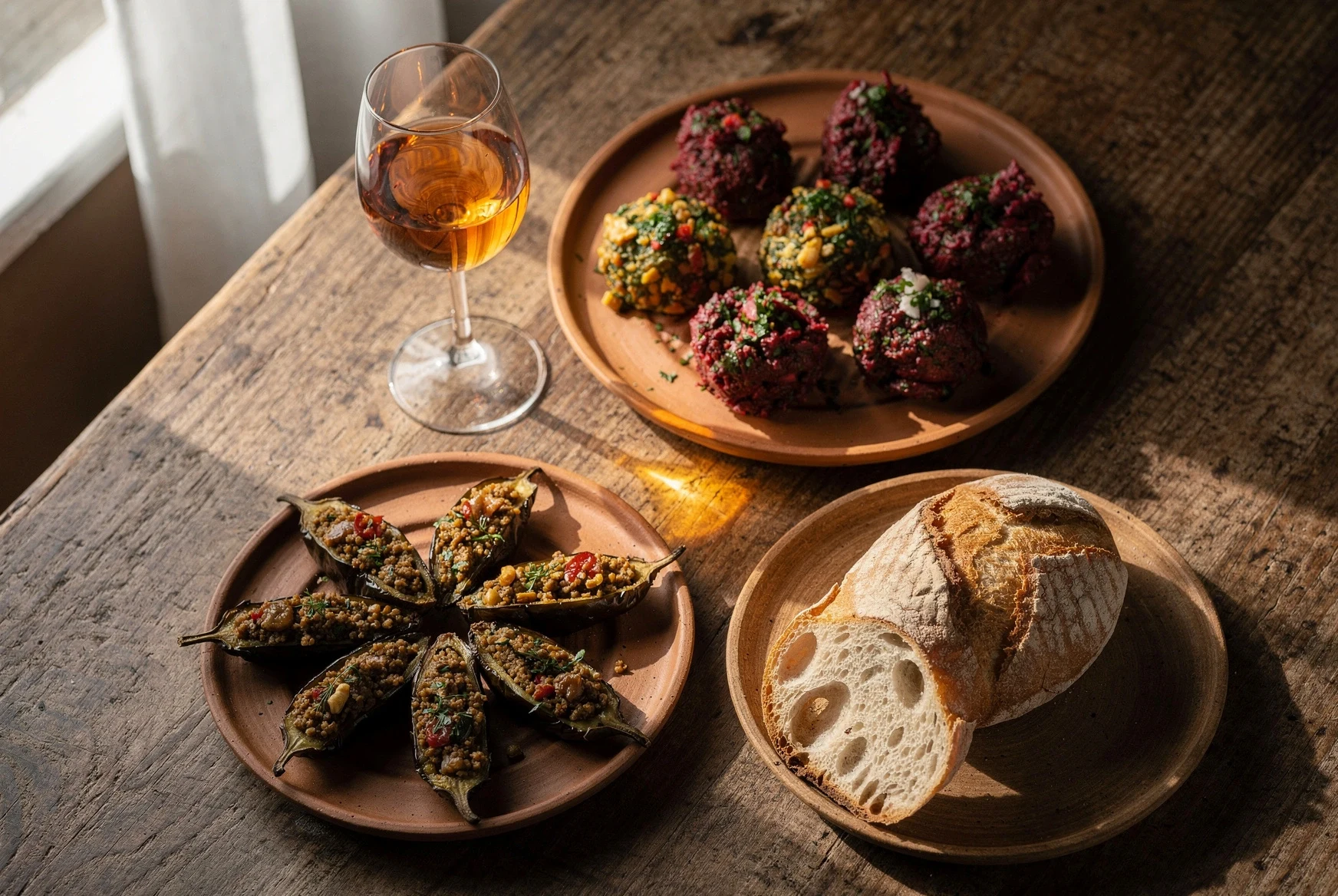
| Dish | Best Rkatsiteli style | Why it works |
|---|---|---|
| Pkhali | Amber | Walnut richness and herbal notes meet the wine's tannin and savory depth |
| Badrijani Nigvzit | Amber | Oil, walnut, and eggplant need structure, not just freshness |
| Adjarian Khachapuri | Amber or richer dry white | Acidity cuts fat; texture keeps up with cheese and egg |
| Lobio | Amber | Beans, herbs, and pickles make more sense with a textured white than a heavy red |
| Chicken Tabaka | Dry white or lighter amber | Enough lift for garlic and crisp skin without overwhelming the meat |
| Kalmakhi | Dry white | Fresher style lets trout stay central while keeping the acid line strong |
What to Buy First
You do not need the rarest bottle to understand Rkatsiteli. You do need a bottle made with conviction. Cheap industrial Rkatsiteli exists, and it is the main reason some people think the grape is boring. The better route is to choose one bottle in each of these lanes: a clean everyday dry white, a serious amber, and if possible a Rkatsiteli-Mtsvane blend.
Best first amber
A qvevri Rkatsiteli from a serious Kakhetian producer. This is the bottle that explains the grape's reputation properly.
Best first easy bottle
A clean dry Rkatsiteli-Mtsvane blend or a well-made Tsinandali if you want something more immediately familiar.
Skip these
Ultra-cheap export bottlings that flatten the grape into anonymous supermarket white wine.
When to spend more
On amber. That is where better fruit and better handling show up most clearly in the glass.
Buying shortcut
If you are choosing between a cheaper famous-name amber and a slightly more expensive small-producer bottle, take the small producer. Rkatsiteli rewards care more than branding.
How to Serve Rkatsiteli So It Does Not Underperform
Serving temperature matters more than people think. Dry white Rkatsiteli can take a cooler serving temperature, but ice-cold still mutes it. Amber Rkatsiteli absolutely should not be served fridge-cold unless the goal is to erase its personality. Cool, yes. Cold, no.
| Style | Best temperature | Glass | Air time |
|---|---|---|---|
| Dry white | 9-11°C | Standard white wine glass | Minimal |
| Amber / qvevri | 12-15°C | Slightly larger bowl | 10-20 minutes helps |
| Richer oak-aged style | 11-13°C | Medium white / universal glass | A little air helps |
If the bottle is amber and slightly cloudy or throws sediment, that is not automatically a problem. Many qvevri wines are unfiltered or lightly filtered. Pour gently and do not panic. The bigger issue is whether the wine smells alive and balanced, not whether it looks laboratory-polished.
Common Mistakes People Make with Rkatsiteli
Treating all Rkatsiteli as one style
Dry white and amber Rkatsiteli can behave almost like different wines. Judge the style, not just the grape name.
Serving amber too cold
You kill the aroma and exaggerate the tannic sternness. Let it warm slightly and it becomes much more coherent.
Buying the cheapest bottle and deciding the grape is boring
That is like eating bad khachapuri at an airport kiosk and declaring the dish overrated.
Drinking amber without food
Some bottles can handle it, but most Rkatsiteli ambers make far more sense once the table has actual salt, fat, herbs, and texture.
Final Verdict
If Saperavi is Georgia's loudest grape, Rkatsiteli is its most necessary white one. It has the range to work as a useful dry white, the authority to dominate amber-wine conversations, and the kind of acid-and-structure profile that makes Georgian food click harder. It is not always the most seductive bottle in the lineup. Good. Georgian wine does not need more seduction. It needs more people paying attention.
If you have never had Rkatsiteli at all, start with a good one. If you have only had a dull export example, try again. And if you already think you know it because you had one amber bottle three years ago, drink it with the right food and see if the story changes.
Frequently Asked Questions
Is Rkatsiteli always amber wine?
No. It can be made as a clean dry white, a richer oak-aged white, a qvevri amber wine, or as part of blends like Tsinandali. Amber is the most interesting version, not the only one.
What does Rkatsiteli taste like?
In dry white form: green apple, quince, citrus peel, yellow plum, and high acidity. In amber form: dried apricot, honey, black tea, walnut skin, chamomile, and tannic grip.
Is Rkatsiteli better than Mtsvane or Kisi?
Not better in every context, but more foundational. Mtsvane is more aromatic. Kisi is often gentler and prettier. Rkatsiteli usually has the strongest spine and the broadest cultural importance.
What should I eat with amber Rkatsiteli?
Walnut dishes, khachapuri, lobio, chicken tabaka, satsivi, pkhali, badrijani, and other Georgian dishes with richness, herbs, and salt. It is a table wine in the best sense.
Written by The Georgian Eats Team
We have drunk enough Rkatsiteli in Georgia to know the difference between the bottles that merely explain the grape and the bottles that actually justify its reputation. This guide is written from the second camp.
Last updated: March 2026.
Related Articles
Georgian Amber Wine Guide
The broader amber-wine picture, including qvevri method, tannin, and why Georgia calls it amber rather than orange.
Georgian Grape Varieties
The wider map of Georgian grapes, from Saperavi and Mtsvane to Tavkveri, Ojaleshi, and beyond.
Georgian Wine for Beginners
A broader starting point if you want regions, qvevri, grapes, and the overall shape of Georgian wine before narrowing in.
Wine and Food Pairing
Dish-by-dish pairing logic for Georgian food, including exactly where amber Rkatsiteli earns its keep.