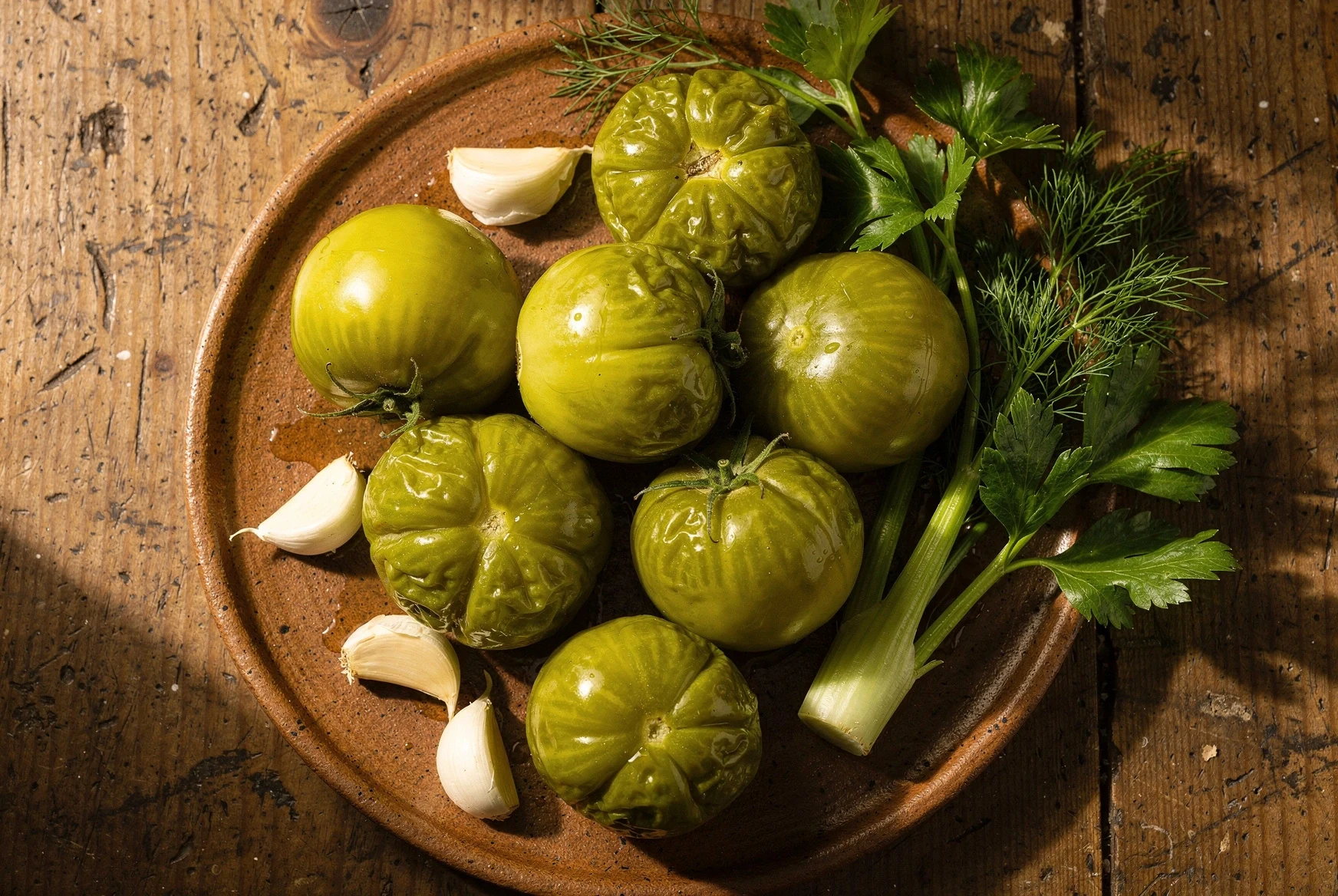
In Georgia, pickled green tomatoes are not a niche pantry project for people with too many end-of-season tomatoes. They are table infrastructure. You see them beside lobio, next to grilled meat, on weekday dinner tables, at supra spreads, and in the fridge of almost every family that takes pickling even half-seriously. The point is not sweet-and-sour vinegar punch. The point is clean, hard, salty, fermented sharpness — the kind that wakes up beans, bread, cheese, and anything fatty.
The Georgian name is mzhave pomidori (მჟავე პომიდორი). Mzhave basically means sour, but in kitchen terms it usually points to salt-brined fermentation rather than a quick vinegar pickle. That distinction matters. If you want the real Georgian effect, you need time, salt, whole green tomatoes, and enough restraint not to drown the jar in sugar or supermarket pickling spice.
Mzhave Pomidori Quick Facts
- Georgian name: მჟავე პომიდორი (mzhave pomidori)
- Method: Salt-brine fermentation, not quick vinegar pickling
- Texture target: Sour, juicy, still firm enough to bite cleanly
- Best with: Lobio, mchadi, grilled pork, kupati, bread and cheese
- Time: About 2-3 weeks depending on room temperature
- Difficulty: Easy, if you keep everything submerged and leave it alone
What Makes Georgian Pickled Green Tomatoes Different
There are plenty of pickled green tomato traditions in the world. Georgian ones stand out for three reasons. First, the tomatoes are usually fermented whole. Not sliced into cute rounds. Not chopped into relish. Whole, so they stay meaty and juicy. Second, the seasoning is straightforward: garlic, dill, celery leaves, maybe chili, maybe parsley. Not an allspice-clove-cinnamon circus. Third, the finished pickle is meant to be aggressively useful at the table. It has to cut through rich food, not sit politely in a burger bun.
A lot of English-language recipes for green tomatoes are really vinegar preserves. Fine, but that is a different thing. Georgian mzhave has that deep lactic tang that feels colder, cleaner, and more serious. You bite through the skin, get the sour brine burst, then the garlic and herb aroma follows. Good ones make you immediately want black bread, beans, and something grilled.
Ingredients
The ingredient list is short because the process is the flavor. That means the tomatoes matter more than anything else. You want fully green, fully firm tomatoes — no blush, no softness, no cracks, no hidden rot around the stem. If a tomato already feels like it is reconsidering its life choices on the counter, do not ferment it.
| Ingredient | Amount | Why it matters |
|---|---|---|
| Green tomatoes | 1.2-1.4 kg | Small to medium fruit ferment more evenly and stay firm |
| Garlic | 6-8 cloves | You want clear garlic aroma, not subtle background politeness |
| Dill | 1 small bunch | Classic pickle backbone; dill crowns are especially good if you have them |
| Celery leaves | 1 generous handful | This is the Georgian touch that gives the brine its distinct savory-green smell |
| Salt | 30g per liter | Use non-iodized salt so the ferment stays clean and predictable |
| Chili | Optional | Some families want a little back-end heat, others do not |
Do Not Use Iodized Table Salt
This is one of those boring details that actually matters. Plain sea salt, kosher salt, or pickling salt works. Iodized table salt can make the brine cloudy and the flavor a little duller.
Equipment and Fermentation Safety
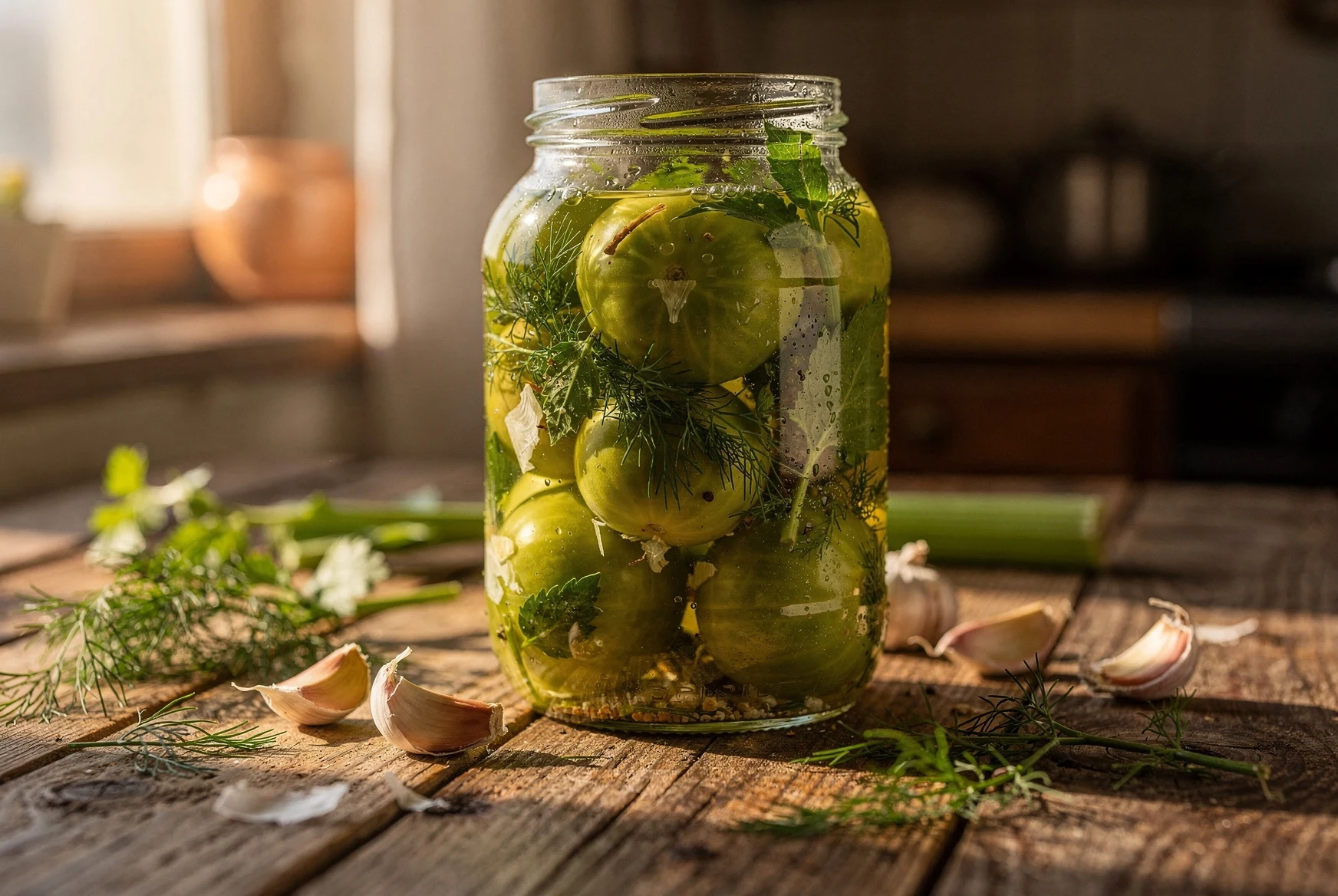
You do not need a full fermentation-lab cosplay setup. A clean large glass jar, crock, or food-safe container is enough. What you do need is a way to keep the tomatoes under the brine. That is the whole game. Anything floating above the surface is inviting mold, softness, and disappointment.
If you have fermentation weights, use them. If not, a small clean jar filled with water works inside a wider vessel. A zip bag filled with extra brine also works in a pinch. What you should not do is fill a jar, cross your fingers, and let half the tomatoes bob around in open air.
What good fermentation looks like
Cloudy brine, tiny bubbles, sharp pleasantly sour smell, tomatoes staying greenish-olive and firm.
What bad fermentation looks like
Fuzzy mold, rotten smell, slimy tomatoes, pink or black surface growth, or fruit sticking above the brine for days.
The Right Brine Ratio
The safest simple ratio for this style is 30 grams of salt per 1 liter of water — roughly a 3% brine. That gives you enough salt to protect the ferment and keep the tomatoes crisp, without making the final pickle obnoxiously salty. Some households go stronger. Some eyeball it. For a reliable home version, 3% is the sweet spot.
If your tomatoes are very tightly packed, you may need more than 1 liter. That is fine. Just keep the ratio constant. Do not randomly add water to stretch the brine and then wonder why the jar tastes flat or starts misbehaving.
| Water | Salt | Use case |
|---|---|---|
| 500 ml | 15 g | Small top-up batch or narrow jar |
| 1 liter | 30 g | Standard 2-liter household jar |
| 2 liters | 60 g | Larger crock or bulk batch |
How to Make Them: Step by Step
Step 1: Choose and prep the tomatoes
Wash the tomatoes well and trim away any ugly stem bits. Pierce each one once or twice near the stem with a skewer, paring knife, or cocktail stick. Do not stab them to death; you just want to help the brine move in. Whole tomatoes with no puncture can take forever to sour properly.
Step 2: Build the jar
Put some dill, celery leaves, garlic, and optional chili at the bottom. Add a layer of tomatoes. Then more herbs and garlic. Then more tomatoes. Keep going until the jar is snugly full. This layering matters: if you dump all the aromatics on top, the bottom tomatoes taste flat and the top ones hog all the perfume.
Step 3: Add the brine
Dissolve the salt fully in boiled and cooled water. Pour it over slowly so it works into the gaps. Tap the jar lightly to release trapped air. Top up if needed until everything is covered. Then add your weight.
Step 4: Let the first fermentation happen
Leave the jar at cool room temperature, loosely covered, for about 5 to 7 days. If your kitchen runs warm, it will move faster. If it is winter-cool, it will move slower. You are looking for small bubbles, slight cloudiness, and a clean sour smell — not fireworks.
Step 5: Slow it down and finish
Once the ferment is clearly active, move it to the fridge or the coolest room you have and give it another 10 to 14 days. This slower second stage gives you better texture. The tomatoes stay firmer and the flavor deepens without racing into mush.
How to Tell When They Are Ready
The tomatoes should taste properly sour all the way past the skin, but still have some internal resistance. The skin softens a little, the flesh turns juicy and saline, and the center loses that harsh raw-green bitterness. If they are only sour on the outside and chalky in the middle, wait. If they are going soft and collapsing, you either fermented too warm, used weak tomatoes, or left them too long before chilling them down.
Good Georgian-style pickled green tomatoes are not delicate. They should punch through rich food. If they taste merely pleasant, they probably need another few days.
How Georgians Actually Serve Them
This is where a lot of non-Georgian recipes miss the point. These are not cocktail garnish pickles. They belong beside serious, blunt food. A plate of lobio and mchadi is the classic. They are also excellent with mtsvadi, kupati, beans, fried potatoes, bread and cheese, or the cold-table spread described in the pickles guide.
Best pairings
Lobio, mchadi, grilled pork, sausages, fried potatoes, beans, and anything with enough fat to welcome acid.
What not to do
Do not bury them in sweet sandwiches or chop them into vague salads. They are better as a side with attitude.
Cool Room Beats Hot Kitchen
If your kitchen is very warm, start the jar somewhere cooler if you can. Fast fermentation sounds efficient until the tomatoes go soft before the centers fully sour.
Common Mistakes
| Mistake | What goes wrong | Fix |
|---|---|---|
| Using half-ripe tomatoes | Texture turns mushy and sweet instead of firm and sharp | Use hard, fully green tomatoes only |
| Not keeping them submerged | Surface mold and uneven fermentation | Use a weight and top up brine when needed |
| Weak brine | Soft texture and unreliable ferment | Stick to 30g salt per liter |
| Too many random spices | Tastes like generic deli pickle, not Georgian mzhave | Keep it garlic, dill, celery, salt, and maybe chili |
| Fermenting too warm for too long | Tomatoes soften before they develop proper deep sourness | Move to a cooler place after the first active days |
Useful Variations
Some Georgian households split the tomatoes partway and stuff them with a rough herb-garlic mixture before brining. That version is excellent, but it is fussier and a little more fragile. For a core house recipe, whole tomatoes are the better place to start. They are easier, keep better, and feel more universal.
You can also add a few grape or cherry leaves if you have them and want extra crunch insurance. Hot peppers are common and good, but do not let them take over. These are tomato pickles, not a chili challenge. Beetroot is less typical here than in pickled cabbage, so I would leave it out unless you have a very specific family version in mind.
FAQ
Can I make these with vinegar instead?
You can make pickled green tomatoes with vinegar, but they will not taste like Georgian mzhave pomidori. The real version is fermented in salt brine.
How long do they keep?
Once fully fermented and refrigerated, they keep for weeks and usually get better for a while. Just keep them submerged and use clean utensils.
Can I use large beefsteak green tomatoes?
You can, but smaller tomatoes give a better texture and sour more evenly. Big ones often stay chalky in the center longer than you want.
Why are my tomatoes floating?
Air pockets plus tomato shape. Press them down with a weight and top up the brine. Floating is normal; staying floating is the problem.
Written by The Georgian Eats Team
We know these as the sharp, cold thing you want next to beans, bread, and grilled meat when the table starts getting too rich. Good mzhave should make the rest of dinner taste better, not just fill a jar.
Last updated: March 2026.
Related Articles
Georgian Pickles & Preserves
The broader world of jonjoli, garlic, peppers, cabbage, and why Georgian tables rely on acid.
Lobio
The classic bean pot that practically begs for a cold, sour pickle on the side.
Mchadi
Golden cornbread and sour pickles is one of the most satisfying Georgian side combinations going.
Jonjoli
Another Georgian pickle, this one floral, springy, and much rarer outside Georgia.