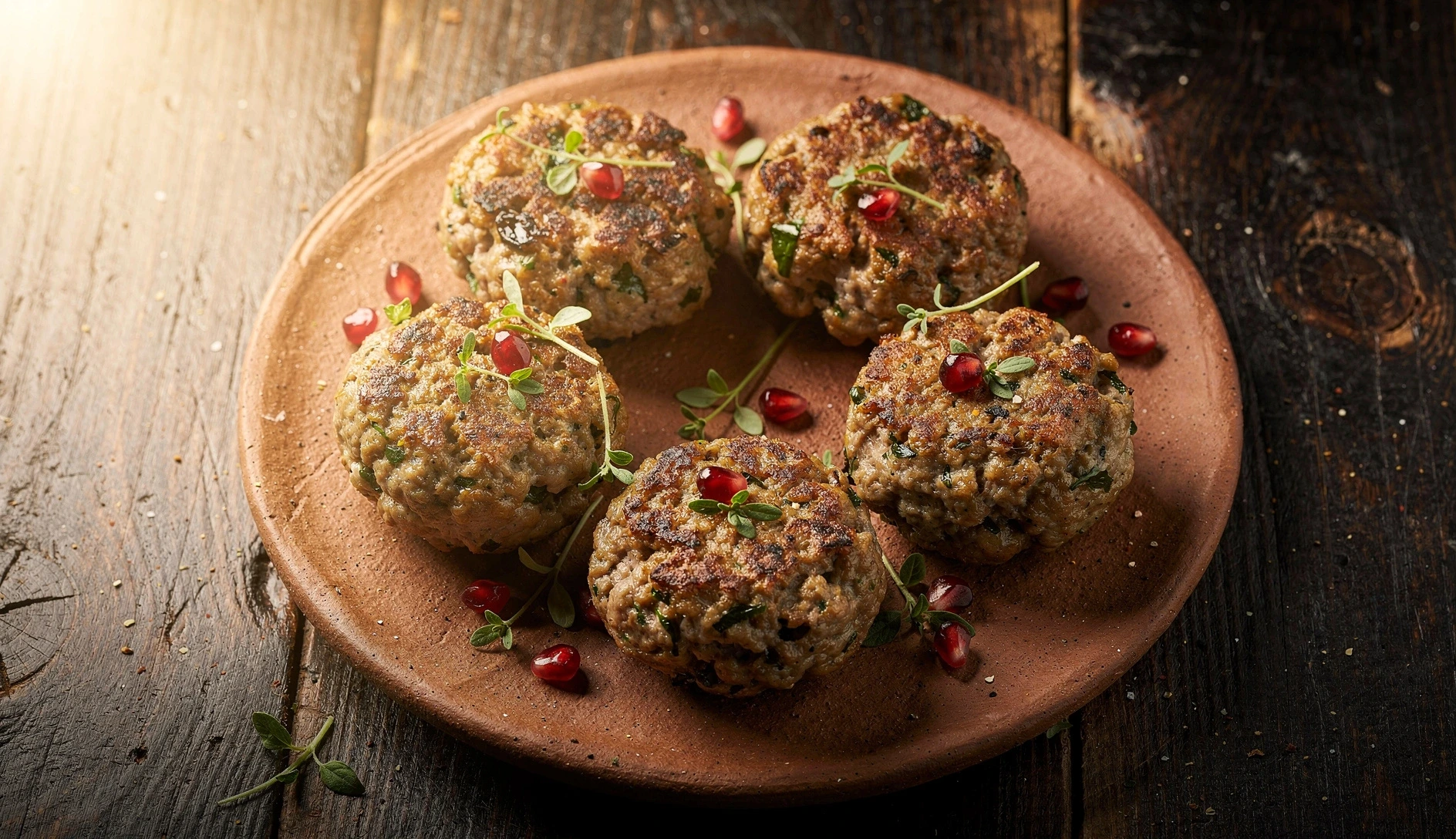
Abkhazura doesn't get the attention of khinkali or khachapuri, and that's fine — more for the rest of us. These are fat, heavily spiced meatballs wrapped in caul fat and pan-fried until the outside turns into a thin, crackling shell while the inside stays almost obscenely juicy. The pomegranate seeds mixed into the meat burst when you bite down, cutting through the richness with little pops of sour sweetness. It's the kind of dish that makes you understand why Georgians spend five hours at the table.
Abkhazura Quick Facts
- Georgian name: აბხაზურა (ab-kha-ZOO-ra)
- Origin: Abkhazia (western Georgia, Black Sea coast)
- Key spices: Coriander, summer savory (kondari), blue fenugreek, fresh cilantro
- Wrapping: Caul fat — the lacy membrane surrounding pork organs
- Prep + cook time: 30 min prep, 20 min cooking (plus marinating)
- Cost in Georgia: 10–18 GEL in restaurants (~$3.50–6.50 USD)
- Difficulty: Easy to moderate — wrapping takes a little practice
What Is Abkhazura
Abkhazura is a spiced meatball from Abkhazia — the subtropical coastal region in western Georgia that also gave the world adjika and some of the most aggressively flavored food in the Caucasus. The name literally refers to the Abkhazian origin, and the dish reflects that region's love of bold seasoning, fresh herbs by the fistful, and the liberal use of pomegranate in savory cooking.
What separates abkhazura from any other meatball on earth is the caul fat. This is the thin, web-like membrane that surrounds the internal organs of pigs (or sometimes sheep). When you wrap ground meat in it and cook it, the fat renders into a crispy, lacy shell — think of it as nature's built-in frying basket. The fat bastes the meat from the outside as it cooks, so the meatball stays incredibly moist while developing a crackling exterior. It's the same principle the French use for crépinettes, but the seasoning here is distinctly Caucasian.
At a Georgian supra, abkhazura often appears alongside mtsvadi and kupati as part of the meat course. It's supra food — big, generous, meant to be eaten with your hands, dipped in sauce, argued about. Nobody makes a single abkhazura.
Understanding the Ingredients
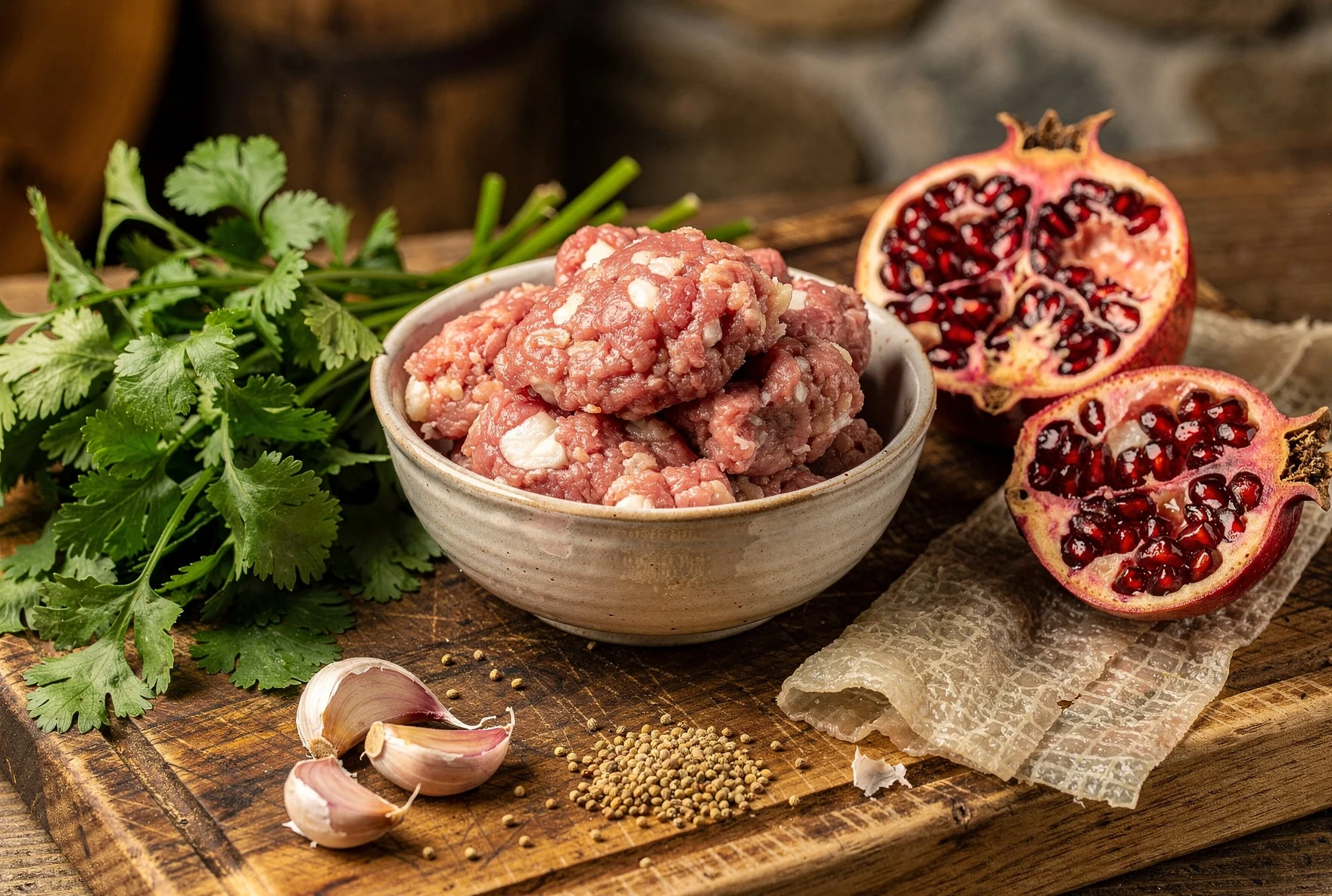
The Meat
The traditional mix is beef and pork in roughly equal parts. The beef gives structure and flavor; the pork adds fat and tenderness. Don't use extra-lean ground beef — you want that 80/20 ratio. If the meat is too lean, the meatballs come out dry and dense, and no amount of caul fat will save them.
Some families use all pork, some add lamb. There's no strict rule, but the beef-pork combination produces the best texture: firm enough to hold shape, fatty enough to stay juicy. If you don't eat pork, all-beef works fine — just add a tablespoon of olive oil to the mixture to compensate for the lost fat.
Caul Fat
This is the one ingredient that defines the dish. Caul fat (bardzaya in Georgian) is a thin, net-like membrane of fat and connective tissue. It looks like lace made of fat, which is basically what it is. You can get it from any decent butcher — ask for pork caul fat. It's cheap (often free if you're buying other meat) and comes frozen in a folded mass.
Can't Find Caul Fat?
If caul fat is unavailable, you can still make abkhazura — they just become very good spiced meatballs instead of the dish. Shape the mixture into balls and pan-fry normally. You'll miss the crispy shell, but the flavor profile is intact. Some Georgian cooks substitute thinly sliced bacon wrapped around each ball, which isn't traditional but creates a similar crispy-fatty exterior.
The Spices
The spice profile is classic western Georgian: ground coriander is the backbone, summer savory (kondari) adds its distinctive peppery-thyme character, and blue fenugreek (utskho suneli) brings that warm, slightly bitter nuttiness that shows up across Georgian cooking. If you're already making other Georgian dishes, you have all of these on hand. If not, check our complete guide to Georgian spices.
The fresh herbs are equally important. Georgian cooking uses cilantro the way French cooking uses parsley — abundantly, in everything. For abkhazura, a full cup of finely chopped fresh cilantro goes into the meat. It's not a garnish amount. It's a structural ingredient.
The Pomegranate
Pomegranate seeds mixed into the raw meat is the signature move. When the meatball cooks, the seeds soften slightly but hold their shape. Bite into the meatball and you get these small bursts of sour-sweet juice cutting through the richness of the meat and fat. It's the same principle as cranberries in a pork stuffing, but more elegant. Reserve some seeds for garnish — the red against the golden-brown meatball is one of the most photogenic plates in Georgian cooking.
Step-by-Step Instructions
1. Mix the Meat
Combine the beef and pork in a large bowl. Add the finely diced onions (and they need to be fine — visible chunks of onion in a meatball is sloppy), minced garlic, chopped cilantro, chopped parsley, and all the dried spices. Mix with your hands for a solid 3-4 minutes. You're not gently folding — you're working the meat until it becomes cohesive and slightly tacky. This develops the proteins that hold the meatball together without a binder. No eggs. No breadcrumbs. Just meat and seasoning.
Fold in half the pomegranate seeds. Be gentle here — you don't want to crush them and turn everything pink. Cover and refrigerate for at least an hour. Overnight is better. Cold meat is dramatically easier to shape, and the rest time lets the salt and spices do their work.
2. Prepare the Caul Fat
Thaw the caul fat if frozen. Soak it in a bowl of warm water with a splash of white vinegar for 20-30 minutes. This softens it and removes any residual smell. Carefully unfold the membrane on a clean cutting board — it tears easily, but small tears don't matter since you're wrapping it around a ball anyway. Cut into squares roughly 15-18cm per side. You'll get 12-15 squares from a typical piece of caul fat.
3. Shape and Wrap
Take about 80-90g of the meat mixture — roughly the size of a tennis ball — and roll it between your palms into a smooth sphere. Place it in the center of a caul fat square. Fold the edges up and around the meatball, tucking them underneath so the seam is on the bottom. The fat should cover the entire surface in a single thin layer. Don't double-wrap — that creates a thick, chewy layer instead of a crisp one.
If the fat tears in spots, don't worry. Small gaps are fine. During cooking, the fat melts and redistributes, so minor imperfections disappear. What matters is that most of the surface has a layer of fat that will render and crisp.
4. Cook
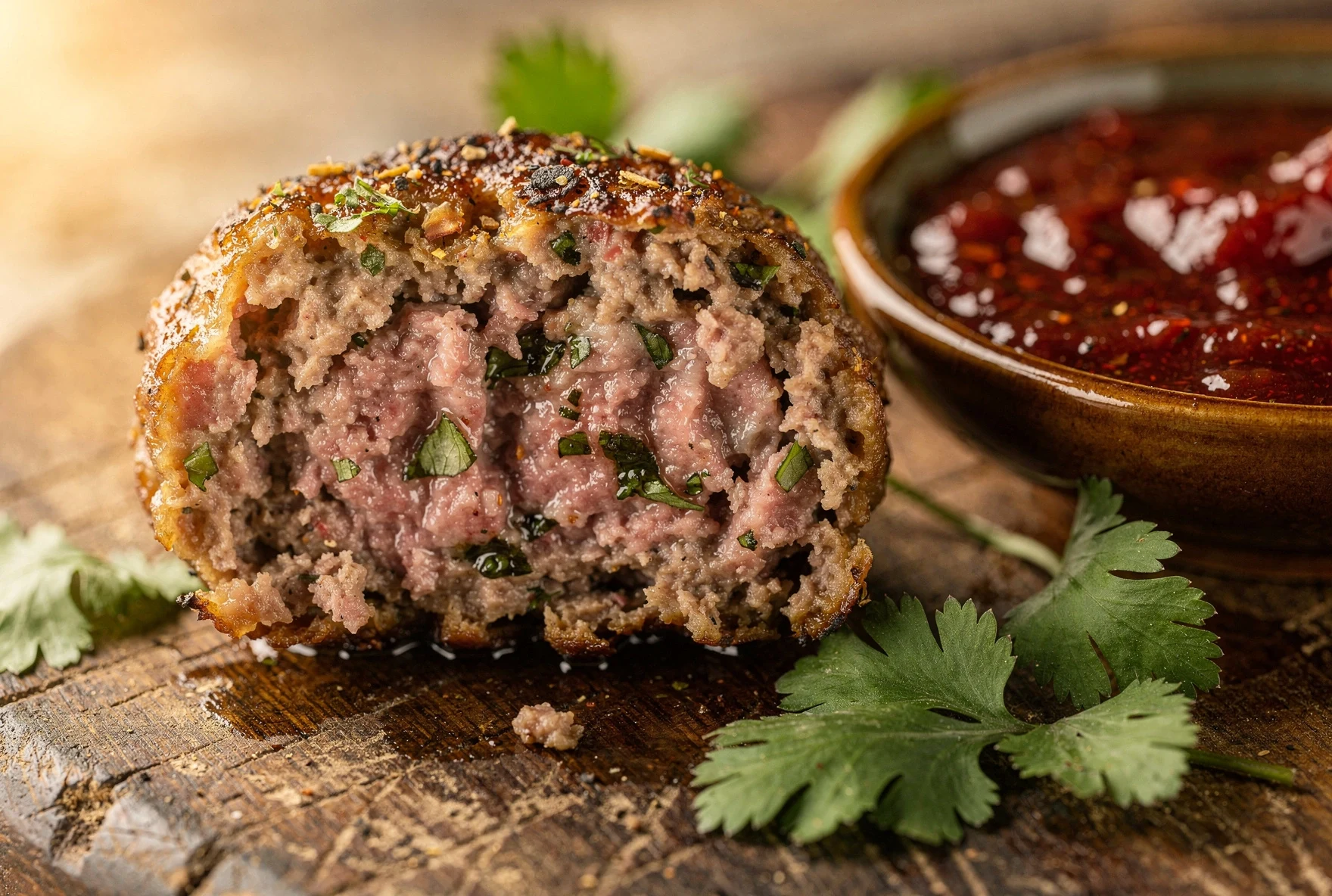
Pan-frying (recommended for most home cooks): Heat 2 tablespoons of oil in a large, heavy-bottomed skillet over medium heat. Not high — medium. You want the caul fat to render slowly and turn crispy, not burn before the inside cooks through. Place the meatballs seam-side down with space between them. Don't crowd the pan; work in batches if necessary.
Cook for 4-5 minutes per side, turning gently with tongs. You're looking for a deep golden-brown color on each surface. The caul fat will look like crispy golden lace — that's exactly right. Total cooking time is about 15-20 minutes. The internal temperature should reach 74°C/165°F, though by the time the outside is properly golden, the inside is always done.
Grilling (the traditional method): If you have a charcoal grill or mangal, this is the superior option. Cook over medium-hot coals — not direct flame. The caul fat drips onto the coals and creates an aromatic smoke that flavors the meat from the outside. Turn every 3-4 minutes, about 15 minutes total. Watch for flare-ups — the rendering fat can cause them. Keep a spray bottle of water nearby.
Temperature Control Is Everything
The most common mistake is cooking too hot. High heat burns the caul fat before it renders properly, giving you a charred, bitter exterior and raw interior. Medium heat — patient, steady medium heat — lets the fat slowly melt, baste the meat, and crisp into that signature lacy shell. If you hear aggressive sizzling, your heat is too high.
5. Serve
Rest the meatballs for 3-4 minutes — they're extremely hot inside and the juices need a moment to redistribute. Arrange on a warm platter and scatter with the reserved pomegranate seeds, fresh cilantro leaves, and thinly sliced raw white onion. Serve with tkemali (sour plum sauce) on the side — the tartness is the perfect counterpoint to the rich meat. Adjika works too if you want more heat.
What to Serve with Abkhazura
Abkhazura is a supra centerpiece, so it's naturally surrounded by other dishes. But if you're building a meal around it, here's what works:
Bread
Shotis puri or mchadi (cornbread). You need something to soak up the juices.
Vegetables
Badrijani nigvzit or ajapsandali — something to cut through the richness.
Wine
A dry red — Saperavi is the obvious choice. The tannins and acidity handle the fat beautifully. See our wine pairing guide.
Tips and Variations
| Variation | What Changes | Notes |
|---|---|---|
| All-beef | Slightly drier, more beefy flavor | Add 1 tbsp olive oil to compensate for lost pork fat |
| Lamb and beef | Richer, more gamey — closer to some Abkhazian versions | Use lamb shoulder, 50/50 with beef |
| Extra spicy | More heat, Abkhazian style | Double the cayenne, add 1 tbsp adjika paste to the mix |
| Without caul fat | Still delicious, but lose the crispy shell | Shape and pan-fry directly, or wrap in thin bacon strips |
| Oven-baked | More even cooking, less hands-on | 200°C/400°F for 20-25 min on a rack over a baking sheet |
Common Mistakes
Meat too lean. This is the number one failure mode. If you use 95% lean ground beef because you're watching your fat intake, you'll end up with dry, crumbly meatballs that taste like seasoned cardboard. Abkhazura is not diet food. The fat is there for a reason — it keeps the interior moist while the outside crisps. Use 80/20 beef and regular ground pork.
Onions too chunky. The onions should be diced very fine — almost minced. Large pieces of onion create weak points in the meatball structure and can make it fall apart during cooking. If your knife skills aren't great, pulse the onion in a food processor (but stop before it becomes a paste).
Skipping the rest time. Cold meat shapes better, holds together better, and the flavors have time to marry. Trying to shape room-temperature meat into balls and wrap them in caul fat is an exercise in frustration. Give it the hour. Overnight is even better.
Cooking too hot. Already mentioned, but it bears repeating. Medium heat. The caul fat needs time to render. If you crank the heat, you get burned fat on the outside and raw meat on the inside. Patience.
Wrapping too thick. One layer of caul fat, not two. Double-wrapping creates a thick, chewy blanket instead of a crispy shell. If you have excess fat hanging over the edges, trim it rather than folding it over.
A Brief History
Abkhazura comes from Abkhazia — the narrow coastal strip between the Greater Caucasus mountains and the Black Sea in western Georgia. Abkhazian cuisine is generally bolder and spicier than central Georgian cooking, influenced by the region's subtropical climate (which grows better chilies) and its historical trade connections along the Black Sea coast.
The use of caul fat in meatballs isn't unique to Georgia — French crépinettes, South African sosaties, and various Middle Eastern preparations all use the same technique. But the specific combination of coriander, summer savory, blue fenugreek, and pomegranate seeds is distinctly Caucasian. The dish likely dates back centuries, though written recipes only appear in Georgian cookbooks from the Soviet era onward.
Darra Goldstein's The Georgian Feast — still the best English-language Georgian cookbook — includes a version that helped introduce the dish to Western audiences in the 1990s. Today, abkhazura appears on menus across Georgia, from high-end Tbilisi restaurants to village supras, though it's still more commonly made at home than ordered in restaurants.
Storing and Reheating
Uncooked: Shaped and wrapped meatballs keep in the fridge for up to 24 hours. You can also freeze them on a parchment-lined baking sheet, then transfer to a freezer bag once solid. They'll keep for 2-3 months. Cook from frozen, adding 5 minutes to the cooking time.
Cooked: Refrigerate for up to 3 days. Reheat in a skillet over medium heat to re-crisp the exterior — the microwave will make the caul fat soggy and sad. Don't even think about it.
Frequently Asked Questions
Where do I buy caul fat?
Ask any butcher — they usually have it or can order it. In Georgia, every market meat stall sells it. Outside Georgia, try Asian or Middle Eastern butchers, or order online. It's cheap — usually under $5 for enough to make 20+ meatballs.
Can I make these ahead for a party?
Absolutely. Shape and wrap the meatballs up to a day ahead, keep them covered in the fridge. Cook them right before serving. They come together fast once shaped.
What if I can't find blue fenugreek?
Use regular fenugreek leaves (methi) at half the quantity — it's stronger. Or substitute with a pinch of regular fenugreek seeds ground fine. The flavor won't be identical but it'll be in the right direction.
Is abkhazura the same as kupati?
No. Kupati are sausages stuffed into intestine casings. Abkhazura are meatballs wrapped in caul fat. Different shape, different texture, different spice balance — though they often appear at the same supra.
Written by The Georgian Eats Team
We've eaten our way through more supras than we can count, and abkhazura is one of those dishes that rarely disappoints — when the caul fat is right and the cook has a heavy hand with the coriander, it's perfect.
Last updated: February 2026.
Related Articles
Kupati: Georgia's Spiced Pork Sausage
The other iconic Georgian sausage — coarsely ground, aggressively spiced, grilled over coals.
Mtsvadi: Georgia's Sacred Art of Grilled Pork
Thick-cut pork shoulder on skewers — the centerpiece of every Georgian barbecue.
Adjika: The Fiery Paste from Abkhazia
Another Abkhazian classic — the chili-garlic paste that goes with everything.
Georgian Spices & Herbs: The Complete Guide
Everything you need to know about the spices that define Georgian cooking.