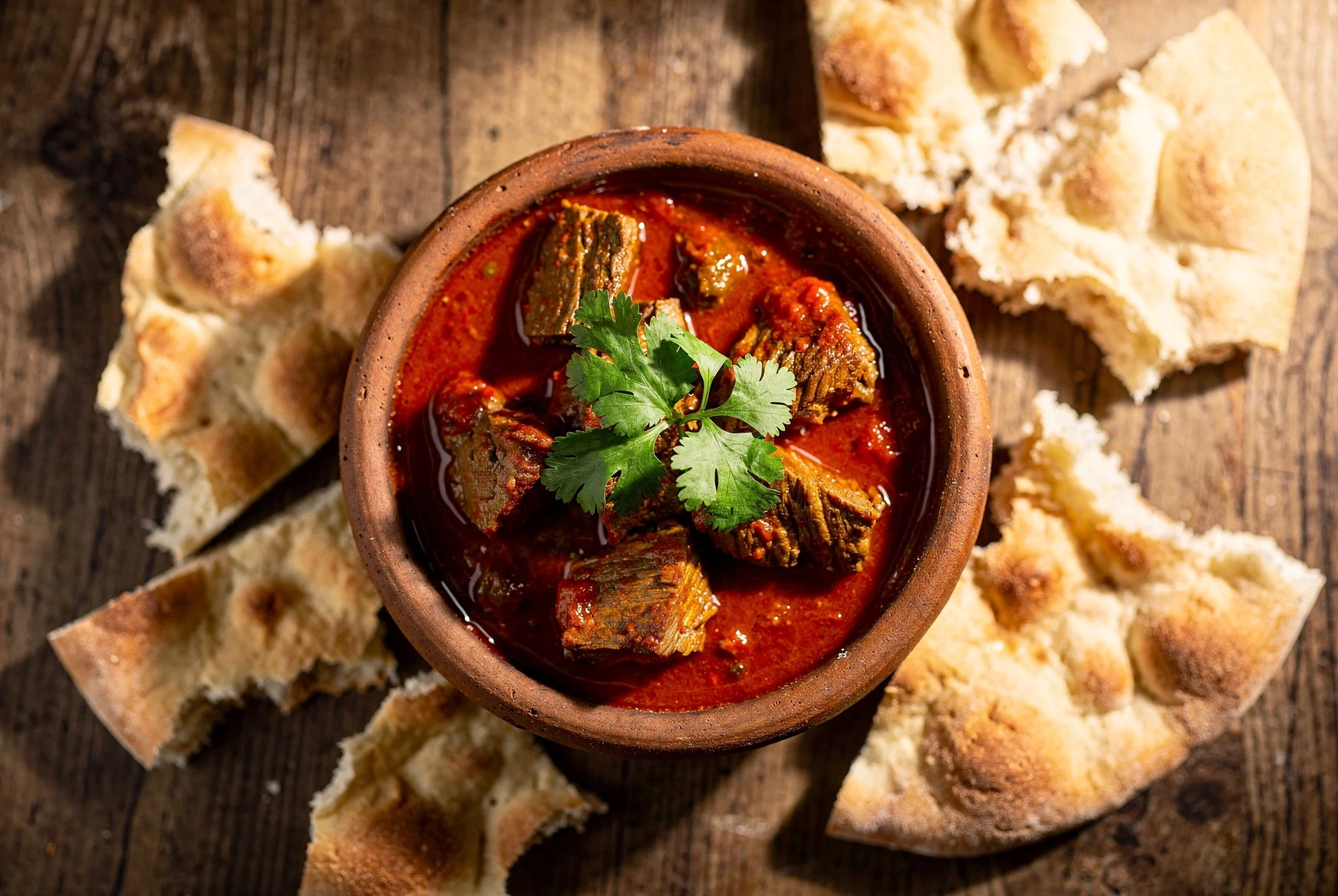
Ostri is what you order when you want the beef dish with actual attitude. It arrives hot, red, sharp with chili, and just loose enough to drag bread through. If chashushuli is the slow, patient cousin that settles in for two hours, ostri is the faster one: tender beef, harder edge, more direct heat. A lot of restaurant menus blur the two, and plenty of cooks do too, but when ostri is good you can tell immediately. The meat still has structure. The sauce is spicy and glossy rather than reduced into a near-dry stew. It tastes like tomatoes, garlic, beef juice, and just enough adjika to keep it honest.
Ostri Quick Facts
- Georgian name: ოსტრი (os-tri)
- Meaning: Literally “sharp” or “spicy”
- Main idea: Tender beef cooked quickly in spicy tomato sauce
- Best cut: Veal, tenderloin, sirloin, or another tender fast-cooking cut
- Total time: About 45-55 minutes
- Serve with: Shotis puri, mchadi, pickles, or a cold lager
What Ostri Actually Is
A lot of English-language recipes flatten Georgian beef dishes into one bucket: “spicy Georgian stew.” That is how you end up with confused recipes using chuck for ostri, tenderloin for chashushuli, and enough added stock to feed a football team. Ostri is not just “beef in tomato sauce.” It is specifically the quicker, sharper version built around tender meat and a sauce that stays lively instead of cooking itself into deep stew territory.
In Georgia, especially in restaurants, ostri often lands somewhere between a skillet dish and a stew. It usually comes in a clay ketsi or shallow pan, still bubbling, with a layer of chopped cilantro over the top and a basket of bread on the side. The heat can vary. Some versions are merely warm and tomatoey. The good ones have real bite. Not pointless chili macho nonsense, just enough edge that you know why it is called ostri in the first place.
Ostri vs Chashushuli
This is the argument everybody runs into. Both are beefy, tomato-based, spicy, and deeply Georgian. Both show up in ketsi dishes on restaurant menus. But the cooking logic is different, and if you want the dish to come out right at home, that difference matters.
| Feature | Ostri | Chashushuli |
|---|---|---|
| Cut of beef | Tenderloin, sirloin, veal, or another quick-cooking cut | Chuck, shoulder, or another slow-cooking cut |
| Cooking style | Quick braise or skillet finish | Long slow stew |
| Sauce texture | Looser, glossy, still lively | Thicker, deeper, more reduced |
| Flavor emphasis | Heat, garlic, tomato brightness | Slow beef richness and concentrated tomatoes |
| Time | Under 1 hour | 1.5-2 hours |
If you want the slower version, make chashushuli. If you want a hotter, faster beef dish that still feels completely Georgian, make ostri. The mistake is trying to split the difference. That usually gives you chewy meat and a confused sauce.
Choosing the Right Beef
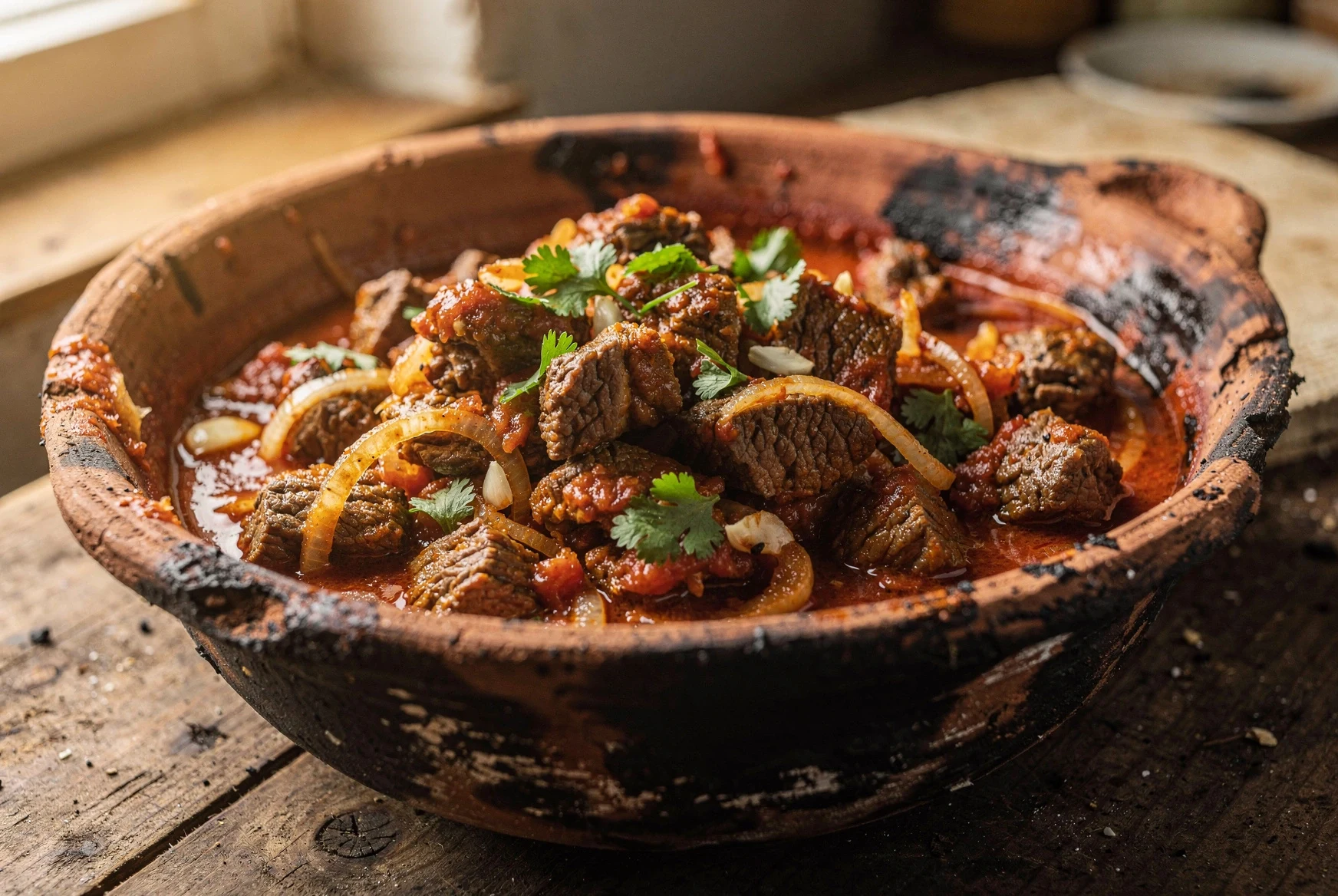
This is the part most recipes get wrong. Ostri likes tender meat because the whole point is speed. You want beef that can brown fast, simmer briefly in the sauce, and still stay soft. Tenderloin is traditional in a lot of restaurant versions, especially if they want the dish to feel a bit more luxurious. Veal is also common and arguably even more Georgian in spirit. Sirloin works well at home if you do not overcook it.
What you do not want is stew meat that needs two hours to surrender. If you use chuck because some generic “beef stew” instinct tells you to, the sauce will be ready long before the meat is. Then you either eat tough beef or overcook the tomatoes into something heavy and dull. Ostri is supposed to stay bright enough that the chili and garlic still matter.
Best Cuts for Ostri
Use beef tenderloin, sirloin flap, bavette, flat iron, or veal. Cut it into smaller pieces than you would for a long stew so it cooks fast and catches more sauce. If the cut is one you would happily pan-sear for steak, it is probably a good ostri candidate.
Ingredients That Matter
Ostri is forgiving on exact proportions, but not on personality. The tomatoes need enough intensity to make sauce, the garlic has to be noticeable, and the chili cannot be purely decorative. Adjika helps a lot here. Even half a spoon changes the dish from generic tomato beef into something recognizably Georgian.
| Ingredient | Amount | Why it matters |
|---|---|---|
| Tender beef or veal | 800g | Fast cooking is the whole point |
| Tomatoes | 4 large | Fresh, ripe, and acidic enough to stay lively |
| Tomato paste | 2 tbsp | Gives backbone without making the sauce heavy |
| Garlic | 4-5 cloves | Ostri should not taste shy |
| Hot peppers | 2 fresh | The dish needs real heat |
| Adjika | 1-2 tsp | Adds depth, salt, and Georgian character |
| Ground coriander + blue fenugreek | Small amounts | Enough to point the dish east, not enough to dominate |
Fresh tomatoes vs canned
In summer, use ripe fresh tomatoes and grate them so the sauce gets smooth quickly. In winter, canned crushed tomatoes are smarter than sad supermarket tomatoes pretending to be useful.
Adjika matters more than extra spice powder
If you can only add one Georgian-specific ingredient, make it adjika. It gives you chili, garlic, salt, and herb depth in one hit.
How to Cook It Properly
Step 1: Sear fast, don’t stew yet
Get the pan properly hot before the beef goes in. You want color on the outside, not gray meat leaking into the oil. Brown the beef in batches if needed. It does not need to cook through here. In fact, it should not. You are just building flavor and buying yourself a better final texture.
Step 2: Build the sauce separately
Once the meat is out, the onions go in. Let them soften properly. Then garlic, chili, and tomato paste. Then the tomatoes and spices. Cook this until it tastes like sauce instead of chopped vegetables. That usually means the raw edge has gone and the oil is starting to look integrated rather than separate.
Step 3: Return the beef and finish gently
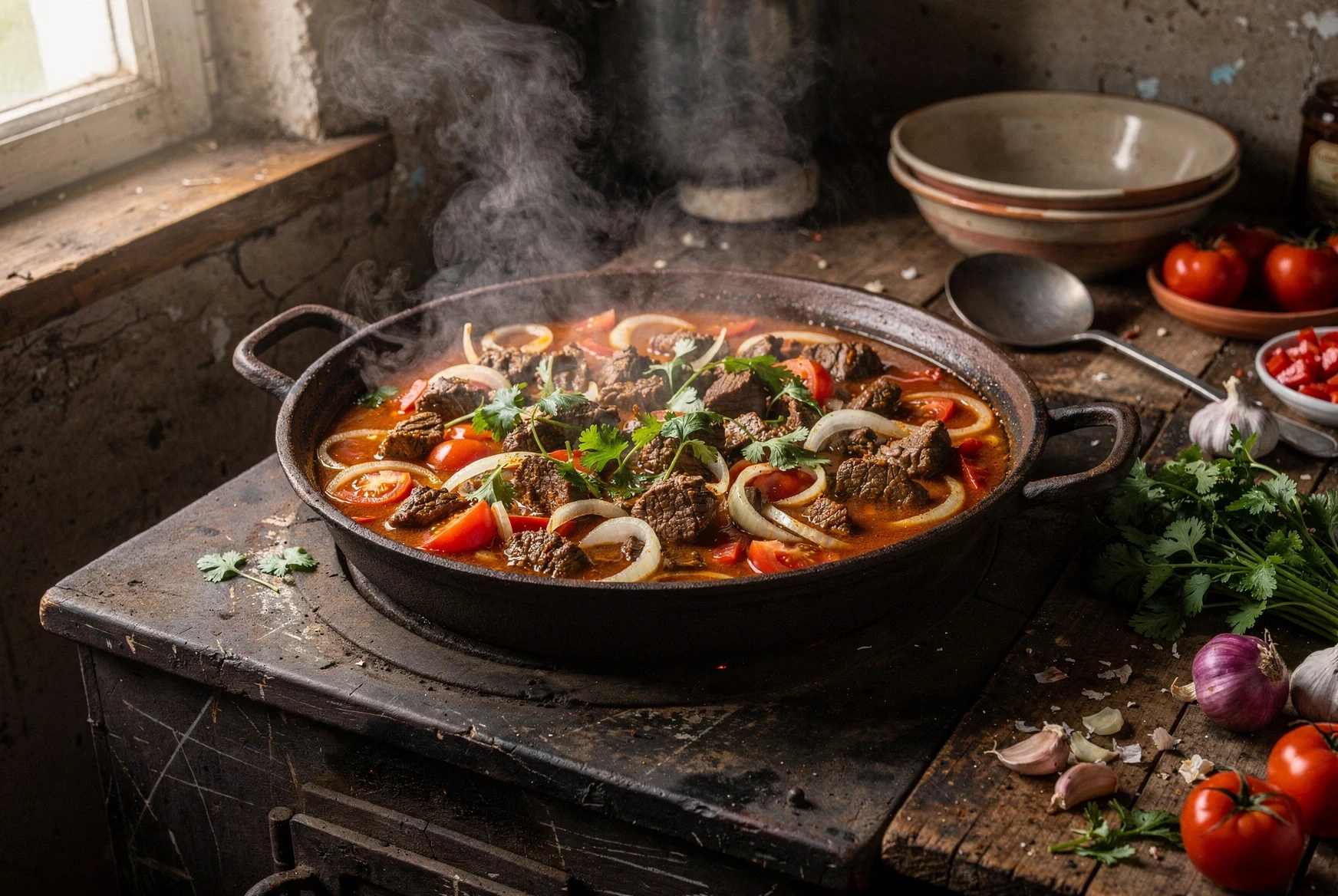
Once the sauce is ready, the beef goes back in for a short final simmer. Ten minutes is often enough with tenderloin. Fifteen if the pieces are larger or you are using sirloin. The goal is tender, sauced beef — not shredded stew meat. If the pan dries out too hard, add a small splash of water or light stock. Small. This is not soup.
Watch the Beef, Not the Clock
Tenderloin can go from perfect to boring fast. Start checking early. The beef should be cooked through, soft, and still clearly itself. If it starts looking like it wants another hour, you used the wrong cut.
What Good Ostri Should Taste Like
The sauce should be spicy, savory, and tomato-led without turning into a generic pasta sauce. Garlic should be obvious. Adjika should be there in the background doing quiet work. The beef should still feel like beef, not soft anonymous protein. And the whole dish should have enough moisture that bread makes sense, because bread is part of the plan, not a side note.
If it tastes flat, it usually needs one of three things: more salt, more adjika, or more reduction before the beef goes back in. If it tastes muddy, you cooked it too long. If it tastes harsh, the tomatoes were not cooked down enough or the garlic hit the pan too aggressively. Ostri rewards a little attention, but it is not complicated food.
| Problem | What happened | Fix |
|---|---|---|
| Beef is chewy | Wrong cut or overcooked finish | Use tender beef next time and shorten the final simmer |
| Sauce tastes generic | Not enough adjika, garlic, or chili | Add adjika and salt first, then reassess |
| Too acidic | Tomatoes were still raw tasting | Cook the sauce longer before the beef returns |
| Too watery | Too much added liquid or weak tomatoes | Reduce uncovered before serving |
What to Serve With Ostri
Bread first. Always. Shotis puri is ideal because it is sturdy enough to swipe through the sauce without collapsing. Mchadi also works if you want that cornmeal contrast. For cold side dishes, anything sour helps: pickled green tomatoes, jonjoli, or even a simple Georgian salad.
Best breads
Shotis puri for dragging, mchadi for contrast, or even torn lavash if that is what you have. Just do not serve ostri without something to wipe the pan with.
What to drink
Cold lager works beautifully. For wine, a young Saperavi or even a semi-sweet Kindzmarauli can make sense if you like the sweet-spicy contrast.
Recipe Notes and Variations
Some versions add mushrooms. Some throw in a touch more stock and drift toward a saucier restaurant-pan style. Some cooks finish with butter for extra gloss. All of that is within range. What matters is keeping the dish recognizably sharp, tomato-forward, and fast-cooked.
If you want a cleaner, more old-school version, use veal and go easy on the khmeli-suneli. If you want a bolder western-Georgia feeling, push the adjika and fresh chili slightly harder. Just do not overcomplicate it. Ostri is good precisely because it tastes direct.
The Best Time to Eat It
Right away. Ostri reheats fine, but it is best the moment the beef is still tender and the sauce still feels fresh and sharp. This is not a next-day stew in the way chashushuli can be.
Written by The Georgian Eats Team
We have eaten enough bubbling ketsi dishes in Georgia to know when a menu is quietly serving chashushuli under an ostri name. This version is built around the texture and sharper heat that make ostri worth separating out properly.
Last updated: March 2026.
Related Articles
Chashushuli: Georgia's Spicy Beef and Tomato Stew
The slower, deeper-cooked cousin — use this when you want chuck, not tenderloin.
Georgian Soups & Stews: The Complete Guide
See where ostri sits among kharcho, chashushuli, chanakhi, and the rest of Georgia's stew canon.
Adjika: Georgia's Fiery Chili Paste
The condiment that gives ostri far more character than plain chili powder ever will.
Georgian Wine & Food Pairing Guide
See which reds actually work with spicy Georgian beef instead of just bulldozing it.