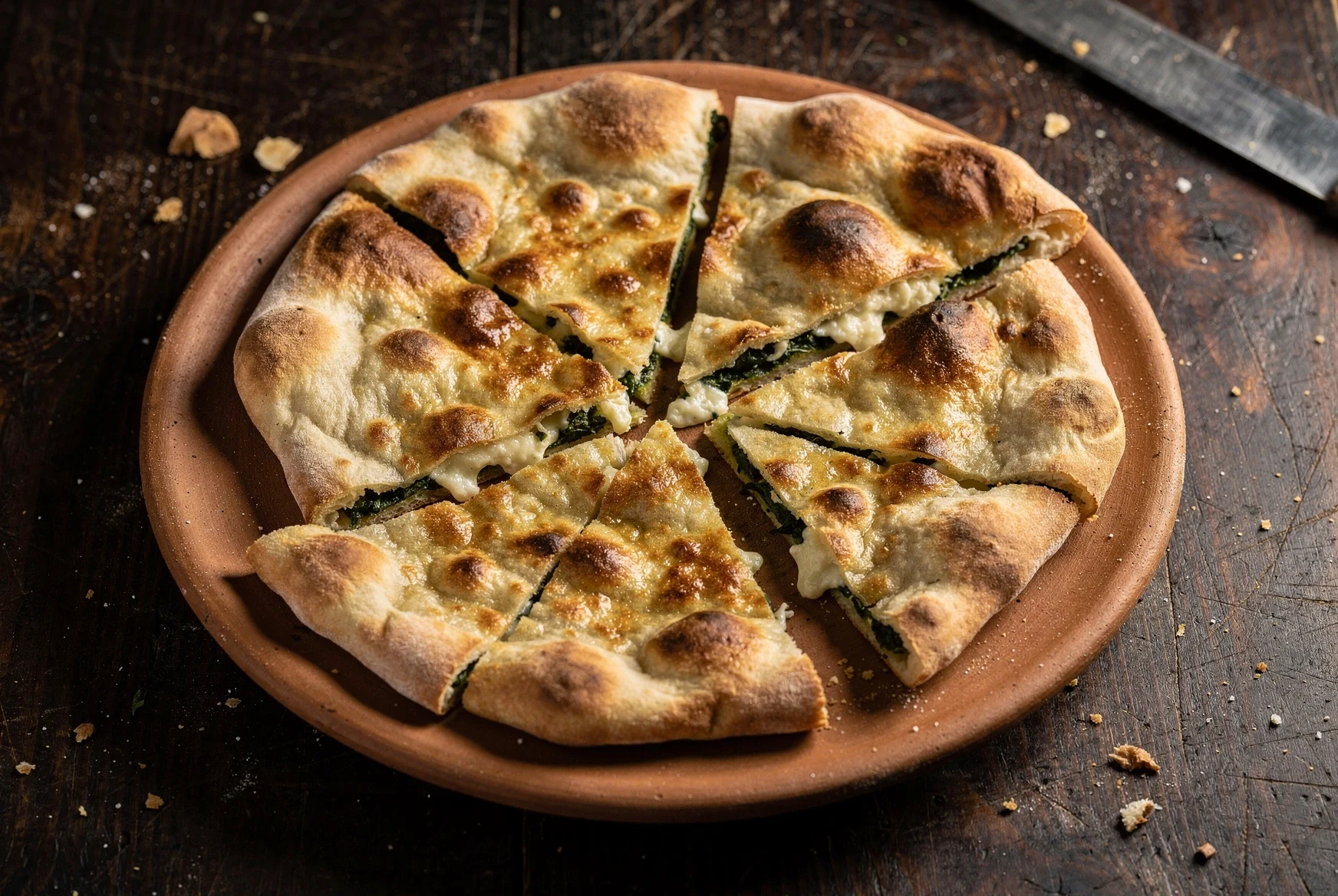
Pkhlovani is what happens when mountain bread logic meets spring greens and good cheese. It comes from Svaneti, where people have never had much patience for food that looks impressive but fails to keep you full. The dough is thin, the filling is generous, and the point is balance: enough greens to taste like more than melted cheese, enough cheese to keep it rich, and enough bread to hold everything together without taking over.
If you already know Georgian bread through imeretian khachapuri or khabidzgina, pkhlovani makes immediate sense. It belongs to the same family of filled flatbreads, but the mood is different. It is greener, lighter on the stomach, and more obviously tied to a place where wild herbs, nettles, beet greens, and field spinach have always mattered. A bad version tastes like spinach pizza trapped in the wrong dough. A good version tastes unmistakably Georgian.
Pkhlovani Quick Facts
- Region: Svaneti, especially upper mountain households and bakeries
- What it is: Thin stuffed bread filled with greens and cheese
- Closest relatives: Khachapuri and khabidzgina, but greener and more herb-driven
- Best greens: Spinach plus chard or beet greens, or a mixed bundle if you have it
- Best cheese: Sulguni, imeruli, or a mix
- Main mistake: Wet filling, which turns the center gummy and blows out the dough
What Pkhlovani Actually Is
Pkhlovani is often described as a spinach khachapuri, which is not completely wrong but still undersells it. Khachapuri is the giant umbrella. Pkhlovani is one of the mountain expressions underneath it: a round bread stuffed with chopped greens, herbs, and cheese, then baked or pan-cooked until the outside blisters and the inside turns soft, savory, and faintly springy from the melted cheese.
The name comes from pkhali, the word Georgians use for greens or leafy vegetable preparations in a broad sense. That does not mean the filling is the same as pkhali with walnuts. It is not. There are no ground walnuts here. The filling is simpler and more direct: greens cooked down hard enough to lose their water, mixed with cheese and herbs, then sealed in dough while still compact and controllable.
What Makes a Good Pkhlovani
The best pkhlovani has three things going for it at once. First, the dough is thin enough that the filling is the story. Second, the greens taste cooked and concentrated, not watery and raw. Third, the cheese is present but not so dominant that the whole bread turns into generic spinach-cheese mush. This is not the place for giant air pockets or a dramatic cheese pull worthy of social media. It is supposed to eat like a real bread from a serious food culture, not a stunt.
That is where a lot of English-language recipes miss the mark. They either underfill it because they are scared of tearing the dough, or they leave too much moisture in the greens, or they treat it like stuffed pita. The Georgian instinct is more confident: pack the filling, seal it, rest it briefly, then flatten it carefully so the bread becomes almost one even thickness from center to edge.
The Right Greens and Cheese
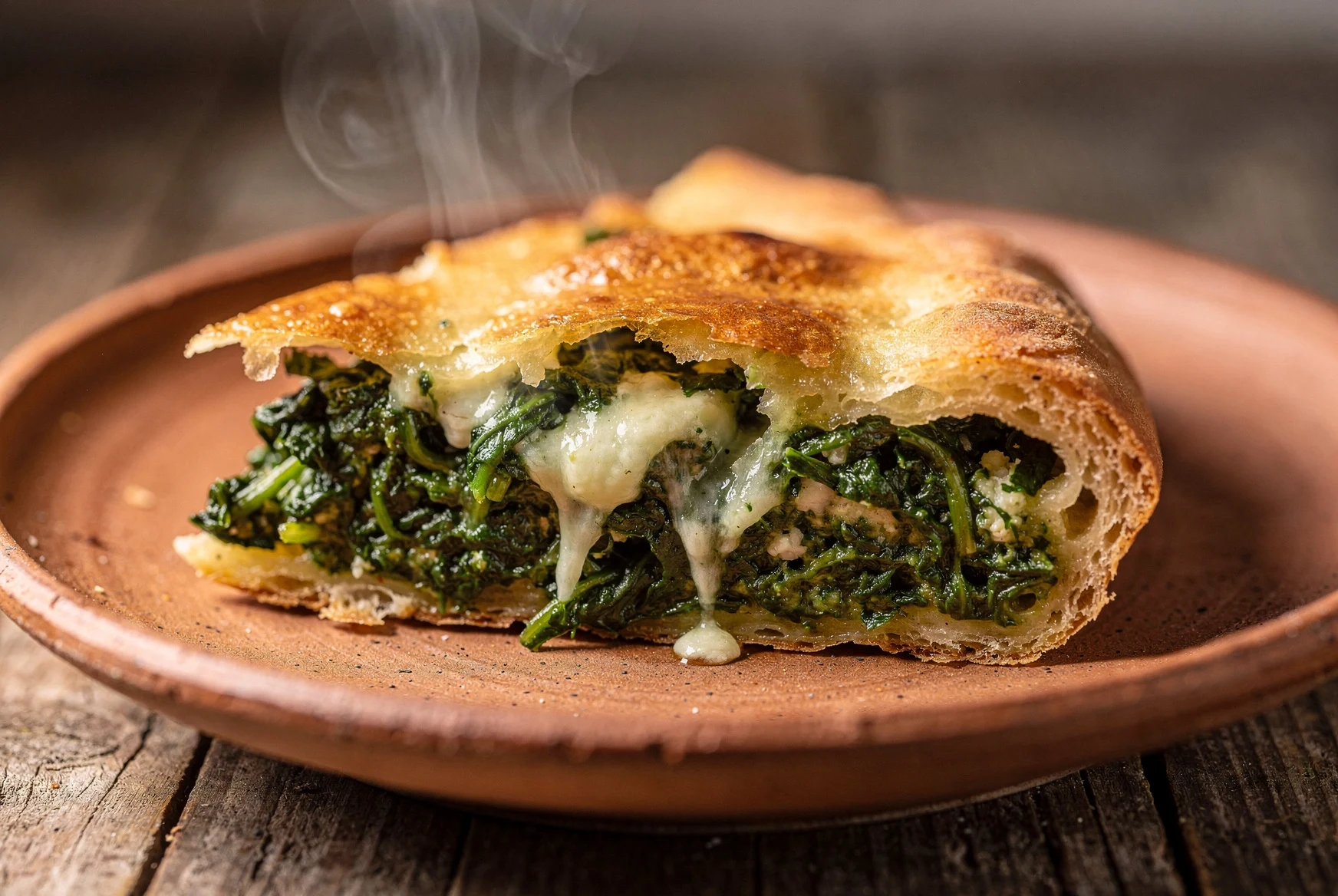
If you are cooking in Georgia, you use what is good and available: spinach, chard, beet greens, young nettles, wild herbs, or a mix. Outside Georgia, the easiest reliable version is mostly spinach with some Swiss chard or beet greens for backbone. Pure spinach works, but mixed greens taste more like an actual mountain filling and less like freezer-aisle spinach pie.
For cheese, sulguni is ideal because it melts well and has the right salty pull. Imeruli softens it and makes the filling slightly creamier. A half-and-half blend is excellent. Feta on its own is too sharp and crumbly. Mozzarella on its own is too bland and too elastic in the wrong way. If you absolutely cannot get Georgian cheese, use low-moisture mozzarella plus a smaller amount of feta, but go in knowing it is a workaround, not a triumph.
| Ingredient choice | Best option | Why |
|---|---|---|
| Greens | Spinach + chard or beet greens | Better flavor and structure than spinach alone |
| Cheese | Sulguni + imeruli | Balanced salt, melt, and softness |
| Herbs | Dill, cilantro, optional mint | Keeps the filling recognizably Georgian rather than generic |
| Spice | Ground coriander, optional blue fenugreek | Adds depth without overwhelming the greens |
Salt the filling last
Sulguni varies wildly. Some batches barely need help, some are salty enough already. Mix the greens, cheese, and herbs first, then taste a little before adding any extra salt.
The Dough Should Be Soft, Not Heroic
Pkhlovani dough is not supposed to be tough or lofty. Think soft, smooth, and easy to stretch. You want enough gluten to flatten the filled bread without tearing, but not a crusty bakery dough that fights back. Bread flour gives you a little more security. Plain flour works too if you knead it properly and give it time to relax.
The dough-to-filling ratio matters more than people think. If you use too much dough, the bread tastes heavy and bready in the dull way, like the cook got nervous halfway through. If you use too little dough before you know what you are doing, it splits. The sweet spot is a soft dough ball sealed around a generous mound of filling, then flattened until the final round is only lightly thicker than a standard skillet flatbread.
How to Make the Filling Properly
The filling is where this recipe either works or quietly falls apart. Start by softening finely diced onion in butter or sunflower oil until sweet and translucent, not browned. Add the washed greens and cook them down just until wilted and most of their water has evaporated. Then cool them. Then squeeze or press out the remaining moisture. Then chop them. If that sounds repetitive, good. Moisture is the enemy here.
Once the greens are properly dry, mix them with the grated or crumbled cheese, dill, cilantro, a little mint if you like, black pepper, and a small amount of ground coriander. Blue fenugreek helps if you have it, but do not force a fake version with too much regular fenugreek seed. That turns bitter fast and drags the bread in the wrong direction.
Correct filling texture
Compact, cool, and scoopable. It should hold together in your hand without dripping or spreading.
Wrong filling texture
Loose, wet, and shiny. If it looks like it needs a spoon, it is too wet for stuffing bread.
How to Shape and Seal It Without Ruining It
After the dough rises, divide it into two balls and let them relax for a few minutes if they feel tight. Flatten one into a disk, mound the filling in the center, then pull the edges up around it the same way you would when shaping khinkali, except less precious. Pinch the top shut, trim any very thick knob of dough if needed, then turn the parcel seam-side down.
Now the important part: do not attack it with a rolling pin straight away. Let it sit for five minutes so the gluten calms down. Then press from the center outward with your hands, rotating as you go, until the bread is about 22 to 24 centimeters wide. If you feel a thin spot forming, stop pressing there and move elsewhere. Georgian cooks do this by instinct. The only real secret is patience.
| Problem | What caused it | Fix |
|---|---|---|
| Dough tearing while shaping | Too much filling or dough not rested | Let it rest 5 minutes and flatten more gently |
| Center turns gummy | Filling too wet | Cook greens longer next time and squeeze them dry |
| Bread tastes too heavy | Too much dough or not flattened enough | Aim for a thinner final round |
| Filling leaks in oven | Bad seal or overfilled weak spot | Patch with a pinch of dough and keep going |
Baking vs Pan-Cooking
A very hot oven with a stone, steel, or preheated tray gives the best version at home. You get quick blistering and a drier exterior before the filling has time to steam itself soggy. Heat the oven to 250°C if it will go there. Bake the bread for 8 to 10 minutes until it takes color in spots and the underside firms up.
That said, a heavy dry skillet works better than people expect and feels closer to old-school household cooking. Cook over medium heat, covered for part of the time if your dough is on the thicker side, until both sides are browned and the center no longer feels doughy. If you pan-cook it, keep the heat moderate. Burned spots plus a raw center is a stupid outcome and an easy one to avoid.
How to Serve It
Pkhlovani is best hot or very warm, cut into wedges or rough pieces, with tea, matsoni, or nothing at all. It makes perfect sense next to a bowl of soup, but it is substantial enough to be lunch by itself. In Svaneti, this kind of bread belongs naturally on a table with other serious food rather than as a neat little side. Treat it that way.
If you want to build a proper Georgian spread around it, pair it with lobio, pkhali, pickles, and maybe a simple tomato-cucumber salad. It also fits naturally into the mountain side of the cuisine alongside kubdari and chvishtari, though those are much heavier company.
Best with
Black tea, matsoni, lobio, pickles, and a cold tomato salad. Keep the accompaniments simple and sharp.
Not ideal with
Heavy sauces or too many rich breads at once. Pkhlovani already does enough work on its own.
Common Mistakes
Using watery spinach straight from the pan
That moisture has nowhere good to go once the bread is sealed. The center turns pasty and the dough tears more easily.
Overloading it with cheese
It should still taste like greens bread, not like spinach got lost inside khachapuri.
Keeping the dough too thick
That gives you a bready edge and a dull center. Pkhlovani should be filling-forward.
Treating it like a health-food flatbread
This is still Georgian bread. It wants proper cheese, enough seasoning, and enough dough to feel satisfying.
Useful Variations
The classic version is greens plus cheese, but there is room for small household moves.
Spring version
Use young nettles with spinach and a little mint. This tastes the most mountain and the least supermarket.
More cheese-forward version
Increase sulguni slightly, but keep enough greens that the filling still has depth and color.
Skillet version
Best for people without a stone or high-powered oven. Keep the rounds slightly smaller so they are easier to turn.
Mixed herb version
Add a little parsley or green onion, but do not let the filling drift into random herb pie territory.
Where Pkhlovani Fits in Georgian Food
Pkhlovani matters because it shows something central about Georgian food that lazy summaries miss. This is not a cuisine built only on meat and molten cheese excess. It is also a cuisine that knows what to do with greens, herbs, cultured dairy, and dough in combinations that feel practical rather than fussy. Svaneti in particular understands how to make filling food without wasting motion.
It also belongs in the same conversation as the broader Georgian bread tradition and the country's unexpectedly strong vegetarian side. If khachapuri is the headline and kubdari is the mountain flex, pkhlovani is the quieter bread that people who actually know the table tend to rate highly.
Pkhlovani FAQ
Can I use frozen spinach?
Yes, but thaw it fully and squeeze it dry with real aggression. Frozen spinach carries far more water than you think.
Is pkhlovani always made with spinach?
No. Mixed greens are common and often better. Spinach is simply the easiest version to reproduce outside Georgia.
Can I make the filling ahead?
Yes. Make it up to a day ahead and keep it chilled. Just bring it closer to room temperature before stuffing the dough so it spreads more evenly.
Is it supposed to be as cheesy as khachapuri?
No. Cheese matters, but pkhlovani should still taste distinctly of greens and herbs.
What is the best cheese substitute outside Georgia?
A mix of low-moisture mozzarella and feta is the least bad workaround. Sulguni or imeruli is still much better if you can find it.
Written by The Georgian Eats Team
Pkhlovani is one of those Georgian breads that rewards people who care about ratio and restraint. We have eaten versions in mountain guesthouses, city bakeries, and home kitchens, and the memorable ones all understood the same point: thin dough, properly dried greens, and enough cheese to support the filling rather than bury it.
Last updated: March 2026.
Related Articles
Khabidzgina
Another mountain stuffed bread, this time with potato and cheese doing the heavy work.
Pkhali
A different Georgian greens tradition entirely: vegetables bound with walnut paste and served cold.
Georgian Bread Guide
The wider bread map, from tone-baked classics to regional stuffed flatbreads like this one.
Vegetarian & Vegan Guide
Why Georgian food gets far more interesting once you stop assuming it is all meat and khachapuri.