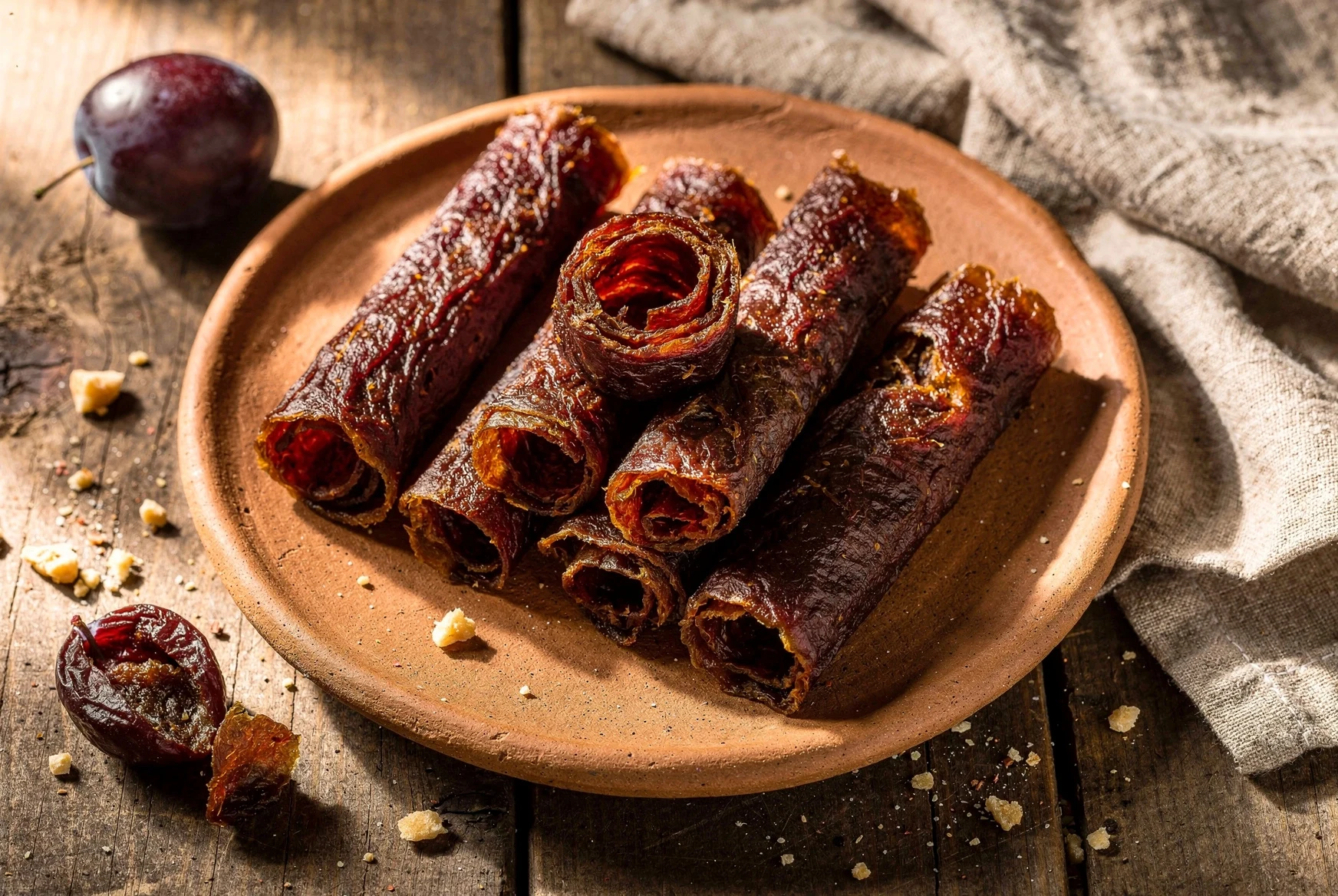
Tklapi is one of those Georgian pantry things that makes perfect sense the second you use it and sounds slightly unhinged before that. It is fruit leather, yes, but not the lunchbox candy version. The classic form is sour plum puree cooked down, spread thin, and dried into flexible sheets that can be rolled, stacked, torn, and dropped into food whenever a dish needs acid. If tkemali is the fresh, spoonable answer to sour plums, tklapi is the shelf-stable, winter-proof one.
In Georgia you see it at bazaars rolled into dark glossy scrolls, sometimes almost black, sometimes brick red, sometimes a dusty purple depending on the fruit. Sour plum is the standard and the most useful version for cooking. Grape, cherry plum, cornelian cherry, apricot, mulberry, and other fruit versions exist too, but when Georgians talk about tklapi in serious savory cooking, they usually mean the tart plum kind that ends up in kharcho, chakapuli, and other dishes that need sourness without extra liquid.
Tklapi Quick Facts
- Georgian name: ტყლაპი (tklapi)
- What it is: Dried fruit leather, usually made from sour plums
- Main job: Souring agent for soups and stews, plus a sharp snack
- Texture target: Dry to the touch but bendable, not brittle
- Best fruit: Sour cherry plums or other tart plums
- Storage: Cool, dry cupboard for months
What Tklapi Actually Is
The easiest way to understand tklapi is this: it is preserved acidity. Before Georgia had supermarket bottles of sauce lined up year-round, households had to trap seasonality and make it last. Sour plum season is brief. Winter is long. Drying cooked fruit puree into sheets solved the problem elegantly. You get concentrated tart fruit that stores well, takes little space, and can be rehydrated directly in the pot.
That practical logic is why tklapi matters more than a cute "traditional snack" label suggests. A strip of sour plum leather can do work that lemon juice, vinegar, tomato, and bottled sauce do less elegantly. It adds sourness, fruit depth, a little body, and none of the watery looseness you get from pouring in liquid. In a dish like kharcho, that matters. The broth stays rich. The flavor gets sharper. Nothing feels diluted.
Good tklapi should taste bluntly tart, fruity, slightly savory, and clean. If it tastes sugary and jammy, that is a different product. Not necessarily bad, but not the one you want for proper Georgian savory cooking.
The Best Fruit to Use
Sour cherry plums are the gold standard. In Georgia these are often just called tkemali plums, and they can be green, yellow, or red depending on the stage and variety. What matters is not the color so much as the acidity. You want fruit that makes your jaw tense a little when you taste it raw. That is the correct direction.
If you live outside Georgia and cannot get true cherry plums, use the sourest plums you can find. Greengages that have not fully softened can work. Small underripe purple plums can work. Damsons can work. Even very tart apricots or cornelian cherries can become good tklapi, but for the classic savory sheet used in Georgian cooking, plums still win.
| Fruit | How well it works | Best use |
|---|---|---|
| Sour cherry plums | Ideal | Classic tklapi for kharcho, chakapuli, and soups |
| Half-ripe tart plums | Very good | Best substitute outside Georgia |
| Damsons | Good | Strongly flavored, dark, cooking-friendly sheets |
| Cornelian cherries | Good but different | Sharper, more niche fruit leather |
| Sweet ripe dessert plums | Weak choice | More snack leather than real souring tklapi |
Do not oversweeten it
A lot of fruit leather recipes online treat all fruit the same and push sugar hard. That misses the whole point here. Classic plum tklapi should lean tart and useful. If you need sugar at all, add just enough to calm aggressive fruit, not enough to turn it into candy.
Ingredients
The ingredient list looks almost insultingly simple because the technique is doing most of the work. This is preserved fruit, not a spiced sauce. Leave the cinnamon, clove, and vanilla somewhere else.
| Ingredient | Amount | Why it matters |
|---|---|---|
| Sour plums | 2 kg | The entire flavor base; tart fruit gives proper Georgian character |
| Water | 120-180 ml | Just enough to stop scorching before the fruit releases juice |
| Salt | Optional pinch | Helps a savory batch taste more purposeful in soups and stews |
| Sugar | Optional 1-2 tbsp | Only for very aggressive fruit or a more snackable batch |
Equipment and Drying Options
Traditionally, tklapi is spread on cloth or boards and dried in the sun. If you live somewhere hot and dry, great — that still works. Most people outside Georgia will use a low oven or dehydrator. Both are fine. The important part is gentle drying and a surface that lets you peel the finished sheet off without tears and profanity.
Best tools
Wide pot, sieve or food mill, offset spatula, parchment or silicone mats, sheet pans.
Best drying method
Sun if the weather is reliable, dehydrator if you have one, low oven if you do not. All three can produce good tklapi.
How to Make Tklapi Step by Step
Step 1: Cook the fruit down
Wash the plums and throw out any with mold, deep bruising, or fermentation funk. Put the good fruit in a wide pot with a very small amount of water — just enough to coat the bottom. Set over medium heat and stir regularly. After 10 minutes the fruit will slump, the skins will wrinkle, and the pot will start looking like a thick tart swamp. Keep going until the flesh fully breaks down and the pits separate easily, usually 20 to 30 minutes total.
Step 2: Remove skins and pits
This is the messiest part and also the one that determines your final texture. Push the hot fruit through a food mill, colander, or sturdy sieve. You want smooth puree, not rustic chunks. Tklapi with skin shards and pit fragments is a bad time. If the puree seems too thick to move through the sieve, do not dump in lots of water. Work patiently. The point is concentration.
Step 3: Tighten the puree
Return the strained puree to the pot and simmer it again for 10 to 15 minutes, stirring often, until it thickens to something like loose ketchup or a slightly thinner tomato paste. This second reduction matters because watery puree dries badly and gives you sticky weak sheets. Add a small pinch of salt if you want a savory batch. If the fruit is almost weaponized in its sourness, you can add a spoon or two of sugar — but only if it needs it.
Step 4: Spread it thin
Lightly grease parchment or silicone mats. Pour the puree out and spread it to about 2 to 3 millimeters thick. Thicker than that and it takes forever to dry and may stay tacky in the middle. Thinner than that and it can become brittle at the edges before the center catches up. Slight imperfections are fine. Museum-level geometry is not required.
Step 5: Dry it gently
If you are sun-drying, put the trays somewhere hot, dry, and well-ventilated, protected from bugs and dust. Depending on weather, it may take one to three days. Rotate as needed. In a dehydrator, dry at around 57°C / 135°F until the sheet is no longer wet but still flexible. In an oven, use the lowest setting you have, ideally with the door slightly cracked, and expect several hours. However you do it, stop before it turns brittle like old plastic.
Step 6: Peel, roll, and store
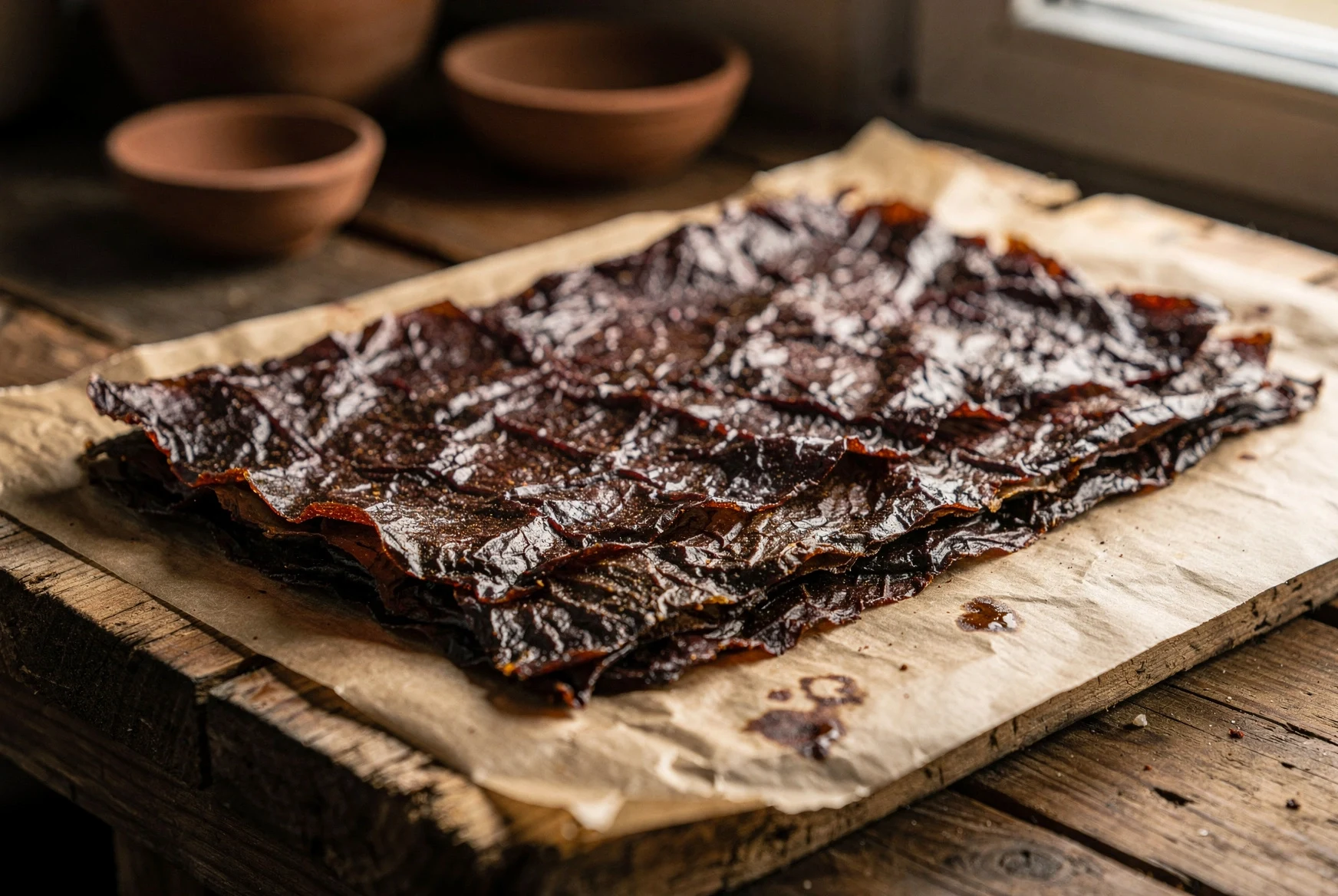
When finished, the sheet should peel away cleanly, feel dry to the touch, and bend without cracking. Cut it into strips, stack it with parchment between layers, or roll it up. Store in a cool dry place. If your climate is humid, the fridge is safer, but wrap it well so it does not absorb every smell in there.
How to Know It Is Done
Underdried tklapi feels tacky and smears a little when you touch it. Overdried tklapi cracks instead of bending. The sweet spot is somewhere in the middle: it should feel leathery, not sticky, and fold without snapping. If you roll it and it glues itself together like fruit cement, it needs longer. If it shatters like autumn leaves, you went too far.
Weather matters more than people admit
Traditional sun-drying works beautifully in hot, dry weather and annoyingly badly in humid weather. If the air is heavy and the fruit refuses to set, stop pretending it is rustic and move the trays to a dehydrator or very low oven.
How Georgians Actually Use Tklapi
The glamorous answer is that tklapi is ancient, clever, and deeply tied to the Georgian pantry. The practical answer is that you tear a piece off and drop it into something that needs sourness. It shows up most famously in kharcho, where it gives beef, walnuts, and spices that unmistakable tart backbone. It also works in chakapuli, and in some households it stands in for tkemali whenever someone wants sour plum flavor without reaching for a jar of sauce.
People also eat it as is. This makes more sense than it sounds. A good strip of sour plum tklapi is tart, chewy, and weirdly addictive, especially if you grew up with it. Think less dessert and more edible pantry concentrate that happens to double as a snack.
| Use | How much | Why use tklapi instead of something else |
|---|---|---|
| Kharcho | 1-2 small strips | Adds sour plum depth without watering down the soup |
| Chakapuli | Small torn pieces | Useful when fresh sour plums are out of season |
| Quick sauce base | Rehydrate to taste | Lets you rebuild a tart plum sauce from the cupboard |
| Snack | As much as you can handle | Sharp, chewy, and better than it sounds to outsiders |
Common Mistakes
| Mistake | What goes wrong | Fix |
|---|---|---|
| Using sweet soft plums | The finished sheet tastes flat and snacky rather than sharp and useful | Start with tart fruit, even if it is less pretty |
| Adding too much water | Drying takes forever and texture stays gummy | Use only enough water to prevent scorching |
| Skipping the straining | You get skin shards and pit debris in the leather | Push the puree through a sieve or food mill properly |
| Spreading too thick | Edges dry, center stays wet | Aim for a thin even 2-3 mm layer |
| Drying until brittle | The sheet cracks instead of rolling | Stop when it bends cleanly and feels dry, not crunchy |
FAQ
Is tklapi sweet or savory?
It can be both, but classic sour plum tklapi used in Georgian cooking leans tart and only lightly sweet, if at all.
Can I use a dehydrator instead of the sun?
Yes, absolutely. It is less romantic and more reliable. Reliability wins.
What if I only want it for kharcho?
Make a strongly tart batch with little or no sugar. That version is the most useful in soups and stews.
Can I just use tkemali sauce instead?
Often yes, and many people do. But tklapi gives a more concentrated sour plum note without adding extra liquid, which is exactly why it survived as a pantry staple.
Written by The Georgian Eats Team
We like Georgian pantry ingredients that do real work, and tklapi is one of the smartest. A strip in the cupboard gives you the kind of sour plum depth that makes heavy food taste more alive.
Last updated: March 2026.
Related Articles
Kharcho
The beef, walnut, and rice soup where tklapi makes the most obvious difference.
Tkemali
The fresh sauce version of the same sour plum logic.
Pickles & Preserves
The broader Georgian preservation tradition that made tklapi inevitable.
Chakapuli
Another sour-driven Georgian classic where plum acidity matters.