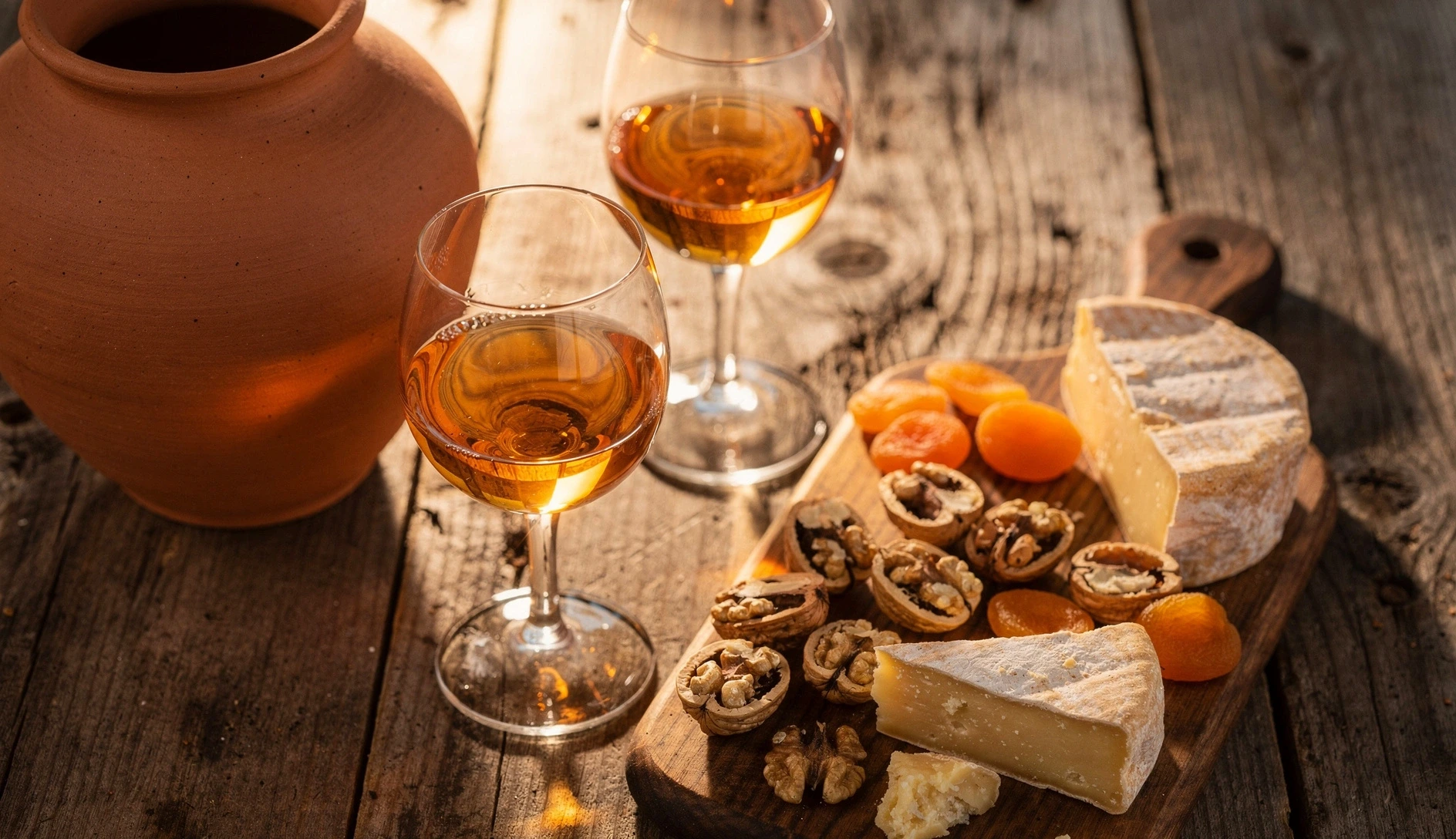
You've probably seen "orange wine" on a trendy wine bar menu and wondered what you'd be getting yourself into. Here's the short version: amber wine is white wine made like red wine — the grape skins stay in the juice for weeks or months, which turns the wine golden, adds tannins, and creates a flavor profile that doesn't fit neatly into any category you already know. Georgia has been making it this way for roughly 8,000 years. The rest of the world discovered it about a decade ago.
This guide covers what amber wine actually tastes like (because "complex" isn't helpful), which grape varieties make the best ones, what to eat alongside it (spoiler: Georgian food is basically engineered for amber wine), and how to navigate buying your first bottle without getting something that tastes like cider vinegar.
What Is Amber Wine, Actually?
Normal white wine: you crush white grapes, immediately separate the juice from the skins, and ferment the clear juice. The result is pale, crisp, and light.
Amber wine: you crush white grapes but leave the skins, seeds, and sometimes stems in the juice for an extended period — anywhere from a few days to six months or more. The skins release tannins, phenolic compounds, and pigments into the wine. The result is golden to deep amber in color, with a tannic structure you'd normally associate with reds, and a flavor complexity that sits in its own universe.
In Georgia, this extended skin contact traditionally happens inside a qvevri — a large egg-shaped clay vessel buried in the ground. The grapes go in whole or lightly crushed, the vessel is sealed with a stone lid and beeswax, and the earth provides natural temperature regulation at around 14–15°C. After three to six months, the lid comes off, the wine is separated from the skins (which have settled to the bottom), and you have amber wine.
That's the traditional method. Today, some Georgian producers use stainless steel tanks or oak barrels for skin contact, and winemakers in Italy, Slovenia, France, and elsewhere make their own versions. But Georgia remains the reference point — this is where the technique originated and where it's practiced most extensively.
The "fourth color" of wine
Wine traditionally comes in three colors: red, white, and rosé. Amber wine is increasingly recognized as a fourth category — distinct in production method, flavor profile, and food pairing potential. Georgia's National Wine Agency formally adopted the term "amber" in 2013 to distinguish traditional skin-contact whites from conventional white wine.
Why Georgians Say "Amber," Not "Orange"
Walk into a wine shop in Tbilisi and ask for "orange wine." You'll get a polite correction. Georgian winemakers and the National Wine Agency deliberately chose "amber" (ქარვისფერი, karvisperi) as the official term in 2013, and the reasoning is practical:
- "Orange" implies citrus. There's nothing citrusy about these wines. The term misleads newcomers into expecting something fruity and light when the reality is tannic, savory, and structured.
- "Amber" describes the actual color. Hold a glass up to the light — it's gold, honey, amber. Not orange. The name matches what you see.
- Cultural identity. "Orange wine" is a marketing term coined by a British wine writer (David A. Harvey) in 2004. Georgia has been making these wines for millennia and wanted terminology that reflected the tradition rather than a recent rebrand.
In practice, both terms refer to the same thing: white wine made with extended skin contact. "Orange wine" dominates in Western wine bars and retail. "Amber wine" is what you'll see on Georgian labels and in Georgian wine shops. Neither is wrong, but if you're drinking Georgian, call it amber.
What Does Amber Wine Actually Taste Like?
This is where most guides fail you by listing "dried apricot, honey, tea, and spice" and calling it a day. Amber wine is genuinely hard to describe because your brain doesn't have an existing category for it. It's not white wine with extra color. It's something else entirely. Here's what to actually expect:
The first sip is confusing. Your mouth expects white wine behavior — crisp acidity, clean finish, gone. Instead you get grip. Tannins. A drying sensation on your tongue and the inside of your cheeks. The wine has texture and weight you'd associate with a medium-bodied red.
The flavor sits between categories. You'll notice dried stone fruit (apricot, peach), honey, chamomile tea, sometimes a hint of walnut or hazelnut. There's often a savory, almost brothy quality — think dried herbs or a faint earthiness. Some bottles have a floral top note. Others lean more toward dried fruit and spice. There is no single "amber wine flavor" — the grape variety, maceration time, and winemaker's hand create enormous variation.
The finish is long. Much longer than a typical white. The tannins keep the wine present on your palate. A good amber wine lingers for 30–60 seconds after swallowing — a trait usually reserved for quality reds.
| Characteristic | White Wine | Amber Wine | Red Wine |
|---|---|---|---|
| Color | Pale yellow to straw | Gold to deep amber | Ruby to garnet |
| Tannins | None to negligible | Low to medium | Medium to high |
| Body | Light to medium | Medium to full | Medium to full |
| Skin Contact | None | Days to 6+ months | 1–4 weeks |
| Serving Temp | 6–10°C (cold) | 12–15°C (cool) | 16–18°C (room temp) |
| Finish | Short to medium | Medium to long | Medium to long |
| Primary Flavors | Citrus, green fruit, floral | Dried fruit, honey, tea, herbs | Dark fruit, spice, earthy |
The Best Grape Varieties for Amber Wine
Georgia has over 525 indigenous grape varieties, but only a handful produce the amber wines you'll actually find in bottles. Each grape gives a noticeably different character. Here's what to look for on labels:
Rkatsiteli
Most common • Kakheti
Georgia's workhorse white grape. Makes the amber wine you'll encounter most. Expect honey, baked apple, dried apricot, and a firm tannic backbone. Pronounced "rah-kah-tsee-TEL-ee." The name means "red stem" in Georgian — check the vine and you'll see why.
Mtsvane
Aromatic • Kakheti
More aromatic and floral than Rkatsiteli, with notes of chamomile, white peach, and dried herbs. Often blended with Rkatsiteli (the classic Kakhetian blend) but stunning on its own. "Mtsvane" means "green" — as in the green berry color.
Kisi
Elegant • Kakheti
Produces some of the most refined Georgian ambers. Think dried flowers, quince, candied orange peel, and soft tannins. More delicate than Rkatsiteli. A Kisi amber is often the gateway wine for people who find Rkatsiteli too austere.
Khikhvi
Rare • Kakheti
A grape that nearly went extinct but has been revived by small producers. Light amber color, with lemongrass, honey, chamomile, and green apple. Generally lighter and more approachable than Rkatsiteli. Worth seeking out for something different.
Tsitska
Western style • Imereti
From western Georgia's Imereti region, where skin contact is shorter (weeks, not months). Produces lighter, more acidic ambers with citrus, green pear, and mineral notes. The Imeretian approach gives a subtler, more "beginner-friendly" amber.
Tsolikouri
Versatile • Western Georgia
Another western variety, often with shorter skin contact. Floral and herbal, with white flower, fresh hay, and stone fruit notes. Can make both conventional whites and lighter-style ambers. Look for Baia's Wine for an excellent example.
Rkatsiteli deserves its own page
Amber wine is a style. Rkatsiteli is the grape that defines that style for a lot of drinkers. If you want the dry-white version, the qvevri version, and the bottle-buying logic in one place, read the dedicated Rkatsiteli guide.
Kakhetian vs. Imeretian amber
The two main styles come from eastern and western Georgia. Kakhetian amber uses full skin contact (3–6 months) with seeds, skins, and sometimes stems — producing deeper color, more tannin, and bigger body. Imeretian amber uses shorter skin contact (a few weeks) without stems and seeds — producing lighter, more delicate wines. Think of it as the difference between a full-bodied Barolo and a lighter Pinot Noir. For a detailed breakdown of these methods, see our qvevri winemaking guide.
Food Pairing: Why Amber Wine and Georgian Food Are Perfect Together
There's a reason Georgian cuisine evolved alongside amber wine for thousands of years — they're built for each other. Georgian food is heavy on walnuts, herbs, garlic, tangy sauces, and salty cheese. Amber wine's tannins, acidity, and savory character handle all of this effortlessly, in ways that neither white nor red wine can match.
The basic principles are simple:
- Match intensity with intensity. Amber wines are bold. They need food that pushes back. A delicate salad will get bulldozed.
- Tannins love fat and salt. Rich cheese, walnut paste, oily eggplant — the fat softens the tannins, the wine cuts through the richness. It's a feedback loop of deliciousness.
- Savory over sweet. Amber wine is inherently savory. Sweet dishes clash. Stick to the salty, herby, garlicky end of the spectrum.
- Acidity loves acid. Tkemali, satsebeli, pomegranate — Georgian food's bright acidic sauces play beautifully with amber wine's own acidity.
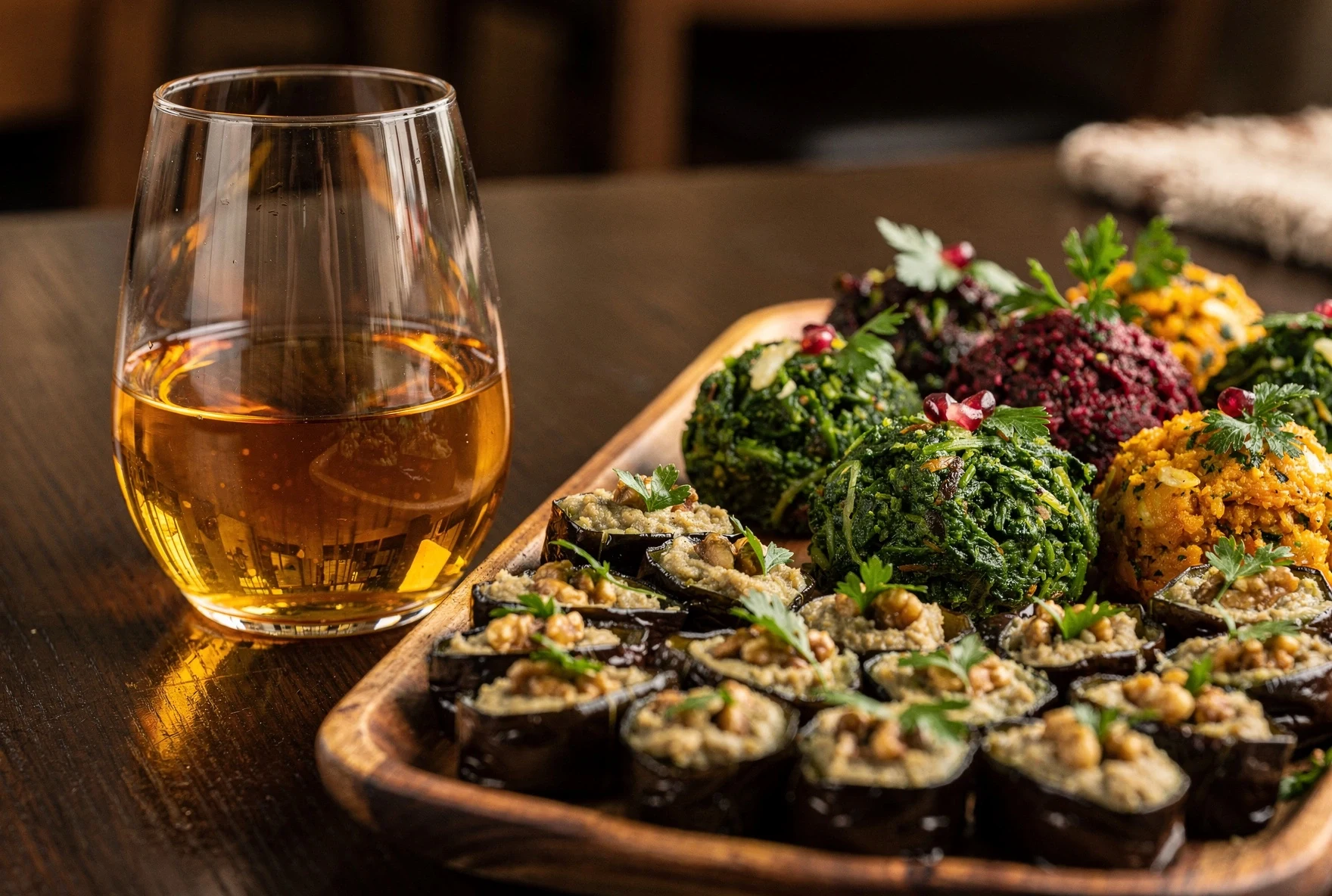
| Georgian Dish | Why It Works | Best Amber Style |
|---|---|---|
| Badrijani Nigvzit | Walnut paste echoes the nutty notes in the wine. Eggplant's oiliness softens tannins. | Rkatsiteli or Kisi |
| Adjarian Khachapuri | Melted cheese, egg, butter — pure richness. Tannins cut through. Acidity balances the salt. | Full Kakhetian style |
| Pkhali | Herbed walnut paste meets the wine's herbal, nutty undertones. Textbook pairing. | Mtsvane or Kisi |
| Lobio | Earthy beans, walnut, and fenugreek match the wine's earthy, savory character. | Rkatsiteli |
| Satsivi | Cold walnut sauce is practically designed for amber wine. The wine's tannins mirror the sauce's texture. | Full Kakhetian style |
| Khinkali | Spiced meat and broth. The coriander and garlic inside amplify the wine's spice notes. | Rkatsiteli or Mtsvane blend |
| Chicken Tabaka | Crispy skin, garlic sauce — the wine handles both the fat and the garlic punch. | Kisi or lighter Imeretian |
| Gebzhalia | Tangy mint-matsoni sauce and fresh cheese — high acidity meets high acidity. Refreshing. | Tsitska or Tsolikouri |
Beyond Georgian food
Amber wine pairs brilliantly with cuisines that share Georgian food's flavor building blocks. Try it with: Indian curry (spice + tannin is magic), Moroccan tagine (dried fruit + savory), Japanese ramen (umami + richness), aged hard cheeses (Parmesan, Manchego), charcuterie, or mushroom risotto. The rule is simple: if the dish is too bold for white wine and too light for red, amber wine is probably your answer.
How to Drink Amber Wine (Practical Tips)
Amber wine has more in common with red wine than white when it comes to drinking logistics. Here's what actually matters:
🌡️ Temperature
Serve at 12–15°C. Not fridge-cold (kills the aromatics), not room temperature (amplifies alcohol). If it's been in the fridge, take it out 15–20 minutes before pouring. If it's at room temp, give it 20 minutes in the fridge.
🍷 Glassware
Use a wider-bowled glass than you would for white wine — something between a white and red wine glass. The wider opening lets the complex aromatics develop. A standard Burgundy glass works well. Avoid narrow flutes or tumblers.
⏱️ Decanting
Full-bodied Kakhetian ambers benefit from 15–30 minutes of air before drinking. Pour into a decanter or just let it sit in the glass. The tannins soften and the aromatic complexity opens up significantly. Lighter Imeretian styles don't need it.
📦 Storage
Treat it like red wine. Store on its side in a cool, dark place. Good amber wine ages well — serious bottles improve over 5–10 years. Once opened, re-cork and it keeps 3–5 days (the tannins protect it better than conventional whites).
The sediment is normal
Many Georgian amber wines, especially natural/unfiltered ones, have visible sediment at the bottom of the bottle. This is not a flaw — it's phenolic compounds and dead yeast from the extended skin contact. Don't shake the bottle. Pour gently, and if you're bothered by it, decant carefully. The sediment is harmless and some wine nerds consider it a sign of authenticity.
Buying Your First Bottle: What to Look For
Walking into a Georgian wine shop (or navigating an international retailer's Georgian section) can be overwhelming. Here's how to find a bottle you'll actually enjoy:
| If You Like... | Try This | What to Expect |
|---|---|---|
| Full-bodied reds | Kakhetian Rkatsiteli (6-month maceration) | Deep amber, serious tannins, honey and dried fruit. The "steak wine" of the amber world. |
| Aromatic whites | Kisi or Khikhvi amber | Lighter, more floral, with softer tannins. An elegant bridge from white wine to amber. |
| Light, crisp whites | Imeretian Tsitska or Tsolikouri | Shorter skin contact, lighter color, more acidity. The gentlest entry point into amber. |
| Natural wine | Any qvevri-fermented amber | Spontaneous fermentation, no additives. Georgian amber IS natural wine, before natural wine was a thing. |
| Something adventurous | Mtsvane single-varietal | Aromatic, herbal, complex — chamomile and dried herbs with a tannic grip. Unique among ambers. |
Reading a Georgian Amber Wine Label
Georgian wine labels can be confusing, especially when they're in Georgian script (მხედრული). Here's what to look for:
- ქარვისფერი (karvisperi) — means "amber." This is the key word confirming it's a skin-contact wine.
- ქვევრი (qvevri) — means the wine was fermented in traditional clay vessels, not steel tanks.
- Grape variety — usually printed in both Georgian and English. Rkatsiteli, Mtsvane, Kisi, Khikhvi are the main amber grapes.
- Region — Kakheti (eastern, fuller style) or Imereti (western, lighter style).
- Vintage year — amber wines age well. 2–5 years of age is the sweet spot for most bottles.
Price guide (in Georgia)
In Tbilisi wine shops, expect to pay 15–30 GEL ($6–12) for a solid everyday amber, 30–60 GEL ($12–25) for a quality producer, and 60–150 GEL ($25–60) for premium single-vineyard or aged bottles. Outside Georgia, prices are roughly double. The sweet spot for quality-to-price is the 25–50 GEL range — you'll get genuinely excellent wine without paying collector prices.
Notable Georgian Amber Wine Producers
Georgia has hundreds of wineries, from family garage operations to industrial-scale producers. These are producers consistently making excellent amber wine — the ones worth seeking out whether you're in a Tbilisi wine bar or an international retailer:
Pheasant's Tears
Signagi, Kakheti
Co-founded by American painter John Wurdeman and the late Georgian winemaker Gela Patalishvili. Their Rkatsiteli and Mtsvane ambers are among the most internationally recognized Georgian wines. Their restaurant in Signagi is worth the drive alone.
Iago's Wine
Chardakhi, Kartli
Iago Bitarishvili makes one wine: Chinuri. Just Chinuri. From a single grape, in qvevri, unfiltered. It's a masterclass in restraint and terroir expression. If you want to understand what one grape can do in clay, start here.
Lapati Wines
Kakheti
Small-production, family-run. Their Kisi amber is one of the best expressions of the grape you'll find — floral, complex, and beautifully structured. Limited availability, but worth hunting for.
Baia's Wine
Obcha, Imereti
Sisters Baia and Gvantsa Abuladze make elegant Imeretian-style ambers from Tsolikouri and Tsitska. Lighter, more delicate approach — a great starting point if Kakhetian ambers feel too intense.
Orgo
Telavi, Kakheti
Consistent quality across their range. Their Rkatsiteli amber offers serious complexity at a fair price. Their wine bar in Tbilisi (on Erekle II street) is one of the best places to taste amber wine in the city.
Nikoladzeebis Marani
Imereti
Ramaz Nikoladze is a purist — everything in qvevri, completely natural, minimal intervention. His Tsitska amber is electric with acidity and mineral tension. Not always easy to find, but always worth it.
Where to Taste Amber Wine in Georgia
You can buy amber wine in any supermarket in Georgia (yes, even the Carrefour at East Point mall stocks decent options). But if you want to actually learn what you're drinking and taste the range, here are the best options:
| Place | Location | What to Expect |
|---|---|---|
| Vino Underground | Tbilisi, Galaktion Tabidze St. | The pioneer natural wine bar. Rotating selection of small-producer ambers. Knowledgeable staff. The best first stop in Tbilisi. |
| g.Vino | Tbilisi, Erekle II St. | Restaurant and wine bar with an extensive Georgian wine list. Great food pairings. More polished atmosphere. |
| Wine Factory No. 1 | Tbilisi, Kote Apkhazi St. | Massive multi-producer tasting space. You can sample dozens of ambers from different regions in one visit. |
| Signagi wine cellars | Signagi, Kakheti | Multiple tasting rooms in this hilltop town. Pheasant's Tears restaurant-cellar is the standout. Combine with Alazani Valley views. |
| Kakheti winery tours | Various, east of Tbilisi | Day trips from Tbilisi visit 2–3 family cellars where you see the qvevri, taste from them, and eat a supra-scale lunch. The best way to understand amber wine in context. |
Common Misconceptions About Amber Wine
❌ "It's white wine that's gone bad"
The color comes from intentional skin contact, not oxidation or spoilage. A properly made amber wine is as stable and intentional as any red.
❌ "It's made from oranges"
No citrus involved. It's white grapes, full stop. The "orange" in "orange wine" refers to color, not ingredients. This confusion is exactly why Georgia prefers "amber."
❌ "It's always funky or weird"
Some natural ambers are intentionally wild. But well-made amber wine is approachable, structured, and delicious — not a dare. Choose a quality producer and you'll be surprised how drinkable it is.
❌ "It needs to be drunk young"
The opposite. Amber wine's tannins and phenolic structure give it excellent aging potential. A good Rkatsiteli amber can improve for 10+ years. The tannins soften, complexity deepens.
❌ "It's a new trend"
It's new to Brooklyn wine bars. It's 8,000 years old in Georgia. The "trend" is the Western world finally discovering what Georgia has been doing since the Neolithic period.
❌ "Serve it cold like white wine"
Chilling it to fridge temperature mutes the aromatics and amplifies the tannins — the worst of both worlds. Serve at 12–15°C: cool enough to be refreshing, warm enough for the flavors to express themselves.
Frequently Asked Questions
Is amber wine the same as orange wine?
Yes — they're the same thing. Both refer to white wine made with extended skin contact. "Amber" is the preferred term in Georgia (adopted officially in 2013). "Orange wine" is more common in Western markets. The production method is identical.
Is Georgian amber wine natural wine?
Traditional qvevri-fermented amber wine is naturally made — spontaneous fermentation from wild yeast, no added sulfites, no fining or filtering. It's been "natural wine" for 8,000 years. However, some modern Georgian producers do add small amounts of sulfite for stability, so "natural" depends on the specific producer.
How long does amber wine last once opened?
3–5 days if re-corked and stored in a cool place — longer than most whites, thanks to the tannins providing antioxidant protection. Some robust Kakhetian ambers are fine for up to a week. If you notice it getting vinegary, it's past its best.
Can I cook with amber wine?
Absolutely. Use it anywhere you'd use white wine in cooking, but expect a slightly richer, more complex result. It's excellent for deglazing pans, in risotto, or in chakapuli (which traditionally calls for unfinished young wine). Don't waste an expensive bottle on cooking — an everyday 15 GEL amber works perfectly.
Where can I buy Georgian amber wine outside Georgia?
Georgian wine imports have grown 30%+ year-over-year in major markets. In the US, look for importers like Silk Road Wines, Teliani Valley, or Tbilvino at specialty wine shops. In Europe, Georgian amber is increasingly common in natural wine shops. Online retailers like Vivino and wine-searcher.com can locate specific bottles near you.
Written by The Georgian Eats Team
We've been drinking amber wine from qvevri in Kakheti basements, Tbilisi wine bars, and our own dinner tables for years. This guide reflects actual tasting experience, not wine-industry press releases.
Last updated: February 2026.
Related Articles
Qvevri Wine: Georgia's 8,000-Year-Old Winemaking Method
How the clay vessels work, Kakhetian vs Imeretian methods, and where to see it in person.
Georgian Grape Varieties: 15 Grapes You Need to Know
Tasting notes, food pairings, and what to order for every major Georgian grape.
Georgian Wine Regions: A Complete Guide
Kakheti, Kartli, Imereti, Racha-Lechkhumi — what each region produces and where to visit.
The Georgian Supra: Guide to Georgia's Legendary Feast
The tamada, the toasts, the food — where amber wine truly comes alive.