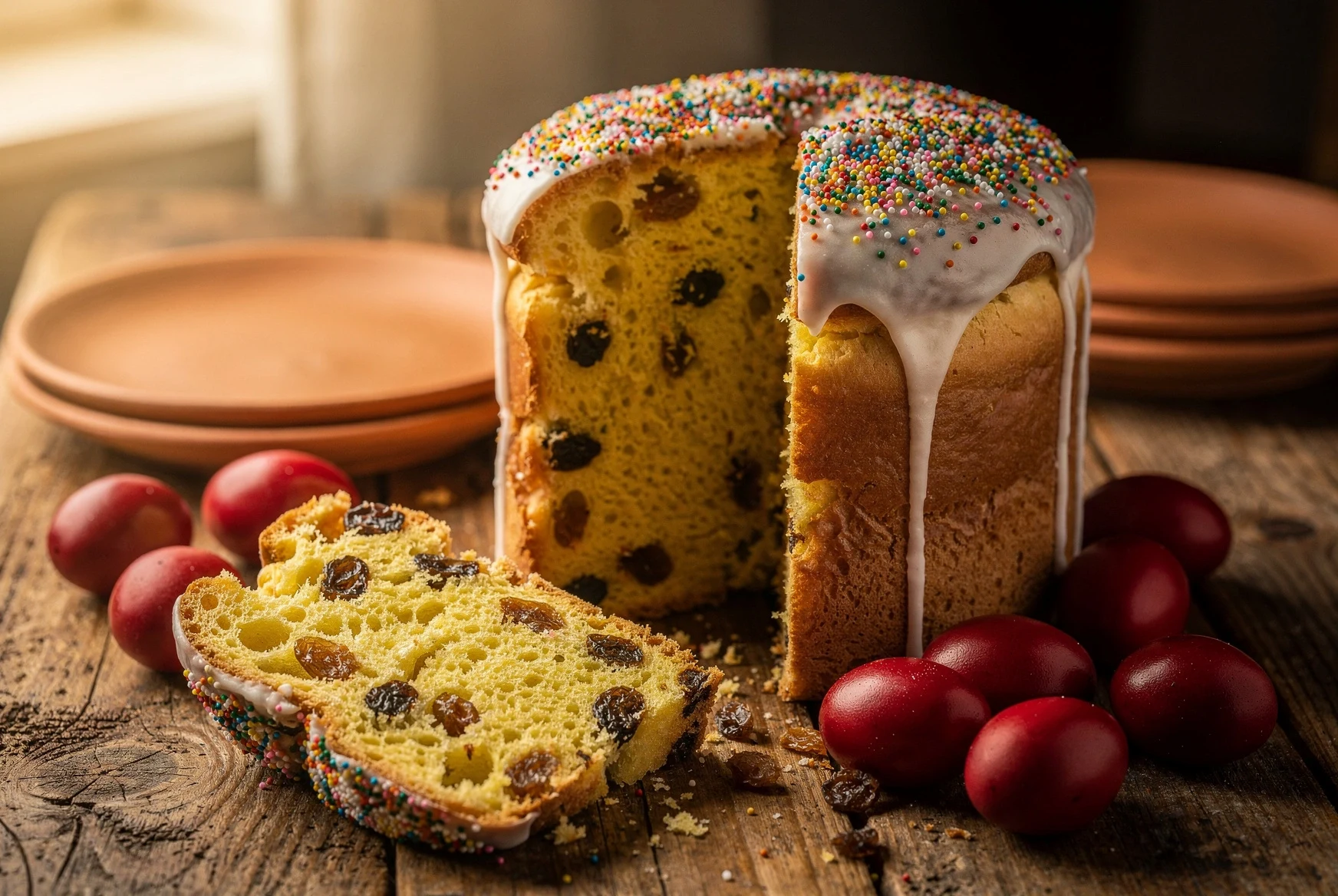
If you grew up around Orthodox Easter, you already know paska is never just “sweet bread.” It is ritual food. The smell fills the whole home, everyone argues about whose loaf rose highest, and somebody always claims their grandmother’s version stayed soft for a week.
Georgian paska sits in the same family as kulich, but local versions usually lean richer in butter and vanilla, with a soft yellow crumb and enough raisins to actually taste them in every bite. Done right, it is tender and feathery, not dry and cakey. Done wrong, it turns into a heavy cylinder that looks pretty and eats like disappointment.
Most online recipes miss the technical parts that matter: dough temperature, when the gluten is actually developed, how full your molds should be, and why overproofing destroys the dramatic dome. This version is built around those details.
Before you start
Paska dough is enriched and sticky. Do not fight it with lots of extra flour. A stand mixer helps, but hand kneading works if you keep your hands lightly buttered and stay patient.
What Good Paska Should Look and Taste Like
A strong paska has a high, rounded crown, deep bronze crust, and a fine shreddable crumb with visible fruit suspended throughout. Slice it and you should feel resistance first, then softness. Flavor should be butter-forward with vanilla and citrus in the background, not aggressively sweet.
| Element | Target | If wrong, you get |
|---|---|---|
| Dough temperature | 24 to 26°C after kneading | Cold dough proofs forever; hot dough smells yeasty and collapses. |
| Gluten strength | Elastic, glossy, stretches thin | Dense crumb and poor rise. |
| Mold fill level | One-third before final proof | Too full = mushroom blowout; too low = squat loaf. |
| Bake endpoint | 93°C center temp | Gummy middle or dry edges. |
Ingredients With Smart Substitutions
This formula makes two tall paska loaves in 12 to 13 cm diameter molds. If you only have one mold, bake in batches and keep second dough half chilled during the first bake.
Flour
All-purpose works, but strong bread flour (11.5 to 12.5% protein) gives better vertical rise in tall molds.
Fat
Use real butter, not margarine. Melted butter weakens the dough; very soft butter is the sweet spot.
Raisins
Soak, drain, and dry them well. Wet raisins create tunnels and gummy spots in the crumb.
Aroma
Vanilla + lemon zest is classic in Georgia. Orange zest works too, but keep it subtle.
Step-by-Step Method
1) Prep the raisins and yeast base
Soak raisins in rum or hot black tea for 20 minutes. Drain and pat dry thoroughly with paper towels.
In a large bowl, combine warm milk, yeast, and one tablespoon sugar. Let sit 10 minutes. You want a foamy surface and a bready aroma. If it stays flat, your yeast is tired — replace it now instead of wasting the rest of your ingredients.
2) Build the enriched dough
Whisk eggs with remaining sugar, vanilla, lemon zest, and salt until the sugar starts dissolving. Add this to the yeast mixture. Mix in flour gradually until a shaggy dough forms.
Knead 8 to 10 minutes, then add soft butter in three additions, kneading each time until absorbed. Continue kneading until dough looks glossy and elastic, usually another 8 to 10 minutes in a mixer, longer by hand.
The right dough feel
It should be soft and tacky, not liquid and not stiff. If it smears like paste, knead longer before adding flour. If it tears instantly, rest 10 minutes and knead again.
3) Add fruit and first proof
Fold in dried raisins gently so you do not tear gluten strands. Form dough into a ball, place in a lightly buttered bowl, cover, and proof in a warm place (25 to 27°C) until doubled, about 75 to 100 minutes depending on room temperature.
4) Shape into molds
Degas lightly and divide into two equal pieces. Shape each into a tight ball by pulling surface tension underneath. Place into parchment-lined or paper paska molds. Dough should fill each mold around one-third of the way up.
5) Final proof
Cover molds loosely and proof 45 to 60 minutes until dough rises close to the rim. Do not wait until it overflows. If you poke lightly with a floured finger, the indentation should bounce back slowly, not immediately.
6) Bake and cool
Brush tops with egg wash. Bake at 175°C for 35 to 45 minutes. If tops brown too fast, tent loosely with foil in the last 15 minutes. Check center temperature: 92 to 94°C is ideal.
Cool in molds 10 minutes, then transfer to a rack. Let cool fully before glazing. Warm paska plus glaze equals melted mess.
Glaze That Sets Cleanly
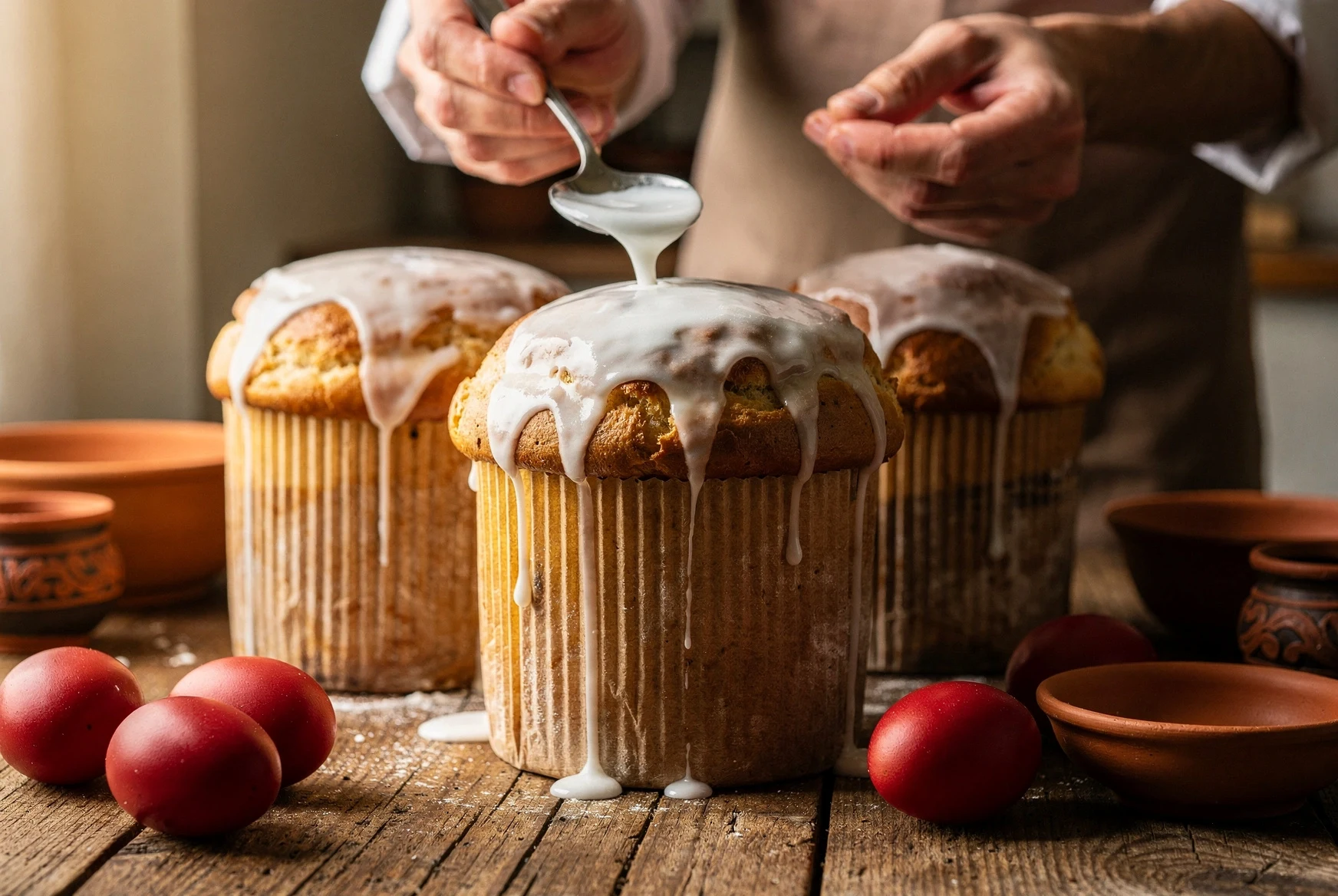
Whisk powdered sugar, vanilla, and lemon juice (or milk) until thick but pourable. Think slow ribbon, not water. Spoon over fully cooled loaves and let it run naturally down the sides.
For the classic Easter look, add sprinkles immediately while glaze is wet. If you want a cleaner, more adult finish, skip sprinkles and dust with a little lemon zest.
Common Failures and How to Fix Them
| Problem | Likely reason | Fix next batch |
|---|---|---|
| Loaf split hard on one side | Underproofed before baking | Give 10 to 15 more minutes final proof and reduce oven by 5°C if needed. |
| Dry crumb after one day | Overbaked or too much flour | Bake to temperature, not time. Keep dough tacky during mixing. |
| Dense center ring | Weak gluten development | Knead longer after butter is incorporated; use windowpane test. |
| Raisins sink to bottom | Raisins too wet or too heavy | Dry well and toss lightly with flour before folding in. |
Timing Plan for Easter Weekend
Serving and Storage
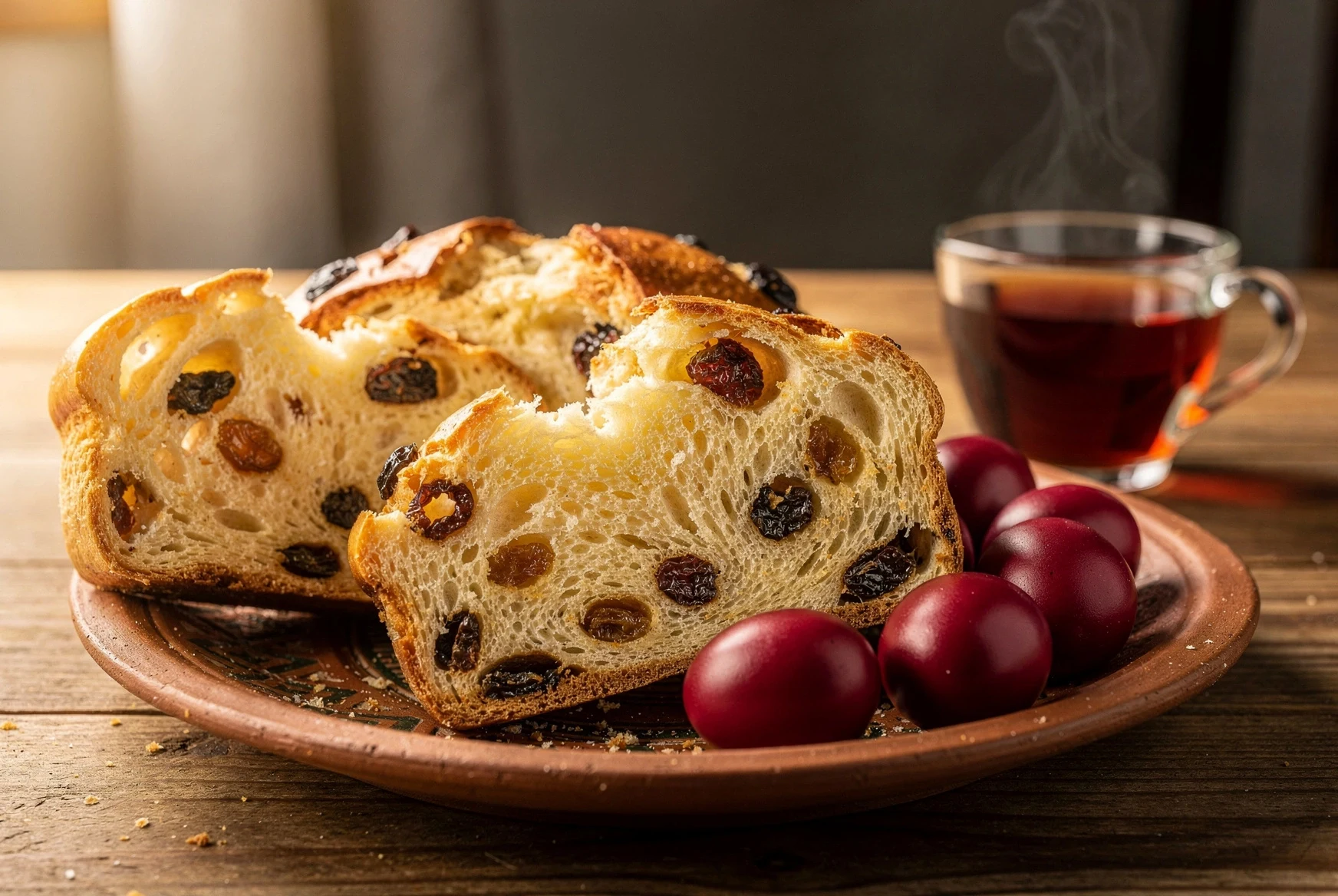
Serve paska at room temperature with black tea or coffee. In Georgian homes it usually shares the table with dyed eggs, savory dishes, and often a little chaos from too many relatives in one kitchen.
Once fully cooled, wrap well and keep at room temperature for up to 3 days. For longer storage, slice and freeze in an airtight bag. Reheat slices briefly in a low oven; avoid microwaving unless you enjoy rubbery bread.
Traditional Easter pairing
Paska is sweet, so pair it with strong tea, salty white cheese, or plain butter. The contrast matters. Sweet-on-sweet gets cloying fast.
FAQ
Can I make it without raisins?
Yes. Replace with candied citrus peel or leave plain. If plain, reduce sugar by 10 to 15g for better balance.
Can I cold-proof overnight?
Yes after first knead. Refrigerate 8 to 12 hours, then bring dough back to room temperature before shaping.
Do I need paper molds?
No. Tall metal cake tins work if lined with parchment. Paper molds are just easier for holiday batches.
Why did my glaze disappear?
You glazed while bread was still warm. Cool completely, then apply a thicker glaze.
Written by The Georgian Eats Team
We test traditional Georgian holiday recipes in home ovens across Tbilisi and adjust them for predictable results without flattening the original character. This paska method is tuned for texture first: tall rise, soft crumb, clean glaze.
Last updated: March 2026.