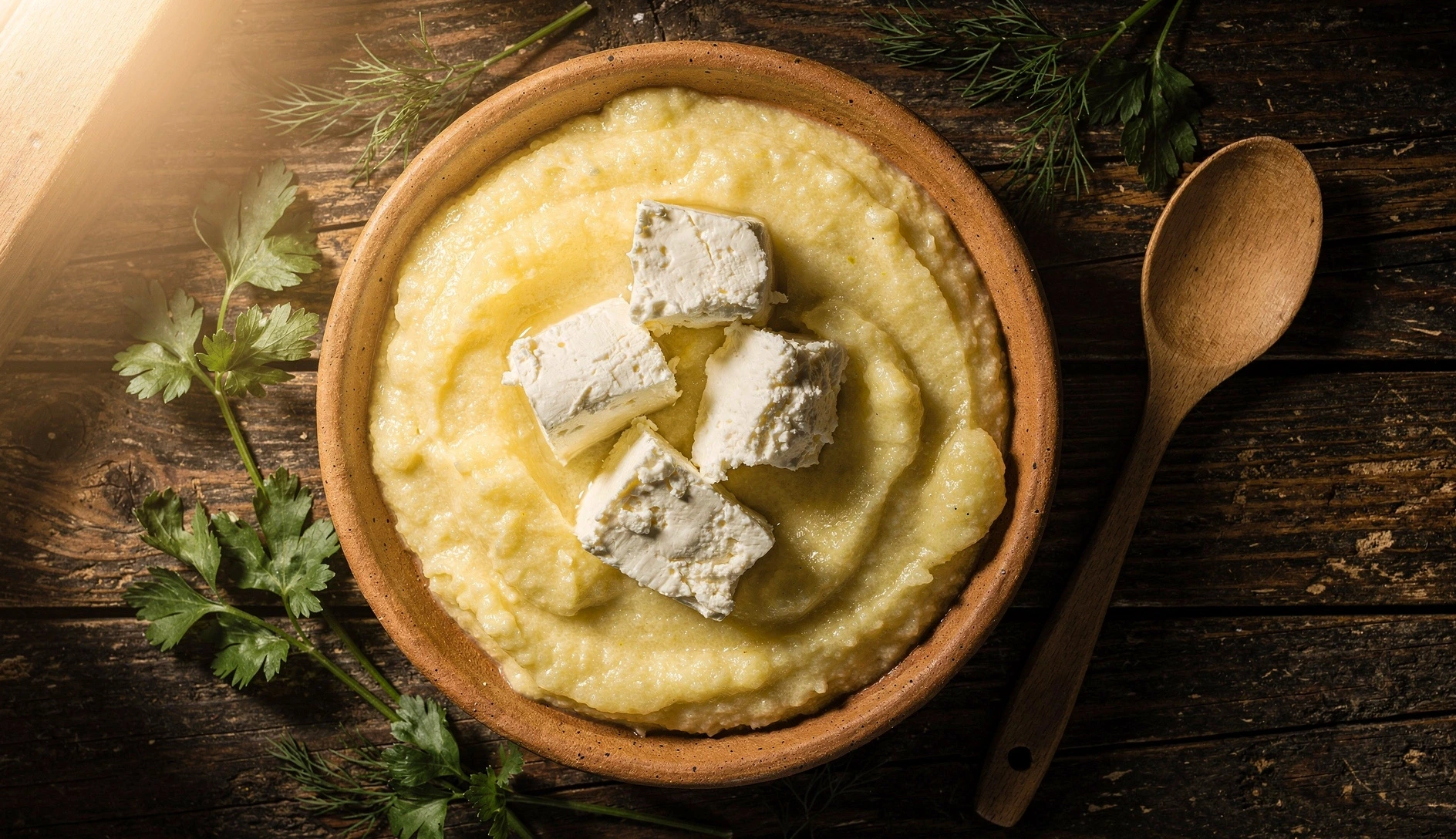
Ghomi (ღომი) is one of the most fundamental dishes in Georgian cuisine — a thick cornmeal porridge from the Samegrelo region that serves as the base for meals across western Georgia. If you've had elarji, you've eaten its flashier cousin. If you've seen Georgians eating bazhe or satsivi, there was probably ghomi underneath. This is the dish that polenta wishes it could be.
Unlike Italian polenta, ghomi uses two types of cornmeal — coarse for body, fine for smoothness — and the result is something with more heft and presence. It's not a side dish. When topped with good cheese, it is the dish. If you want the mountain potato equivalent rather than the western corn version, that is tashmijabi.
What Exactly Is Ghomi?
Ghomi is white cornmeal cooked slow in salted water until it forms a thick, dense mass that holds its shape when scooped. The name comes from the Mingrelian word for corn, and the dish is central to Samegrelo (Mingrelia), the lush western region of Georgia known for its bold, spicy, and dairy-forward cuisine.
In Samegrelo, ghomi is eaten almost daily. It appears at breakfast, lunch, and dinner. It's the neutral-flavored canvas that absorbs the richness of cheese, the heat of adjika, or the complexity of walnut sauces. Think of it as Georgia's equivalent of rice in East Asia — essential, humble, and everywhere.
Regional Context
Ghomi is specifically Mingrelian. In other parts of Georgia, corn is used differently — for mchadi (cornbread) or chvishtari (cheese-stuffed patties). The thick porridge style is a Samegrelo specialty, though it's become popular nationally.
Ghomi vs. Elarji: What's the Difference?
If you know elarji, you might wonder why ghomi exists separately. Here's the relationship:
| Aspect | Ghomi | Elarji |
|---|---|---|
| Base | Cornmeal porridge | Same cornmeal porridge |
| Cheese | Served on top, melts in | Mixed in while cooking (a LOT of it) |
| Texture | Dense, scoopable | Stretchy, elastic, stringy |
| Cheese Amount | ~100g per serving | ~300-400g per serving |
| Eating | With spoon or torn bread | Pulled/stretched, often with hands |
| Typical Pairing | Bazhe, satsivi, lobio, grilled fish | Usually eaten alone as a spectacle |
In short: ghomi is the foundation. Elarji is what happens when you add an almost obscene amount of cheese and stir until the whole thing becomes stretchy and dramatic. Tashmijabi is the mountain cousin that does the same emotional job with potatoes instead of cornmeal. This recipe teaches you the ghomi base.
Ingredients
| Ingredient | Amount | Notes |
|---|---|---|
| Coarse white cornmeal | 200g | Not yellow polenta — white corn preferred |
| Fine white corn flour | 50g | Maseca or white cornstarch works |
| Water | 1 liter | Some use half milk for richness |
| Salt | 1 tsp | Adjust to taste |
| Sulguni cheese | 300g | Fresh mozzarella as a substitute |
| Butter | 30g (optional) | For serving |
About the Cornmeal
Traditional ghomi uses white cornmeal, which is more common in Georgia than yellow. The flavor is slightly milder and sweeter. If you can only find yellow cornmeal or polenta, use it — the dish will still work, just with a slightly different color and taste.
The key is using TWO textures: coarse for structure and fine for smoothness. The coarse cornmeal gives ghomi its body, while the fine flour stirred in at the end creates that characteristic dense, slightly sticky texture. If you skip the fine flour, you'll have something closer to American grits.
Finding Ingredients Outside Georgia
Look for white cornmeal at Latin groceries (labeled "harina de maíz blanco") or order online. For the fine flour, Maseca or any finely ground white corn flour works. Sulguni can be found at Russian/Georgian stores — or substitute low-moisture mozzarella for similar stretchy melt.
Equipment You'll Need
Heavy-Bottomed Pot
Essential — thin pots will burn the bottom. Cast iron, enameled Dutch oven, or thick stainless steel.
Wooden Paddle or Spoon
Traditional is a flat wooden paddle (moziteli). A wooden spoon works, but something flat scrapes the bottom better.
Strong Arm
Seriously. The final mixing requires vigorous stirring through thick resistance. It's a workout.
Serving Bowls
Clay bowls are traditional and keep ghomi warm longer, but any deep bowl works.
Step-by-Step Instructions
Stage 1: The Initial Cook (5 minutes)
- Boil the water. Add 1 liter of water and 1 tsp salt to your heavy pot. Bring to a rolling boil.
- Add the coarse cornmeal slowly. Pour in the cornmeal in a thin stream while whisking or stirring constantly. If you dump it all at once, you'll get lumps.
- Whisk out any lumps. Stir vigorously for the first 2-3 minutes to ensure the cornmeal is evenly dispersed.
Stage 2: The Slow Simmer (25-30 minutes)
- Reduce heat to low. Once combined, turn the heat down to the lowest setting.
- Stir every few minutes. The porridge will thicken slowly. Stir every 3-4 minutes, scraping the bottom to prevent sticking.
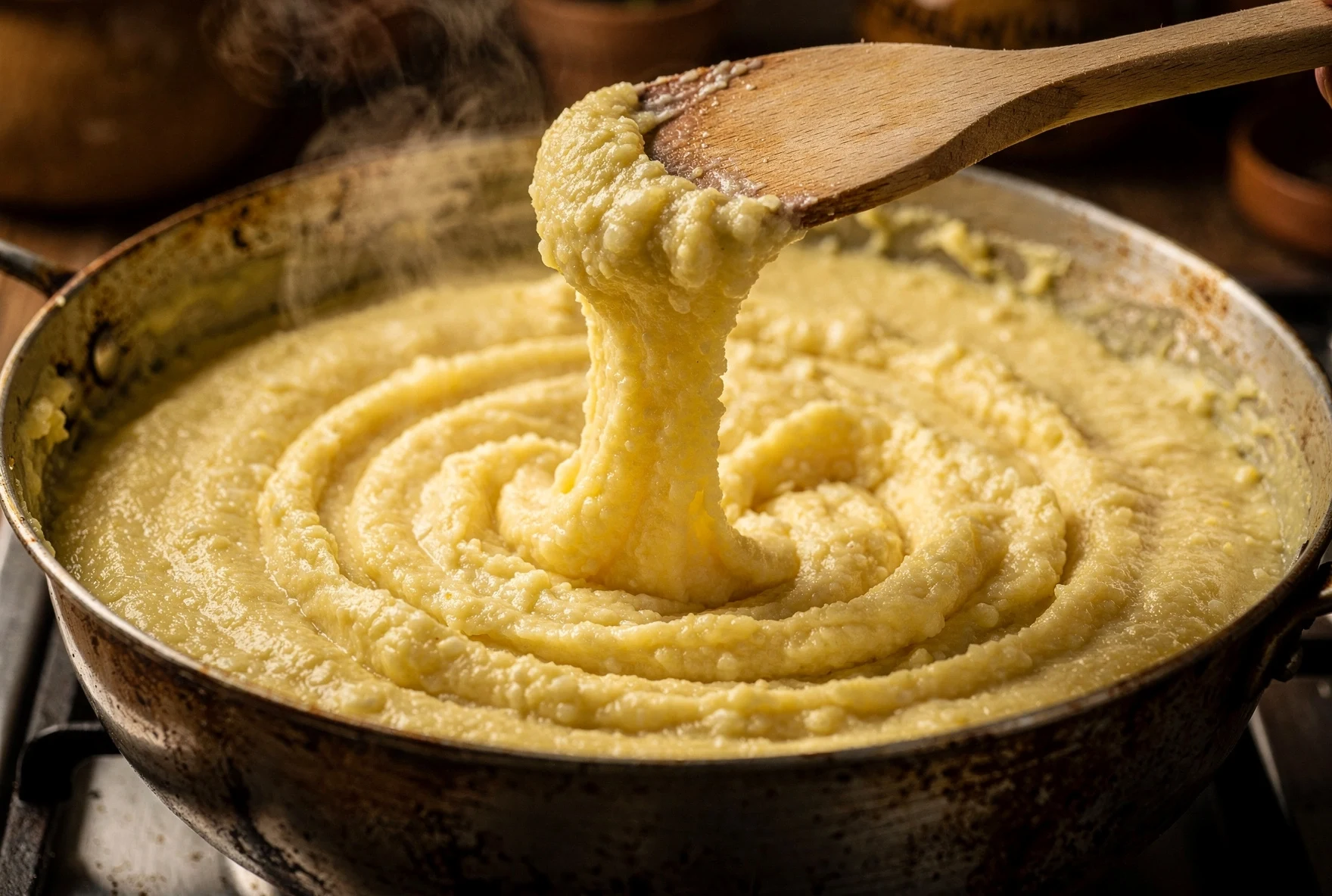
- Watch for the "pull." After about 20 minutes, the ghomi will start to pull away from the sides of the pot when stirred. This is good.
- Test thickness. At 25 minutes, the ghomi should be thick enough that a spoon stands up in it briefly. If it's still soupy, continue cooking.
Don't Rush This Stage
Low heat + time is what transforms grainy cornmeal into smooth, cohesive ghomi. Rushing with high heat leads to burnt bottoms and raw-tasting interiors. Give it the full 25-30 minutes.
Stage 3: The Final Thickening (5-10 minutes)
- Sprinkle in the fine corn flour. Add the 50g of fine flour gradually, stirring constantly.
- Stir vigorously. This is the arm workout part. The ghomi will become very thick and resistant. Keep stirring — you're developing the texture.
- Look for the signs of doneness:
- The ghomi pulls completely away from the pot when stirred
- The surface looks smooth, not grainy
- A spoon leaves a clear trail that fills in slowly
- The texture is dense but not gummy
- Taste and adjust salt. The cornmeal absorbs a lot of salt, so you may need to add more.
Stage 4: Serving
- Work quickly. Ghomi sets as it cools, so serve immediately.
- Scoop into bowls. Use a wet spoon or paddle to scoop portions into individual bowls. Wet utensils prevent sticking.
- Make a well. Create a depression in the center of each portion.
- Add the cheese. Place chunks or thick slices of sulguni in the well. The heat of the ghomi will melt it.
- Optional: add butter. A knob of butter on top adds richness.
- Serve immediately. Eat while the cheese is melting and stretchy.
Visual Cues for Perfect Ghomi
| What You See | What It Means | What to Do |
|---|---|---|
| Lumps forming | Cornmeal added too fast | Whisk vigorously or blend |
| Burning on bottom | Heat too high | Lower heat, stir more often |
| Still runny at 30 min | Needs more cooking | Continue until it thickens |
| Grainy texture | Not cooked long enough | Keep cooking, stir more |
| Pulls away from pot | Getting close to done | Add fine flour, stir well |
| Smooth, dense mass | Perfect — ready to serve | Serve immediately |
What to Serve with Ghomi
Ghomi is a canvas. Its mild corn flavor and dense texture make it the perfect vehicle for rich, bold toppings and sauces. Here's how it's traditionally eaten:
With Cheese Only
The classic. Sulguni chunks melting into the hot porridge. Simple, satisfying, substantial. Add butter if you want richness.
With Bazhe
Cold walnut-garlic sauce spooned over hot ghomi. The contrast of temperatures and the nuttiness against corn is exceptional.
With Satsivi
Chicken or turkey in cold walnut sauce. Served at room temperature over warm ghomi — a New Year's tradition.
With Kharcho
Spicy beef soup ladled over ghomi instead of bread. The porridge soaks up the rich, walnut-thickened broth beautifully.
With Lobio
Bean stew served alongside ghomi — a hearty, completely vegetarian meal that's standard in Samegrelo.
With Fried Fish
Crispy fried trout or carp with ghomi and bazhe is a western Georgian specialty, especially along river towns.
Variations
Elarji (Maximum Cheese)
To make elarji, use the same base but add 400-500g of shredded sulguni to the hot ghomi while still on heat. Stir vigorously until the cheese is fully incorporated and the whole mass becomes elastic and stretchy. You should be able to stretch it like mozzarella. See our full elarji recipe for detailed instructions.
Milk Ghomi
Replace half the water with whole milk for a richer, creamier version. This is less traditional but popular for children and those who prefer a milder taste.
Ghomi with Adjika
For spice lovers, serve ghomi with a dollop of fresh adjika (Mingrelian chili paste) on top along with the cheese. The heat cuts through the richness.
Storage and Reheating
Ghomi is best eaten fresh — it sets as it cools and loses its smooth texture. That said, leftovers can be revived:
| Method | How to Do It | Result |
|---|---|---|
| Stovetop | Add splash of water, reheat on low, stir constantly | Closest to fresh |
| Microwave | Cover, microwave in 30-sec bursts, stir between | Works but less smooth |
| Pan-fried | Slice cold ghomi, fry in butter until crispy | Different but delicious |
Cold, set ghomi can be sliced and pan-fried in butter until crispy on the outside — a completely different but equally good way to eat it. Top with fresh cheese and herbs.
Common Mistakes to Avoid
❌ Using Yellow Polenta Only
Instant polenta is too fine. Traditional ghomi needs coarse + fine cornmeal for proper texture. Use both.
❌ Cooking Too Fast
High heat = burnt bottom + raw interior. Keep it low and slow for the full cooking time.
❌ Adding Too Much Water
Ghomi should be thick enough to hold its shape. If it's soupy, cook longer until it reduces.
❌ Serving Lukewarm
Ghomi needs to be hot enough to melt the cheese. Don't let it cool before serving.
A Brief History
Corn arrived in Georgia from the Americas in the 17th century and quickly became a staple in the western lowlands, where the humid climate was perfect for cultivation. Within a few generations, corn displaced millet as the primary grain in Samegrelo and surrounding regions.
Ghomi became the daily bread of western Georgia — literally. While eastern Georgia developed its wheat-based shotis puri and lavash traditions, the west built its cuisine around corn: ghomi, mchadi, chvishtari, and elarji. This regional split persists today.
Why Mingrelians Are Famous for Corn
The humid, subtropical climate of Samegrelo made it ideal for corn cultivation. Combined with the region's abundant dairy (sulguni cheese originated here), the pairing of corn and cheese became foundational. Today, Samegrelo remains Georgia's corn belt, and ghomi/elarji are its signature dishes.
Frequently Asked Questions
Can I use regular polenta?
Yes, but the texture will be different. Italian polenta is usually all one grind. For authentic ghomi, you need coarse + fine cornmeal. If using polenta, add some cornstarch at the end.
What if I can't find sulguni?
Fresh mozzarella (low-moisture) is the closest substitute. String cheese or provolone in a pinch. Avoid aged cheeses — you want something that melts and stretches.
Is ghomi gluten-free?
Yes — corn is naturally gluten-free. Just verify your cornmeal isn't processed on shared equipment if you have celiac disease.
Can I make it ahead?
Not recommended. Ghomi is best fresh. If you must, make the base and reheat with extra water, then add fresh cheese when serving.
What's the difference from grits?
American grits are similar but typically coarser and served softer. Ghomi is denser, uses two textures of cornmeal, and is thick enough to hold its shape when scooped.
Why does my ghomi taste bland?
Cornmeal absorbs a lot of salt. Season generously — ghomi should taste properly seasoned on its own before you add cheese. Taste and adjust during cooking.
Written by The Georgian Eats Team
Based in Tbilisi with frequent trips to Samegrelo, where ghomi is a way of life. We've eaten it at family tables, roadside restaurants, and everything in between.
Last updated: March 2026.
Related Recipes
Elarji: Stretchy Cheesy Cornmeal
Take ghomi to the extreme with a full kilo of melted sulguni.
Tashmijabi: Svan Potato and Cheese Mash
The mountain cousin: potatoes instead of cornmeal, same Georgian love of starch and elastic cheese.
Bazhe: Cold Walnut Garlic Sauce
The classic sauce to serve over hot ghomi.
Mchadi: Golden Cornbread
The other essential Georgian corn dish — crispy pan-fried bread.
Lobio: Smoky Bean Stew
The perfect companion to ghomi — hearty and vegetarian.