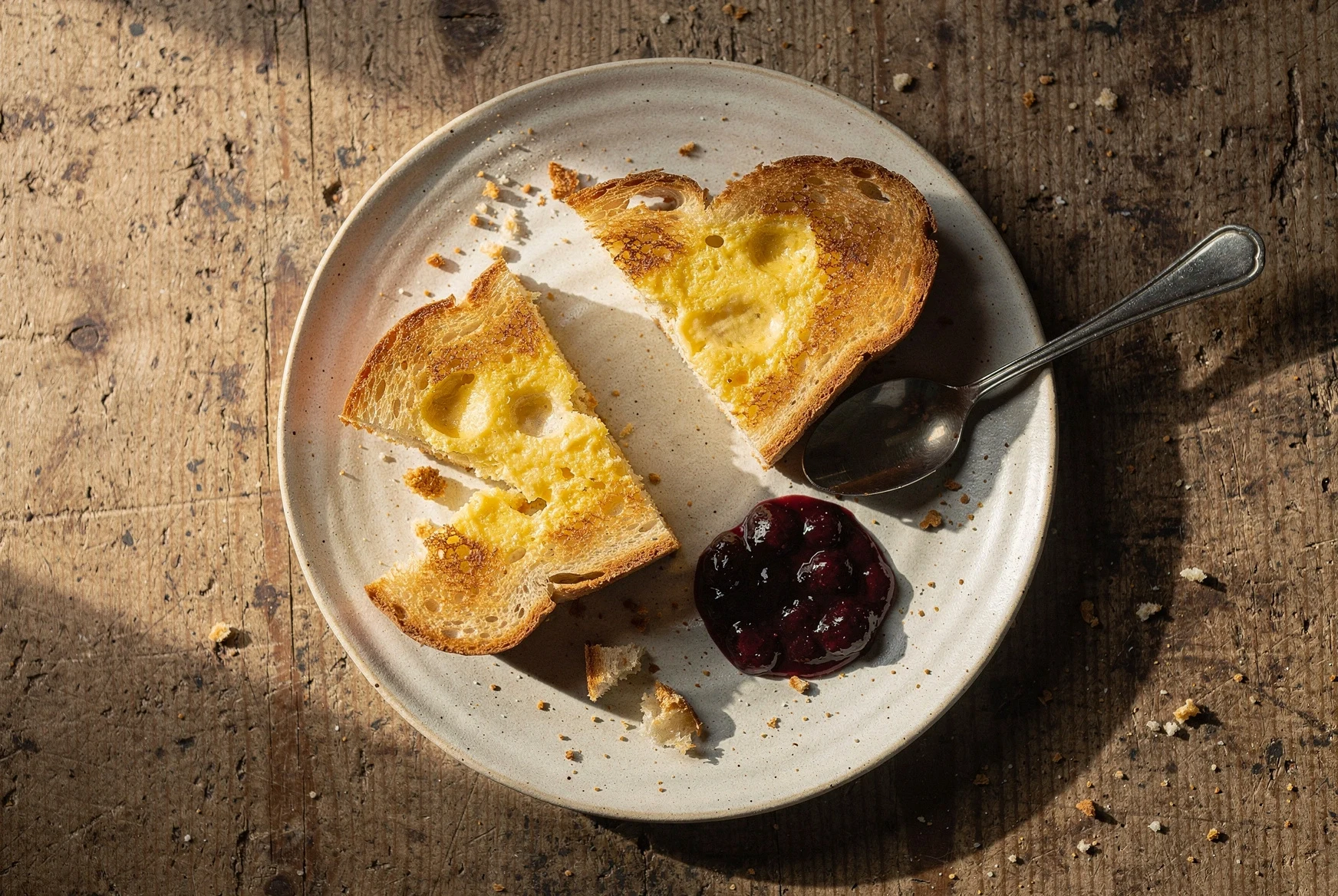
Kikliko is one of those Georgian dishes that almost never gets written about properly because it is too ordinary for travel writing and too humble for restaurant menus. Which is exactly why it matters. This is the breakfast people actually grew up eating: yesterday's bread dipped in egg, fried in butter, and eaten hot before the crust loses its edge. Sometimes sweet with jam. Sometimes savory with cheese. Always simple, fast, and better than it has any right to be.
Calling kikliko "Georgian French toast" is useful, but not quite right. French toast is usually softer, sweeter, and more obviously dessert-adjacent. Kikliko is plainer and more practical. It sits in that familiar Georgian zone where bread, eggs, butter, and whatever is already in the house become breakfast without anyone needing to make a fuss about it. If you grew up around Georgia, it tastes like childhood. If you did not, it still tastes like the kind of breakfast people actually make for themselves when nobody is trying to impress anyone.
Kikliko Quick Facts
- Georgian name: კიკლიკო
- What it is: Bread dipped in beaten egg and fried in butter
- Best bread: Day-old white bread, not ultra-soft sandwich bread
- Sweet or savory: Both are authentic
- Total time: 15 minutes
- Best moment: Right out of the pan, before it starts steaming itself soft
What Kikliko Actually Is
At its core, kikliko is stale-bread management turned into breakfast. The bread is dipped in beaten egg, sometimes with a splash of milk, then fried in butter until the outside goes golden and the middle turns soft but not soggy. That is the whole idea. There is no formal Georgian sauce to master, no rare spice blend, no regional gatekeeping. It belongs to the same family as lost bread, eggy toast, and French toast found all over Europe. The Georgian difference is mostly in how it is eaten and how little ceremony surrounds it.
In Georgian homes, kikliko is not restaurant food. It is what gets made when there is yesterday's bread on the table, eggs in the fridge, and not much time. Children eat it with jam. Adults eat it with salty cheese and tea. Nobody writes a recipe down because everybody already knows it. That is usually a sign that a dish matters more than its reputation suggests.
Sweet vs Savory Kikliko
This is where people outside Georgia often expect a single canonical answer and do not get one. Some households make kikliko sweet, with sugar whisked into the eggs and jam or honey on the table. Others keep the egg mixture plain and eat the bread with imeruli or sulguni cheese, maybe with tomatoes on the side. Both are real. Both are common. The sweet version feels more obviously like French toast. The savory version feels more Georgian.
| Version | What changes | Best served with |
|---|---|---|
| Sweet kikliko | Add a little sugar to the egg mixture | Sour cherry jam, fig preserve, honey, black tea |
| Savory kikliko | No sugar, sometimes a bit more salt | Imeruli cheese, sulguni, tomatoes, cucumbers, tea |
| In-between version | Barely sweet egg mixture | Butter and mild jam so it stays breakfast, not dessert |
If you want my blunt take, the savory version is underrated. Good Georgian cheese next to hot egg-fried bread makes more sense than syrup. The sweet version is nostalgic and excellent with sour jam, especially cherry or cornelian cherry preserve, but the savory one tastes more like something an actual Georgian breakfast table would naturally serve.
The Bread Choice Matters More Than People Think
Kikliko is not the place for ultra-soft packaged sandwich bread unless you enjoy disappointment. It soaks too fast, tears too easily, and fries up with no character. Day-old white loaf, slightly dry bakery bread, or even leftover shotis puri trimmed into manageable pieces works much better. You want bread with enough structure to drink in the egg without collapsing.
Fresh bread can work, but only if you let it dry out a bit first. Fifteen or twenty minutes uncovered is enough. Truly stale bread is even better, which is part of the point. Kikliko is one of those dishes built around yesterday's leftovers becoming this morning's breakfast. That old practical instinct is half the charm.
Best bread thickness
Aim for slices around 1.5 cm thick. Too thin and the bread turns floppy and overcooked before the center gets any softness. Too thick and the middle can stay raw while the outside browns too fast.
Ingredients and Ratios
This is a forgiving dish, but there is still a ratio that works best. Too much milk and the bread tastes diluted. Too little egg and you are just butter-frying toast. The mix below gives you a coating thick enough to make the bread rich without turning the center into scrambled custard.
| Ingredient | Amount | Why it matters |
|---|---|---|
| Bread | 6 slices | Day-old is ideal because it absorbs egg without going limp |
| Eggs | 3 large | Enough to coat properly without drowning the bread |
| Milk or water | 3 tbsp | Loosens the eggs a little so the coating spreads evenly |
| Butter | 35 g | Butter gives the crust its proper nutty edge |
| Sugar | 1 tbsp, optional | Only for the sweet version, and not too much |
| Salt | 1 pinch | Even sweet kikliko tastes flatter without it |
How to Make Kikliko Step by Step
The method is short, but the texture cues are what separate proper kikliko from greasy egg bread.
Step 1: Dry the bread slightly if needed
If your bread is already one day old, you are fine. If it is fresh, slice it and leave it uncovered for 10 to 20 minutes. This small step makes a real difference. Slightly dry bread absorbs the egg mixture evenly instead of turning gummy on contact.
Step 2: Whisk the eggs properly
Beat the eggs with milk or water, salt, and sugar if you are making the sweet version. Whisk until the yolks and whites are fully combined and the surface looks lightly foamy. You do not want streaks of white hanging around because those cook unevenly on the bread.
Step 3: Heat the butter over medium-low
This is not a high-heat dish. Melt half the butter in a wide skillet and let it foam gently. If the butter goes dark before the bread even hits the pan, the heat is too high. Kikliko needs enough time for the interior to cook while the crust turns golden.
Step 4: Dip, but do not drown
Dip each slice for a few seconds per side. You want the bread to absorb egg, not disintegrate in the bowl. Thick, sturdy bread can take a little longer. Softer bread needs only a quick turn. If the slice starts sagging like a wet sponge, you have gone too far.
Step 5: Fry until deeply golden
Lay the bread in the pan in a single layer. Cook for 2 to 3 minutes on the first side, then flip and cook another 2 to 3 minutes. The crust should be properly golden, not pale blond. That butter-fried edge is the whole point. Add more butter between batches if the pan starts looking dry.
Step 6: Serve immediately
Kikliko waits for no one. The best version has a delicate contrast between crisp outside and soft center, and that window is short. Get the jam, cheese, tea, and tomatoes ready before the frying starts.
| Visual cue | What it means | What to do |
|---|---|---|
| Pale surface | Not enough crust yet | Give it another 30 to 60 seconds |
| Deep golden brown | Perfect | Flip or remove and serve |
| Dark patches before center sets | Heat too high | Lower the heat before the next batch |
| Slice tearing when lifted | Bread soaked too long | Dip the next slice more briefly |
How Georgians Actually Serve It
The sweet version usually lands on the table with preserves, not maple syrup. Sour cherry jam is especially good because the sharp fruit cuts the richness of the egg and butter. Fig preserve is more old-fashioned and a little more Georgian in spirit. Honey also works, especially with black tea.
The savory version is the one I would push most people toward first. A slab of matsoni-tangy cheese next to hot kikliko makes sense in a way that sweet brunch logic never quite does. Add sliced summer tomatoes, maybe cucumbers, and strong tea, and you have the kind of breakfast that tastes more Georgian than most "must-try Georgian breakfast" lists ever manage.
Sweet table
Kikliko, sour cherry jam, fig preserve, honey, and strong black tea. Best when you want comfort more than complexity.
Savory table
Kikliko, imeruli or sulguni, sliced tomatoes, cucumbers, and tea. This feels like a real Georgian morning.
Common Mistakes
Using bread that is too soft
Pillowy packaged bread collapses quickly and fries up without texture. Slightly older bakery bread is better by a mile.
Over-soaking the slices
If the bread sits in egg too long, the middle turns wet and the slice becomes hard to handle. A quick dip is enough.
Cooking over high heat
That burns the crust before the inside cooks through. Medium-low gives you time and better butter flavor.
Turning it into dessert soup
Too much sugar or syrup pulls the dish away from its Georgian home-breakfast identity. Keep the sweetness moderate.
Variations Worth Making
Kikliko is flexible enough to invite small household tweaks without losing the plot.
With cinnamon
A pinch in the sweet version works, though it feels more international than Georgian. Still good on cold mornings.
With cheese melted on top
Once the second side is nearly done, add a thin slice of sulguni and cover briefly. This leans savory and works very well.
Using shotis puri
Trim into manageable pieces and dip quickly. The crustier structure gives a more rugged, very Georgian result.
With preserves and cheese together
This is the sweet-savory move that makes the most sense: sour jam on one bite, salty cheese on the next.
Where Kikliko Fits in Georgian Breakfast
Kikliko sits below showier dishes like chirbuli and borano in the prestige hierarchy, but that does not make it less real. It is more real. Chirbuli is what you order when brunch exists. Kikliko is what somebody's mother makes when there is bread to use up and school starts soon. Georgian breakfast culture makes more sense when you understand both.
If you want the wider context, the full Georgian breakfast guide covers where kikliko sits among bread, cheese, tea, matsoni, guesthouse breakfasts, and the rest of the morning table. But this page is the one to keep open when you are standing in the kitchen with eggs, butter, and old bread and want breakfast in ten minutes.
Kikliko FAQ
Can I use fresh bread?
You can, but let it dry for a bit first. Fresh bread soaks too fast and can turn mushy in the middle.
Is kikliko always sweet?
No. Sweet and savory versions both exist, and the savory version is arguably more recognizably Georgian.
Can I make it ahead?
Not really. You can keep it warm for a few minutes, but kikliko is best eaten straight from the pan.
What jam works best?
Sour cherry jam is excellent because it balances the butter and egg. Fig preserve and honey also work well.
What should I drink with it?
Strong black tea. That is the classic answer, whether the kikliko is sweet or savory.
Written by The Georgian Eats Team
Kikliko is the kind of breakfast that barely makes it into glossy food writing, which usually means it is worth defending. We have eaten it sweet with sour jam, savory with cheese, and plain with just tea, and the best versions all have the same thing in common: old bread, enough butter, and no unnecessary fuss.
Last updated: March 2026.
Related Articles
Georgian Breakfast
Where kikliko sits in the real Georgian morning routine, from bread and cheese to chirbuli and matsoni.
Chirbuli
The richer, more dramatic Georgian breakfast classic with eggs in tomato-walnut sauce.
Matsoni
Another quiet Georgian breakfast staple: tangy cultured milk eaten with honey or used across the kitchen.
Borano
Adjara's butter-and-cheese breakfast flex for mornings when restraint is not part of the plan.