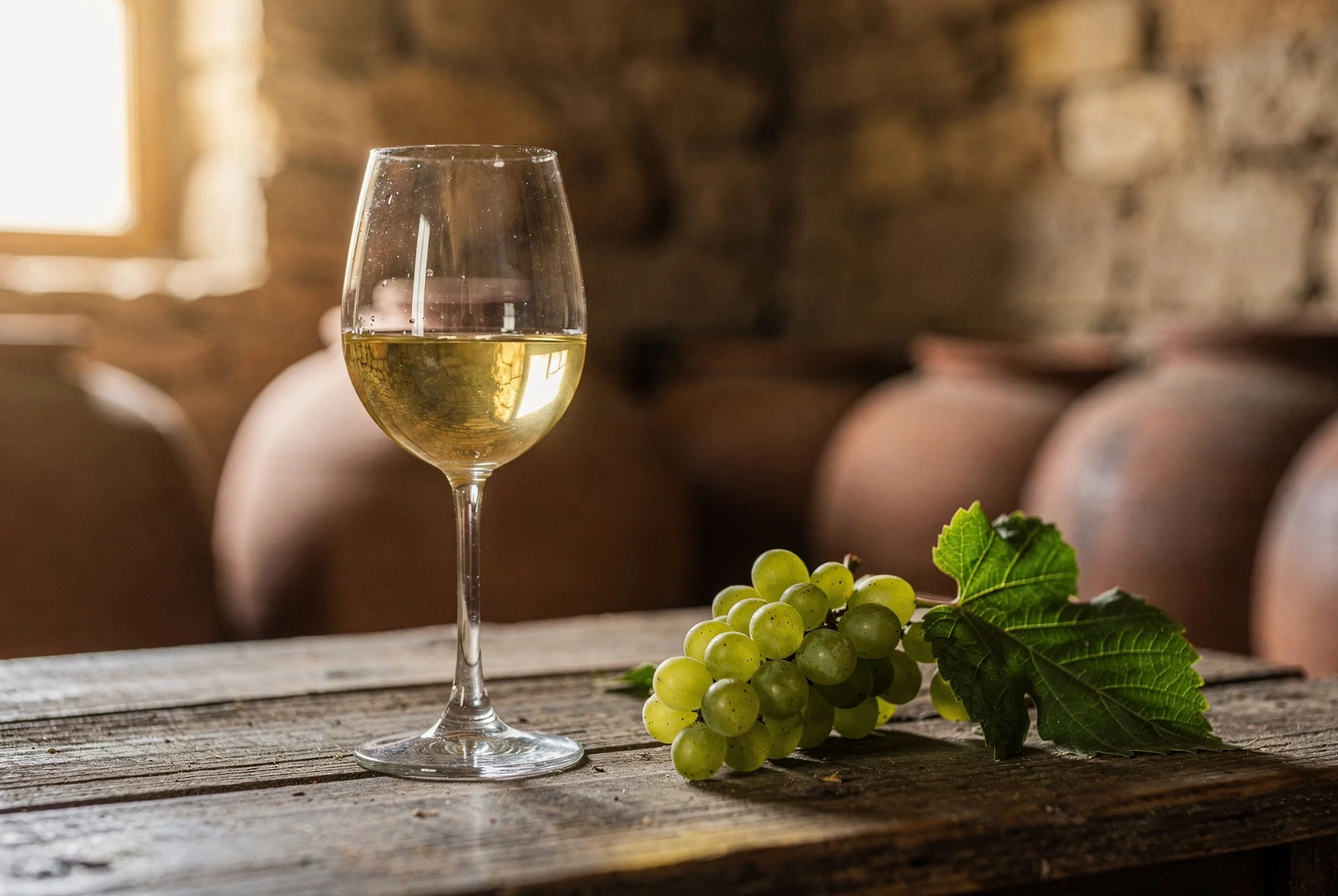
Mtsvane is the Georgian white grape people keep enjoying before they remember to ask what it was. Saperavi gets the swagger, Rkatsiteli gets the history lecture, qvevri gets the mythology, and Mtsvane often gets reduced to a throwaway line about being "aromatic." That undersells it badly. Good Mtsvane is not just floral filler for blends. It is one of the most useful, expressive, and food-ready white grapes in Georgia — especially when you want a bottle with perfume but not fluff.
If Rkatsiteli is the backbone of Georgian white wine, Mtsvane is often the thing that makes the bottle feel awake. It gives lift, blossom, citrus, fresh herbs, and sometimes a honeyed edge, but the best versions still keep enough acidity and grip to sit on a Georgian table without getting bullied by cheese, walnuts, garlic, or herbs. That matters, because Georgian food does not reward delicate little white wines that disappear after the first bite of dinner.
This guide is the practical version: what Mtsvane actually is, what it tastes like in dry and amber form, why the classic Rkatsiteli-Mtsvane partnership works, when to buy it on its own, what dishes it suits, and which mistakes people make when they expect it to behave like Sauvignon Blanc with a Caucasus passport.
What Mtsvane Actually Is
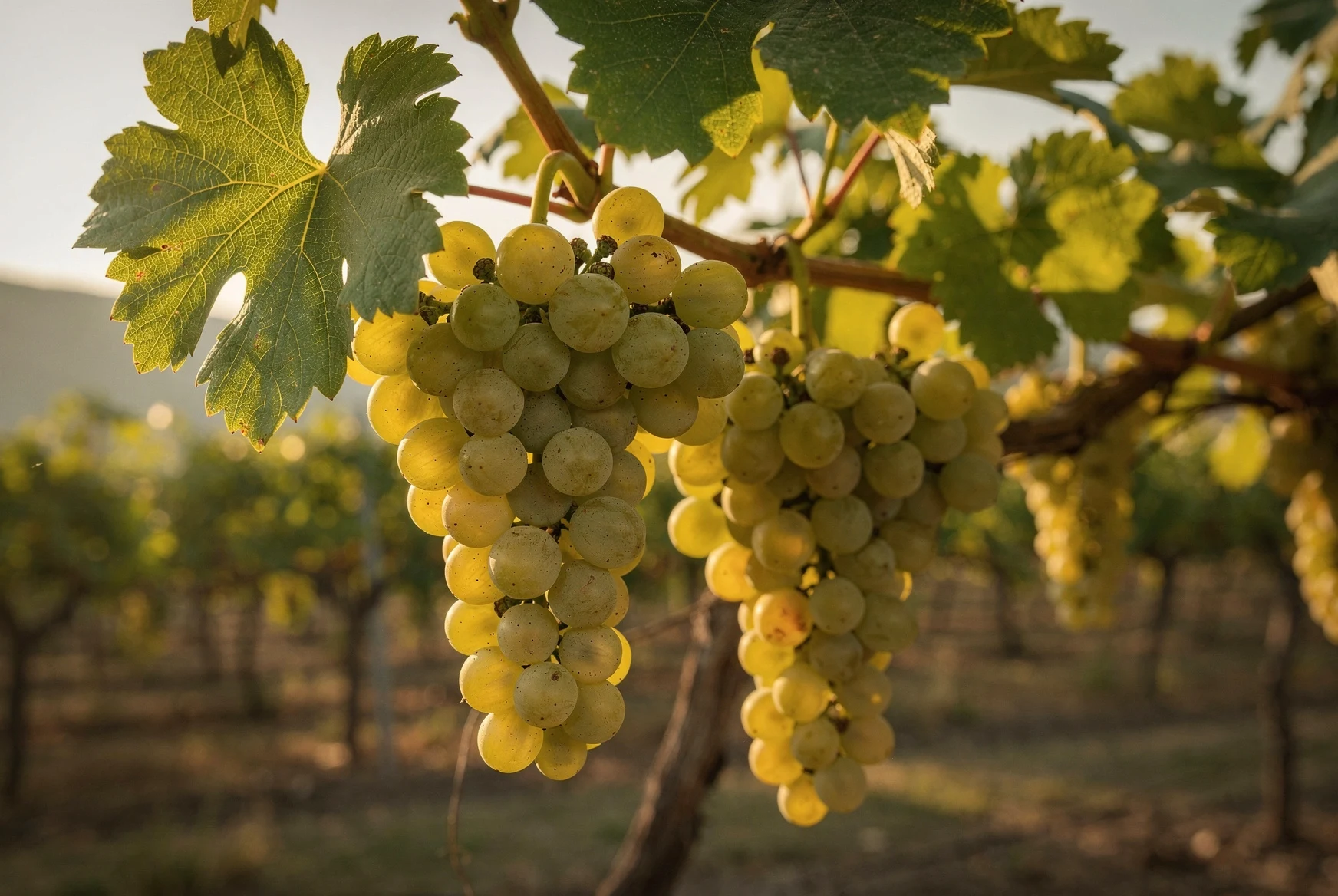
First, the naming issue. Mtsvane simply means green in Georgian, so you will see more than one grape with that word attached. The one most wine drinkers mean when they say Mtsvane is Mtsvane Kakhuri, the Kakhetian white grape associated with eastern Georgia. That matters because there are other Mtsvane-family grapes, including Goruli Mtsvane in Kartli, and they are not interchangeable. On restaurant lists and export labels, though, "Mtsvane" almost always points to Mtsvane Kakhuri unless the producer says otherwise.
At its best, Mtsvane gives you the part of Georgian white wine that feels bright and fragrant rather than stern and structural. The fruit tends toward citrus, pear, quince, green plum, and orchard blossom rather than tropical sweetness. There is often a herbal line too — mint, fennel, wildflower, sometimes a dried tea note in amber versions. It can be made clean and fresh in stainless steel, richer in oak, or fermented in qvevri with skin contact where it becomes deeper, spicier, and more savory.
Mtsvane quick facts
- Full name: Mtsvane Kakhuri
- Georgian: მწვანე კახური
- Name meaning: Green from Kakheti
- Main region: Kakheti
- Core profile: Floral, citrusy, herbal, and more aromatic than Rkatsiteli
- Common role: Varietal wine or blend partner with Rkatsiteli
- Best pairing lane: cheeses, herbs, trout, chicken, lighter walnut dishes, and spring vegetables
Why Mtsvane Matters
Mtsvane matters because Georgian wine needs more than one story. If every white bottle on the table were built on Rkatsiteli alone, the whole category would skew a bit too hard toward acid, grip, and seriousness. Mtsvane broadens the vocabulary. It adds perfume where some Georgian whites can be too strict, and it gives producers a way to make wines that feel open and inviting without stripping out the regional identity.
It also matters because it shows something important about Georgian winemaking culture: Georgia is not just about ancient methods and dramatic vessels. It is also about balance. The classic white blends from Kakheti make sense precisely because growers understood long ago that one grape brings structure and another brings aroma. Mtsvane is often the answer to the question, "Why does this bottle feel more complete than the sum of its parts?"
On its own, Mtsvane is more than good enough to stand alone. The better varietal bottlings have a line of freshness that keeps the floral side from turning perfumey. In qvevri, it can become one of the most beautiful entry points into amber wine because it tends to hold onto fragrance even after gaining tannin and skin-contact depth. That makes it easier for newcomers to understand than some harder, drier, more severe amber bottlings.
| Style | What it tastes like | Texture | Best use |
|---|---|---|---|
| Fresh dry white | White flowers, pear, citrus peel, green plum | Light to medium, bright, lifted | Aperitif, trout, salads, young cheese |
| Richer dry white | Riper orchard fruit, honey, fennel, blossom | Rounder, broader, still energetic | Roast chicken, creamy sauces, fuller cheese plates |
| Qvevri amber | Dried flowers, tea, apricot skin, herbs, orange peel | Textured, savory, gently tannic | Walnut dishes, herbs, beans, salty breads |
| Rkatsiteli-Mtsvane blend | Structure plus floral lift and softer edges | Balanced, easy to understand, food-friendly | Best beginner buy for Georgian white wine |
How Mtsvane Tastes in Real Terms
The lazy tasting note for Mtsvane is "floral." That is not wrong, but it is incomplete to the point of uselessness. Plenty of wines smell floral and then collapse into nothing once food appears. Mtsvane usually has more going on than that. Think citrus blossom, pear skin, quince, green apple, green plum, lemon peel, and fresh herbs. Good versions have lift and brightness, but they are not featherweight. There is usually enough extract to keep the wine from feeling watery.
In stainless steel or otherwise clean, modern styles, Mtsvane often comes across as the more generous cousin to Rkatsiteli. It still has freshness, but the aromatics arrive first. That makes it one of the friendlier white grapes for people who find some Georgian whites too strict on first contact. It is also part of why restaurants love it: it feels expressive early, works with a broad range of dishes, and does not need a lecture before the first sip.
In qvevri, Mtsvane gets more interesting rather than just heavier. The floral side moves toward dried flowers and herbal tea. Citrus becomes peel rather than juice. Stone fruit and pear become dried fruit, sometimes with honeycomb or chamomile notes. The tannin is usually gentler than in a stern amber Rkatsiteli, which makes good amber Mtsvane one of the easier skin-contact wines to understand at the table.
What Mtsvane is not
Do not go in expecting New Zealand Sauvignon Blanc, Alsace Muscat, or some perfume-bomb natural wine. Mtsvane can be fragrant, but the Georgian versions that matter still have salt, grip, and food logic. It is a dinner grape, not just a sniff-and-post-about-it grape.
Kakheti and Home Territory
Mtsvane Kakhuri belongs to eastern Georgia, above all Kakheti. That region still drives the conversation because it has the combination of vineyard tradition, climate, and winemaking habit that suits the grape best. Kakheti gives enough ripeness to let the aromatics show, while still keeping the acid line that stops the wine from feeling broad and lazy.
It also matters that Kakheti is where the white-grape culture around blends became so deeply embedded. Mtsvane is not interesting only as a stand-alone varietal. It is interesting because producers in Kakheti learned exactly when to let it play the lead and when to let it play the supporting role beside Rkatsiteli. That is why so many of the most useful Georgian white wines for actual dinner tables are built around this pairing.
Outside Kakheti you may encounter other grapes carrying the Mtsvane name, and some of them are excellent in their own right. But for most drinkers searching menus, buying bottles, or trying to understand Georgian white wine, Mtsvane means Mtsvane Kakhuri unless clearly labeled otherwise.
Kakheti
The core home of Mtsvane Kakhuri, best for classic blends, aromatic dry whites, and serious qvevri versions.
Tsinandali zone
Important because this is where the Rkatsiteli-Mtsvane logic makes immediate sense in cleaner, more polished white wines.
Restaurant lists in Tbilisi
One of the safest white grapes to order if you want something local but not punishingly eccentric.
Export shelves
Mixed quality, but decent Mtsvane usually reveals itself fast because the aromatics are obvious even before the finish tells you more.
Dry White Mtsvane vs Amber Mtsvane
This is where expectations matter. Dry white Mtsvane is the easy sell. It smells good, starts fast, and works with a lot of food. It is the version to buy when you want a Georgian white that feels light on its feet without becoming generic. Fish, herbs, fresh cheeses, chicken, and spring vegetables all make sense here.
Amber Mtsvane is not harder exactly, but it is more layered. You get some of the floral and fruit perfume, but now it is wrapped in tea, tannin, dried peel, and a more savory finish. It can be a beautiful first amber wine for people who bounce off the stricter, more severe end of skin-contact whites. Done well, it has enough fragrance to keep the structure from feeling punishing.
| Question | Choose dry white if… | Choose amber if… |
|---|---|---|
| You want something immediately approachable | Yes | Only if you already like textured wines |
| The table is light and herb-driven | Best choice | Can still work, but may dominate |
| The table has walnuts, beans, salty cheese, garlic | Good | Usually better |
| You want to understand Georgian skin-contact whites | Only partly | This is the point |
Why Mtsvane Works So Well with Rkatsiteli
This is one of the easiest Georgian wine lessons to understand once you taste the two grapes side by side. Rkatsiteli brings shape: acid, firmness, and a more structural profile. Mtsvane brings perfume, freshness, and a softer aromatic front. One gives the frame, the other gives the room some light. Together they make bottles that are balanced in the old-fashioned sense: not technically tidy, but genuinely useful on a table full of food.
That is why so many classic white wines from Kakheti feel more complete in blended form. A pure Rkatsiteli can be brilliant, but it can also run a bit stern if the producer is not careful. A pure Mtsvane can be beautiful, but if made too simply it can feel like a nice top note without enough bottom end. Blended together, they solve each other's problems.
Best progression for a newcomer
Start with a Rkatsiteli-Mtsvane blend, especially if you are new to Georgian whites. Then drink a varietal Mtsvane. Then try an amber qvevri Mtsvane with food. That sequence shows you exactly what the grape contributes before asking it to carry the whole conversation alone.
What to Eat with Mtsvane
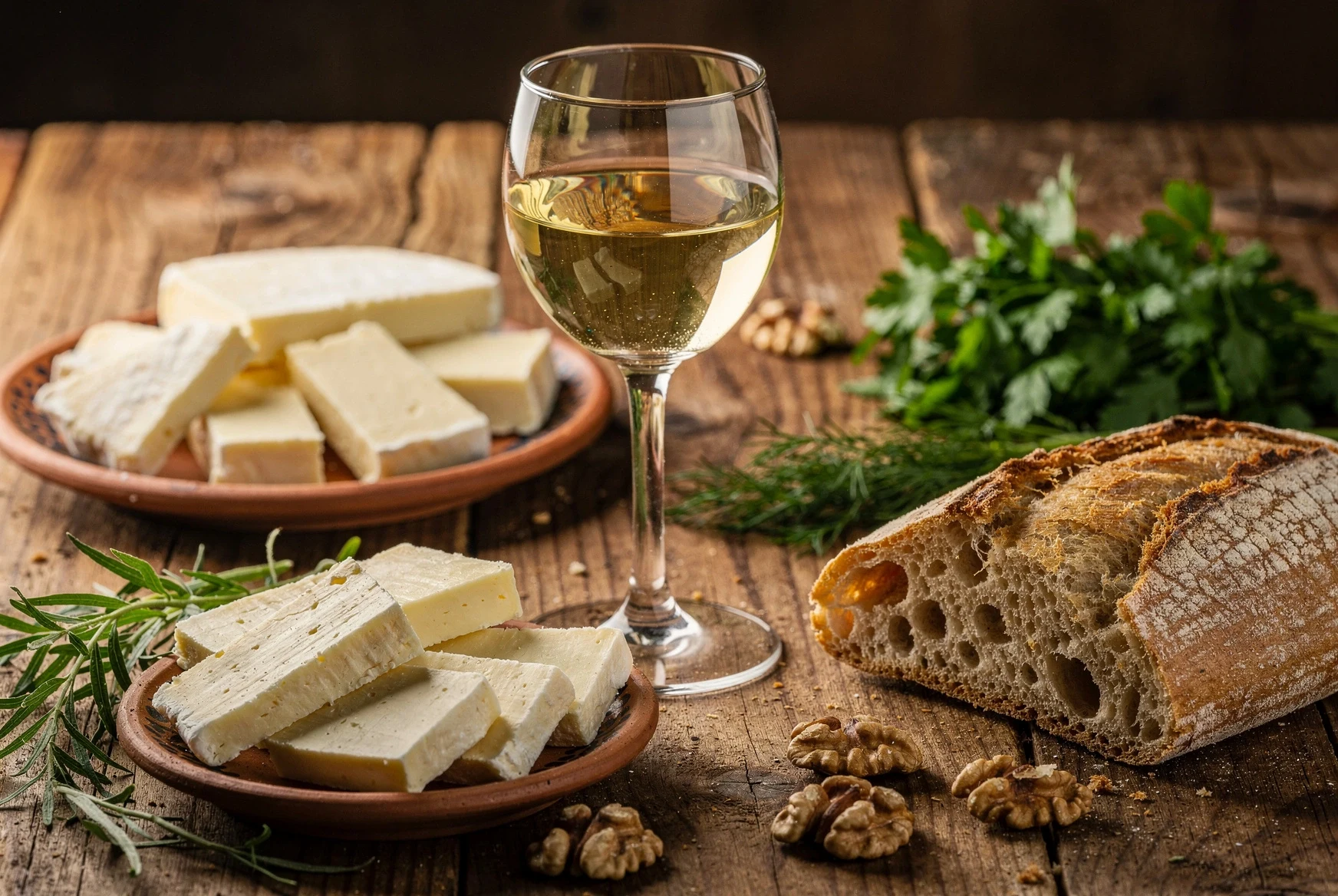
Mtsvane is one of the more flexible white grapes in Georgia because it can move between fresh dishes and richer Georgian food without feeling lost. Dry versions are very good with herbs, fresh cheeses, grilled trout, roast chicken, lighter bean dishes, and spring vegetables. The floral side likes freshness on the plate. The citrus and herb line loves anything green.
Amber Mtsvane is better when the table gets more serious. Once walnuts, garlic, salty cheese, and warm breads show up, the skin-contact versions make much more sense. They have enough tannin and savory depth to keep pace. That is where dishes like pkhali, badrijani nigvzit, lobio, and good salty breads stop feeling like difficult pairings and start feeling like the wine's natural habitat.
| Dish | Best Mtsvane style | Why it works |
|---|---|---|
| Kalmakhi | Dry white | Freshness, herbs, and enough acidity for trout and butter |
| Chicken tabaka | Dry white or richer dry | Cuts fat and garlic without overpowering the bird |
| Pkhali | Amber | Tea-like grip works with walnuts and herbs |
| Lobio | Amber | Beans need texture more than raw fruitiness |
| Imeretian khachapuri | Dry white | Salt and fat meet blossom and acid in the right way |
| Badrijani nigvzit | Amber | Walnuts, garlic, and eggplant ask for more grip and savory depth |
How to Buy Mtsvane Without Wasting a Bottle
The easiest buying mistake is chasing the word "Mtsvane" without checking whether you want freshness or skin-contact texture. Decide that first. If you want a clean, bright Georgian white to drink with fish, cheese, or a lighter dinner, buy a dry varietal or a Rkatsiteli-Mtsvane blend. If you want a bottle that feels more distinctly Georgian and stands up to a denser table, go for amber qvevri Mtsvane.
The second mistake is buying the cheapest export bottle and deciding from that whether the grape matters. Aromatic grapes suffer quickly when producers flatten them into anonymous supermarket wine. With Mtsvane, quality shows up in the finish. Cheap versions smell pleasant enough, then vanish. Better ones keep going: herbs, peel, floral notes, and enough structure to stay alive after swallowing.
Buy dry Mtsvane if…
You want a flexible dinner white, you like aromatics but not perfume overload, and you are serving fish, herbs, or young cheeses.
Buy amber Mtsvane if…
You want a gentler entrance into Georgian skin-contact wines than a very stern amber Rkatsiteli often gives.
Buy the blend if…
You are new to Georgian white wine and want the smartest first bottle rather than the most niche one.
Skip the bottle if…
The label tells you nothing about region or style and the back description reads like generic import copy. Life is short.
Common Mistakes People Make with Mtsvane
The first mistake is treating it as a minor grape because it often appears in blends. That is backwards. Plenty of serious grapes do their best work in blends because balance matters more than ego.
The second is expecting it to taste like Western aromatic whites. Mtsvane has perfume, yes, but Georgian examples usually come with more structure, more savory depth, and less fruity obviousness than people expect.
The third is serving amber Mtsvane without food and then wondering why it feels harder than expected. Skin-contact Georgian whites nearly always make more sense at the table than on an empty stomach.
Do not confuse the grape with the mood
Because the name means "green," some drinkers mentally file Mtsvane under light, grassy, simple white wine. That is exactly how you end up buying the wrong bottle or pairing it with the wrong dinner. Good Mtsvane can be delicate, but it is not flimsy.
So What Is the Best First Mtsvane Bottle?
For most people, the best first step is still a good Rkatsiteli-Mtsvane blend from Kakheti. It is the bottle most likely to show you why Georgia's white-wine culture is so compelling without demanding too much patience. After that, move to a varietal dry Mtsvane. Once that clicks, drink an amber qvevri Mtsvane with a proper Georgian table: bread, cheese, beans, herbs, walnut dishes, pickles, maybe grilled chicken. That is when the grape usually stops being an abstract tasting note and becomes part of a whole system that makes sense.
If you are already sold on Georgian whites, then skip the training wheels and buy a producer who takes the grape seriously. Mtsvane rewards people who pay attention. It is not the loudest grape in Georgia, but it is one of the most useful — and one of the easiest to miss if you only chase the obvious headline bottles.
Final Verdict
Mtsvane is one of the reasons Georgian white wine feels like a real category instead of just a historical curiosity. It brings fragrance without becoming silly, freshness without becoming thin, and enough adaptability to move between clean dry whites, amber qvevri wines, and some of the smartest white blends in the country. That makes it far more important than the usual quick summaries suggest.
If Saperavi is Georgia's extrovert and Rkatsiteli is its stern professor, Mtsvane is the white grape that knows how to make both of them easier to live with. Learn it, and a lot of Georgian wine suddenly gets clearer.
Written by The Georgian Eats Team
We taste Georgian wine where it actually gets poured — at restaurant tables, winery tastings, and supra-heavy dinners where a white wine has to survive cheese, herbs, walnuts, and garlic to earn its keep.
Last updated: March 2026.
Related Articles
Rkatsiteli Wine Guide
Georgia's defining white grape, from crisp dry bottles to serious amber qvevri versions.
Georgian Grape Varieties
The wider grape map, from Saperavi and Rkatsiteli to lesser-known bottles worth seeking out.
Georgian Wine for Beginners
The clean primer if you want qvevri basics, regions, grapes, and how to start tasting.
Wine & Food Pairing
Practical pairings for Georgian dishes, from khachapuri and beans to grilled meats and walnuts.